Infosys

Search documents
Sensex declines over 400 pts, Nifty below 25,850 as IT selloff intensifies
The Economic Times· 2026-02-12 04:02
Market Overview - The BSE Sensex traded over 400 points lower, reaching a low of 83,817, while the Nifty 50 fell over 100 points, slipping below the 25,850 mark [1][11] - A sharp selloff in IT stocks weighed on market sentiment, with Infosys, Eternal, and Titan Company being the top drags, falling between 2-4% [11] - Marginal gains were observed in ICICI Bank, Power Grid, and Tata Steel, rising up to 1% [11] Economic Indicators - The latest U.S. jobs data showed the addition of 130,000 jobs and a decline in unemployment to 4.3%, suggesting the Federal Reserve may refrain from rate cuts in the near term [11] - In India, the rate-cutting cycle appears largely over, with steady growth and inflation expected to gradually return to the RBI's long-term target by the end of FY27 [11] Sector Performance - Market support is likely to come from earnings growth, particularly in sectors such as automobiles, jewellery, hotels, select capital goods, telecom, and financials, which are showing strong performance [12] - Tech stocks are under pressure, particularly following the Anthropic-led disruption, and may take longer to recover [12] - A rotation of funds from IT to better-performing segments could support stocks in sectors driven by stronger earnings [12] Foreign Investment - Foreign portfolio investors (FPIs) net bought shares worth ₹944 crore on February 11, while domestic institutional investors (DIIs) were net sellers of ₹125.36 crore [5][12] Global Market Trends - U.S. markets ended marginally lower after a choppy session, with the Dow Jones Industrial Average slipping more than 66 points (0.1%) and the Nasdaq Composite falling about 0.2% [6][12] - In Asia, Japan's Nikkei 225 briefly crossed the 58,000 mark for the first time, while South Korea's Kospi surged as much as 2.1% to a record high of 5,466.9 [7][12] - Other Asian markets showed resilience despite weaker cues from Wall Street, with Singapore's benchmark index crossing the 5,000 level for the first time [7][12] Commodity Prices - Oil prices edged higher due to escalating tensions between the U.S. and Iran, with Brent crude futures rising 34 cents (0.49%) to $69.74 per barrel and U.S. West Texas Intermediate (WTI) crude gaining 37 cents (0.57%) to $65.00 per barrel [9][12] Currency Exchange - The Indian rupee opened 0.27% higher at 90.4550 per U.S. dollar, compared to its previous close of 90.70 [10][12]


This Emerging Markets ETF Charges Just 0.07% and Ran Way Past The S&P 500
Yahoo Finance· 2026-02-11 12:04
Core Insights - The SPDR Portfolio Emerging Markets ETF (SPEM) has achieved a 32% gain over the past year, significantly outperforming the S&P 500's 16% return, driven by growth in emerging market economies, particularly in Asia and Latin America [2][7] Performance Overview - SPEM provides diversified access to emerging markets with an expense ratio of just 0.07%, tracking over 800 holdings across countries like China, India, and Brazil [3] - Notable individual stock performances include Nu Holdings, which rose 28% with 41% earnings growth, while PDD Holdings fell 8% due to a focus on market share over profitability [7] Currency Impact - Currency movements, particularly the strength of the U.S. dollar, significantly influence emerging market returns; a weaker dollar enhances the value of local currency-denominated assets [4] - Monitoring the DXY Dollar Index is crucial, as a sustained move below 100 could support emerging market strength, while a rise above 108 may create challenges [5] Volatility Factors - Individual stock performance within SPEM can vary widely; for instance, PDD Holdings' decline illustrates the trade-offs between growth and profitability that many emerging market companies face [6]
Sensex, Nifty close almost unchanged in choppy trade
Rediff· 2026-02-11 11:43
Domestic equities may enter a brief consolidation phase following this week's strong rally driven by the US-India trade deal.Photograph: Francis Mascarenhas/ReutersBenchmark stock indices Sensex and Nifty closed on a flat note in a choppy session on Wednesday as gains in PSU banks and auto shares were offset by losses in IT stocks.Key PointsNSE Nifty inched up 18.70 pointsMarket attention has shifted back to mixed Q3 resultsDomestic markets have begun to benefit from improving FII flowsIn a range-bound trad ...
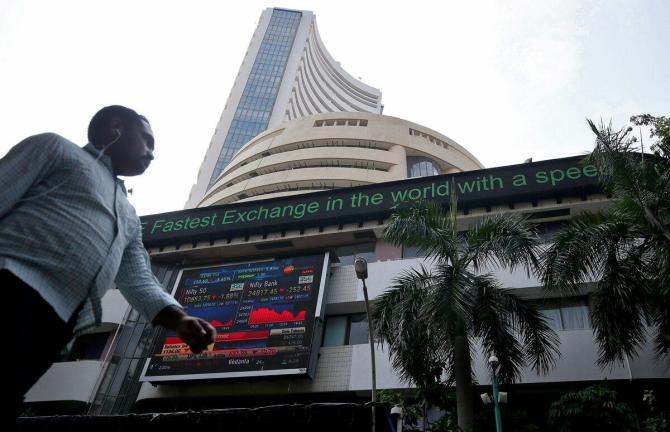
Sensex reclaims 84K-mark; Nifty ends up 174 points
Rediff· 2026-02-09 11:19
Market Overview - Benchmark equity indices Sensex and Nifty extended gains for the second consecutive session, driven by optimism over the India-US trade deal and strong buying in public sector banks, consumer durables, and realty stocks [3][10] - The 30-share BSE Sensex increased by 485.35 points, or 0.58%, closing at 84,065.75, while the NSE Nifty rose by 173.60 points, or 0.68%, settling at 25,867.30 [3][7] Sector Performance - Key sectors attracting investor interest included cement, capital goods, textiles, and consumer discretionary, supported by favorable trade deals and union budget proposals [11] - Public sector banks showed stronger-than-expected performance, contributing to the outperformance of the PSU bank index [10] Stock Performance - Notable gainers included State Bank of India, Titan, UltraTech Cement, Tata Steel, and Kotak Mahindra Bank, while laggards comprised PowerGrid, NTPC, and Infosys [4][9] - The benchmark index reached an intraday high of 84,314.68, reflecting a surge of 734.28 points, or 0.87% during the session [6] Foreign Investment - Foreign institutional investors (FIIs) purchased equities worth ₹1,950.77 crore, indicating a return of foreign capital to the market [12]
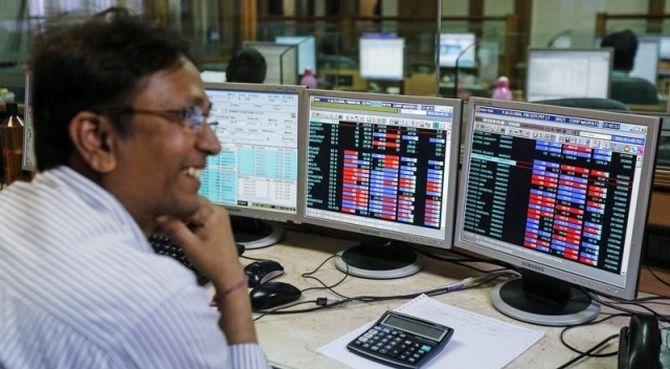
Sensex and Nifty rise as SBI and Tata Steel lead market rally
BusinessLine· 2026-02-09 07:48
Benchmark indices maintained their upward momentum in afternoon trade on Monday, with the Sensex trading at 83,983.84, up 403.44 points or 0.48 per cent from its previous close of 83,580.40. The Nifty 50 was at 25,838.90, up by 145.20 points or 0.57 per cent from its previous close of 25,693.70.State Bank of India continued to drive the rally, advancing 6.66 per cent to ₹1,137.40, while Shriram Finance gained 4.20 per cent to ₹1,044.60. Tata Steel rose 2.35 per cent to ₹201.69, Grasim Industries climbed 2. ...

Market rally lifts top firms as eight of top 10 add Rs 4.55 lakh crore in value, Reliance leads gains
The Times Of India· 2026-02-08 09:32
Core Viewpoint - The BSE benchmark experienced a significant surge of 2,857.46 points, or 3.53%, during the week, driven by strong performances from several major firms, particularly Reliance Industries, while IT stocks faced selling pressure due to global trends and valuation concerns [4][6]. Group 1: Market Valuation Changes - The combined market valuation of eight of the top ten firms increased by Rs 4,55,336.36 crore, with Reliance Industries contributing the most at Rs 1,41,887.97 crore, bringing its total market capitalization to Rs 19,63,358.79 crore [4][6]. - LIC's market valuation rose by Rs 64,926.1 crore to Rs 5,70,198.54 crore, while Bharti Airtel's valuation surged by Rs 52,516.39 crore to Rs 11,62,288.64 crore [4][6]. - ICICI Bank's valuation increased by Rs 52,476.97 crore to Rs 10,06,258.82 crore, and Bajaj Finance added Rs 48,659.83 crore to reach Rs 6,10,830.20 crore [4][6]. - State Bank of India's valuation rose by Rs 45,460.79 crore to Rs 9,84,353.06 crore, and HDFC Bank's valuation increased by Rs 32,350.28 crore to Rs 14,48,249.63 crore [5][6]. - Hindustan Unilever's market valuation grew by Rs 17,058.03 crore to Rs 5,69,482.18 crore [5][6]. Group 2: Declines in Market Valuation - Tata Consultancy Services (TCS) saw a decline in its market valuation by Rs 88,172.8 crore, bringing it down to Rs 10,64,242.35 crore [5][6]. - Infosys' market capitalization fell by Rs 63,462.66 crore to Rs 6,26,067.95 crore, reflecting the broader selling pressure in IT stocks [5][6]. Group 3: Industry Trends - The IT sector faced selling pressure in line with weak global trends in technology stocks, driven by valuation concerns and worries over the rapid advancements in artificial intelligence [5][6]. - Reliance Industries maintained its position as the most valued firm, followed by HDFC Bank, Bharti Airtel, TCS, ICICI Bank, State Bank of India, Infosys, Bajaj Finance, LIC, and Hindustan Unilever [5][6].
Mcap of 8 of top 10 valued firms surges by whopping ₹4.55 lakh crore; Reliance biggest winner
BusinessLine· 2026-02-08 06:39
Market Valuation Overview - The combined market valuation of eight of the top 10 valued firms increased by ₹4.55 lakh crore last week, with Reliance Industries being the largest beneficiary [1][2] - The BSE benchmark index rose by 2,857.46 points or 3.53 percent during the same period [1] Gainers and Losers - The firms that gained in valuation include Reliance Industries, HDFC Bank, Bharti Airtel, ICICI Bank, State Bank of India, Bajaj Finance, Life Insurance Corporation of India (LIC), and Hindustan Unilever [2] - Tata Consultancy Services (TCS) and Infosys experienced a decline in their market valuations [2] Individual Firm Valuations - Reliance Industries added ₹1,41,887.97 crore to reach a market valuation of ₹19,63,358.79 crore [2] - LIC's valuation increased by ₹64,926.1 crore to ₹5,70,198.54 crore [3] - Bharti Airtel's market valuation surged by ₹52,516.39 crore to ₹11,62,288.64 crore [3] - ICICI Bank's valuation jumped by ₹52,476.97 crore to ₹10,06,258.82 crore [3] - Bajaj Finance's market capitalization climbed by ₹48,659.83 crore to ₹6,10,830.20 crore [3] - State Bank of India's valuation rose by ₹45,460.79 crore to ₹9,84,353.06 crore [3] - HDFC Bank's valuation advanced by ₹32,350.28 crore to ₹14,48,249.63 crore [4] - Hindustan Unilever appreciated by ₹17,058.03 crore to ₹5,69,482.18 crore [4] Declines in Valuation - TCS saw its market valuation erode by ₹88,172.8 crore, bringing it down to ₹10,64,242.35 crore [4] - Infosys experienced a decline of ₹63,462.66 crore, resulting in a market capitalization of ₹6,26,067.95 crore [4] Sector Trends - IT stocks faced selling pressure last week, influenced by weak trends in global tech firms and concerns regarding valuation and advancements in artificial intelligence [5]

Mcap of 8 of top 10 valued firms surges by whopping Rs 4.55 lakh cr; Reliance biggest winner
The Economic Times· 2026-02-08 06:28
Core Insights - The BSE benchmark experienced a significant increase of 2,857.46 points or 3.53 percent last week, indicating a strong rally in equities [1][6] - The combined market valuation of eight of the top ten valued firms surged by Rs 4,55,336.36 crore, with Reliance Industries being the largest contributor [6] Company Performance - Reliance Industries saw its market valuation rise by Rs 1,41,887.97 crore, reaching Rs 19,63,358.79 crore, making it the most valued firm [2][6] - Life Insurance Corporation of India (LIC) increased its valuation by Rs 64,926.1 crore to Rs 5,70,198.54 crore [4][6] - Bharti Airtel's market valuation surged by Rs 52,516.39 crore to Rs 11,62,288.64 crore [4][6] - ICICI Bank's valuation jumped by Rs 52,476.97 crore to Rs 10,06,258.82 crore [4][6] - Bajaj Finance's market capitalization climbed by Rs 48,659.83 crore to Rs 6,10,830.20 crore [5][6] - State Bank of India's valuation increased by Rs 45,460.79 crore to Rs 9,84,353.06 crore [5][6] - HDFC Bank's valuation advanced by Rs 32,350.28 crore to Rs 14,48,249.63 crore [5][6] - Hindustan Unilever appreciated by Rs 17,058.03 crore to Rs 5,69,482.18 crore [5][6] Declines in Valuation - Tata Consultancy Services (TCS) experienced a decline in market valuation by Rs 88,172.8 crore, bringing it down to Rs 10,64,242.35 crore [5][6] - Infosys saw its market capitalization decrease by Rs 63,462.66 crore to Rs 6,26,067.95 crore [6] - The decline in IT stocks was attributed to global trends in technology firms and concerns regarding rapid advancements in artificial intelligence [6]
The Trump Market: A Rollercoaster Fueled by Tweets and Tariffs
Stock Market News· 2026-02-07 18:00
Trade Policy and Market Reactions - President Trump announced a significant reduction in U.S. tariffs on Indian goods from 50% to 18%, leading to a surge in Indian equity markets, with the Nifty 50 index rising 4.86% and the BSE Sensex increasing by 4.48% [2] - U.S.-listed Indian companies such as Infosys, Wipro, and HDFC Bank experienced notable stock increases of 4.3%, 6.8%, and 4.4% respectively, while the iShares MSCI India ETF saw a 3% rise [2] - The announcement of new tariffs on U.S. imports from countries trading with Iran could reach as high as 25%, raising concerns about market volatility, particularly for energy producers and sectors like airlines [3] Domestic Initiatives and Market Impact - An executive order was signed to increase the in-quota tariff-rate quota for lean beef trimmings by 80,000 metric tons for 2026, aimed at reducing ground beef prices, which averaged $6.69 per pound in December 2025 [4] - The TrumpRx.gov website was launched to provide discounted drugs, with Pfizer's stock rising 6.8% following its announcement to participate, offering an average 50% discount on certain drugs [5][6] - Analysts expressed skepticism about the effectiveness of TrumpRx, with some labeling it a "glorified coupon book" and suggesting it may not significantly impact consumer behavior [6][7] Market Performance and Economic Indicators - The Dow Jones Industrial Average (DJIA) reached a new all-time high of 50,115.67, following a significant rally of 1,207 points, while the broader market saw a rebound with the S&P 500 and Nasdaq also gaining [8][9] - Despite the rally, the S&P 500 and Nasdaq ended the week slightly down, indicating ongoing concerns about AI spending and aggressive tech selling [9] - Economic studies suggest that Trump's tariffs may slow economic growth, with U.S. consumers expected to bear 67% of the tariff burden by July 2026, translating to an average tax increase of $1,300 per household [10]

AI and The Software Rout: Lessons From the Handset Industry and Why Indian IT is Still Not Cheap
BusinessLine· 2026-02-07 16:28
Core Insights - The recent volatility in global enterprise software stocks has been unprecedented, with significant underperformance over the past year, raising concerns about the impact of AI on the software industry [1][2] - The introduction of a new AI plug-in by Claude has sparked fears regarding AI's potential to disrupt the software sector, leading to a broader discussion among industry experts [2] Historical Context - The launch of the iPhone in January 2007 marked a significant turning point in the mobile industry, surprising competitors and leading to a shift in market dynamics [3][4] - Following the iPhone's unveiling, Google pivoted its strategy towards developing a sophisticated operating system, resulting in the creation of Android, which now holds a 70% market share [4] - The iPhone's introduction also contributed to the decline of major players like Nokia and BlackBerry, who failed to recognize the disruptive potential of the new technology [5][8] Market Performance - By the end of 2007, Nokia and BlackBerry had market capitalizations of $150 billion and $100 billion respectively, but these figures would drastically decline in the following years due to the iPhone's impact [7][9] - By 2012, Apple captured approximately 70% of global mobile handset industry profits, despite holding only a 10% unit share, illustrating the profound effect of the iPhone on competitors [9] Current Industry Dynamics - Recent concerns about AI disruption have led to a significant decline in the stock prices of SaaS companies, despite their strong business performance in recent years [15] - For instance, Adobe, which reported 11% revenue growth and 15% net profit growth, is currently trading at a trailing PE of 15.5 times, indicating a disconnect between performance and market valuation [15] Investment Considerations - Investors are advised to approach the current market with caution, considering multiple potential outcomes rather than adopting a "buy the dip" mentality [13][16] - The Indian IT services sector is currently not priced for disruption, trading at high PE multiples despite lower revenue and profit growth compared to SaaS companies [19][21] - Historical data shows that during previous disruptions, leading IT services companies traded at lower PE multiples, suggesting that current valuations may not reflect the risks posed by ongoing technological changes [21][22]