
Neuralink

Search documents
SpaceX eyes merger with other Elon companies, Palantir head says he doesn't 'EVER second-guess Elon'
Youtube· 2026-01-30 21:15
The AI IPO race is officially on and it's approaching zero hour. Open AAI reportedly targeting a Wall Street debut for the fourth quarter of this year. The Wall Street Journal says the valuation of the AI startup Phenom could hit $830 billion.The timing of OpenAI's IPO plans may have been fast-tracked because its rival Anthropic is also planning an endofear IPO. The Amazon and Google backed AI company founded by former Open AI leaders projects it will break even by 2028. That would be two years ahead of ope ...



Morning News NOW Full Episode - Jan. 30
NBC News· 2026-01-30 16:36
AN NBC NEWS REPORTER, GARY AN NBC NEWS REPORTER, GARY GRUMBACH, WHO'S BEEN FOLLOWING GRUMBACH, WHO'S BEEN FOLLOWING THIS. WE WERE EXPEPECTING THIS THIS. WE WERE EXPECTING THIS ANNOUNCEMENT TO COME T TODAY. ANNOUNCEMENT TO COME TODAY.THERE'S BEEN TALALK ABOUT A FEW THERE'S BEEN TALK ABOUT A FEW POTENTIAL CANDIDATES. . IN THE POTENTIAL CANDIDATES. IN THE END, THE PRESIDENT SETTLING ON END, THE PRESIDENT SETTLING ON KEVIN WARSH, SAYING, I HAVE KEVIN WARSH, SAYING, I HAVE KNOWN KEVIN FOR A LONG PERERIOD KNOWN K ...

2026前沿科技趋势:塑造自己的下一个版本
3 6 Ke· 2026-01-30 09:58
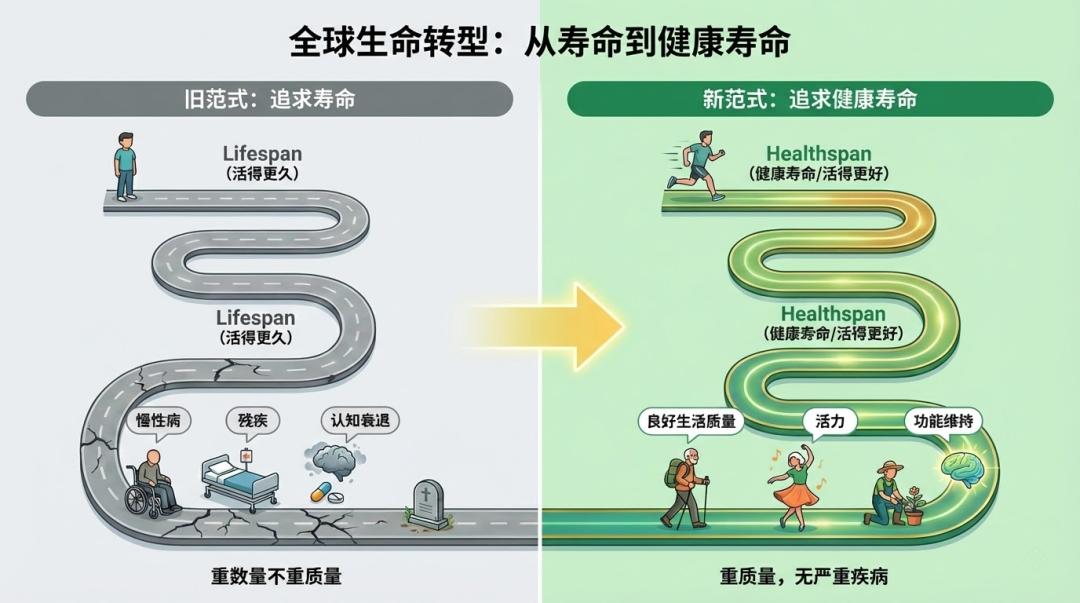
Group 1 - The rapid evolution and application of artificial intelligence and cutting-edge technologies are causing societal adaptation challenges, leading to feelings of uncertainty among people [1][2] - The focus of technological advancement should be human-centered, with an emphasis on shaping a better future through technology by 2030 [2] Group 2 - The "third transformation" of human life aims to extend healthy lifespan rather than just lifespan, with significant implications for global health and economy [3][5] - Human life expectancy has doubled over the past century, but the growth rate has significantly slowed down, with some regions experiencing stagnation or decline [4] - By 2030, the quality of life is projected to be a major focus, with non-communicable diseases potentially costing the global economy up to $47 trillion if not addressed [5] Group 3 - Advances in gene therapy and artificial intelligence are expected to play crucial roles in extending healthy lifespan, with technologies like CRISPR and AI enhancing medical capabilities [9][17] - Clinical breakthroughs in preventive gene therapy and RNA therapies are showing promise in treating chronic diseases effectively [10][12] - Epigenetic reprogramming is emerging as a potential method to reverse aging, with ongoing research aiming for clinical trials by 2026 [15] Group 4 - Artificial intelligence is set to enhance medical efficiency and understanding of human health, with applications in drug development, disease screening, and personal health management expected to yield significant results by 2030 [17][18] - AI is accelerating drug development processes, reducing timelines from years to months, and improving the success rates of new treatments [18][19] Group 5 - The development of exoskeleton technology is enhancing human physical capabilities, with applications in medical rehabilitation, industrial safety, and personal use expected to expand significantly [24][25] - Innovations in exoskeletons are making them more adaptable and user-friendly, with advancements in sensor technology and materials [28][30] Group 6 - The eVTOL market is projected to grow significantly, with advancements in battery technology and noise reduction strategies being critical for its acceptance and integration into urban transportation [31][32] - The evolution of drones into autonomous aerial robots is enhancing their capabilities for both consumer and industrial applications [34] Group 7 - The development of brain-computer interfaces (BCIs) is transforming the treatment of neurological conditions and enhancing human capabilities, with both invasive and non-invasive technologies showing promise [51][54] - BCIs are moving from experimental to standard treatment options for conditions like paralysis, with significant advancements in technology and regulatory approval processes [52][53]
2026前沿科技趋势:塑造自己的下一个版本
腾讯研究院· 2026-01-30 08:18
Core Insights - The article emphasizes the rapid evolution and application of artificial intelligence and cutting-edge technologies across various fields, urging a human-centered approach to technological advancement [3][4][5]. Group 1: Human Life's "Third Transformation" - Extending Healthy Lifespan - Human life expectancy has doubled over the past century, with significant improvements attributed to public health, antibiotics, and vaccines [7]. - Recent research indicates a dramatic slowdown in the growth rate of life expectancy, with the average increase dropping to below 0.25 years per decade in the last 30 years [8]. - A shift is occurring from merely extending lifespan to enhancing healthspan, which is the period of life spent in good health, with potential economic implications of up to $47 trillion in costs from non-communicable diseases by 2030 [9]. Group 2: Programmable Life - Gene Therapy - Gene therapy is moving towards optimizing the "life code," with advancements in CRISPR technology and delivery systems expected to mature by 2030 [11]. - Clinical breakthroughs in preventive gene therapy, such as Verve Therapeutics' treatment for cardiovascular disease, show promising results with significant reductions in LDL-C levels [12]. - The success of personalized CRISPR therapy in curing a fatal metabolic disease in a patient highlights the potential of gene therapy [14]. Group 3: Health Planning - AI Enhancing Medical Efficiency - AI is set to revolutionize drug development, disease screening, and personal health management by 2030, significantly reducing the time and cost associated with traditional drug development [21]. - AI combined with multi-omics technology is facilitating faster and more accurate disease screening, with notable advancements in cancer detection [23]. - Aging clock technology is evolving, enabling precise monitoring of aging processes and identifying underlying causes of aging [25]. Group 4: Enhancing Physical Capability - Exoskeleton Technology - Exoskeleton technology is advancing to enhance human physical capabilities, with applications in medical rehabilitation, industrial safety, and personal use [30]. - In the medical field, exoskeletons are evolving from mere mobility aids to intelligent devices that promote neurological recovery [31]. - Consumer-grade exoskeletons are expected to become popular for outdoor activities, significantly improving mobility for users [32]. Group 5: Flying Technology - eVTOL Development - The eVTOL market is projected to reach $41 billion in China by 2040, with significant advancements in battery technology expected to triple flight ranges [37]. - Noise reduction technologies are being explored to enhance social acceptance of eVTOLs, with strategies like "noise corridors" being implemented [38]. - The evolution of drones into aerial robots is enhancing capabilities in both consumer and industrial applications, with significant advancements in autonomous operations [40]. Group 6: Brain-Machine Interfaces - A New Era of Interaction - Brain-machine interfaces (BCIs) are transitioning from experimental therapies to standard treatment options for conditions like paralysis, with companies like Neuralink leading the way [61]. - Non-invasive BCIs are emerging, allowing for enhanced human-computer interaction, with applications in consumer technology [63]. - The integration of BCIs with AI could redefine human-AI collaboration, raising ethical considerations regarding privacy and data protection [64].

招商证券:2025年国内政策明显加码 脑机接口产业爆发临界点将至
智通财经网· 2026-01-30 02:37
Core Insights - The brain-computer interface (BCI) technology is at a critical industrial turning point, transitioning from academic exploration to commercial application, driven by policy and demand [1][4] - The medical field is the primary battlefield for BCI applications, accounting for 56% of the market, while non-medical sectors such as consumer, industrial, and education represent a combined 44%, indicating strong expansion potential [2][3] Industry Overview - BCI technology enables direct communication between the brain and external devices, facilitating bidirectional interaction from neural signals to control commands. The technology is categorized into invasive, semi-invasive, and non-invasive methods, with no absolute superiority among them; suitability depends on specific applications [1][3] - The global BCI market is projected to grow from $1.98 billion in 2023 to $7.63 billion by 2029, with China's market expected to reach 1.73 billion yuan in 2023, increasing its global share to 12.5% [2] Development Challenges - The BCI industry faces several challenges, including balancing high-throughput, high signal-to-noise ratio signal acquisition with long-term biocompatibility, and the need for breakthroughs in decoding algorithms and adaptive control precision [3] - Clinical challenges include the need for large-scale trials to verify the long-term safety and efficacy of invasive products, as well as the maturity of indication definitions, surgical standardization, and postoperative management systems [3] Global and Domestic Progress - The global BCI industry ecosystem is rapidly developing, with leading companies like Neuralink and Synchron innovating in high-throughput flexible implants and vascular interventions to enhance brain signal acquisition and interaction systems [4] - In China, significant progress has been made in system integration and application implementation, with a diverse enterprise matrix represented by companies such as Strong Brain Technology (non-invasive), Borui Kang (semi-invasive), and Xinwei Medical (interventional) [4] Relevant Companies - Key players in the primary market include Strong Brain Technology, Borui Kang, Ladder Medical, and others; in the secondary market, upstream companies like Maipu Medical and Meihao Medical, midstream companies like Xinwei Medical-B and Xiangyu Medical, and downstream companies like Sanbo Neuroscience are notable [5]

X @Elon Musk
Elon Musk· 2026-01-30 00:23
RT Sky News (@SkyNews)Sebastian Gomez-Pena, who is paralysed from the neck down, is one of the first people in the UK to receive Elon Musk’s brain chip. "It's magical," he tells Sky's @t0mclark3, "it's cool to see that when I think about moving my hand something actually happens." https://t.co/w78ejmxApB ...
X @Elon Musk
Elon Musk· 2026-01-29 19:18
RT DJ Seo (@djseo)In parallel, we are working on a design with 10X capability that will scale to 100X using 3D integration. We are also making great progress on entirely automating the surgical procedure (auto craniotomy, inserting threads through the dura, and more), bringing up a high-volume device production facility, and designing our own medical center in TX.In addition to Blindsight, we’ll also be announcing a few more products in the coming months.There has never been a better time to join and contri ...
X @Elon Musk
Elon Musk· 2026-01-29 18:29
RT DJ Seo (@djseo)Hear from Sebastian, one of the first people in the UK with Neuralink, and our partners at University College London Hospitals (UCLH). ...
X @Elon Musk
Elon Musk· 2026-01-29 14:20
RT X Freeze (@XFreeze)Neuralink is ready to implant its Blindsight vision-restoring device in a human for the first time, pending regulatory approval• Blindsight bypasses damaged eyes and optic nerves, using a camera to wirelessly send visual data directly to the brain’s visual cortex• Initial vision will be low-resolution, with the goal of improving quality over time as the technology advances• Neuralink has expanded its brain-computer interface trials to 21 participants worldwide ...
X @Tesla Owners Silicon Valley
Tesla Owners Silicon Valley· 2026-01-29 14:01
“You’ve got to look at Elon Musk, at SpaceX, Tesla, Neuralink – the guy is our Einstein. I'd like to be helpful to him and his companies as much as we can.”https://t.co/56I9G5rzEL ...
