
Unitree

Search documents
摩根大通中国市场峰会:三大关键投资主题
Zhi Tong Cai Jing· 2025-05-21 02:29
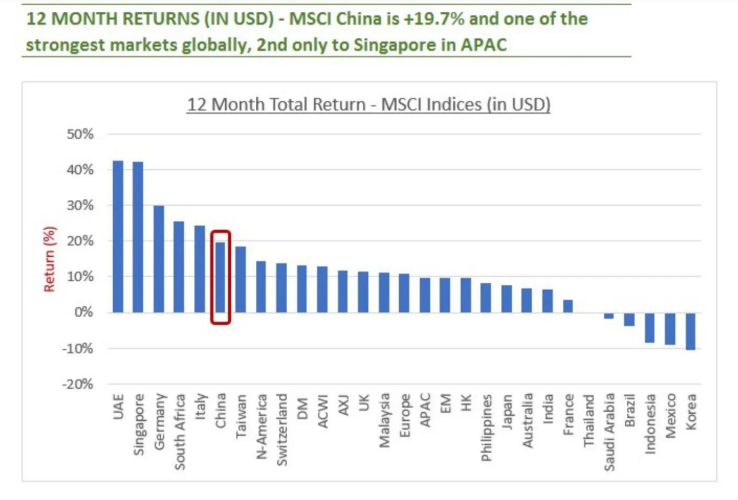
Core Insights - The Morgan Stanley China Summit is set to begin this week with over 2,800 participants, reflecting a more optimistic market sentiment compared to last year, which was focused on hope for policy shifts and growth stabilization that have since materialized [1] - The consensus for EPS growth for the MSCI China Index is projected at 8.3% for 2025 and 11.8% for 2026, with potential upside risks driven by increased AI applications [1][2] Group 1: Investment Themes - Three key investment themes highlighted by Morgan Stanley include: (1) AI innovations in enterprises, particularly in robotics and autonomous driving; (2) consumer demand supported by government policies; (3) the current state and future trajectory of US-China relations [2][10] Group 2: Market Positioning - Emerging market funds have returned to neutral positioning in Hong Kong/China markets, with a median overweight of +0.2 percentage points, ending a two-year low allocation period [4] - Global and EAFE funds remain significantly underweight in the Chinese market, requiring approximately $475 billion in long positions to adjust to neutral [4] Group 3: Market Performance - The MSCI China Index has risen 19% over the past year, outperforming the S&P 500 Index (+14%) and emerging markets (+10%), with a year-to-date increase of 16% [5][9] - Recent performance has lagged slightly, with a 9% increase in the past month compared to the S&P 500's 15% rise [5] Group 4: Valuation Metrics - The MSCI China Index's P/E ratio is currently at 12.6x, and P/B ratio at 1.6x, indicating valuations are no longer a barrier to market growth [6] - There are still significant value opportunities, particularly in the consumer discretionary sector, which is trading at a 30% discount to its 10-year average [6][11] Group 5: Consumer Sector Insights - The Chinese government is shifting focus from supply-side growth to boosting demand, which is crucial for EPS growth in consumer companies [10] - There is a notable disconnect between the earnings growth and stock performance of leading Chinese consumer companies, presenting attractive buying opportunities [11] Group 6: AI and Innovation - The focus on AI applications is expected to grow, with significant interest in "physical AI" such as robotics and advanced driver-assistance systems (ADAS) [14][15] - Companies like UBTECH and Unitree are leading in the humanoid robotics space, with a projected market size of $5 billion for humanoid robots [14] Group 7: US-China Relations - The strategic competition between the US and China extends beyond trade, with deep-rooted geopolitical tensions and a spectrum of potential outcomes ranging from a grand bargain to a new cold war [18][20][22] - The current geopolitical landscape poses risks for companies operating in both markets, with implications for their strategic decisions and operations [18]




U.S. tech giants are betting big on humanoid robots — but China's already ahead, analysts say
CNBC· 2025-03-28 07:38
Core Insights - American tech giants like Tesla and Nvidia are in a competitive race to develop humanoid robots, which are seen as crucial for the future economy, but they face significant competition from China [1][2][3] Industry Overview - Humanoid robots, powered by artificial intelligence, are expected to fill various roles in industrial and service sectors, with increasing investor interest driven by tech leaders like Nvidia [2] - Tesla's Optimus project aims to produce around 5,000 units in 2025, positioning it as a leader in the U.S. market, although it faces competition from Chinese firms like Unitree and Agibot, which have similar production goals [3][4] Competitive Landscape - Chinese companies are leveraging superior economies of scale and manufacturing capabilities to undercut U.S. competitors in humanoid robotics, with Unitree's G1 robot priced at $16,000 compared to Tesla's estimated $20,000 for Optimus [7][8] - Over the past five years, China has led the world in patent filings related to humanoid robots, with 5,688 patents compared to 1,483 from the U.S., indicating a strong innovation pipeline [9][10] Government Support and Market Dynamics - The Chinese government is actively promoting the development of humanoid robots, with guidelines issued for large-scale production by 2025 [11] - Analysts suggest that humanoid robots could help mitigate labor shortages in China, with initial applications expected in production lines and later in the service industry [12] Supply Chain and Component Costs - China controls approximately 70% of the supply chain for components used in humanoid robots, which is expected to lead to a rapid decline in component costs and increased adoption of these technologies [13] - The Unitree G1 is noted as being entirely decoupled from American components, positioning China to capitalize on the economic benefits of intelligent robotics systems [14] Strategic Recommendations - To remain competitive, U.S. companies like Tesla may need to consider reshoring or "friendshoring" their component sourcing and manufacturing to reduce reliance on China [15]



SemiAnalysis:中美机器人技术的竞争
2025-03-11 13:00
Summary of Key Points from the Conference Call Industry Overview - The conference call discusses the robotics industry, particularly focusing on China's dominance in the sector and the implications for the United States and the West [5][7][8]. Core Insights and Arguments - **Automation Revolution**: The U.S. is at a critical juncture in the automation and robotics revolution, which is expected to enable full-scale automation in manufacturing and mission-critical industries. China is positioned to lead this transformation [5][6][8]. - **China's Competitive Edge**: China has established a highly competitive economy with significant economies of scale in manufacturing. The country has already achieved dominance in several critical industries, including batteries and electric vehicles (EVs) [8][9]. - **Robotics Manufacturing**: China's robotics manufacturing capabilities are rapidly advancing, with local firms capturing nearly 50% of the global market share, up from 0% in 2020. This includes a shift towards higher-end market segments [11][14]. - **Cost Disparity**: Building a robotic arm in the U.S. is 2.2 times more expensive than in China, highlighting the cost advantages that Chinese manufacturers have [14][21]. - **Market Dynamics**: The commercial drone market exemplifies China's strategy of scale and oversupply, with local leader DJI capturing over 80% of the global commercial drone market [18][25]. Potential Risks and Challenges - **U.S. Manufacturing Decline**: The U.S. faces existential threats as it risks being outcompeted in manufacturing capacities. The focus on overseas production and procurement has weakened its industrial base [5][7][9]. - **Western Competitors' Struggles**: Companies like GoPro have struggled to compete in the consumer drone market due to their reliance on overseas manufacturing, which hampers rapid iteration and product development [22][24]. Important but Overlooked Content - **Generative Purpose Robotics**: The call emphasizes the potential of general-purpose robotics, which could revolutionize various industries by enabling robots to perform a wide range of tasks in dynamic environments [36][43]. - **China's Advanced Manufacturing**: China's investment in robotics has led to the establishment of fully automated factories, such as Xiaomi's factory, which produces one smartphone every minute without human intervention [46][49]. - **Future of Robotics**: The discussion highlights the importance of advancements in hardware and AI, which are expected to unlock new capabilities in robotics, allowing for more complex tasks and greater efficiency in manufacturing [41][43][48]. Conclusion - The conference call underscores the urgent need for the U.S. and Western nations to respond to China's advancements in robotics and automation. The implications for global manufacturing and economic competitiveness are significant, with potential shifts in market leadership on the horizon [5][8][27].
