Samsung

Search documents
Nvidia's South Korea deals mark a 'watershed', says Wedbush's Dan Ives
Youtube· 2025-10-31 08:43
Core Insights - Nvidia is collaborating with Samsung to establish a new AI mega factory, deploying over 50,000 GPUs from Nvidia, with Hyundai also utilizing 50,000 Nvidia chips in a new AI factory [1][5] - South Korea's presidential office announced that more than 260,000 GPUs will be deployed across both public and private sectors, highlighting the shift towards AI infrastructure [2][5] - The computing landscape is undergoing a fundamental transformation due to AI and accelerated computing, necessitating a transition from traditional computing systems [3][4] Nvidia's Market Position - The deal with South Korea is significant for Nvidia, marking its entry into the AI revolution in the region, which is crucial for its market presence [6][7] - Nvidia's market cap is projected to reach $6 trillion within the next 12 to 18 months, driven by the demand for AI technologies [9] - The company is seen as a pivotal player in the tech market, with its foundational role in the ongoing fourth industrial revolution [10] Global AI Landscape - The collaboration with South Korean companies indicates a broader global interest in AI, moving beyond Silicon Valley [8] - Nvidia's strategic importance is underscored by its partnerships with major companies and governments, positioning it as a key player in the AI arms race [12][13] - The potential for Nvidia in the Chinese market is significant, with estimates suggesting a $20 billion annual opportunity, emphasizing the importance of negotiations with China [12] Future Considerations - Supply constraints and power supply issues could pose challenges for Nvidia in the coming years, particularly in the context of expanding AI infrastructure [14][15] - The ongoing demand for AI technologies suggests a sustained growth trajectory for Nvidia, reinforcing its status as a leader in the industry [9][10]


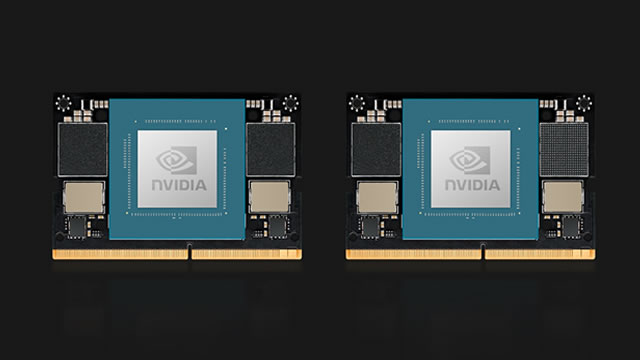
Nvidia lines up major chip deals with ROK titans
Youtube· 2025-10-31 08:43
Group 1: Nvidia's Strategic Moves - Nvidia has announced a significant deal with South Korean companies, deploying over 260,000 Blackwell AI chips, valued at over $7 billion, with an estimated price of $30,000 to $40,000 per chip [4][8][11] - The partnerships include collaborations with Samsung and Hyundai, focusing on AI mega factories and high bandwidth memory chips, which are crucial for Nvidia's supply chain [8][10][11] - This deal follows President Trump's recent trip to South Korea, highlighting the intersection of corporate and diplomatic relations in technology investments [5][6] Group 2: Market Reactions and Trends - The semiconductor index saw a decline of 1.5% following Nvidia's announcements, indicating market caution regarding the sustainability of Nvidia's growth amidst high capital expenditures [7][39] - Despite skepticism in the market, Nvidia's partnerships and the ongoing demand for AI technology suggest a potential for continued growth, as major tech companies like Amazon and Microsoft are also increasing their capital expenditures [12][15][38] - The broader narrative around AI investments is mixed, with some companies facing scrutiny over their spending, as seen with Meta's poor performance impacting market sentiment [38] Group 3: Global Technology Landscape - Nvidia's advancements in AI and partnerships in South Korea position it as a key player in the global technology stack, particularly in the context of sovereign AI initiatives [11][36] - The company is focusing on future technologies such as quantum computing and robotics, aiming to diversify beyond just GPU sales [34][35] - The competitive landscape includes challenges from Chinese firms, which are attempting to develop domestic alternatives to Nvidia's technology, although they currently lag behind in performance [21][22][36]


Nvidia to supply more than 260,000 Blackwell AI chips to South Korea
Reuters· 2025-10-31 06:02
Core Insights - Nvidia, a leading U.S. semiconductor company, announced it will supply over 260,000 advanced AI chips to the South Korean government and major businesses, including Samsung [1] Group 1 - Nvidia's supply of AI chips signifies a strategic partnership with South Korea, enhancing the country's technological capabilities [1] - The deal reflects the growing demand for advanced AI technology in various sectors within South Korea [1] - This move positions Nvidia as a key player in the South Korean semiconductor market, potentially increasing its market share [1]
NVIDIA, South Korea Government and Industrial Giants Build AI Infrastructure and Ecosystem to Fuel Korea Innovation, Industries and Jobs
Globenewswire· 2025-10-31 06:00
Core Insights - South Korea is collaborating with NVIDIA to enhance its AI infrastructure by deploying over 260,000 NVIDIA GPUs, which will support economic growth and innovation across various industries [2][13][14] Government Initiatives - The Korean government, through the Ministry of Science and ICT, is investing in sovereign AI infrastructure, planning to deploy over 50,000 NVIDIA GPUs across the National AI Computing Center and local cloud service providers [14] - The government aims to position South Korea as one of the top three global AI powerhouses by expanding its national AI infrastructure [3][14] Corporate Collaborations - Samsung is constructing a semiconductor AI factory with over 50,000 GPUs to enhance intelligent manufacturing and product integration [7] - SK Group is designing an AI factory to host over 50,000 NVIDIA GPUs, focusing on semiconductor research and cloud infrastructure for digital twin and AI agent development [8] - Hyundai Motor Group is partnering with NVIDIA to co-develop AI capabilities, investing approximately $3 billion to advance the physical AI landscape in Korea [9] AI Infrastructure Development - NAVER Cloud plans to deploy over 60,000 GPUs for sovereign and physical AI, focusing on industry-specific AI models [10] - Research institutes, startups, and AI companies will utilize the sovereign infrastructure to build models and applications, supporting Korea's national AI strategy [4] Advanced Technologies - NVIDIA is collaborating with various industries and academic institutions in Korea to develop AI-RAN and 6G infrastructure, aiming to reduce computing costs and enhance device battery life [5] - The Korea Institute of Science and Technology Information (KISTI) is establishing a Center of Excellence for quantum computing research in collaboration with NVIDIA [16][17] Startup Ecosystem - NVIDIA and its partners are forming an alliance to support startups through the NVIDIA Inception program, providing access to accelerated computing infrastructure and expertise [19][20]
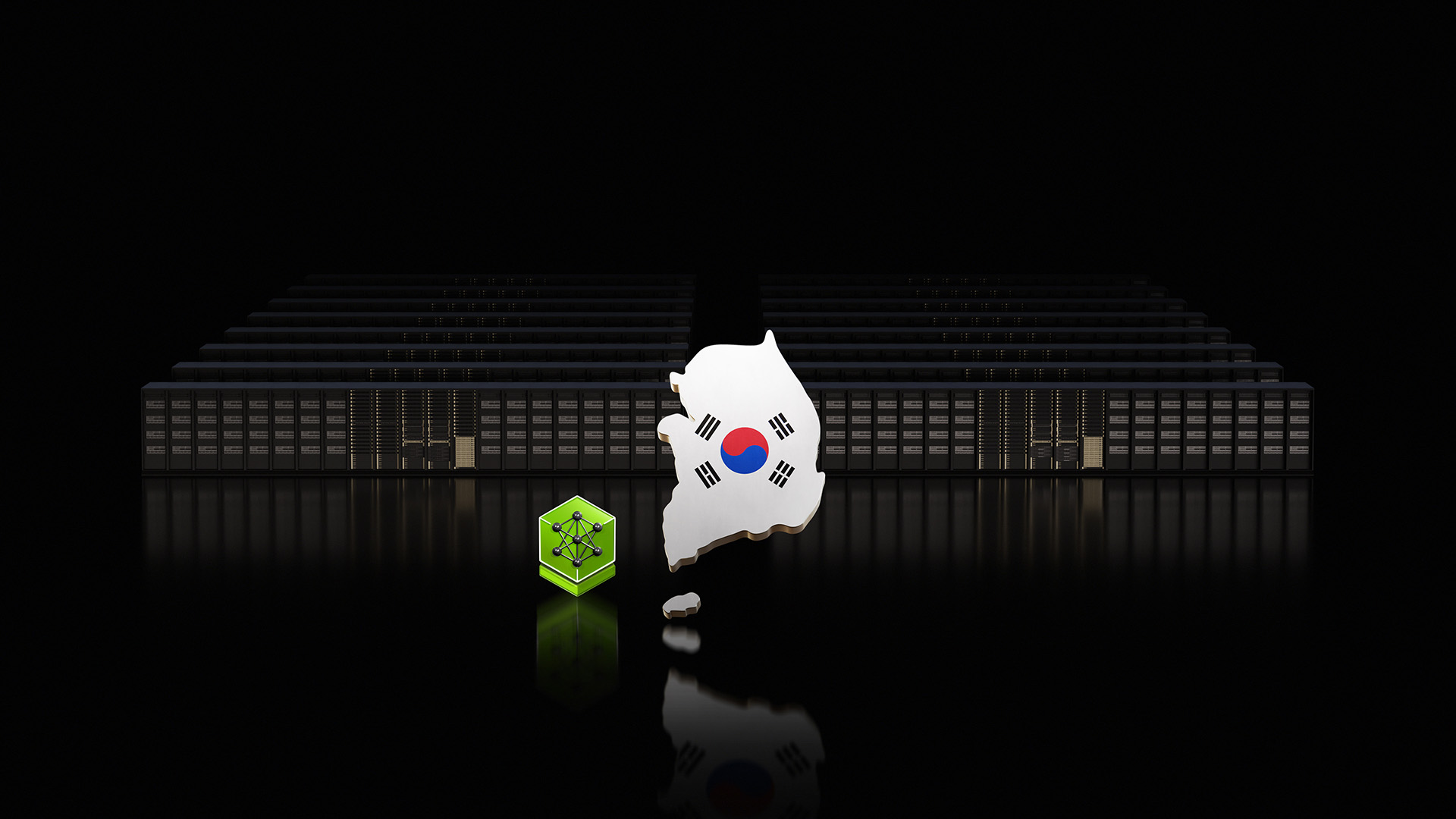
Samsung building facility with 50,000 Nvidia GPUs to automate chip manufacturing
CNBC· 2025-10-31 06:00
Core Insights - Samsung plans to purchase and deploy 50,000 Nvidia GPUs to enhance its chip manufacturing capabilities for mobile devices and robots [1][2] - The GPUs will be utilized in a facility termed "AI Megafactory," although no timeline for construction has been provided [2] - Nvidia's partnerships with various companies, including Samsung, are part of a broader strategy to capitalize on the growing demand for advanced AI technologies [3][4] Company Collaborations - Nvidia CEO Jensen Huang announced collaborations with companies such as Palantir, Eli Lilly, CrowdStrike, and Uber during a recent keynote address [3] - Nvidia is working closely with the Korean government to support its AI leadership initiatives [4] - Samsung is not only a customer but also a key supplier for Nvidia, providing high-performance memory essential for Nvidia's AI chips [7] Performance Enhancements - The collaboration with Samsung aims to adapt Samsung's chipmaking lithography platform to Nvidia's GPUs, resulting in a performance improvement of 20 times for Samsung [6] - Samsung will also utilize Nvidia's simulation software, Omniverse, to enhance its AI capabilities [6] Market Impact - Nvidia's forecast and partnerships have positively influenced its stock, making it the first company to achieve a market capitalization of $5 trillion [5]
如何用一种工具瓦解两大垄断-How to Kill 2 Monopolies with 1 Tool
2025-10-31 01:53
Summary of Key Points from the Conference Call Industry Overview - The chipmaking industry is facing disruption due to inertia in technical decisions and a lack of innovation in existing processes [3][4] - Companies like ASML are developing tools that may not be economically viable, indicating a stagnation in technological advancement [4] Company Focus: Substrate - Substrate is a Bay Area startup focused on developing X-ray lithography (XRL) technology to reduce the cost of advanced logic wafers [6] - The company aims to create a new American foundry and develop an end-to-end chipmaking process [14] Technological Claims - Substrate's XRL tool claims to achieve: - Single-patterning capability for 2nm, 1nm, and potentially beyond [10] - Equivalent resolution to high-NA EUV [10] - Production of leading-edge wafers at 50% less cost than existing options [10][12] - Performance metrics include: - Overlay <= 1.6 nm - Full-wafer Critical Dimension Uniformity (CDU) of 0.25 nm - Line Edge Roughness (LER) <= 1 nm [10] Economic Implications - If Substrate's claims are validated, it could revolutionize lithography by significantly reducing costs and increasing design flexibility [17][24] - The potential market for Substrate's technology could reach $50 billion by 2030, posing a serious threat to incumbents like ASML [24] Strategic Importance - Substrate's success could enhance the U.S.'s strategic position in advanced chipmaking, reducing reliance on foreign fabs, particularly in Taiwan [34] - The company is taking measures to protect its innovations from espionage, especially from China, which is also developing similar technologies [35][36] Competitive Landscape - Substrate's XRL technology is positioned as a revolutionary step compared to competitors like xLight, which focuses on improving existing EUV tools [39][41] - The competitive dynamics are influenced by the need for advanced lithography solutions amid rising geopolitical tensions [35] Challenges Ahead - Despite impressive claims, Substrate faces significant challenges in scaling its technology from lab to industrial levels [16][31] - The company acknowledges the difficulties in transitioning from theoretical capabilities to practical, high-volume production [16][31] Future Milestones - Key milestones for Substrate include: - Building a complete XRL tool with a particle accelerator source [43] - Demonstrating sustained performance and successful chip production using their technology [46] Conclusion - Substrate's advancements in X-ray lithography could disrupt the chipmaking industry, but substantial proof and development are required to validate their ambitious claims and achieve market penetration [43][46]
Apple silences its critics with strong iPhone demand and blowout services revenue
CNBC· 2025-10-31 01:13
Core Insights - Apple reported a strong September quarter with revenue of $102.47 billion, an 8% year-over-year increase, surpassing the consensus estimate of $102.26 billion [1] - Earnings per share reached $1.85, a 91% increase, exceeding the consensus estimate of $1.77 [1] - The stock price rose approximately 30% over the past three months, joining the $4 trillion market cap club [1] Financial Performance - Revenue for the fiscal 2025 fourth quarter was $102.47 billion, up 8% year-over-year [1] - Earnings per share increased by 91% to $1.85, or 13% when excluding a one-time charge from the previous year [1] - Apple's consolidated gross profit margin expanded by 70 basis points sequentially and nearly 100 basis points year-over-year [1] Product Highlights - iPhone sales grew 6% to $49.03 billion, despite supply constraints [1] - Mac sales increased 12.7% to $8.73 billion, driven by strong demand for MacBook Air [1] - Services revenue reached an all-time high of $28.75 billion, up 15% year-over-year [1] Regional Performance - Apple set September quarter records in all regions except Greater China, where sales were down due to supply constraints [1] - iPhone sales in India reached all-time highs, contributing to the overall growth [1] Outlook - December quarter revenue is expected to increase by 10% to 12% year-over-year, significantly above the 6% anticipated by analysts [1] - iPhone revenue is projected to grow at a double-digit rate year-over-year, indicating strong demand for the iPhone 17 [1] - Gross margin for the December quarter is expected to be between 47% and 48% [2] Capital Allocation - Apple ended the September quarter with $132 billion in cash and marketable securities, with net cash of $34 billion [2] - The company returned $24 billion to shareholders during the quarter, including $3.9 billion in dividends and $20 billion in share repurchases [2]



Apple delivers strong quarter despite trade war challenges and ongoing artificial technology issues
Yahoo Finance· 2025-10-30 21:10
Core Insights - Apple reported financial results for the summertime quarter that surpassed analyst expectations, driven by strong demand for the iPhone 17 lineup despite challenges from a global trade war and competition in artificial intelligence [1][5]. Financial Performance - iPhone sales reached $49 billion during the July-September period, marking a 6% increase year-over-year, although this was below the anticipated 8% growth and less than the 13% increase seen in the previous quarter [4]. - Apple sold approximately 58.6 million iPhones globally in the quarter, ranking second behind Samsung, which sold 61.4 million Android devices [5]. - The company reported earnings of $27.5 billion, or $1.85 per share, nearly doubling its profit from the previous year, with total revenue climbing 8% to $102.5 billion, both figures exceeding analyst forecasts [5][6]. Product Insights - The iPhone 17 features a redesign with a "liquid glass" appearance but lacks advanced AI capabilities found in competitors' devices [2]. - Despite tariffs costing Apple $1.1 billion in the last quarter and an expected $1.4 billion in the upcoming quarter, the company maintained pricing on its latest iPhones [3]. Future Outlook - CEO Tim Cook expressed optimism about the iPhone 17's continued success, predicting increased sales during the holiday season, with expectations of at least a 10% rise in iPhone sales compared to last year's holiday season [7][8].
Could This AI Pick Surge 700% in 3 Years?
Yahoo Finance· 2025-10-30 20:37
Group 1 - Broadcom's stock has increased over 700% in the past three years, primarily driven by sales of AI chips [1][8] - The company offers a diverse range of networking, optical, and custom accelerator chips, differentiating it from competitors like Nvidia [1][4] - In fiscal 2024, Broadcom generated 58% of its revenue from semiconductor solutions and 42% from infrastructure software, showcasing its diversification strategy [5][6] Group 2 - Revenue growth for Broadcom was 21% in FY 2022, 8% in FY 2023, and accelerated to 44% in FY 2024 [7] - Adjusted EBITDA growth was 27% in FY 2022, 10% in FY 2023, and 37% in FY 2024 [7] - Free cash flow growth was 22% in FY 2022, 8% in FY 2023, and 10% in FY 2024 [7] Group 3 - In fiscal 2023, Broadcom's growth slowed due to challenges in non-AI markets, but it rebounded in fiscal 2024 with a 220% increase in AI chip sales, which constituted 24% of total revenue [6][9]

MVST vs. Arm Holdings: Which Tech Growth Stock is the Better Placed?
ZACKS· 2025-10-30 19:46
Core Insights - Microvast (MVST) and Arm Holdings (ARM) are key innovators in technology, focusing on high-growth areas such as battery systems and semiconductor architecture [1][2] - Both companies are strategically positioned in transformative themes like electrification, artificial intelligence, and next-generation computing [2][3] Microvast Overview - Microvast specializes in advanced lithium-ion battery systems, particularly its True All-Solid-State Battery (ASSB) technology, which enhances safety and efficiency by eliminating liquid electrolytes [4][5] - The company reported a 9.2% year-over-year revenue growth in Q2 2025, with a 220-basis-point improvement in gross margin [4] - Adjusted EBITDA surged to $25.9 million, a significant recovery from a negative $78.4 million in the same quarter last year [5] - The Huzhou Phase 3.2 expansion plan aims to increase production capacity by 2 GWh, enhancing market share and competitive strength [6] Arm Holdings Overview - ARM maintains dominance in mobile computing with power-efficient chip architectures that are integral to devices from major companies like Apple, Qualcomm, and Samsung [7][8] - The demand for ARM's chips is growing as they are essential for AI and IoT advancements, powering a wide range of applications from wearables to cloud infrastructure [8] - ARM's architecture is becoming increasingly vital in the AI-driven future, supporting innovations in machine learning and edge computing [8] Financial Estimates - Microvast's 2025 sales estimate is $462.3 million, indicating a 21.7% year-over-year growth, with earnings expected to surge over 100% from the previous year [11] - ARM's 2025 sales estimate is $4.7 billion, reflecting an 18.1% year-over-year growth, with earnings projected to increase by 1.2% [14] Valuation Comparison - Microvast is trading at a forward P/E ratio of 19.71X, below its 12-month median of 20.78X, while ARM is at 85.87X, lower than its median of 123.75X [17] - Both stocks are trading at discounts compared to historical valuations, but Microvast appears significantly cheaper than ARM [17] Conclusion - Microvast is better positioned for near-term growth due to advancements in ASSB technology, improving profitability, and attractive valuation [18] - ARM remains a dominant player in semiconductors, but its high valuation limits near-term upside potential [18]