American Express

Search documents
JPMorgan CFO warns credit card rate cap could hurt US consumers, economy
Reuters· 2026-01-13 14:10
A proposed cap on credit card interest rates will hurt U.S. consumers and the economy, JPMorgan Chase Chief Financial Officer Jeremy Barnum said on Tuesday. ...



JPMorgan Chase says banks could fight Trump credit card rate cap: 'Everything's on the table'
CNBC· 2026-01-13 13:55
Core Viewpoint - The banking industry is considering legal action against President Trump's proposal to impose a 10% cap on credit card interest rates, as it may lead to negative consequences for consumers and the economy [1][3]. Group 1: Industry Response - JPMorgan Chase's CFO Jeremy Barnum indicated that the industry might litigate against the proposed credit card price controls, stating that "everything's on the table" if the directives are not justified [1]. - Barnum emphasized the responsibility to shareholders in responding to potentially harmful regulations [1]. Group 2: Economic Implications - Industry insiders believe that implementing an interest rate limit would lead to fewer credit card accounts and reduced consumer spending, as companies may withdraw accounts rather than operate at a loss [2]. - The current average credit card interest rate is 19.7%, with higher rates for subprime borrowers and store-specific cards [2]. Group 3: Consequences of Regulation - Barnum argued that the proposed actions would likely have the opposite effect of what the administration intends, potentially reducing the supply of credit rather than lowering costs for consumers [3]. - The anticipated reduction in credit availability could negatively impact consumers, the broader economy, and the banking sector itself [3].

World shares are mixed and Tokyo hits a record, tracking fresh highs on Wall Street
ABC News· 2026-01-13 11:01
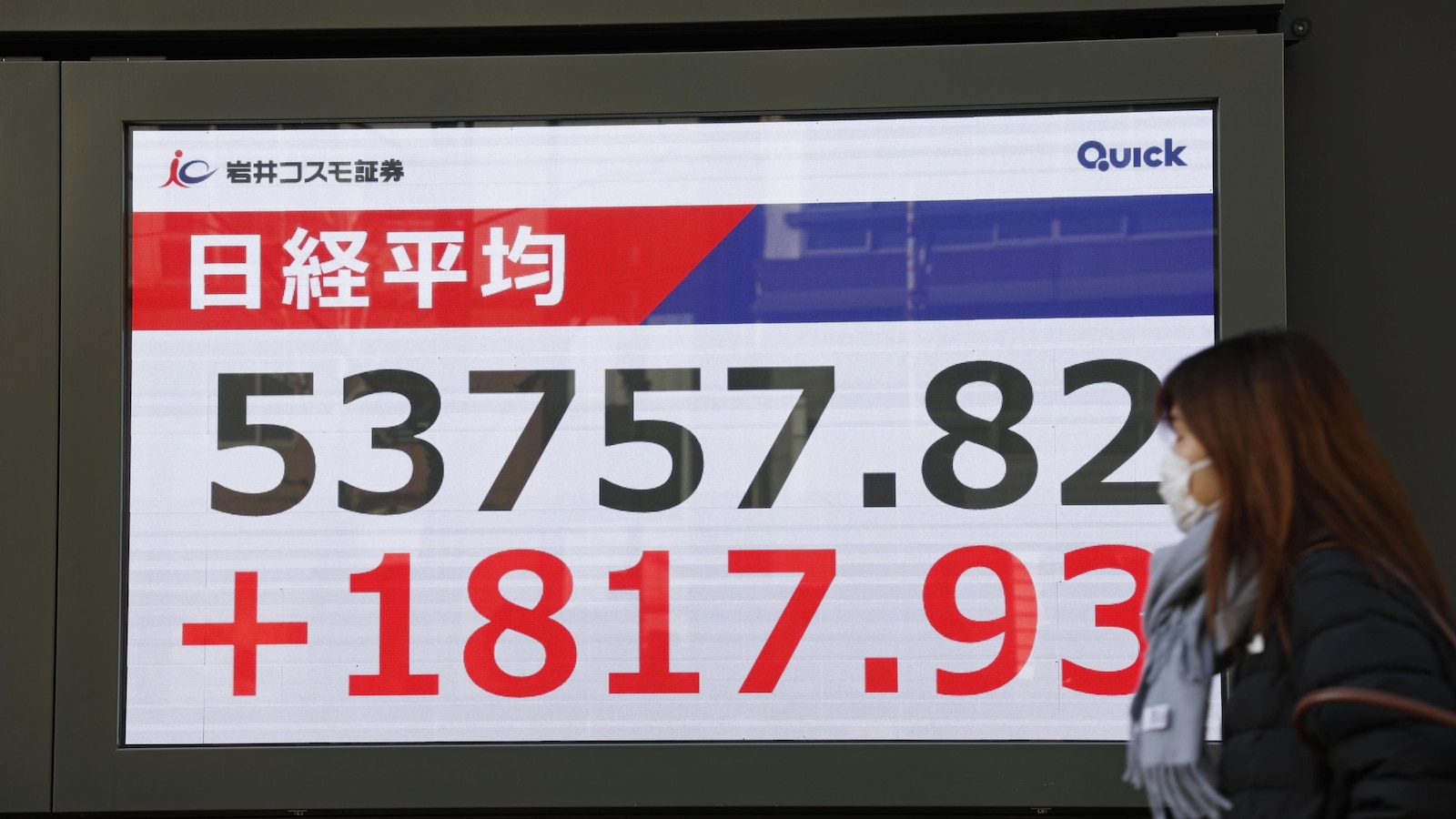
Market Overview - World shares exhibited mixed performance with U.S. futures declining slightly ahead of the U.S. consumer price update [1] - In early European trading, the FTSE 100 rose less than 1% while Germany's DAX and France's CAC 40 fell by 0.2% and 0.5% respectively [2] Inflation and Consumer Prices - U.S. consumer prices are expected to have risen by 2.6% in December compared to the previous year, according to economists' estimates [2] - Inflation pressures are likely to remain high due to increased costs in electricity, groceries, and clothing [3] Regional Market Performance - Asian shares mostly gained, with Japan's Nikkei 225 surging 3.1% to a record close of 53,549.16, driven by technology-related stocks [3] - Hong Kong's Hang Seng index advanced 0.9% to 26,848.47, while shares of GigaDevice Semiconductor jumped 54% in its trading debut [5] - South Korea's Kospi closed 1.5% higher at a record 4,692.64, and Australia's S&P/ASX 200 gained nearly 0.6% [5] U.S. Federal Reserve and Interest Rates - Concerns over the Federal Reserve's independence in setting interest rates were somewhat mitigated by investor expectations of potential rate cuts [6] - Tensions between President Trump and Fed Chair Jerome Powell escalated following a subpoena from the Department of Justice regarding Powell's testimony [7] - Trump has advocated for further interest rate cuts, which could benefit stock prices by lowering borrowing costs [8] Company-Specific Developments - Alphabet, Google's parent company, saw a 1% increase in market value, surpassing $4 trillion, following a deal with Apple to enhance Siri using Google's technology [8] - Credit card companies faced losses after Trump proposed a cap on credit card interest rates, impacting their profit margins [9]

大摩展望美国消费金融财报季:防御仍是主线,特朗普信用卡限息提议增添不确定性
智通财经网· 2026-01-13 09:33
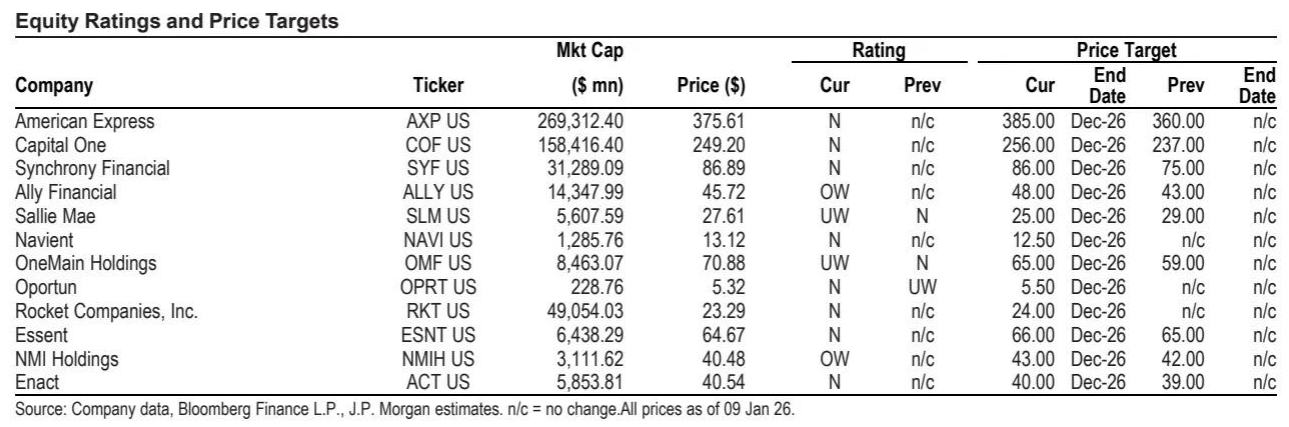
Group 1 - The core viewpoint of the reports indicates that the financial sector is advised to maintain a defensive posture due to anticipated impacts from inflation and labor market dynamics on credit performance and consumer confidence [1] - Morgan Stanley acknowledges that while target stock prices have been steadily raised since the beginning of the year, earnings expectations have largely remained unchanged, reflecting a conservative outlook [1] - The report highlights a significant proposal from Trump to limit credit card interest rates to 10% for one year, which could fundamentally reshape the credit card industry and significantly reduce profitability for issuers [1] Group 2 - In December, U.S. consumer spending growth showed signs of slowing, with a year-over-year increase of 2.4%, down from 3.7% in November, indicating a divergence in spending patterns between high-income and low-income households [2] - The labor market is characterized by low hiring and low layoffs, with non-farm payrolls increasing by only 50,000 in December, which is below expectations, while the unemployment rate decreased from 4.6% to 4.4% [2] - Despite geopolitical news, the direct impact on consumer finance remains limited, with Morgan Stanley expecting inflation and labor market conditions to continue being focal points for investors and operators [3] Group 3 - Morgan Stanley maintains a selective and rigorous approach in evaluating the financial sector, considering factors such as adequate valuations, uneven credit trends, and execution risks within the rating spectrum [3] - The report includes specific ratings and target price adjustments for various financial stocks, reflecting a balanced and differentiated outlook based on current market dynamics [3]
Jim Cramer Says 'Wall Street Doesn't Seem To Care' About Trump's 10% Cap On Credit Card Rates, Warns 'Millions' Will Lose Access To Credit - American Express (NYSE:AXP)
Benzinga· 2026-01-13 06:51
Core Viewpoint - President Trump's proposal to impose a one-year 10% cap on credit card interest rates is largely ignored by Wall Street, indicating a lack of concern among investors and analysts [1][2][4]. Group 1: Market Reaction - The market has shown indifference to Trump's announcement, with bank stocks rebounding after an initial drop, suggesting that Wall Street does not view the proposal as a significant threat [4]. - Leading bank stocks closed in the red on the day of the announcement, with Capital One Financial Corp. experiencing a steep decline due to its reliance on credit card revenue [5][6]. Group 2: Legislative and Economic Implications - Congressional approval is required for the cap to take effect, and there are concerns that Trump may attempt to pressure banks into compliance without formal legislation [2][3]. - Industry organizations, including the Bank Policy Institute and American Bankers Association, expressed concerns that the cap could limit credit availability for consumers, particularly affecting those with lower credit scores [6]. - High interest rates are deemed necessary for lenders to justify the risk of lending to subprime borrowers, and capping rates could lead to a significant reduction in credit flow, potentially mandating an economic downturn [5].

S&P 500, Dow hit closing record highs; Walmart, tech climb
The Economic Times· 2026-01-13 01:48
Group 1: Market Performance - Walmart shares increased by 3%, contributing to gains in the S&P 500 and Nasdaq, where it recently moved its stock listing from the NYSE [1] - Consumer staples rose by 1.4%, leading sector gainers, while the technology sector also saw an increase [1] - The S&P 500 and Dow reached record closing highs, driven by gains in technology companies and Walmart [9] Group 2: Walmart's Index Inclusion - Walmart is set to join the Nasdaq-100 index on January 20, which could attract billions of dollars from passive index funds [1] - The shift to the Nasdaq is expected to enhance Walmart's visibility and investment appeal [1] Group 3: Financial Sector Performance - Financial stocks declined by 0.8%, leading sector decliners in the S&P 500, with Citigroup down 3% and American Express down 4.3% [10] - Trump proposed a one-year cap on credit card interest rates at 10%, impacting lender and credit card firm shares [10] Group 4: Earnings Outlook - Analysts anticipate a 26.5% year-over-year earnings growth for the technology sector in the upcoming fourth-quarter earnings season [10] - Overall S&P 500 companies' earnings are expected to rise by 8.8% compared to the previous year [10] Group 5: Market Activity - U.S. exchange volume reached 17.29 billion shares, above the 20-day average of 16.40 billion [8] - Advancing issues outnumbered decliners by a ratio of 1.68-to-1 on the NYSE, with 725 new highs and 48 new lows [8]


American Express (AXP) Stock Drops Despite Market Gains: Important Facts to Note
ZACKS· 2026-01-12 23:51
Company Performance - American Express (AXP) closed at $359.59, down 4.27% from the previous trading session, underperforming the S&P 500's gain of 0.16% [1] - Over the past month, AXP shares have decreased by 1.82%, lagging behind the Finance sector's gain of 3.24% and the S&P 500's gain of 1.89% [1] Upcoming Earnings Report - The company is set to release its earnings on January 30, 2026, with expected earnings of $3.55 per share, reflecting a year-over-year growth of 16.78% [2] - Revenue is anticipated to be $18.86 billion, indicating a 9.78% increase compared to the same quarter last year [2] Fiscal Year Estimates - For the entire fiscal year, earnings are projected at $15.41 per share, showing a growth of 15.43%, while revenue is expected to remain flat at $72.11 billion [3] - Recent adjustments to analyst estimates suggest evolving short-term business trends, with positive revisions indicating analyst optimism [3] Zacks Rank and Performance - The Zacks Rank system, which ranges from 1 (Strong Buy) to 5 (Strong Sell), has shown that 1 ranked stocks have yielded an average annual return of +25% since 1988 [5] - American Express currently holds a Zacks Rank of 3 (Hold), with a recent 0.13% increase in the consensus EPS estimate over the last 30 days [5] Valuation Metrics - The current Forward P/E ratio for American Express is 21.38, which is a premium compared to its industry's Forward P/E of 11.84 [6] - The company has a PEG ratio of 1.57, indicating a higher valuation relative to the average PEG ratio of 0.94 for Financial - Miscellaneous Services stocks [7] Industry Context - The Financial - Miscellaneous Services industry, part of the Finance sector, has a Zacks Industry Rank of 157, placing it in the bottom 36% of over 250 industries [8] - Research indicates that the top 50% rated industries outperform the bottom half by a factor of 2 to 1 [8]

Financial stocks fall as investors get jittery over Trump's call for one-year 10% credit card interest cap
New York Post· 2026-01-12 18:16
Core Viewpoint - President Trump's proposal to cap credit card interest rates at 10% for one year has caused significant concern in the financial sector, leading to a decline in bank stocks and fears of reduced profitability for lenders [1][4][10]. Group 1: Market Reaction - Shares of major banks such as JP Morgan Chase, Capital One, and Citigroup experienced declines of nearly 7%, 6.5%, and over 3% respectively, as investors reacted negatively to the proposed cap [1][4]. - Payment networks like Visa, American Express, and Mastercard also saw stock drops of over 5%, 4.5%, and about 2%, indicating widespread market apprehension regarding the potential impact on spending and transaction volumes [2][4]. Group 2: Proposal Details - Trump announced the cap would take effect on January 20, 2026, coinciding with the one-year anniversary of his administration, claiming that Americans are being "ripped off" by high borrowing costs [5][6]. - The average interest rates on new credit card offers are currently above 23%, making credit cards highly profitable for lenders [6][9]. Group 3: Support and Opposition - Proponents of the cap argue it could save Americans approximately $100 billion annually in interest charges, suggesting that major credit card banks are already highly profitable [7]. - Conversely, banks and industry groups have expressed strong opposition, warning that a hard cap could lead to reduced credit availability and negatively impact consumers who rely on credit cards [10][12]. Group 4: Legal and Political Context - Legal experts have indicated that Trump may lack the authority to impose such a cap without congressional approval, suggesting that the January 20 deadline may be more about pressuring compliance than enforcing a legal mandate [10][11][14]. - Previous bipartisan bills proposing a similar cap have failed to gain traction, indicating significant political resistance to the idea [15].

American Express Downgraded As Trump Floats Credit Card Rate Cap (NYSE:AXP)
Seeking Alpha· 2026-01-12 17:16
President Trump attacked not only Fed Chair Powell in recent months, but over the weekend, he took verbal aim at credit card companies. The POTUS floated the idea of capping credit card interest rates at 10% , which, if made law, would significantlyFreelance Financial Writer | Investments | Markets | Personal Finance | RetirementI create written content used in various formats including articles, blogs, emails, and social media for financial advisors and investment firms in a cost-efficient way. My passion ...

American Express Downgraded As Trump Floats Credit Card Rate Cap
Seeking Alpha· 2026-01-12 17:16
Group 1 - President Trump proposed capping credit card interest rates at 10%, which could have significant implications for credit card companies and consumers [1] - The proposal indicates a growing scrutiny of financial institutions, particularly in the context of rising interest rates and inflation [1] Group 2 - The article does not provide specific financial data or performance metrics related to credit card companies or the broader financial sector [2][3]