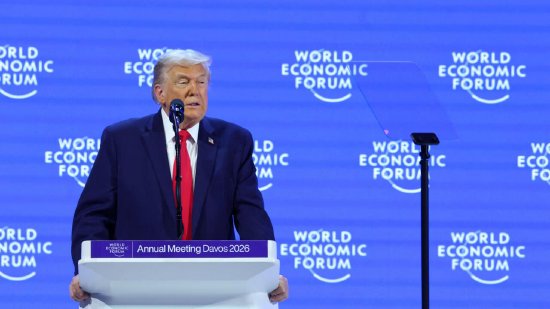
信用卡利率上限

Search documents
纳瓦罗喊话戴蒙:必须下调信用卡利率
Xin Lang Cai Jing· 2026-02-12 15:27
Core Viewpoint - The White House is increasing pressure on JPMorgan Chase CEO Jamie Dimon to impose a cap on credit card interest rates, reflecting President Trump's latest initiative to address affordability issues for the public [1] Group 1: Government Pressure - White House trade advisor Navarro explicitly called for Dimon to lower credit card interest rates, criticizing the high rates of 22%, 25%, and 30% as "robbery" [1] - President Trump is advocating for a one-year plan to set a credit card interest rate cap at 10%, which has faced strong opposition from several major banks and credit card issuers [1] Group 2: Industry Response - Dimon warned that implementing such a cap could lead to an "economic disaster" for the U.S., potentially forcing many lending institutions to tighten consumer credit limits [1]

白宫贸易顾问施压华尔街大行 喊话摩根大通(JPM.US)CEO戴蒙下调信用卡利率
智通财经网· 2026-02-12 15:24
Group 1 - The White House is increasing pressure on JPMorgan Chase CEO Jamie Dimon to lower credit card interest rates, reflecting President Trump's stance on addressing high living costs [1] - White House trade advisor Peter Navarro publicly criticized Dimon, urging him to reduce credit card rates, which currently range from 22% to 30%, stating that such practices harm consumers [1] - Trump has proposed a one-year cap on credit card interest rates at 10%, a suggestion that has faced opposition from major banks and credit card issuers [1] Group 2 - Dimon warned that imposing a rate cap could lead to an "economic disaster" in the U.S. and may force lenders to tighten or eliminate credit limits for consumers [1] - Bank executives indicated that if a rate cap is implemented, consumers with poor credit histories would be the first to lose access to credit cards, pushing them towards higher-cost, riskier alternative financing options [1] - Despite strong opposition from financial institutions, Trump continues to push for price reductions or caps in various sectors, aiming to demonstrate responsiveness to economic pressures ahead of the midterm elections [2]
“Let it go Down,” Says Jim Cramer on Capital One (COF)
Yahoo Finance· 2026-01-31 12:24
Core Viewpoint - Capital One Financial Corporation (NYSE:COF) is currently in the spotlight due to President Trump's proposal to cap credit card interest rates and its recent acquisition of Brex, a corporate card issuer, which has led to mixed reactions from analysts regarding its impact on the company's stock price. Group 1: Recent Developments - President Trump's suggestion to cap credit card interest rates has brought attention to Capital One Financial Corporation [2] - The company announced the acquisition of Brex, which has been described as a significant move to compete directly with American Express [2] - Analysts from BTIG and Wolfe Research have adjusted their price targets for Capital One, citing concerns over earnings dilution and increased marketing and operating expenses following the acquisition [2] Group 2: Analyst Commentary - Jim Cramer praised the Brex acquisition during a conference call, emphasizing the potential of the company and encouraging investors to hold onto their shares despite recent stock price declines [2] - Cramer noted that the CEO Richard Fairbank provided valuable insights into the credit card industry during the call, while also being dismissive of the President's comments [2] - RGA Investment Advisors has added shares of Capital One to their portfolios, highlighting the company's strong digital presence and user experience stemming from past acquisitions [3][4]

美国民众能“减负”吗?——特朗普七大政策构想分析
一瑜中的· 2026-01-27 16:01
Core Viewpoint - The importance of the "Affordability" issue is increasingly prominent as the U.S. enters the midterm election year, with Trump proposing several policies aimed at addressing this concern [2]. Group 1: Proposed Policies - The proposed policies can be categorized into four areas: housing, finance, cost of living, and defense [21]. - In the housing sector, Trump has proposed two measures: directing Fannie Mae and Freddie Mac to purchase $200 billion in mortgage-backed securities (MBS) to lower mortgage rates, and restricting large institutional investors from buying single-family homes to stabilize home prices [21][26]. - In the finance sector, a proposal to set a credit card interest rate cap at 10% has been introduced [22]. - For the cost of living, three measures include issuing tariff dividends, requiring large tech companies to cover their electricity infrastructure costs, and a comprehensive healthcare plan aimed at reducing medical expenses [23][24]. - In defense, a proposal has been made to prohibit defense contractors from stock buybacks and dividends while limiting executive compensation [25]. Group 2: Feasibility of Policies - The feasibility of these policies is assessed based on whether they require congressional legislation, the attitudes of both parties, and predictions from the betting market [27]. - Two of the proposed policies do not require congressional approval and have already begun implementation: directing Fannie Mae and Freddie Mac to purchase MBS, and prohibiting defense contractors from stock buybacks and dividends [29][32]. - The remaining five policies may require congressional legislation, with varying degrees of clarity regarding their implementation paths [29][33][34]. Group 3: Potential Impacts - The potential impacts of the proposed policies are significant, particularly in four areas: 1. Directing Fannie Mae and Freddie Mac to purchase MBS could help narrow mortgage loan spreads, although their holdings represent only about 1.1% of the total MBS market [46][50]. 2. Restricting institutional purchases of homes could affect only about 3% of the market, as large investors hold a small share of single-family rentals [53][59]. 3. The proposed credit card interest rate cap could reduce rates by 11%, but the net interest margin for credit card businesses is only around 9% to 10%, potentially making the business unprofitable [63][65]. 4. The prohibition on dividends and buybacks for defense contractors could impact their financial strategies, as these actions currently represent a significant portion of their market value [17]. Group 4: Future Monitoring Points - Key future monitoring points include the Defense Secretary's review of defense contractors on February 6, the State of the Union address on February 24, the presidential budget proposal in February-March, and potential affordability measures that may be announced during the primary election period from May to August [4].


美国银行、花旗集团考虑发行利率上限为10%的新信用卡
Xin Lang Cai Jing· 2026-01-22 18:05
Core Viewpoint - Major banks, including Bank of America and Citigroup, are exploring options to meet Trump's proposal of capping credit card interest rates at 10% for one year [1][4]. Group 1: Bank Responses - Bank of America and Citigroup are considering launching credit cards with a 10% interest rate as a potential solution to align with Trump's proposal [1][4]. - Bank executives have previously criticized the proposed cap, stating it could lead to reduced credit limits for consumers [2][5]. - Brian Moynihan, CEO of Bank of America, indicated that the 10% cap could suppress consumer spending, but the bank is in communication with the government regarding this issue [3][6]. Group 2: Government Interaction - Trump has expressed intentions to request Congress to implement the interest rate cap, providing financial institutions with clearer guidance on his objectives [2][5]. - Some bank executives have acknowledged Trump's focus on consumer welfare and are working on plans to support government efforts to lower consumer costs [2][5].


特朗普在达沃斯吹捧住房政策措施
Xin Lang Cai Jing· 2026-01-22 15:50
Group 1 - The core policy proposals presented by Trump at the Davos Forum include lowering interest rates [1][2] - Implementation of a one-year cap on credit card interest rates at 10% [1][2] - Restrictions on large investors purchasing single-family homes [1][2] - Mention of utilizing Fannie Mae (FNMA) and Freddie Mac (FMCC) to purchase mortgage-backed securities [1][2]
特朗普达沃斯宣战机构炒房资本,称美国不能变“租房者国家”
Feng Huang Wang· 2026-01-22 12:57
Group 1 - Trump emphasized a series of measures aimed at alleviating housing affordability, asserting that the U.S. will not become a nation of renters [1] - The executive order titled "Stop Wall Street from Competing with Ordinary Homebuyers" was signed, although it does not immediately impose new rules but initiates a multi-step policy process [1] - The White House's National Economic Council Director, Kevin Hassett, indicated that a significant housing policy will be announced soon, highlighting its importance in the upcoming State of the Union address [1] Group 2 - Trump acknowledged that his housing affordability plans would impact Wall Street banks and institutional investors, proposing a permanent ban on institutional investor home purchases [3] - He stated that homes are built for people, not corporations, and expressed a desire to protect the wealth of current homeowners from policy changes [3] - The plan to limit credit card interest rates to 10% was presented as a means to help Americans save for down payments, addressing the issue of rising credit card debt [4] Group 3 - Jamie Dimon, CEO of JPMorgan Chase, warned that capping credit card interest rates could lead to an "economic disaster" for the U.S. [4]
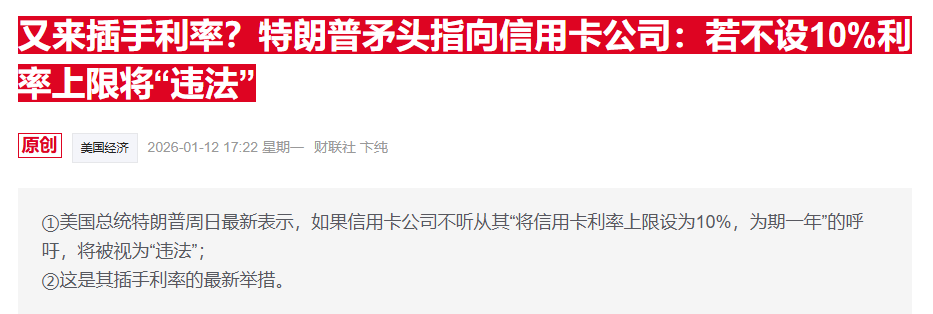
特朗普取消对欧关税威胁!美股收高!
证券时报· 2026-01-22 00:12
Core Viewpoint - The article discusses the positive impact of President Trump's decision to cancel tariffs on Europe related to Greenland, which led to a rebound in U.S. stock markets and a shift in investor sentiment towards growth stocks [1][4]. Market Performance - The Dow Jones Industrial Average rose by 588.64 points, or 1.21%, closing at 49,077.23 points; the Nasdaq increased by 270.50 points, or 1.18%, to 23,224.82 points; and the S&P 500 gained 78.76 points, or 1.16%, ending at 6,875.62 points [2]. Tariff Cancellation - Trump announced the cancellation of a planned 10% tariff on goods from eight NATO member countries, which was set to take effect on February 1, due to a productive discussion with NATO Secretary General Mark Rutte [3][4]. Investor Sentiment - Following the tariff suspension, there was a reversal of the "sell America" trade, with investors returning to favored growth stocks, particularly in the technology sector, including Nvidia and AMD [4]. Financial Sector Reaction - Bank stocks saw an uptick, with Citigroup and First Capital Financial each rising by approximately 1% after Trump's comments regarding a proposed 10% cap on credit card interest rates, despite uncertainty about legislative support [4]. Intel's Contract - Intel's stock surged by 11.72% after winning a significant contract from the U.S. Department of Defense, with a maximum limit of $151 billion for the SHIELD project, which is expected to drive strong demand for its server chips [9][10]. Sector Performance - The financial sector generally saw gains, with regional banks rising over 3% and major banks like American Express and UBS increasing by over 2% [11]. - Energy stocks also performed well, with Petrobras rising over 5% and Apache Oil increasing over 4% [11]. - Chinese concept stocks experienced a positive trend, with the Nasdaq Golden Dragon China Index rising by 2.21%, led by Baidu and Bilibili [11].

全球市场深夜暴涨!特朗普,改口了
Zhong Guo Ji Jin Bao· 2026-01-21 22:34
Market Overview - The U.S. stock market saw significant gains, with the Dow Jones up 1.21% to 49,077.23 points, the S&P 500 up 1.16% to 6,875.62 points, and the Nasdaq up 1.18% to 23,224.82 points, following President Trump's remarks at the World Economic Forum [1] - Concerns over Trump's previous comments regarding the military acquisition of Greenland were alleviated, leading to a positive market response [1] Economic Commentary - Trump emphasized that the U.S. has not received any returns for its financial and military contributions to NATO, stating he would not resort to military force regarding Greenland, which reassured investors [1][4] - The market reacted positively to Trump's lack of reiteration on threats of tariffs against Europe and military actions, indicating a potential easing of tensions [4] Sector Performance - Technology stocks surged, with Intel rising by 10.48% to $53.63 and AMD increasing by 8.33% to $251.25, reflecting strong investor confidence in the sector [5][6] - The overall performance of the Nasdaq China Golden Dragon Index rose approximately 2%, suggesting a favorable outlook for Chinese stocks in the upcoming trading sessions [6][8]
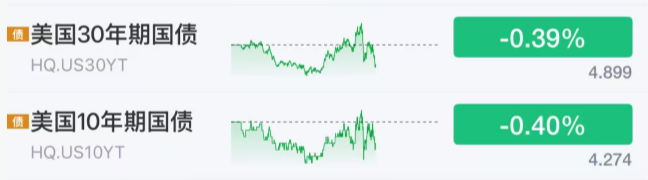
特朗普在达沃斯就美国经济发表了哪些言论
Xin Lang Cai Jing· 2026-01-21 21:13
Trade and Tariff Policy - The trade and tariff policies have led to a surge in factory construction and favorable trade agreements with multiple countries. However, overall factory spending is projected to decline in the first eight months of 2025 from its peak in 2024. Since the announcement of the "liberation day" tariffs in April, manufacturing jobs in the U.S. have been decreasing monthly. Tariffs have reduced the monthly trade deficit by 77% without causing inflation, with the trade deficit in October reaching its lowest level since 2009, down 39% from September. Inflation has cooled, but prices continue to rise [2][13]. Tax Reform - The economic policy enacted this summer as part of a major tax and spending plan includes tax cuts, tips tax reductions, and a permanent extension of 100% bonus depreciation for eligible properties, which is expected to encourage production relocation to the U.S. The majority of tax cut benefits will flow to middle and upper-income households [3][14]. Housing Affordability - The statement emphasizes that homes are built for people, not corporations, asserting that the U.S. will not become a nation of renters. Following an executive order targeting Wall Street buyers for driving up housing costs, there is a call for Congress to pass a ban on large institutional investors purchasing single-family homes [4][16]. Credit Card Rates - There is a renewed call for Congress to set a temporary cap of 10% on credit card interest rates for one year. The banking industry opposes this idea, arguing it would force them to significantly tighten credit support. Concerns have been raised about potential economic disaster if such a cap is implemented, although pilot programs are suggested in Vermont and Massachusetts, home states of supportive senators [5][17]. Gas Prices - Since returning to the White House, there has been a focus on lowering gas prices, with reports indicating that in many states, prices have reached or fallen below $1.99 per gallon. The national average gas price is currently $2.83 per gallon, down from $3.13 a year ago [6][7][18]. Energy Policy - There is a strong criticism of wind power, with a statement indicating that the U.S. is significantly developing nuclear energy [8][19]. Drug Prices - The healthcare policy aims to reduce drug costs in the U.S. by 90% or more, depending on the calculation method. A proposal known as "most favored nation" pricing is mentioned, which would allow the U.S. to purchase drugs at lower prices paid by other countries. An executive order from May aims to align U.S. drug prices with those of comparable developed countries [9][20]. Defense Industry - Efforts to restrict stock buybacks by defense companies are reiterated, with the intention that these funds will be used to build manufacturing plants to accelerate military equipment production [10][21].