防御性布局

Search documents
大摩展望美国消费金融财报季:防御仍是主线,特朗普信用卡限息提议增添不确定性
智通财经网· 2026-01-13 09:33
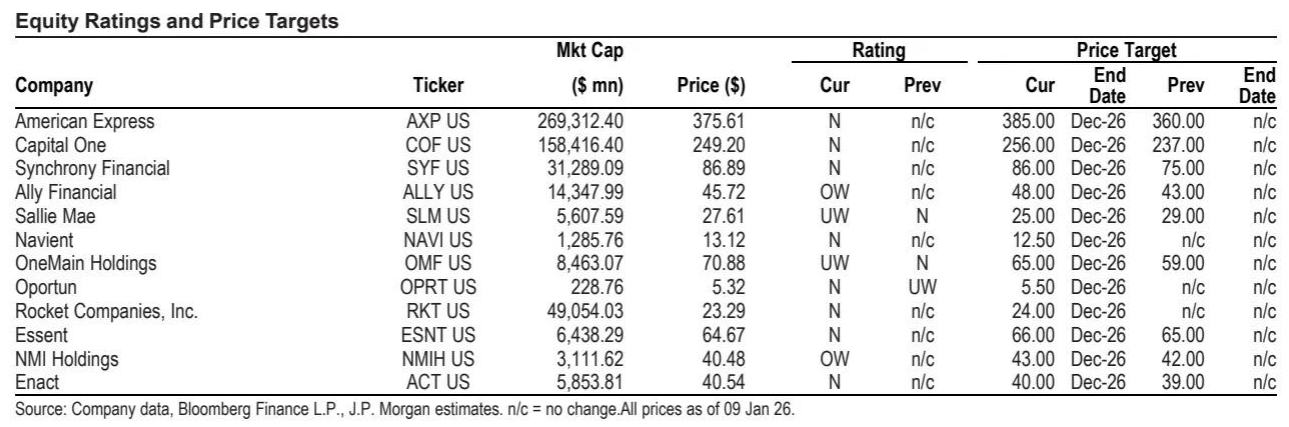
Group 1 - The core viewpoint of the reports indicates that the financial sector is advised to maintain a defensive posture due to anticipated impacts from inflation and labor market dynamics on credit performance and consumer confidence [1] - Morgan Stanley acknowledges that while target stock prices have been steadily raised since the beginning of the year, earnings expectations have largely remained unchanged, reflecting a conservative outlook [1] - The report highlights a significant proposal from Trump to limit credit card interest rates to 10% for one year, which could fundamentally reshape the credit card industry and significantly reduce profitability for issuers [1] Group 2 - In December, U.S. consumer spending growth showed signs of slowing, with a year-over-year increase of 2.4%, down from 3.7% in November, indicating a divergence in spending patterns between high-income and low-income households [2] - The labor market is characterized by low hiring and low layoffs, with non-farm payrolls increasing by only 50,000 in December, which is below expectations, while the unemployment rate decreased from 4.6% to 4.4% [2] - Despite geopolitical news, the direct impact on consumer finance remains limited, with Morgan Stanley expecting inflation and labor market conditions to continue being focal points for investors and operators [3] Group 3 - Morgan Stanley maintains a selective and rigorous approach in evaluating the financial sector, considering factors such as adequate valuations, uneven credit trends, and execution risks within the rating spectrum [3] - The report includes specific ratings and target price adjustments for various financial stocks, reflecting a balanced and differentiated outlook based on current market dynamics [3]

调整观望?
第一财经· 2025-11-19 11:28
Market Overview - The market experienced a broad decline with 1,196 stocks rising and 4,173 stocks falling, indicating a general bearish trend despite some active sectors like gold and aquaculture showing strength [4] - The trading volume in the two markets decreased significantly to 5 trillion yuan, down 10.39%, reflecting a cautious sentiment among investors [5] Capital Flow - There was a net outflow of funds from major players, while retail investors showed a net inflow, indicating a divergence in investment behavior [6] - Institutional investors are adopting a defensive strategy, focusing on sectors like banking, communication equipment, electricity, and food and beverage, while moving funds from high-valuation sectors to low-valuation ones [6] Investor Sentiment - Retail investor sentiment is cautious, with 75.85% of investors adopting a "watch and wait" approach, indicating a preference for selective stock picking rather than broad market exposure [7] - The sentiment towards the next trading day is mixed, with 55.35% of investors expecting a rise and 44.65% expecting a decline [12]

腾讯音乐买下喜马拉雅,却买不到"声音的春天"
3 6 Ke· 2025-06-17 00:24
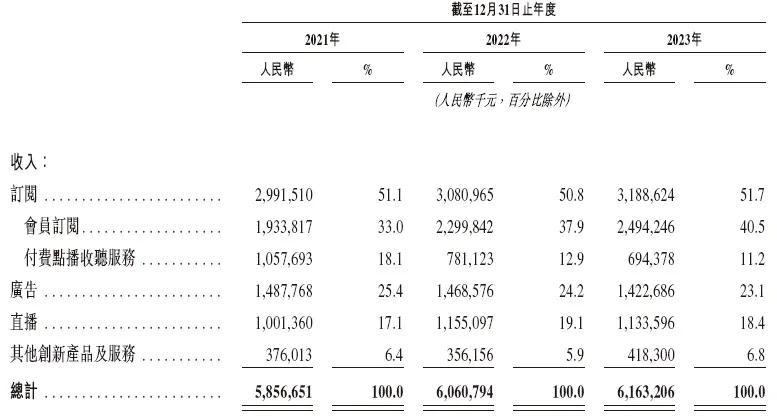
Core Viewpoint - Tencent Music Entertainment Group (TME) announced the acquisition of Ximalaya for approximately 20.5 billion RMB (1.26 billion USD), which includes 12.6 billion RMB in cash and up to 5.1986% of TME's shares [1][2]. Group 1: Acquisition Details - The acquisition was communicated internally at Ximalaya, where founder Yu Jianjun expressed emotional distress despite the financial gain, indicating a sense of loss for the company's future [2][4]. - Yu Jianjun holds 10.61% of Ximalaya through Xima Holdings Limited, translating to over 2 billion RMB in cash-out from the acquisition [2][3]. Group 2: Financial Performance - Ximalaya has achieved profitability for nine consecutive months as of 2023, with an average monthly active user base of 303 million, capturing 25% of the online audio revenue market [3][10]. - Revenue figures from 2021 to 2023 show modest growth: 5.857 billion RMB in 2021, 6.061 billion RMB in 2022, and 6.463 billion RMB in 2023 [7][9]. - Adjusted net profits improved from -718 million RMB in 2021 to 2.24 billion RMB in 2023, largely due to cost-cutting measures [8]. Group 3: Revenue Challenges - Ximalaya's revenue model includes subscriptions, advertising, and live streaming, but faces challenges in monetization, with a low paid user rate of 5.3% compared to competitors [10][12]. - The company has seen a decline in membership subscription growth from 18.9% in 2021 to 8.4% in 2023, with paid content revenue experiencing negative growth for two consecutive years [11]. Group 4: Market Context - The broader content platform industry faces similar monetization challenges, with competitors like iQIYI and Zhihu also struggling to achieve consistent profitability [12][14]. - Ximalaya's valuation has significantly decreased from 4.3 billion USD in 2021 to approximately 2.85 billion USD at the time of the acquisition [15][16]. Group 5: Strategic Implications - The acquisition is viewed as a defensive move for Tencent Music, which is experiencing a decline in monthly active users [18][19]. - The integration of Ximalaya's long audio content with Tencent's music services presents both opportunities and challenges, particularly in aligning different content production models [22][23]. - The acquisition may provide Ximalaya with a capital exit strategy while Tencent Music seeks to enhance its market presence in the audio sector [26].