
华东师范大学出版社

Search documents
当父母也要“考试”?100组家庭加入上海“家+书屋”项目
Xin Lang Cai Jing· 2025-11-17 00:51
Core Insights - The article discusses the launch of the "Suhua Good Family · Home + Growth" family education project in Putuo District, which aims to enhance family education quality through collaboration among various stakeholders, including local government, universities, and community resources [1][10] Group 1: Project Overview - The project is initiated by the Putuo District Women's Federation and aims to create a platform for sharing quality family education resources, addressing the needs of families in a competitive learning environment [1][10] - The "Home + Bookstore" initiative, part of this project, has expanded to include 238 reading venues across Shanghai, focusing on themes of parent-child growth, parental improvement, and family happiness [2][10] Group 2: AI Empowerment and Training - The "AI Empowerment Family Education Gold Seed Smart Parent Growth Plan" utilizes AI technology to enhance family education, combining traditional cultural elements with modern parenting concepts [5][10] - The training program consists of a 6-week course covering essential parenting skills, including communication techniques and child psychological development, with a focus on practical application [5][7] Group 3: Community Engagement and Certification - The project aims to recruit 100 families as the first cohort of participants, utilizing a hybrid model of online and offline training to ensure comprehensive engagement [7][10] - Participants who complete the program will receive a "Parenting Education Practice Instructor" certificate, promoting the development of knowledgeable community volunteers in family education [7][10]


上海书展的“含书量”下降了?
Xin Lang Cai Jing· 2025-08-21 00:21
Core Insights - The 21st Shanghai Book Fair has evolved from a book-centric event to a diverse cultural venue, showcasing various products beyond books, such as canvas bags, perfumes, and collaborative merchandise [4][14] - The event attracted over 382,000 visitors, a 28.4% increase year-on-year, with total book sales reaching 64.72 million yuan, up 31.6%, and cultural product sales exceeding 10 million yuan, marking a 100.1% growth [4][8] - The fair generated approximately 181 million yuan in related consumption, with significant increases in foot traffic and retail spending in the surrounding areas [4][8] Book Sales Trends - New sales methods, such as "book blind boxes," have gained popularity, allowing readers to discover unfamiliar authors through a surprise purchase experience [8] - The influence of film adaptations on book sales remains strong, with titles linked to popular media seeing increased demand [8][9] - Educational books continue to dominate sales, particularly during the back-to-school season, with notable growth in both supplementary and student-related materials [9][10] Product Innovations - The demand for smaller book formats is rising, with publishers introducing compact editions to cater to fragmented reading habits [10][12] - Cultural products have become a focal point, with many readers showing interest in merchandise rather than books, prompting a reevaluation of the role of cultural products in book fairs [14][15] Cultural Product Development - The evolution of cultural products is categorized into three phases, with the current "3.0" stage focusing on creating independent cultural products that reflect literary themes and concepts [15][16] - Emotional value is increasingly important in cultural product design, resonating with contemporary themes of personal well-being and mental health [16][18] - Publishers are exploring direct promotional strategies between cultural products and books, enhancing sales through cross-marketing [19][21] Market Dynamics - The perception that cultural products overshadow book sales may not reflect the true interest in books, as many purchases occur online after the event [23][24] - The pricing mechanism for books can deter on-site purchases, leading readers to seek better deals through other channels [24]
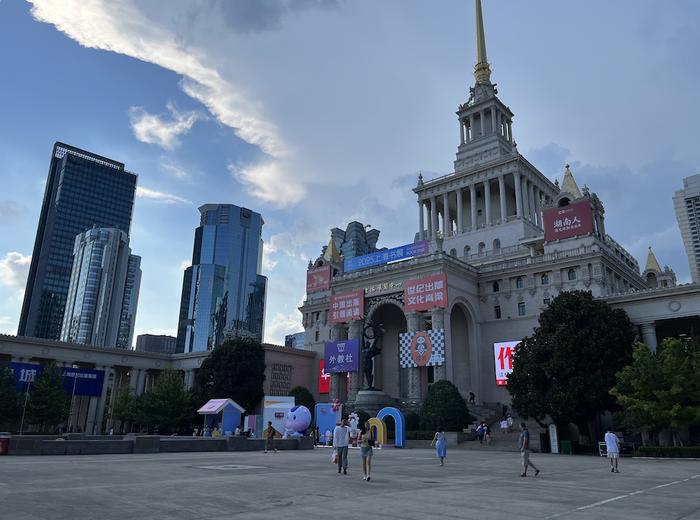
上海书展上的图书、文创与“含书量”之争
Xin Lang Cai Jing· 2025-08-20 04:21
Group 1 - The 21st Shanghai Book Fair attracted over 382,000 visitors, a year-on-year increase of 28.4%, with total book sales reaching 64.727 million yuan, up 31.6% [1] - Sales of cultural and creative products exceeded 10 million yuan for the first time, showing a remarkable growth of 100.1% [1] - The fair generated approximately 181 million yuan in related consumption, with significant increases in foot traffic and retail dining spending in the surrounding areas [1] Group 2 - New sales methods emerged at the fair, including "book blind boxes," which offer readers a surprise element in their purchases, enhancing the reading experience [4] - The influence of film adaptations on book sales remains strong, with titles linked to popular media experiencing high demand and even selling out [4][6] - Educational books continue to be a major sales driver, particularly during the back-to-school season, with notable sales growth compared to previous years [6] Group 3 - The trend towards smaller book formats is rising, catering to the demand for more portable reading options [7][9] - Cultural and creative products have gained significant attention, with many readers shifting their focus from books to related merchandise, leading to a re-evaluation of the book fair's purpose [11][13] - The evolution of cultural products is categorized into three phases, with the current phase emphasizing the integration of literary themes into standalone creative products [15] Group 4 - The popularity of canvas bags and other cultural products is attributed to their low production costs and practical use, making them accessible to a wider audience [17] - The relationship between cultural products and book sales is complex, with many readers purchasing creative items first and then exploring the related literature [18][22] - The book fair serves as a platform for showcasing books, but actual purchasing decisions often occur off-site due to pricing mechanisms and discount transparency issues [22]
第三十一届图博会达成中外版权贸易协议2826项--版权护航图书“扬帆出海”
Zhong Guo Chan Ye Jing Ji Xin Xi Wang· 2025-07-01 23:50
Core Insights - The 31st Beijing International Book Fair concluded with over 1,700 exhibitors from 80 countries and regions, showcasing 220,000 types of books and achieving 2,826 international copyright trade agreements [1] Group 1: Exhibition Highlights - The fair featured a prominent display of quality publications, including themed books and ancient texts, with over 2,400 titles showcased in six major sections [2] - Shanghai organized nearly 30 publishers to exhibit over 2,000 titles, highlighting red culture and award-winning publications, demonstrating the city's achievements in copyright export [3] Group 2: International Cooperation - A signing ceremony for the "China-Azerbaijan Classic Works Translation" project took place, granting rights for translating and publishing significant Chinese literary works in Azerbaijani [4] - Beijing's exhibition area displayed over 3,500 titles and established over 350 output intentions with nearly 40 foreign publishing institutions [5] Group 3: Copyright Trade Agreements - The fair resulted in 2,826 international copyright trade agreements, with 1,955 related to copyright output and 753 for imports, indicating significant progress in promoting Chinese literature abroad [7] - Shanghai's initiatives to support copyright export have led to over 200 projects funded since 2013, with financial support exceeding 8 million yuan [7] Group 4: Literary Promotion - The China Writers Association has been actively promoting copyright output, signing over 160 translation projects covering 29 languages, enhancing the global reach of Chinese literature [8] - Notable author Mai Jia participated in a dialogue with international scholars and publishers, emphasizing the importance of literary communication in bridging cultural gaps [8]