
康惠制药

Search documents
中药板块9月25日跌0.36%,恩威医药领跌,主力资金净流出4.62亿元
Zheng Xing Xing Ye Ri Bao· 2025-09-25 08:37
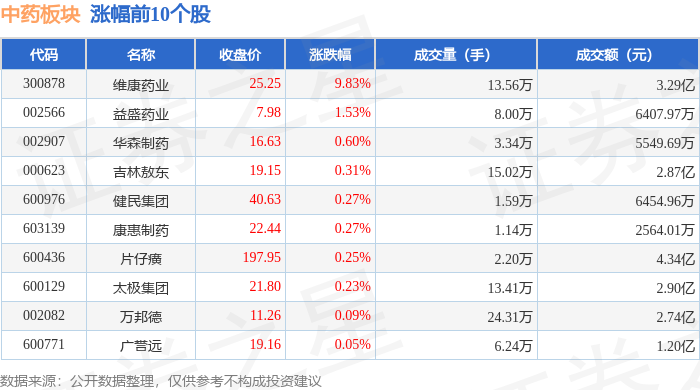
Market Overview - The Chinese medicine sector experienced a decline of 0.36% on September 25, with Enwei Pharmaceutical leading the drop [1] - The Shanghai Composite Index closed at 3853.3, down 0.01%, while the Shenzhen Component Index closed at 13445.9, up 0.67% [1] Stock Performance - Notable gainers included: - Weikang Pharmaceutical, closing at 25.25 with a rise of 9.83% and a trading volume of 135,600 shares, totaling 329 million yuan [1] - Yisheng Pharmaceutical, closing at 7.98 with a rise of 1.53% and a trading volume of 80,000 shares, totaling 6.41 million yuan [1] - Major decliners included: - Enwei Pharmaceutical, closing at 32.25 with a drop of 3.09% and a trading volume of 8,950 shares, totaling 2.91 million yuan [2] - Zhendong Pharmaceutical, closing at 6.85 with a drop of 2.97% and a trading volume of 508,400 shares [2] Capital Flow - The Chinese medicine sector saw a net outflow of 462 million yuan from institutional investors, while retail investors contributed a net inflow of 315 million yuan [2] - The table of capital flow indicates that: - Wanbangde had a net inflow of 23.44 million yuan from institutional investors, but a net outflow of 29.29 million yuan from retail investors [3] - Jilin Aodong experienced a net inflow of 21.10 million yuan from institutional investors, with outflows from both retail and speculative investors [3]




康惠制药涨2.01%,成交额825.62万元,主力资金净流入29.59万元
Xin Lang Cai Jing· 2025-09-24 02:12
Core Insights - Kanghui Pharmaceutical's stock price increased by 2.01% on September 24, reaching 22.33 CNY per share, with a total market capitalization of 2.23 billion CNY [1] - The company has experienced a year-to-date stock price increase of 55.50%, but has seen a decline of 5.66% over the last five trading days [2] Financial Performance - For the first half of 2025, Kanghui Pharmaceutical reported a revenue of 248 million CNY, a year-on-year decrease of 6.83%, and a net profit attributable to shareholders of -40.20 million CNY, a significant decline of 362.01% [2] - The company has not distributed any dividends in the last three years, with a total payout of 54.23 million CNY since its A-share listing [3] Shareholder Information - As of June 30, the number of shareholders increased by 37.26% to 12,000, while the average number of tradable shares per shareholder decreased by 27.14% to 8,326 shares [2]

“湖南医药第一股”启迪药业正式易主
Xin Lang Cai Jing· 2025-09-23 12:49
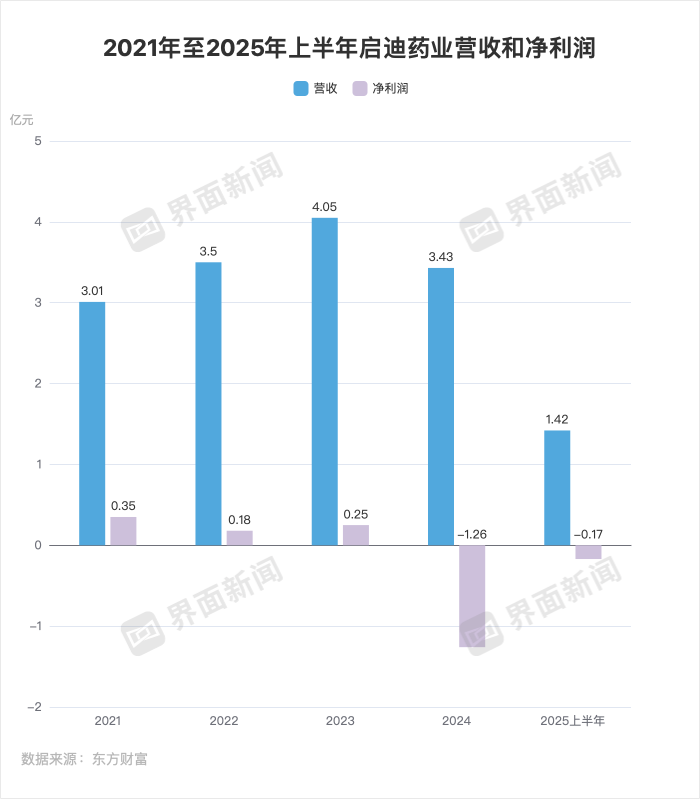
Core Viewpoint - The management and shareholder changes at Qidi Pharmaceutical are closely linked to the recent shift in control, marking a significant transition in the company's governance and strategic direction [2][4]. Group 1: Management Changes - Qidi Pharmaceutical's President Feng Xue and Vice President Cai Jun have resigned, with no future roles in the company [1]. - The company's chairman, Jiao Qisen, will remain in other internal positions despite stepping down as chairman [1]. - New board members from Hunan Sailoxian, the new controlling shareholder, have been appointed, indicating a shift in management focus [1]. Group 2: Shareholder Changes - Hunan Sailoxian acquired a 24.47% stake in Qidi Pharmaceutical for approximately 1 billion yuan, marking a significant change in ownership [4][5]. - Prior to this change, Qidi Pharmaceutical was primarily controlled by Qidi Technology Service Co., which held 24.47% of the shares [3][5]. - The acquisition price of 17.18 yuan per share was notably higher than the market price at the time of the transaction [5]. Group 3: Company History and Evolution - Qidi Pharmaceutical has undergone multiple name changes and ownership transitions since its inception as Hengyang Traditional Chinese Medicine Industry Co. in 1996 [2][3]. - The company has changed its name several times, reflecting its evolving business strategy and ownership structure [2][3]. Group 4: Financial Performance - Qidi Pharmaceutical's revenue and net profit have shown fluctuations, with recent figures indicating a decline in profitability [6][8]. - The company reported revenues of 3.01 billion yuan in 2021, with a net profit of 354.4 million yuan, but faced losses in subsequent years [8].

康惠制药:公司为控股子公司提供担保余额约为1.11亿元
Mei Ri Jing Ji Xin Wen· 2025-09-23 11:10
每经AI快讯,康惠制药9月23日晚间发布公告称,截至本公告披露日,公司为控股子公司提供担保余额 约为1.11亿元,控股子公司为其全资子公司提供的担保余额为280万元,公司及控股子公司提供担保总 额占公司最近一期经审计归母净资产的13.26%。 每经头条(nbdtoutiao)——报价太低遭严防,投标企业还得"解释清楚",一场国家组织的大型采购, 为何引发全行业关注 (记者 曾健辉) ...
康惠制药(603139) - 康惠制药关于为控股子公司提供担保的公告
2025-09-23 10:45
证券代码:603139 证券简称:康惠制药 公告编号:2025-063 陕西康惠制药股份有限公司 关于为控股子公司提供担保的公告 本公司董事会及全体董事保证本公告内容不存在任何虚假记载、误导性陈述 或者重大遗漏,并对其内容的真实性、准确性和完整性承担法律责任。 重要内容提示: 担保对象及基本情况 | | | 被担保人名称 | 团股份有限公司 | 公司控股子公司,四川春盛药业集 | | --- | --- | --- | --- | --- | | | | 本次担保金额 | 500 万元 | | | 担 象 | 保 对 | 实际为其提供的担保余额 | 3,380 | 万元(含本次担保) | | | | 是否在前期预计额度内 | 是 □否 | □不适用:_________ | | | | 本次担保是否有反担保 | □否 是 | □不适用:_________ | 累计担保情况 | 对外担保逾期的累计金额(万元) | 0 | | --- | --- | | 截至本公告日上市公司及其控股子公司对外担保总额(万元) | 11,366.40 | | 对外担保总额占上市公司最近一期经审计归母净资产的比例(%) | 13. ...
康惠制药(603139) - 康惠制药公司证券简称变更实施公告
2025-09-23 10:45
证券代码:603139 证券简称:康惠制药 公告编号:2025-062 陕西康惠制药股份有限公司 证券简称变更实施公告 本公司董事会及全体董事保证本公告内容不存在任何虚假记载、误导性陈述 或者重大遗漏,并对其内容的真实性、准确性和完整性承担法律责任。 三、 公司证券简称变更的实施 经公司申请,并经上海证券交易所办理,公司证券简称将自 2025 年 9 月 29 日起由"康惠制药"变更为"康惠股份",公司证券代码"603139"保持不变。 重要内容提示: 一、 公司董事会审议变更证券简称的情况 陕西康惠制药股份有限公司(以下简称"公司") 于 2025 年 9 月 16 日召开 第六届董事会第二次会议,审议通过了《关于变更公司证券简称的议案》,公司董 事会同意将公司证券简称由"康惠制药"变更为"康惠股份",公司证券代码"603139" 保持不变。 二、 公司证券简称变更的原因 根据公司长期发展规划,公司拟将证券简称由"康惠制药"变更为"康惠股 份",新证券简称简洁清晰,在保留"康惠"这一核心品牌标识的同时,新增"股 份"二字有助于市场更直观理解公司发展定位,有助于投资者准确把握公司核心 价值与发展方向。 本次变 ...
康惠制药(603139.SH):证券简称将自9月29日起变更为“康惠股份”
Ge Long Hui A P P· 2025-09-23 10:38
Group 1 - The company announced a change in its stock name from "康惠制药" to "康惠股份" effective from September 29, 2025, while the stock code "603139" will remain unchanged [1]
康惠制药:证券简称变更为“康惠股份”
Xin Lang Cai Jing· 2025-09-23 10:28
Core Viewpoint - The company will change its stock abbreviation from "康惠制药" to "康惠股份" effective September 29, 2025, while the stock code "603139" remains unchanged. This change aligns with the company's long-term development strategy and aims to enhance market understanding of its positioning, but it will not significantly impact current operational performance [1]. Group 1 - The abbreviation change is part of the company's long-term development plan [1] - The change is expected to help the market better understand the company's development positioning [1] - The change complies with relevant laws, regulations, and the company's articles of association [1]
中药板块9月22日跌0.57%,众生药业领跌,主力资金净流出4.29亿元
Zheng Xing Xing Ye Ri Bao· 2025-09-22 08:47
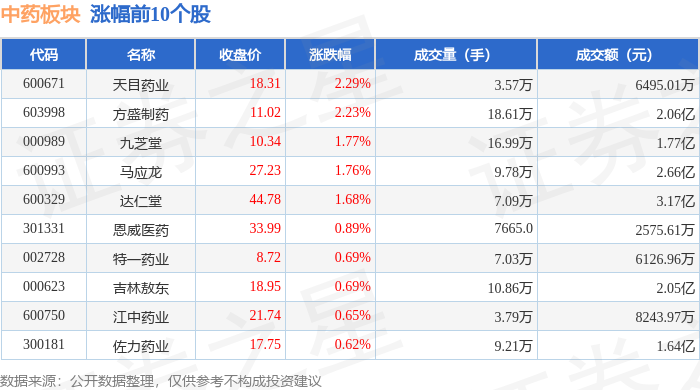
Market Overview - The Chinese medicine sector experienced a decline of 0.57% on September 22, with Zhongsheng Pharmaceutical leading the drop [1] - The Shanghai Composite Index closed at 3828.58, up 0.22%, while the Shenzhen Component Index closed at 13157.97, up 0.67% [1] Stock Performance - Notable gainers in the Chinese medicine sector included: - Tianmu Pharmaceutical: closed at 18.31, up 2.29% with a trading volume of 35,700 shares [1] - Fangsheng Pharmaceutical: closed at 11.02, up 2.23% with a trading volume of 186,100 shares [1] - Jiuzi Tang: closed at 10.34, up 1.77% with a trading volume of 169,900 shares [1] - Conversely, Zhongsheng Pharmaceutical saw a significant decline, closing at 18.52, down 6.28% with a trading volume of 974,000 shares [2] Capital Flow - The Chinese medicine sector experienced a net outflow of 429 million yuan from institutional investors, while retail investors saw a net inflow of 392 million yuan [2] - The overall capital flow indicates a mixed sentiment, with institutional investors pulling back while retail investors remained active [2] Individual Stock Capital Flow - Key stocks with notable capital flow include: - Zhendong Pharmaceutical: net inflow of 31.47 million yuan from institutional investors [3] - Daren Tang: net inflow of 27.08 million yuan from institutional investors [3] - Jiuzi Tang: net inflow of 18.17 million yuan from institutional investors [3] - Stocks like Daren Tang and Jiuzi Tang experienced negative net inflows from retail investors, indicating a divergence in investor sentiment [3]

科技赋能“防恶作剧”校用产品? 开学季消费热潮下 儿童指纹水杯成“爆款”
Mei Ri Shang Bao· 2025-09-19 07:04
Core Viewpoint - The rise of fingerprint recognition children's water bottles has become a popular trend during the back-to-school season, driven by parents' concerns about safety and preventing school pranks [1][2]. Group 1: Market Trends - Fingerprint water bottles have gained significant popularity, ranking first in sales on platforms like Tmall, with a single model selling over 20,000 units since September [1]. - The price range for fingerprint water bottles is between 200 to 400 yuan, which is two to three times higher than that of regular plastic or insulated bottles [2]. - Major brands in the market include established names like Fuguang and Chenguang, as well as new entrants like MIKAPU, focusing specifically on this niche [2]. Group 2: Product Features - Fingerprint water bottles are designed with features such as temperature display, drinking record tracking, and Bluetooth connectivity, differentiating them from standard water bottles [2]. - The materials used in fingerprint water bottles are similar to regular ones, primarily food-grade 316 stainless steel and food-grade silicone for the lid [2]. - Some models include smart chips for high sensitivity, requiring fingerprint recognition to open, and offer real-time monitoring of drinking habits through connected apps [2]. Group 3: Consumer Sentiment - While these products are popular, some parents view them as an "intelligence tax," expressing concerns about potential usability issues, such as difficulty in opening due to sweaty fingers or forgetting to charge the device [3]. - A study indicated that children's fingerprints may not be fully developed until ages 6-12, which could affect the effectiveness of fingerprint recognition [3]. Group 4: Industry Insights - Industry experts suggest that the utility of fingerprint water bottles should be evaluated based on the specific context, such as for older students in communal living situations where mix-ups are more likely [4]. - For younger children, traditional methods like labeling may be more practical due to potential issues with fingerprint recognition [4]. - The ongoing development of such products reflects parents' heightened concern for their children's safety, but experts emphasize the importance of practicality and reliability over reliance on technology alone [4].