益海嘉里金龙鱼

Search documents
近1000亿!这位华侨企业家用37年证明:投资中国,就是投资未来
Jin Rong Jie· 2025-12-23 06:55
Core Viewpoint - The commitment to invest in China is not merely a slogan but is backed by substantial long-term investments, exemplified by the nearly 100 billion yuan invested by the company over 37 years [1]. Group 1: Investment Strategy - The company has invested nearly 100 billion yuan in China, starting from its first factory in Shenzhen in 1988, demonstrating a long-term commitment to the Chinese market [1]. - The company anticipates that even with a GDP growth rate of around 5%, China's per capita GDP will double in the next 14 years, indicating significant market potential [1]. - The shift in consumer demand from basic needs to health and quality food products aligns with the company's strategic transition from traditional grain and oil processing to health-oriented food products [1]. Group 2: Business Environment - The improved business environment in China, characterized by market-oriented reforms and high-quality governance, has bolstered the company's confidence in future investments [2]. - The company's investments in China have exceeded the total of the previous 30 years by more than double in the last five years, reflecting a strong commitment to the market [2]. - Data from the Ministry of Commerce indicates a significant increase in foreign investment in China, with countries like Switzerland, UAE, and the UK showing growth rates of 67%, 47.6%, and 19.3% respectively [2]. Group 3: Dual Development Strategy - The company employs a dual strategy of "deepening within China" and "linking outward," focusing on both domestic market growth and international collaboration [4]. - Future investments will target four main areas: upgrading traditional grain production, expanding a national central kitchen network, developing functional foods under the brand "Jinlongyu Fengyitang," and exploring deep processing and healthcare projects [4]. - The company aims to leverage its operational efficiency and innovation gained in China to support global business and assist Chinese food companies in international markets [4]. Group 4: Commitment to Long-term Growth - The company emphasizes its role as a witness, participant, and beneficiary of China's reform and opening-up, pledging to continue its deep engagement in the Chinese market [5]. - The company aims to contribute to high-quality industry development, enhance the quality of life for consumers, and participate in the country's high-level opening-up [5].
新加坡丰益国际调整风险委 郭孔丰卸任 杨荣文加入
Zhong Guo Jin Rong Xin Xi Wang· 2025-12-01 13:03
Core Viewpoint - Wilmar International announced the resignation of its Chairman, Kuok Khoon Hong, from the Risk Management Committee and the Sustainability Committee, aiming to enhance the board's independent oversight mechanism amid significant legal challenges faced by the company [1]. Group 1: Corporate Governance - The company stated that the Risk Management Committee should be composed entirely of independent directors to strengthen objective supervision in risk matters [1]. - Former Singapore Foreign Minister, George Yeo, and independent director, Su Jin De, have been appointed to the aforementioned committees [1]. Group 2: Legal Challenges - Wilmar's subsidiary, Guangzhou Yihai, was recently convicted of contract fraud and ordered to compensate Anhui Huawen for losses amounting to 1.881 billion RMB [1]. - Wilmar International and its subsidiary, Yihai Kerry Golden Dragon Fish, have expressed their intention to appeal the judgment [1]. Group 3: Market Performance - As of December 1, Wilmar International's stock price closed at 3.23 Singapore dollars, reflecting a decrease of 0.31% [1].

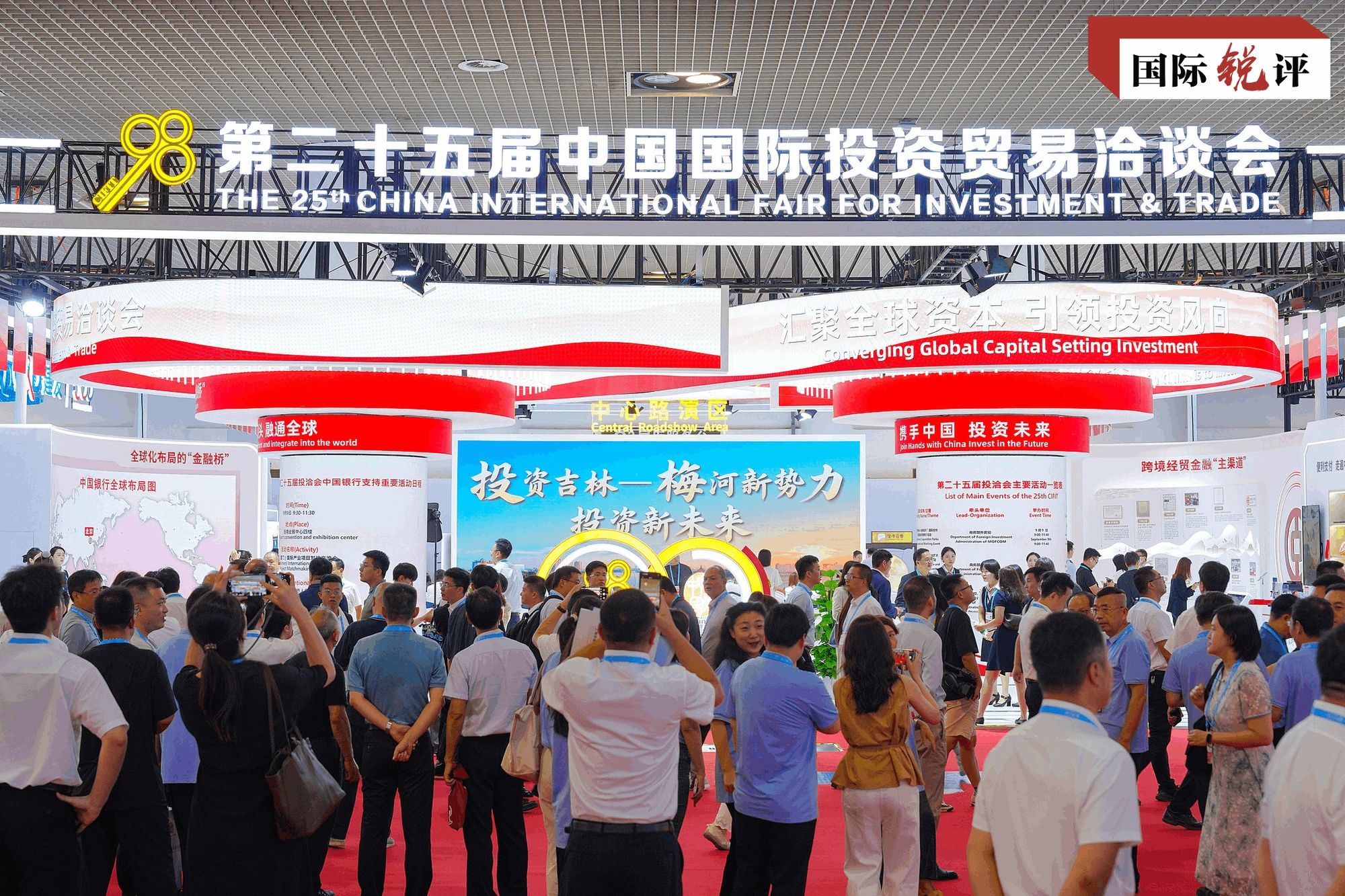
国际锐评丨投资未来!外资说要在中国做“长跑者”
Yang Shi Xin Wen Ke Hu Duan· 2025-09-12 13:30
Core Insights - The 25th China International Investment Trade Fair (CIFIT) highlighted the importance of long-term investment strategies in China, with multinational executives emphasizing the need for innovation to keep pace with China's high-quality development [1][3][4] Group 1: Investment Opportunities - CIFIT attracted over 1,100 government and business delegations from 123 countries and regions, resulting in 1,154 signed investment projects with a total planned investment of 644 billion RMB [1] - The theme of this year's CIFIT, "Join Hands with China, Invest in the Future," resonated strongly with participants, particularly in the context of rising protectionism and global economic uncertainty [3] - China is projected to attract over 100 billion USD in foreign investment for 15 consecutive years, maintaining its position as a leading global investment destination [3] Group 2: Market Potential - The transformation and upgrading of China's large-scale market are releasing significant potential, particularly in sectors like deep processing of grain and oil, and the health industry, driven by rising consumer income and demand for high-quality living [4] - Saudi Aramco's downstream business considers China a key part of its global strategy, with the Chinese market accounting for 40% of its global chemical sales [4] Group 3: Innovation and Collaboration - Foreign companies are increasingly investing in new productive capacities in China, fostering a collaborative innovation environment with local firms [4] - The automotive industry in China is experiencing rapid innovation, with significant breakthroughs occurring every six months, prompting companies like ZF Group to invest in new facilities approximately every ten months [4] - The medical device sector is expected to see explosive growth due to China's support for high-quality pharmaceutical development, with companies like Danaher planning to enhance local innovation through investments and partnerships [4][6] Group 4: Long-term Commitment - Executives from multinational companies emphasize the importance of "certainty" in China's expanding openness, which provides new momentum for business development [6] - The profitability of foreign-funded industrial enterprises in China is higher than the national average, with a revenue profit margin of 6.6% for foreign-funded firms compared to 5.4% for all industrial enterprises [7] - Companies are increasingly accelerating their investments in China, with notable examples including significant investments by Yihai Kerry and Saudi Aramco in local projects [7]