
投资中国

Search documents
两会|国泰君安国际阎峰:建议适时分步下调港股通合格投资者准入门槛
券商中国· 2026-03-09 15:06
Core Viewpoint - The article emphasizes the need for China to leverage its economic resilience and advancements in new productive forces to attract global capital, especially in the context of ongoing geopolitical tensions and changes in the economic landscape [1]. Group 1: Market Development and Stability - The article suggests that promoting rapid development of the capital market while maintaining market stability should be prioritized. It highlights the importance of capitalizing on the current global governance changes to enhance "Investing in China" and "China Investing" opportunities [1]. - The unique advantages of the Hong Kong market are identified as crucial for achieving a more vibrant and stable market, which would boost international capital's confidence in allocating Chinese assets [1]. Group 2: Performance of Hong Kong and A-share Markets - In 2025, the Hong Kong stock market showed significant support for the A-share market, with the Hang Seng and Hang Seng Tech indices rising by 27.8% and 23.5%, respectively. The IPO market raised a total of HKD 285.8 billion, reclaiming the top position globally [2]. - The A-share market also performed well, with the Shanghai and Sci-Tech 50 indices increasing by 18.4% and 35.9%, respectively, and the total market capitalization surpassing CNY 100 trillion. The average daily trading volume reached CNY 1.7 trillion, a year-on-year increase of 61.9% [2]. Group 3: Specific Recommendations - The article outlines four specific recommendations to enhance market conditions: 1. Utilize the "China Investment" leverage by lowering the eligibility criteria for Hong Kong Stock Connect investors and expanding QDII and RQDII mechanisms to individual clients, which could alleviate the A-H share premium issue and boost market valuation [3]. 2. Focus on the "Investing in China" theme to attract global capital by improving the convenience for foreign investors in mainland markets and aligning trading rules with international standards [4]. 3. Reform the market-making system to enhance liquidity and effectiveness, addressing the lack of market-making functions in mainland markets and the liquidity issues of small-cap stocks in Hong Kong [4]. 4. Strengthen the risk prevention system to avoid systemic risks by monitoring high-risk areas and ensuring market leverage remains within safe limits [4].


——十四届全国人大四次会议经济主题记者会学习心得:信心铿锵,专注落实,坚定看好证券行业中长期经营发展空间
Shenwan Hongyuan Securities· 2026-03-08 12:55
Investment Rating - The report maintains a positive outlook on the securities industry, suggesting a long-term growth potential and recommending investors to consider undervalued brokerage stocks as a buying opportunity [4]. Core Insights - The report highlights the ongoing transformation in the domestic financing structure, with direct financing's share increasing to 31.97%, indicating a robust capital market environment that supports the growth of leading investment banks [2]. - Technological advancements are expected to enhance operational efficiency in the securities industry, particularly for leading firms, as they leverage synergies across investment research, investment banking, and investment activities [2]. - Regulatory reforms are being introduced to optimize the policy environment for the securities industry, including measures to enhance the quality of listed companies and streamline the refinancing process [3]. - The report emphasizes the resilience of the market and the importance of maintaining a stable investment environment, which is crucial for the sustainable operations of brokerages [3]. - Opportunities arising from the internationalization of the RMB and the increasing demand for diversified asset allocation by international investors are expected to benefit the securities industry [3]. Summary by Sections Section 1: Market Trends - The report notes that the capital market is experiencing significant growth in scale, structure, and quality, with the total market capitalization of A-shares exceeding 110 trillion yuan and over 5,400 listed companies generating revenues surpassing half of the GDP [2]. - The report also mentions the government's commitment to maintaining a moderately loose monetary policy and a more proactive fiscal stance, creating a favorable environment for brokerage operations [2]. Section 2: Technological Development - The clarity and specificity of the technology narrative in the A-share market are expected to facilitate a smooth cycle of equity investment, enhancing the collaborative efforts of leading brokerages in their business segments [2]. Section 3: Regulatory Reforms - The report outlines upcoming reforms aimed at enhancing the entrepreneurial board and optimizing the refinancing mechanism, which will support high-quality development in emerging and future industries [3][5]. - Specific measures include improving the inclusivity and adaptability of regulatory frameworks, expediting the review process for quality companies, and enhancing the overall governance of listed firms [5]. Section 4: Market Resilience - The report stresses the importance of enhancing the internal stability of the market and improving the quality of listed companies, which will lay a solid foundation for the sustainable and healthy operation of brokerages [3]. Section 5: International Opportunities - The report identifies the trends of RMB appreciation and internationalization as key factors that will create new opportunities for the securities industry, particularly for leading brokerages that can effectively mobilize global resources [3].
十四届全国人大四次会议经济主题记者会学习心得:信心铿锵,专注落实,坚定看好证券行业中长期经营发展空间
Shenwan Hongyuan Securities· 2026-03-08 12:11
Investment Rating - The report maintains an "Overweight" rating for the securities industry, indicating a positive outlook for the sector's performance relative to the overall market [11]. Core Insights - The report emphasizes the long-term growth potential of the securities industry, driven by factors such as increased direct financing, capital market expansion, and structural upgrades [3][4]. - It highlights the importance of technological advancements in enhancing operational capabilities within the industry, particularly for leading securities firms [3]. - Regulatory reforms are expected to create a more favorable policy environment for the securities industry, facilitating business expansion and improving market quality [4]. - The report notes the resilience of the market and its capacity for sustainable operations, which will support the long-term stability of securities firms [4]. - Opportunities arising from the internationalization of the RMB and the increasing demand for "China investment" are identified as significant growth drivers for the industry [5]. Summary by Sections Section 1: Industry Trends - The report discusses the ongoing shift towards direct financing, with the proportion of direct financing reaching 31.97%, an increase of 3.2 percentage points from the end of the previous five-year plan [3]. - The total market capitalization of A-shares exceeds 110 trillion yuan, with over 5,400 listed companies generating annual revenues that surpass half of the GDP [3]. Section 2: Technological Development - The report indicates that the clarity and specificity of the technology narrative in the A-share market will enhance the operational synergy among investment research, investment banking, and investment businesses [3]. Section 3: Regulatory Environment - The report outlines upcoming reforms aimed at optimizing the listing and refinancing mechanisms, which will support high-quality development in emerging and future industries [4]. Section 4: Market Resilience - The report emphasizes the need for enhanced market stability and quality of listed companies, which will provide a solid foundation for the sustainable operations of securities firms [4]. Section 5: International Opportunities - The report identifies the ongoing internationalization of the RMB and the increasing attractiveness of "China assets" as key opportunities for the securities industry, particularly for leading firms [5].
商务部部长答南财21:中国市场是全球机遇,对接外资新赛道投资
21世纪经济报道· 2026-03-06 11:46
Core Viewpoint - The article emphasizes China's commitment to leveraging its vast market size as a strategic advantage for international cooperation and economic growth, countering protectionism from other countries [1]. Group 1: "Buy in China" Initiative - The "Buy in China" initiative was launched in January 2023 in Shanghai, featuring a special "Happy Shopping Spring Festival" event during the Chinese New Year [2]. - The initiative will focus on three areas: hosting numerous special events and 15 city-specific activities, implementing policies for consumer expansion and upgraded tax refund processes, and enhancing international consumption environment through pilot projects [2]. Group 2: "Export to China" Initiative - The "Export to China" initiative kicked off with its first event in February 2023 in Beijing, with over 100 activities planned for the year [2]. - Key focus areas include promoting mutual activities both online and offline, enhancing supply-demand matching by assessing countries' export capabilities to China, and deepening international interactions [2]. Group 3: "Invest in China" Initiative - The "Invest in China" initiative, now in its fourth year, aims to attract foreign investment by focusing on new industry sectors and improving service mechanisms for foreign enterprises [3]. - The initiative will enhance precision in industry matching, utilize multi-level engagement mechanisms to convert enterprise needs into service offerings, and improve platforms like trade fairs and free trade zones to attract more foreign investment [3]. - The three initiatives are interconnected, aiming to create synergistic effects that promote domestic and international market integration and innovation [3].

(新春走基层)浙江宁波鼓楼茶话“投资中国”:外企高管展望马年新禧
Zhong Guo Xin Wen Wang· 2026-02-15 06:06
Group 1 - The tea gathering in Ningbo featured over twenty foreign enterprise executives discussing investment opportunities in China, highlighting the favorable business environment in Ningbo [1] - Notable announcements included the plans of Norse company Norktik to increase its production capacity from 2,000 tons last year to a target of 5,000 tons this year, with a long-term goal of reaching 20,000 tons by 2030 [2] - The event underscored the trend of foreign companies reinvesting profits back into Ningbo, with 32 enterprises projected to reinvest $5.7 million in profits in 2025 [4] Group 2 - The executives expressed confidence in Ningbo's business environment, with one stating it ranks among the best in terms of investment opportunities [3] - The local government is focused on rapid project development, emphasizing the importance of timely execution in attracting foreign investment [4] - The gathering concluded with a cultural experience, symbolizing the strong ties and mutual benefits between foreign enterprises and the Ningbo region [3]
确认!张忆东,入职海通国际!
证券时报· 2026-02-05 10:00
Group 1 - Zhang Yidong, the former global chief strategy analyst of Industrial Securities, is set to join Haitong International Securities as a committee member, head of the equity research department, and chief economist [1] - Zhang aims to enhance Haitong International's research capabilities and implement the group's strategy for integrated research operations both domestically and internationally, leveraging resources from the headquarters and subsidiaries [1] - The strategy focuses on attracting foreign investment back to China and increasing foreign holdings in the Chinese stock market while also strengthening overseas research capabilities to meet the asset allocation needs of Chinese institutions abroad [1][2] Group 2 - Zhang Yidong emphasizes four key investment opportunities for 2026: growth sectors such as AI, military industry, energy technology, new consumption, and innovative pharmaceuticals; strategic high-yield assets in a low-interest-rate environment; traditional industries benefiting from supply chain restructuring and globalization; and core assets like gold and rare earths amid global order restructuring [3] - Zhang has expressed strong confidence in both A-shares and Hong Kong stocks, highlighting the importance of focusing on structural highlights and medium to long-term development while downplaying short-term economic fluctuations [2] - The macroeconomic outlook for 2026 includes an expected improvement in nominal GDP growth and a moderate recovery in inflation compared to 2025 [2]


确认!张忆东,入职海通国际!
券商中国· 2026-02-05 06:11
Core Viewpoint - Zhang Yidong has joined Haitong International Securities as the Chief Economist and Head of the Equity Research Department, focusing on integrating domestic and international research and institutional sales [1][2]. Group 1: Zhang Yidong's Role and Responsibilities - Zhang Yidong is responsible for enhancing Haitong International's research capabilities and implementing the group's strategy for integrated research operations domestically and internationally [2]. - He aims to leverage the group's resources to capitalize on the dual opportunities of "Investing in China" and "Chinese Investment" [2]. - Zhang plans to strengthen the role of "Chinese experts" to better serve overseas clients and attract foreign capital back to the Chinese stock market [2]. Group 2: Background and Career Transition - Zhang Yidong left his position at Industrial Securities at the end of December 2022, citing career transition and family considerations [3]. - He has nearly 20 years of experience at Industrial Securities, where he held various significant roles, including Global Chief Strategist [4]. - Zhang holds degrees from Fudan University and Shanghai Jiao Tong University, and has been involved in both academic and practical finance roles [3][4]. Group 3: Market Outlook and Investment Strategy - Zhang Yidong maintains a strong confidence in both A-shares and H-shares, emphasizing the importance of structural highlights and long-term development in investment strategies [4]. - For 2026, he anticipates improvements in nominal GDP growth and moderate inflation, suggesting a focus on four key investment opportunities: AI, military industry, energy technology, and innovative pharmaceuticals [4]. - He also highlights the potential of stable high-yield assets in a low-interest-rate environment and traditional industries benefiting from supply chain restructuring [4].

今年如何进一步促消费?将围绕这3个方面开展→
Sou Hu Cai Jing· 2026-01-27 03:10
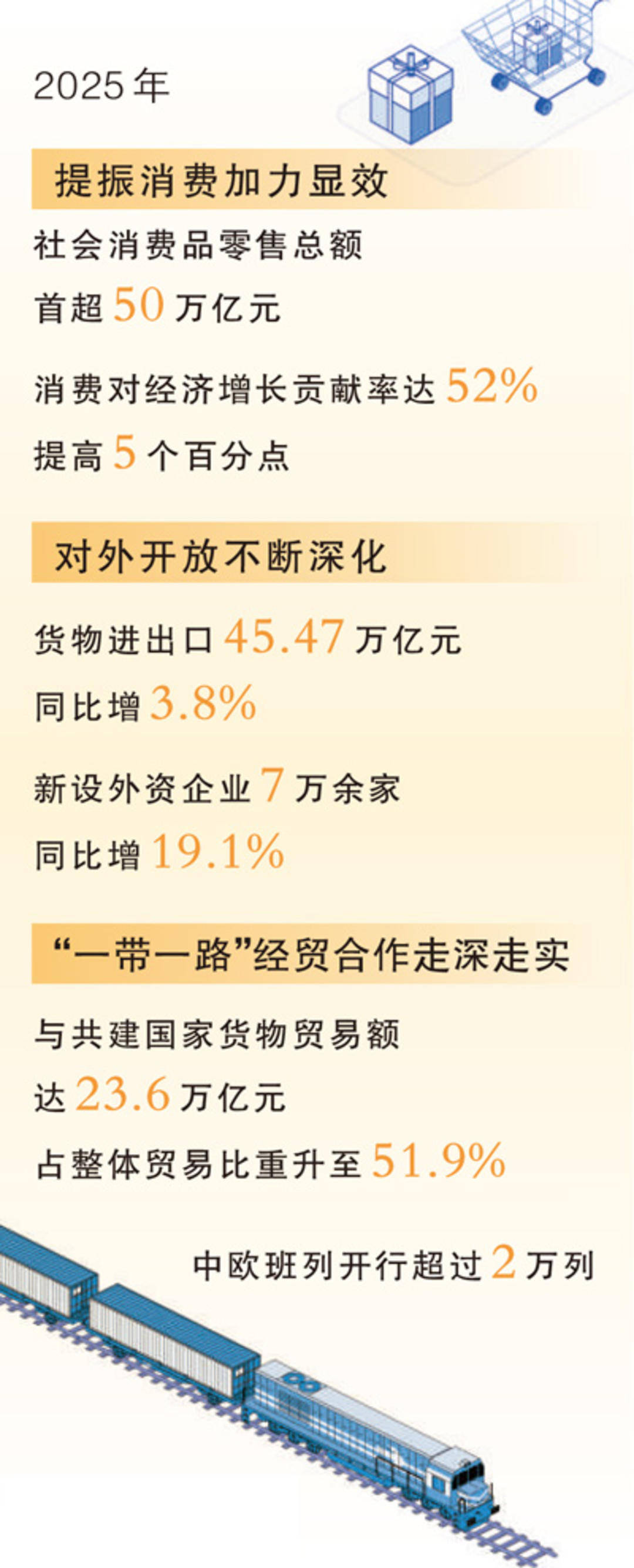
Core Viewpoint - The Chinese government aims to enhance consumer spending, targeting a 5 percentage point increase in the contribution of consumption to economic growth by 2025, with a retail sales target of 50.1 trillion yuan, reflecting a 3.7% year-on-year growth [7][8]. Group 1: Policy Initiatives - The Ministry of Commerce plans to implement a dual approach of "policy + activities" to stimulate consumption, focusing on enhancing supply in cultural, entertainment, tourism, and healthcare sectors [7][9]. - Specific policies include optimizing the "trade-in" program for consumer goods and promoting automotive consumption through pilot reforms [9][10]. Group 2: Consumption Activities - Over 20 "Buy in China" themed events will be organized, alongside city-specific activities to create a vibrant consumption atmosphere [9][10]. - The service sector is expected to see a 5.5% increase in retail sales, with significant growth in leisure, tourism, and transportation services [7][9]. Group 3: International Trade and Investment - In 2025, China's total goods import and export reached 45.47 trillion yuan, a 3.8% increase, with over 780,000 active trading entities [10][11]. - The government aims to attract foreign investment by expanding market access and supporting foreign enterprises in various economic activities [11][12]. Group 4: Global Economic Engagement - China has signed 24 free trade agreements with 31 countries, covering 45% of its total goods trade, and is actively participating in global economic cooperation initiatives [12][14]. - The "Belt and Road" initiative has led to a 6.3% increase in trade with partner countries, highlighting China's commitment to international collaboration [12][13].
权威数读|这些数据,让“购在中国”熠熠生辉!
Xin Hua She· 2026-01-26 12:20
Group 1 - The core viewpoint of the article emphasizes the integration of policies and activities to stimulate consumption, with a target of exceeding 50 trillion yuan in total retail sales of consumer goods in 2025 [1] Group 2 - In terms of goods consumption, the implementation of a trade-in program for consumer goods resulted in sales of 2.61 trillion yuan, benefiting 366 million people [4] - For service consumption, a quality improvement initiative led to a 5.5% increase in service retail sales for the year [4] - The establishment of international consumption environment pilot projects and optimization of the outbound tax refund policy contributed to the growth in sales of tax refund eligible products [4] Group 3 - The development of goods, services, and digital trade as three pillars is being coordinated to expand diversified markets and promote trade innovation [12] - In 2025, the total import and export value of goods is projected to reach 45.47 trillion yuan, reflecting a growth of 3.8%, while service imports and exports increased by 7.1% to 7.2 trillion yuan in the first eleven months [12] - The number of active enterprises with import and export records exceeded 780,000, with private enterprises accounting for 57.3% of total foreign trade [12] Group 4 - The "Invest in China" brand is being continuously enhanced, with over 70,000 new foreign-funded enterprises established in the year, marking a growth of 19.1%, and foreign investment absorption reaching 747.69 billion yuan, with high-tech industries accounting for 32.3% [14] - The overseas comprehensive service system is being improved, with non-financial direct investment abroad reaching 1 trillion yuan for the year [15]
商务部:一视同仁支持外资企业参与提振消费、政府采购、招投标等
2 1 Shi Ji Jing Ji Bao Dao· 2026-01-26 12:02
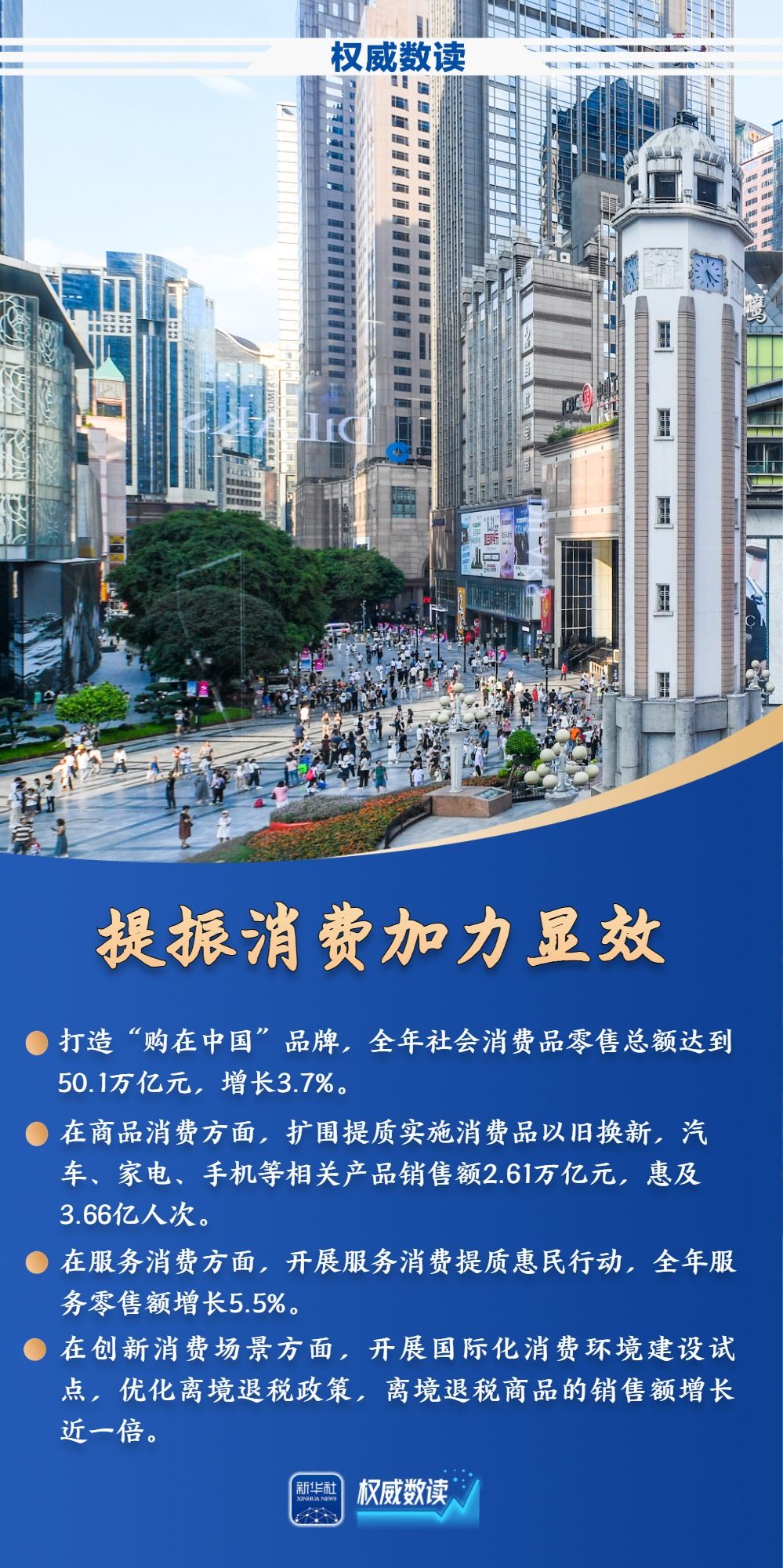
Core Insights - The Ministry of Commerce aims to attract and utilize foreign investment more effectively in 2025, with a target of establishing over 70,000 new foreign enterprises, representing a growth of 19.1% and an absorption of foreign capital amounting to 747.69 billion yuan, with high-tech industries accounting for 32.3% of this investment [1][2] Group 1: Foreign Investment Strategy - The focus will be on expanding market access and opening up service sectors such as telecommunications, healthcare, and education, promoting pilot projects to support the professionalization and integration of foreign service enterprises [2] - Policies will be optimized to support foreign investment, including tax incentives for overseas investors reinvesting profits earned in China and encouraging foreign participation in consumption, government procurement, and bidding activities [2] - A comprehensive service guarantee system for foreign investment will be established, ensuring national treatment for foreign enterprises and addressing their concerns through continuous service optimization [2] Group 2: Open High Ground Development - The Ministry will work on diversifying the layout of free trade pilot zones, providing broader space and richer platforms for innovative trials [2] - There will be a focus on aligning with international high-standard economic and trade rules, conducting extensive and in-depth institutional opening-up experiments, and supporting emerging industries in comprehensive innovation across the entire industrial chain [2]
