
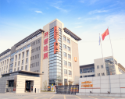
许昌开普检测研究院股份有限公司

Search documents
开普检测股价跌1.01%,诺安基金旗下1只基金位居十大流通股东,持有73.74万股浮亏损失16.22万元
Xin Lang Cai Jing· 2025-12-30 02:07
12月30日,开普检测跌1.01%,截至发稿,报21.67元/股,成交387.88万元,换手率0.23%,总市值22.54 亿元。 数据显示,诺安基金旗下1只基金位居开普检测十大流通股东。诺安多策略混合A(320016)三季度新 进十大流通股东,持有股数73.74万股,占流通股的比例为0.95%。根据测算,今日浮亏损失约16.22万 元。 截至发稿,孔宪政累计任职时间5年35天,现任基金资产总规模56.08亿元,任职期间最佳基金回报 86.1%, 任职期间最差基金回报-16.74%。 风险提示:市场有风险,投资需谨慎。本文为AI大模型自动发布,任何在本文出现的信息(包括但不 限于个股、评论、预测、图表、指标、理论、任何形式的表述等)均只作为参考,不构成个人投资建 议。 资料显示,许昌开普检测研究院股份有限公司位于河南省许昌市尚德路17号,成立日期2005年1月27 日,上市日期2020年9月23日,公司主营业务涉及电力系统二次设备的检测服务、其他技术服务以及检 测设备销售等。主营业务收入构成为:检测服务94.16%,产品销售4.60%,其他技术服务0.69%,其他 (补充)0.56%。 责任编辑:小浪快报 诺 ...
开普检测股价跌5.09%,诺安基金旗下1只基金位居十大流通股东,持有73.74万股浮亏损失87.75万元
Xin Lang Cai Jing· 2025-11-21 02:55
Group 1 - The core point of the news is that Kaipu Testing's stock price has dropped by 5.09%, currently trading at 22.19 CNY per share, with a total market capitalization of 2.308 billion CNY [1] - Kaipu Testing, established on January 27, 2005, and listed on September 23, 2020, primarily engages in testing services for secondary equipment in power systems, with revenue composition being 94.16% from testing services, 4.60% from product sales, and 0.69% from other technical services [1] Group 2 - Among the top ten circulating shareholders of Kaipu Testing, the Noan Multi-Strategy Mixed A Fund (320016) has recently entered the list, holding 737,400 shares, which is 0.95% of the circulating shares, with an estimated floating loss of approximately 877,500 CNY [2] - The Noan Multi-Strategy Mixed A Fund, established on August 9, 2011, has a current size of 1.855 billion CNY, with a year-to-date return of 73.37% and a one-year return of 70.11% [2]
开普检测: 《董事会议事规则》(2025年8月修订)
Zheng Quan Zhi Xing· 2025-08-10 08:16
General Principles - The rules aim to improve the governance structure of Xuchang Kaipu Testing Research Institute Co., Ltd. and ensure the board of directors operates independently and effectively [1][2] - The board of directors is a permanent decision-making body responsible to the shareholders' meeting and must act within the authority granted by laws, regulations, and the company's articles of association [1][2] Meeting Convening and Notification - The board meetings can be proposed by shareholders holding more than 10% of voting rights, one-third of the directors, or the finance and audit committee [2] - Regular board meetings must be held at least twice a year, with notifications sent 10 days in advance for regular meetings and 3 days for temporary meetings [2][3] Meeting Procedures - A board meeting requires the presence of more than half of the directors to be valid [4] - Independent directors must attend personally and cannot delegate their voting rights unless they have reviewed the materials beforehand [4][5] Voting and Resolutions - Each director has one vote, and resolutions require a majority of the attending directors to pass [8][22] - In cases of conflicts of interest, relevant directors must abstain from voting, and decisions must be made by a majority of non-related directors [22][23] Meeting Records and Announcements - The board secretary is responsible for preparing and maintaining meeting documents, ensuring records are accurate and complete [27][29] - Resolutions must be reported to the Shenzhen Stock Exchange promptly after the meeting, including details of the voting results and any related transactions [32][34] Amendments and Effectiveness - The rules can be amended based on actual circumstances and must be approved by the shareholders' meeting [38][39] - The rules take effect upon approval by the shareholders' meeting [39]
开普检测: 《公司章程》(2025年8月修订)
Zheng Quan Zhi Xing· 2025-08-10 08:16
Core Points - The company is established as a joint-stock company under the laws of the People's Republic of China, specifically the Company Law and Securities Law [1][2] - The registered capital of the company is RMB 104 million [2] - The company was approved for its initial public offering of 20 million shares on August 20, 2020, and listed on the Shenzhen Stock Exchange on September 23, 2020 [1][3] Company Structure - The company is named Xuchang KETOP Testing Research Institute Co., Ltd. and is located at 17 Shangde Road, Xuchang City, with a postal code of 461000 [2] - The company is a permanent joint-stock company, and its chairman serves as the legal representative [2][3] - The legal representative's civil activities conducted on behalf of the company will have legal consequences for the company [2] Business Objectives and Scope - The company's mission is to be a guardian of power grid safety, a creator of customer value, a facilitator of employee happiness, and a practitioner of social responsibility [3][4] - The business scope includes inspection and testing services, certification services, and power supply business, among others [4] Share Issuance and Capital Management - The company issues shares in the form of stocks, with each share having a par value of RMB 1 [5][6] - The total number of shares issued at the establishment of the company was 60 million, with a total of 10.4 million shares currently issued [5][6] - The company can increase its capital through various methods, including issuing shares to unspecified objects or existing shareholders [6][7] Shareholder Rights and Responsibilities - Shareholders have the right to receive dividends and participate in decision-making processes, including voting on significant company matters [10][11] - Shareholders holding more than 5% of voting shares must comply with specific regulations to protect the interests of the company and other shareholders [15][16] - The company must maintain a shareholder register to document ownership and rights [10][11] Governance and Meetings - The company holds annual and extraordinary shareholder meetings, with specific procedures for calling and conducting these meetings [19][20] - Decisions made at shareholder meetings require a majority or supermajority vote, depending on the nature of the resolution [78][80] - The company must ensure transparency and proper documentation of meeting proceedings, including voting results and shareholder inquiries [75][76]
开普检测: 《独立董事工作制度》(2025年8月修订
Zheng Quan Zhi Xing· 2025-08-10 08:16
Core Points - The document outlines the independent director system of Xuchang Kaipu Testing Research Institute Co., Ltd, aiming to enhance corporate governance and regulate the behavior of independent directors [1][2][3] - Independent directors are required to act independently and are not influenced by the company or its major shareholders [2][3] - The board must include at least one-third independent directors, with at least one being a qualified accounting professional [2][3][4] Group 1 - Independent directors must fulfill their duties with loyalty and diligence, protecting the overall interests of the company and the legal rights of minority shareholders [1][2] - The document specifies the qualifications and independence requirements for independent directors, including relevant work experience and absence of significant conflicts of interest [6][7][8] - Independent directors are limited to serving on a maximum of three domestic listed companies to ensure they can dedicate sufficient time and effort to their responsibilities [2][4] Group 2 - The nomination and election process for independent directors is detailed, requiring proposals from shareholders and the company board, with a focus on transparency and independence [6][7][8] - Independent directors are expected to participate actively in board decisions, provide objective advice, and monitor potential conflicts of interest [19][20] - The document mandates regular evaluations of independent directors' independence and requires them to report any issues affecting their ability to perform their duties [5][12][13] Group 3 - Independent directors must maintain communication with minority shareholders and report any significant issues to regulatory authorities if necessary [32][39] - The company is responsible for providing necessary support and resources to independent directors to facilitate their duties [35][36] - Independent directors are entitled to compensation and reimbursement for expenses incurred while performing their roles [40][41]
开普检测: 《对外投资管理制度》(2025年8月修订)
Zheng Quan Zhi Xing· 2025-08-10 08:16
General Principles - The purpose of the external investment management system is to standardize the external investment behavior of the company, prevent investment risks, and improve investment efficiency, in accordance with relevant laws and regulations [2][3] - External investments refer to actions taken by the company for profit or value preservation, including equity investments, financial investments, and other types of investments [2] Decision-Making Authority - A specialized institution should be designated to research and evaluate the feasibility, risks, and returns of major investment projects, and report any abnormalities to the board of directors [3][4] - Certain investment matters must be approved by the board of directors and disclosed if they meet specified thresholds, such as asset totals exceeding 10% of the company's audited total assets [3][4] Investment Standards - Specific thresholds for board approval include asset totals over 50% of the company's audited total assets, or transactions involving significant revenue or profit percentages [4][5] - If investment matters do not meet the specified standards, they can be decided by the general manager's office [5][6] Financial Assistance - Financial assistance must be approved by two-thirds of the attending directors and disclosed promptly [6] - Financial assistance is subject to additional scrutiny if the recipient has a high debt ratio or if the amount exceeds 10% of the company's net assets [6] Daily Management - The board of directors should regularly monitor the progress and effectiveness of major investment projects, addressing any deviations from planned investments [7][8] - The general manager is responsible for the daily management of external investment projects [7] Accounting and Reporting - The finance department must maintain comprehensive financial records of external investments, establishing detailed accounts for each project [8] - Subsidiaries must adhere to the company's accounting policies and practices [8] Investment Recovery and Transfer - The company can recover investments under specific circumstances, such as project completion or inability to repay debts [10] - Transfers of external investments are permissible if the project deviates from the company's direction or shows continuous losses [10] Information Disclosure - The company must comply with information disclosure obligations as per relevant regulations [9] - Subsidiaries are required to provide accurate and timely information to the company for external disclosure [9]