TTTech Auto

Search documents
NXP(NXPI) - 2025 Q3 - Earnings Call Transcript
2025-10-28 13:02
Financial Data and Key Metrics Changes - The company reported third quarter revenue of $3.17 billion, a decline of 2% year-on-year but an increase of 8% sequentially [5][12] - Non-GAAP operating margin was above 34%, down 170 basis points year-on-year but 10 basis points above the midpoint of guidance [5][14] - Non-GAAP earnings per share were $3.11, a penny better than guidance [6][12] - Total debt at the end of Q3 was $12.24 billion, up $757 million sequentially, while cash balance increased to $3.95 billion [15][16] Business Line Data and Key Metrics Changes - Automotive revenue is expected to increase mid-single digits year-on-year and low single digits sequentially in Q4 [8] - Industrial and IoT revenue is projected to rise in the mid-20% range year-on-year and 10% sequentially [8] - Mobile revenue is anticipated to grow in the mid-teens year-on-year and mid-single digits sequentially [9] Market Data and Key Metrics Changes - Distribution inventory remained flat at nine weeks, below the long-term target of 11 weeks [7] - The company noted that inventory levels of NXP-specific products at major Tier 1 partners are below manufacturing cycle time, indicating cautious inventory management in the automotive supply chain [7][9] Company Strategy and Development Direction - The company has closed acquisitions of Kinara and Aviva Links, expecting material revenue impact in 2028 and beyond [10] - The strategy remains focused on product innovation and disciplined investment to drive profitable growth [11][20] - The company aims to consolidate manufacturing and invest in joint ventures to enhance supply resilience and competitive cost structure [20] Management's Comments on Operating Environment and Future Outlook - Management expressed confidence in company-specific growth drivers and signs of cyclical recovery in automotive and industrial markets [9] - There is no expectation of direct customer inventory restocking in the near term due to macroeconomic uncertainties [9] - The company anticipates Q4 revenue to be $3.3 billion, reflecting a 6% year-on-year increase and a 4% sequential increase [18] Other Important Information - The company paid $256 million in cash dividends and repurchased $54 million of shares during Q3, representing a total shareholder return of $2.05 billion [16] - The cash flow from operations was $585 million, with non-GAAP free cash flow at $509 million or 16% of revenue [17] Q&A Session Summary Question: What improved in the last 90 days regarding guidance? - Management noted that risks did not materialize and order books remain strong, particularly in industrial and IoT [24] Question: What is the impact of inventory levels on revenue? - Management indicated that one week of inventory equals approximately $100 million, but emphasized strategic management of channel inventory [26] Question: Are you comfortable with seasonal trends for Q1? - Management suggested modeling Q1 with a high single-digit decline based on historical seasonality [34] Question: What is the outlook for gross margins? - Management expects gross margins to improve due to higher revenues and operational efficiencies, despite some unfavorable product mix [35] Question: How is the automotive sector performing? - Management highlighted strong growth in the automotive sector driven by software-defined vehicles and core growth drivers [66] Question: What is the situation in the China auto market? - Management reported that the China auto market remains strong with lean inventory levels and good customer traction [93]

NXP(NXPI) - 2025 Q3 - Earnings Call Transcript
2025-10-28 13:02
Financial Data and Key Metrics Changes - NXP Semiconductors reported third quarter revenue of $3.17 billion, a decline of 2% year on year but an increase of 8% sequentially [5][12] - Non-GAAP operating margin was above 34%, down 170 basis points year on year but 10 basis points above the midpoint of guidance [5][13] - Non-GAAP earnings per share for the quarter was $3.11, slightly better than guidance [6][12] Business Line Data and Key Metrics Changes - Automotive revenue is expected to increase mid-single digits year on year and low single digits sequentially in Q4 [8] - Industrial and IoT revenue is projected to rise in the mid-20% range year on year and 10% sequentially [8] - Mobile revenue is anticipated to grow in the mid-teens year on year and mid-single digits sequentially [8] - Communication infrastructure and other segments are expected to decline by 20% year on year and remain flat sequentially [8] Market Data and Key Metrics Changes - Distribution inventory remained flat at nine weeks, below the long-term target of 11 weeks [7] - Aggregate inventory levels at major Tier 1 partners are below NXP's manufacturing cycle time, indicating cautious inventory management in the automotive supply chain [7] Company Strategy and Development Direction - The company is focused on product innovation and disciplined investment to drive profitable growth [10][11] - Recent acquisitions of Kinara and Aviva Links are expected to enhance customer engagement and market position, with material revenue impact anticipated in 2028 and beyond [10] - The strategy remains aligned with the vision established during the November 2024 Investor Day [10] Management's Comments on Operating Environment and Future Outlook - Management expressed confidence in company-specific growth drivers and signs of a cyclical recovery in automotive and industrial markets [9] - There is no expectation of direct customer inventory restocking in the near term due to the uncertain macro environment [9] - The company anticipates Q4 revenue to be $3.3 billion, reflecting a 6% year-on-year increase and a 4% sequential increase [17] Other Important Information - Total debt at the end of Q3 was $12.24 billion, with a cash balance of $3.95 billion [15] - The company plans to continue share buybacks as part of its capital allocation strategy [21] Q&A Session Summary Question: What specifically got better over the last 90 days? - Management noted that risks previously anticipated did not materialize, and signals of a soft recovery continue to be present, with a strong order book and healthy backlog [24] Question: What is the impact of inventory levels on revenue? - Management indicated that one week of inventory equals approximately $100 million, but emphasized the importance of managing the right product mix in the channel [26] Question: Are you comfortable with seasonal trends for Q1? - Management suggested modeling seasonality using pre-COVID trends, indicating a stable setup for 2026 [34] Question: What is driving the gross margin outlook? - Management expects gross margins to improve due to higher revenues, operational cost improvements, and higher utilizations, despite an unfavorable product mix [36] Question: What is the outlook for the automotive sector? - Management expressed optimism about the automotive sector, driven by the shift to software-defined vehicles and core growth drivers [65] Question: How does the company view the industrial and IoT market compared to peers? - Management highlighted that their disciplined inventory management and company-specific drivers are contributing to a more positive outlook compared to peers [89]
NXP(NXPI) - 2025 Q3 - Earnings Call Transcript
2025-10-28 13:00
Financial Data and Key Metrics Changes - NXP Semiconductors reported Q3 2025 revenue of $3.17 billion, a decline of 2% year on year but an increase of 8% sequentially [4][10] - Non-GAAP operating margin was above 34%, down 170 basis points year on year but 10 basis points above the midpoint of guidance [4][11] - Non-GAAP earnings per share for Q3 was $3.11, slightly better than guidance [4][10] Business Line Data and Key Metrics Changes - Automotive revenue is expected to increase mid-single digits year on year and low single digits sequentially in Q4 2025 [6] - Industrial and IoT revenue is projected to rise in the mid-20% range year on year and 10% sequentially [6] - Mobile revenue is anticipated to grow in the mid-teens percentage year on year and mid-single digits sequentially [6] - Communication infrastructure and other segments are expected to decline by 20% year on year but remain flat sequentially [6] Market Data and Key Metrics Changes - Distribution inventory remained flat at nine weeks, below the long-term target of 11 weeks [5] - Aggregate inventory levels of NXP products at major Tier 1 partners are below NXP's manufacturing cycle time, indicating cautious inventory management in the automotive supply chain [5] Company Strategy and Development Direction - The company is focused on product innovation and disciplined investment to drive profitable growth [9] - Recent acquisitions of Kinara and Aviva Links are expected to enhance customer engagement and market position, with material revenue impact anticipated in 2028 and beyond [8] - The strategy remains aligned with the vision established during the November 2024 Investor Day, emphasizing intelligent edge systems in automotive, industrial, and IoT markets [8][9] Management's Comments on Operating Environment and Future Outlook - Management expressed confidence in company-specific growth drivers and signs of a cyclical recovery in automotive and industrial markets [6][7] - There is no expectation of direct customer inventory restocking in the near term due to the uncertain macro environment [6][7] - The company anticipates Q4 revenue to be $3.3 billion, reflecting a 6% year-on-year increase and a 4% sequential increase [16] Other Important Information - Total debt at the end of Q3 was $12.24 billion, with a cash balance of $3.95 billion [12][13] - The company plans to retire $1.25 billion in debt due in 2026 and has restarted stock buybacks [14][19] Q&A Session Summary Question: What specifically got better over the last 90 days? - Management noted that risks previously anticipated did not materialize, and order books remain strong, particularly in industrial and IoT [24][25] Question: What is the impact of inventory levels on revenue? - Management indicated that one week of inventory equates to approximately $100 million, but emphasized strategic management of channel inventory over static metrics [26][27] Question: How does the company view the automotive market? - Management sees normalization in automotive inventory and anticipates a positive outlook driven by content growth rather than production levels [80][81] Question: What are the expectations for gross margins moving forward? - Management expects gross margins to improve due to higher revenues and operational efficiencies, with a long-term target of 57% to 63% [40][41] Question: How is the company managing inventory in the industrial and IoT segments? - Management highlighted disciplined inventory management and specific design wins driving demand in these segments [112][114]
September review: Stability, strength & new trends in European tech investments
Yahoo Finance· 2025-10-14 10:54
Group 1: Healthcare Technology - The healthcare sector saw significant activity with companies like ViCentra raising €72.4M for its next-gen insulin pump and MRM Health securing €55M for microbiome therapeutics [1] - Digital health and predictive care are being advanced by companies such as Simple (€33M) and Teton.ai (€17M), while Aerska (€17M) focuses on RNA-based therapies [7] - The integration of biotech with AI-driven clinical data is attracting investor interest, indicating a strong flow from lab to clinic [7] Group 2: AI Integration - AI has become a horizontal layer across various industries, with companies like Veezoo (€5M) and Supersonik (€4.2M) integrating AI into their operations [3][4] - Investors view AI innovations as infrastructure plays rather than standalone developments, reflecting a stable growth pattern in the tech stack [4][5] - The trend of AI integration is consistent across Europe, with significant funding rounds indicating a robust market presence [3][4] Group 3: Climate and Energy Infrastructure - Climate and energy infrastructure remains a key investment area, highlighted by Terra One's €150M funding for battery storage and OXCCU's €23.7M for sustainable aviation fuel [8] - Complementary funding in agri-energy and material development is growing, with companies like LeydenJar (€13M) and feld.energy (€10M) demonstrating this trend [9] - The dual focus on climate innovation and energy infrastructure is solidifying its position as a pillar of European tech investments [8][9] Group 4: Hybrid Funding Models - The rise of hybrid capital models combining debt and equity has been confirmed, with examples like DataCrunch utilizing a mix of funding sources [12][13] - This trend indicates a shift in how companies are financed, with venture debt becoming a standard part of the funding stack [13] - The evolution of hybrid funding reflects a more selective capital environment, suggesting a strategic approach to financing [13] Group 5: Mergers and Acquisitions - September saw a notable increase in corporate takeovers, indicating that consolidation is now viewed as a strategy for scaling rather than distress [14][15] - Major acquisitions, such as Workday's €928M purchase of Sana, demonstrate a shift in enterprise software towards integrated knowledge systems [15][26] - The trend of consolidation is evident in mid-market rollups, emphasizing the importance of knowledge and compliance in the tech ecosystem [16] Group 6: Emerging Trends - New growth indicators emerged in September, with concentrated R&D deeptech rounds signaling a focus on hard sciences [22] - US investors are increasingly entering European markets early, indicating a strategic interest in promising technologies [24][25] - Southern Europe is gaining traction in tech investments, with notable funding activities in Spain, Italy, Greece, and Portugal [27] Group 7: Conclusion - The European tech market is maturing, with AI as a foundational infrastructure and climate and healthtech as key pillars [28] - New funds across AI, climate, and defense sectors suggest a self-sustaining investment cycle is developing in Europe [29]


恩智浦(NXPI):FY2025Q2 业绩说明会纪要:各终端趋势好于预期,复合增速及长期毛利率指引乐观
Huachuang Securities· 2025-07-24 08:55
Investment Rating - The report assigns a positive outlook for NXP Semiconductors, indicating a potential for growth in the upcoming quarters, particularly in the automotive and industrial sectors [2][4]. Core Insights - NXP Semiconductors reported Q2 2025 revenue of $2.93 billion, a year-over-year decrease of 6%, but exceeding the midpoint of guidance. The Non-GAAP gross margin was 56.5%, down 2.1 percentage points year-over-year, while Non-GAAP EPS was $2.72, also above guidance [3][7]. - The company has completed the acquisition of TTTech Auto and is awaiting regulatory approval for the acquisitions of Kinara and Aviva Links, aimed at enhancing its product portfolio and software capabilities in the automotive sector [4][14]. - For Q3 2025, NXP expects revenue to be $3.15 billion, a year-over-year decrease of 3% but an 8% increase quarter-over-quarter. The management expresses confidence in achieving a compound annual growth rate of 8%-12% for automotive and industrial IoT segments from 2024 to 2027 [4][18]. Company Performance Overview - **Q2 2025 Performance Summary**: - Revenue: $2.93 billion (YoY -6%) - Non-GAAP Gross Margin: 56.5% (YoY -2.1 percentage points) - Non-GAAP Net Profit: $690 million (YoY -17%) [3][7]. - **Segment Revenue Breakdown**: - Automotive: $1.73 billion (YoY flat, QoQ +3%) - Industrial & IoT: $546 million (YoY -11%, QoQ +7%) - Mobile Devices: $331 million (YoY -4%, QoQ -2%) - Communication & Others: $320 million (YoY -27%, QoQ +2%) [10][11]. Strategic Investments - The acquisition of TTTech Auto is expected to integrate 1,100 software engineers into NXP's software-defined vehicle solutions, although its revenue contribution is minimal in the short term [14][25]. - The company is managing operational expenses related to the pending acquisitions of Kinara and Aviva Links, which are relatively small in scale [22][25]. Performance Guidance - **Q3 2025 Guidance**: - Expected revenue: $3.15 billion (YoY -3%, QoQ +8%) - Non-GAAP Gross Margin: 57% [4][17]. - **Long-term Growth Outlook**: - Revenue CAGR from 2024 to 2027 is projected at 6%-10%, with specific segments like automotive and industrial IoT expected to grow at 8%-12% [18][30]. Q&A Insights - Management expresses a significantly improved confidence in the cyclical recovery, supported by various positive signals from distributors and customers [21][30]. - The automotive sector is anticipated to see a recovery driven by the end of inventory consumption cycles among Tier-1 customers, rather than relying solely on macroeconomic improvements [23][39].
荷兰半导体巨头牵手零跑,在华设6大研发中心
2 1 Shi Ji Jing Ji Bao Dao· 2025-07-07 13:04
Core Insights - NXP Semiconductors is enhancing its strategy in China, focusing on "localized innovation" and "intelligent technology implementation" in the automotive sector [2][3] - The company has established a China division to improve local responsiveness and product offerings, with a workforce of 6,000 employees and 1,600 engineers in the country [2][3] - NXP's products manufactured in China contribute approximately 18% to its revenue, with one-third of its sales coming from the Chinese market [3][7] Market Dynamics - The automotive market in China is experiencing a compound annual growth rate (CAGR) of over 10%, indicating significant growth potential [3] - NXP has announced collaborations with various partners, including Leap Motor and Great Wall Motors, to enhance its product offerings and innovation capabilities [3][6] Product Development - NXP's CoreRide platform is designed to facilitate scalable innovation, allowing for customized solutions that cater to diverse automotive needs [4][5] - The company is focusing on developing hardware that is compatible with various software solutions, emphasizing the importance of both hardware and software in modern automotive applications [5][6] Strategic Acquisitions - The acquisition of TTTech Auto is aimed at enhancing NXP's software capabilities, particularly in middleware solutions that integrate with various hardware platforms [6][7] - NXP plans to operate TTTech Auto as an independent entity, allowing for flexibility in integrating its software with both NXP and non-NXP hardware [7] Local Manufacturing and R&D - NXP is committed to increasing local manufacturing and R&D efforts in China, with advanced packaging and testing facilities already established [7][8] - The company is collaborating with local foundries, including TSMC and SMIC, to strengthen its manufacturing capabilities in the region [8] Safety and Compliance - NXP is focusing on functional safety in its products, with a trend towards offering ASIL C certified solutions for less critical applications, reflecting the growing importance of safety in automotive systems [11]

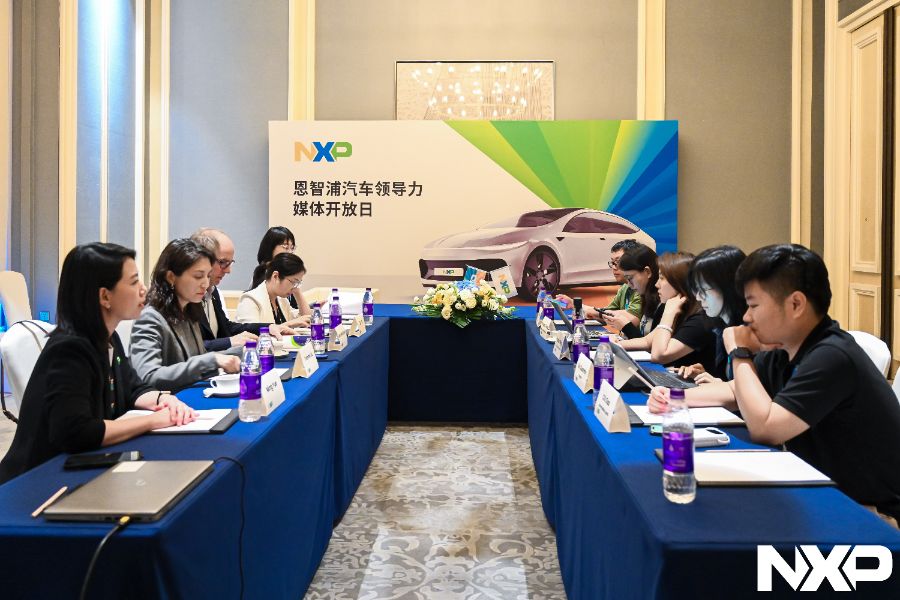
NXP Completes Acquisition of TTTech Auto to Accelerate the Transformation to Software-Defined Vehicles
Globenewswire· 2025-06-17 12:35
Core Insights - NXP Semiconductors has completed the acquisition of TTTech Auto, a leader in safety-critical systems and middleware for software-defined vehicles (SDVs), as per the agreement announced in January 2025 [1][7] - The acquisition aims to enhance the NXP CoreRide platform and TTTech Auto's MotionWise safety middleware, facilitating automakers in overcoming integration barriers while improving scalability and cost-efficiency for next-generation vehicles [2] Company Strategy - TTTech Auto will maintain a neutral position within the industry ecosystem, supporting various System-on-Chips manufacturers, OEMs, and third-party software partners, which will advance SDV capabilities while ensuring safety and data protection [3] - NXP Semiconductors operates in over 30 countries and reported a revenue of $12.61 billion in 2024, indicating a strong market presence and financial stability [5]