Uniqlo

Search documents
Shuffle Board: Moves at BFC, Bare Necessities
Yahoo Finance· 2026-02-20 23:18
Philanthropy The British Fashion Council has appointed Clare Waight Keller to its executive board, effective March 11. Waight Keller is currently creative director at Uniqlo and previously held top creative roles at Chloé and Givenchy. She was named Uniqlo’s first creative director in 2023 following a collaboration with the brand. The UK-based nonprofit also announced the immediate appointment of Kate Varah, executive director and co-CEO of the National Theatre, to its board. Varah previously led The Old ...
Levi Strauss heir Daniel Lurie helped lure the Super Bowl when Levi’s Stadium was under construction. Now he’s mayor for the $440 million windfall
Fortune· 2026-02-03 22:27
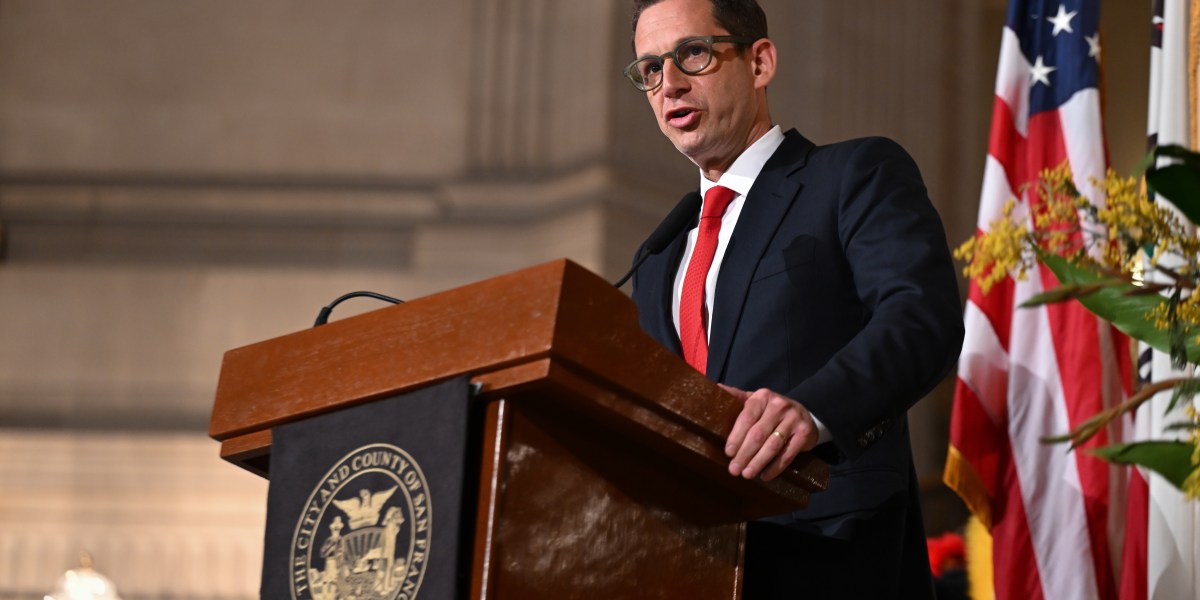
Since taking office in 2025, San Francisco Mayor Daniel Lurie has been on a mission to shake the city out of a post-pandemic economic slump. A political outsider, Lurie was previously best known as an heir to the Levi Strauss family fortune and a philanthropist focused on poverty-fighting initiatives. Now, Lurie has leveraged his connections across industries to boost the city’s reputation and economy following a slow recovery. Years after the pandemic, San Francisco’s downtown is still struggling with a ...

X @Bloomberg
Bloomberg· 2026-01-29 22:04
Uniqlo's billionaire founder has an ambitious goal to expand in the US — but can he finally make it after years of failed attempts? https://t.co/dMVeUH2I4w ...
Uniqlo and Coach are opening cafes — joining longtime coffee players Ralph Lauren and Capital One. Here's why it's become a retail trend
CNBC· 2026-01-06 16:00
Core Insights - Retailers are increasingly integrating cafes into their stores to enhance customer experience and engagement, leveraging the concept of the "Experience Economy" [1][9] Group 1: Retail Trends - Post-pandemic, brands like Uniqlo are expanding their cafe concepts, with Uniqlo opening its first coffee bar in the U.S. in March, aiming to attract more customers [2][3] - Luxury brands such as LVMH have opened cafes in collaboration with Michelin-starred chefs, including locations for Dior, Louis Vuitton, and Tiffany [4] - Coach has seen significant sales growth, reporting double to triple-digit increases in stores with cafes, and has opened multiple locations internationally [5][6] Group 2: Brand Strategies - The cafes serve to create a sense of belonging and cultural immersion, particularly for brands like Uniqlo, which aims to spread Japanese culture through its offerings [3] - Capital One and Ralph Lauren have also entered the cafe space, with Capital One operating 65 cafes and Ralph Lauren over 40 globally, both planning further expansions [8] - Companies are focusing on unique designs and experiences to differentiate their cafes, as noted by industry experts [10] Group 3: Customer Engagement - The integration of cafes is seen as a way to enhance the shopping experience, with Uniqlo emphasizing customer service and convenience [13] - The cafes are not just profit centers but also serve to increase brand awareness and customer loyalty, as highlighted by Capital One's approach [11][12]


X @Bloomberg
Bloomberg· 2025-12-22 00:48
Uniqlo's owner will raise base salaries for new graduates in Japan by as much as 12%, stepping up efforts to secure and retain talent as the country’s workers grapple with inflation https://t.co/Zy6tSjmXXx ...
X @Bloomberg
Bloomberg· 2025-12-18 05:05
Uniqlo has refined the art of getting people to buy clothes. Now, its billionaire founder just needs to crack Middle America. https://t.co/xjtAYn9woM ...
Apple retains No.1 spot, followed by Microsoft, Amazon, and Google, Samsung ranks 5th in global brand value,
BusinessLine· 2025-10-17 06:32
Group 1: Samsung Electronics - Samsung Electronics ranked fifth in Interbrand's "Best Global Brands" list for the sixth consecutive year, maintaining its position as the top Asian company among global brands with a brand value of $90.5 billion [1][2] - Since 2020, Samsung has been the only Asian company in the global top five brands, with its brand value assessed based on financial performance, brand influence on consumer decisions, and overall competitiveness [2] - The company's strong performance is attributed to its competitiveness in artificial intelligence (AI), AI-powered home experience ecosystem, investment in AI-related semiconductors, and customer-centric brand strategies [3] Group 2: Hyundai Motor - Hyundai Motor ranked 30th in the global brand list with a brand value of $24.6 billion, marking its presence in the top 100 brands since 2005 and experiencing a brand value increase for 16 consecutive years since 2010 [4] - The company has expanded its electric and hybrid vehicle lineups and strengthened its global presence through region-specific marketing strategies, enhancing its brand influence in the U.S., Europe, and emerging markets [5] Group 3: Other Companies - Kia ranked 89th in the global brand list, while Apple retained the No. 1 spot, followed by Microsoft, Amazon, and Google [5] - Among Japanese companies, Toyota ranked sixth, Sony 34th, Uniqlo 47th, and Nintendo 53rd, while Chinese firms Xiaomi, BYD, and Huawei ranked 81st, 90th, and 96th, respectively [5] - NVIDIA saw a significant rise from 36th last year to 15th this year, highlighting its growing influence in the AI semiconductor market [6]





纺织服装行业四季度策略:制造期待复苏,品牌分化持续
ZHESHANG SECURITIES· 2025-10-12 13:39
Group 1: Export Chain - The export chain is expected to see improved sentiment and performance, with clarity on tariff arrangements boosting order placement by brands [1][9] - Major brands like Nike and Adidas are cautiously optimistic about demand recovery, with Nike reporting a slight revenue and gross margin beat in its recent quarterly results [2][12] - Leading manufacturers have begun to see performance improvements in Q3, with companies like Xin'ao and Bailong Dongfang anticipating revenue growth driven by increased orders [3][19] Group 2: Investment Themes - Key investment themes include leading sports and leisure brands such as Nike, Adidas, and Uniqlo, along with their core suppliers like Shenzhou International and Huayi Group, which have attractive PE ratios for 2025 [4][21] - Upstream manufacturers showing short-term order improvements and medium-term market share gains include Xin'ao and Weixing, which are expected to benefit from rising raw material prices [4][21] Group 3: Brand Apparel - The brand apparel sector continues to show signs of divergence, with retail performance impacted by fluctuating offline traffic and intense online competition [5][22] - Despite challenges, companies like Hailan Home and Luolai Life are expected to maintain positive revenue growth due to strong online and offline sales strategies [6][26] Group 4: Market Outlook - The overall market outlook for the textile and apparel industry remains cautiously optimistic, with expectations of gradual recovery in demand and performance improvements across various segments [1][9][22] - The consumer confidence index shows slight recovery, but consumers remain focused on product functionality and value for money [5][22]




With coffee shop expansion, Coach wants to build on its gains with Gen Z
CNBC· 2025-09-29 15:39
Core Insights - Coach is expanding its brand presence through the introduction of coffee shops, aiming to attract more Gen Z customers and increase store visits [1][4][8] Group 1: Coffee Shop Strategy - Coach has opened its third U.S. coffee shop in The Mills at Jersey Gardens and plans to open a fourth location soon [3] - The company aims to establish 12 to 15 coffee shops annually worldwide, offering seasonal menu items and exclusive merchandise [4][15] - Coffee shops are designed to enhance customer experience and encourage additional purchases, with merchandise accounting for about 30% of overall revenue [18][21] Group 2: Targeting Gen Z - Coach has successfully attracted 4.6 million new customers in North America, with nearly 70% being Gen Z and millennials [8] - The coffee shop concept provides a more affordable entry point for younger consumers who may not currently afford luxury handbags [6][7] - The brand's marketing strategy has focused on creating a full experience for customers, particularly appealing to younger shoppers [5][12] Group 3: Financial Performance - Coach's parent company, Tapestry, has seen a 67% increase in shares this year, driven by strong sales growth and new customer acquisition [7][8] - The company is on track to become a $10 billion brand, with annual revenue of approximately $5.6 billion [12] - Coach has capitalized on the trend of rising prices in the ultra-luxury segment, allowing it to increase its own prices while maintaining perceived value [13] Group 4: Market Positioning - Coach has blurred the lines between retail channels by selling full-price items at outlet stores, responding to consumer behavior influenced by social media [9][10] - The coffee shops are strategically located in outlet malls, addressing a gap in food options and enhancing customer convenience [20] - The brand's exclusive merchandise, such as tote bags featuring a unique logo, adds to the appeal of the coffee shops [19]