
城乡供水一体化

Search documents
两镇供水工程完工
Xin Lang Cai Jing· 2026-02-09 22:25
Core Viewpoint - The completion of large-scale water supply projects in Puding County is a significant step towards integrated urban-rural water supply, benefiting over 80,000 rural residents with access to clean drinking water [1] Group 1: Project Completion - The large-scale water supply projects in Pingshang Town and Jichangpo Town have been fully completed [1] - A total of over 370 kilometers of water supply pipelines have been laid [1] Group 2: Community Impact - More than 80,000 rural residents now have access to safe drinking water [1] - The projects are a key initiative for the comprehensive revitalization of rural areas in Puding County [1] Group 3: Future Plans - The county plans to promote professional operation and maintenance of the projects to ensure long-term stability and effectiveness [1]
全力冲刺,织密城乡“水网”
Xin Lang Cai Jing· 2026-02-06 22:00
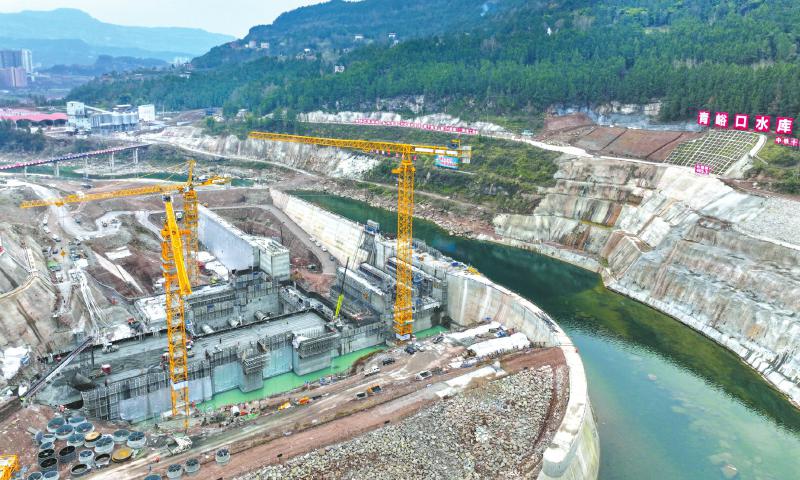
Core Viewpoint - The construction of the Chitangwan Reservoir in San Tai County is progressing well, with a completion rate of 65%, and it aims to provide stable irrigation water for 81,200 acres of farmland and serve as an emergency water source for the county [1] Group 1: Infrastructure Development - The Chitangwan Reservoir has a designed height of 51 meters and is currently at a compaction rate of 97.8% [1] - San Tai County is seizing the winter repair period to accelerate various water-related infrastructure projects [1] Group 2: Water Supply Improvement - Since 2025, San Tai County has been promoting integrated urban and rural water supply, enhancing facilities like the second water plant and extending 458 kilometers of water supply pipelines to all towns and 196 administrative villages [1] - Over 270 kilometers of channels have been rehabilitated to ensure safe drinking water for the community [1] Group 3: Agricultural Benefits - The right irrigation canal of the Shengli Reservoir in Badong Town is currently in the concrete pouring phase, with a total length of 15.32 kilometers, benefiting 6,700 acres of farmland across three village groups [1] - Since 2025, San Tai County has constructed a total of 140 kilometers of channels and 12 ponds across eight townships, with plans to initiate 15 new channels and 11 pumping stations soon [1]
北京今年将实施100公里老旧供水管网改造
Xin Lang Cai Jing· 2026-02-05 09:58
Core Viewpoint - The Beijing Municipal Water Authority plans to implement significant upgrades to the city's water supply infrastructure, including the renovation of 100 kilometers of old water supply pipelines, as part of its key initiatives for the year [1] Group 1: Water Supply Infrastructure - The city aims to enhance urban and rural water supply services, with a focus on equalizing service quality across regions [1] - The plan includes the construction of surface water plants in Fengtai, Fangshan, Shunyi, and Huairou to expand the coverage of the South-to-North Water Diversion Project [1] - The goal is to reduce the pipeline leakage rate to below 7.8% and to connect 15 villages to public water supply systems [1] Group 2: Water Management and Conservation - The total annual water consumption for the city is projected to be controlled within 3 billion cubic meters, with water usage per unit of GDP targeted at around 8.5 cubic meters [1] - The city plans to build 30 kilometers of new sewage pipelines and 20 kilometers of recycled water pipelines, along with the renovation of 25 kilometers of combined sewer systems in key urban areas [1] - The initiative includes a monthly focus on rural sewage treatment, aiming to improve the operational standards of rural sewage collection and treatment facilities [1]
“十四五”以来,四川持续推动治水利民 水中奏响民生“三部曲”
Si Chuan Ri Bao· 2026-02-04 00:23
Core Insights - The article highlights the significant progress in water supply and management projects in Sichuan Province, aiming to improve drinking water quality and agricultural irrigation by 2025 [7][9][10]. Water Supply Projects - By the end of 2025, Sichuan will complete 20 rural water supply projects, benefiting over 520,000 people and achieving a rural water supply coverage rate of 94.12% [7][9]. - The new third water plant in Luojiang District is designed to supply 50,000 cubic meters of water daily, enhancing water security for several towns [6][7]. Agricultural Irrigation Improvements - Sichuan is implementing 99 medium-sized irrigation projects and 16 small irrigation projects, with the modernization of the Dujiangyan irrigation system expected to increase irrigated area by 220,000 acres and improve food production [10][11]. - The modernization efforts are projected to reduce water loss by 430 million cubic meters annually, benefiting over 30 million people [10]. Flood and Disaster Management - A pilot program for flood disaster prevention has been initiated in 5,761 channels across flood-prone areas, with a total of 21,000 personnel assigned for monitoring and early warning [12][13]. - The province has established a comprehensive monitoring network, including 73 new rain measurement radars, enhancing flood prediction capabilities [13][14]. Ecological and Community Benefits - The construction of 151 happiness rivers and lakes has improved community access to clean water and recreational spaces, benefiting 51 million people [15]. - The article emphasizes the transformation of the Ba River area through soil and water conservation projects, which have improved agricultural productivity and local livelihoods [16].

全省农村自来水普及率超95%
Xin Lang Cai Jing· 2026-02-03 19:47
Core Insights - The rural tap water coverage in Guizhou Province has reached 95.15%, marking a significant improvement in water supply security for rural populations [1][2] Group 1: Current Status and Challenges - Guizhou's rural water supply system faces challenges due to the karst topography and uneven distribution of water resources, resulting in lower overall scale compared to the national average [1] - Some areas experience seasonal water shortages and unstable water quality, indicating the need for further improvements in management and infrastructure [1] Group 2: Initiatives and Achievements - The province is implementing a "3+1" model to enhance rural water supply, which includes urban-rural integration, large-scale centralized water supply, and localized small-scale projects [1] - A total of 357 projects for urban-rural integrated and large-scale rural water supply have been initiated, with 250 completed, benefiting 4.02 million rural residents [2] - The rural tap water coverage has increased by 4.95 percentage points since the end of the 13th Five-Year Plan, with the proportion of the population served by large-scale projects rising to 50.81%, an increase of 30.65 percentage points [2] Group 3: Management and Maintenance Improvements - Since the 14th Five-Year Plan, 28,200 rural water supply projects have been maintained, and 2,000 water quality improvement projects have been completed [2] - The province has established a professional management model for rural water supply, with 64 counties achieving unified management, enhancing service efficiency and water safety for residents [2]
破解城乡供水二元分割难题,江西吉安明确水利部门主管
Xin Lang Cai Jing· 2026-01-30 13:31
Core Viewpoint - The article discusses the reform of the water supply management system in Ji'an City, Jiangxi Province, aimed at integrating urban and rural water supply services, addressing the historical divide in management and improving service coverage from 52% in 2021 to 82.48% [1] Group 1: Structural Reforms - Ji'an City is implementing a reform to consolidate urban and rural water supply administrative functions under the water conservancy department, allowing for unified planning, construction, coordination, and supervision [2] - A collaborative mechanism has been established, including a working group led by the water conservancy department, to oversee the integration of urban and rural water supply as part of the city's ten key livelihood projects [2] Group 2: Operational Integration - The city promotes a model of "one entity" for managing water supply, where a state-owned enterprise oversees all aspects of water supply, from source protection to quality testing and infrastructure maintenance [3] - A total of 7.4 billion yuan has been raised through various funding channels to support the construction of integrated water supply projects, enhancing operational efficiency and investment in rural water supply [3] Group 3: Infrastructure Development - The strategy emphasizes the construction of large water sources, plants, and pipelines, aiming to extend the coverage of large-scale water plants beyond administrative boundaries [4] - A comprehensive management model is being established at the county level, focusing on unified service standards, monitoring, and operational management to ensure consistent quality and service across urban and rural areas [4]
涓涓甘甜水 滴滴润民心
Xin Lang Cai Jing· 2026-01-23 18:53
Core Viewpoint - The article highlights the successful implementation of a drinking water supply project in the remote areas of Xinjiang, improving water quality and accessibility for local residents, transitioning from merely having water to having safe and clean drinking water. Group 1: Project Implementation - Xinjiang Tengyuan Water Group invested over 150,000 yuan to install four drinking water machines for four teams in high-altitude areas, ensuring access to clean drinking water [2] - In 2025, the company plans to invest over 300,000 yuan for comprehensive upgrades of water supply facilities, including replacing old pipelines and enhancing water purification systems [2] Group 2: Water Quality Management - The city established a water quality monitoring mechanism, testing 473 water samples in 2025, all of which met quality standards [3] - Six standardized water testing laboratories were set up, conducting ten different testing projects, including microbiological and heavy metal tests [3] Group 3: Smart Water Management - The company is advancing smart water management by creating a platform for real-time monitoring of water quality, quantity, and pressure, integrating existing monitoring networks [3] - Smart water meters have been installed for residents, allowing for hourly water usage monitoring and immediate communication in case of anomalies [3] Group 4: Operational Efficiency and Community Engagement - The city has implemented a unified management model for rural water supply, ensuring consistent service quality and efficiency [4] - A 24-hour service hotline and WeChat public account have been established to address community concerns, achieving a satisfaction rate of over 95% [4] - The city has constructed eight water supply facilities, benefiting 30,000 households, and is working towards a standardized water supply model [4]

从“饮水难”到“饮水甜”
Xin Lang Cai Jing· 2026-01-13 19:50
Core Points - The article highlights the successful implementation of a water supply integration project in Yiliang County, which has significantly improved the living conditions of residents in two villages, Xiaohongpo and Yousuo, by providing access to clean water [1][2] - The project is prioritized by the county government as a key livelihood initiative, demonstrating the importance of effective governance and oversight in public works [1][2] Group 1 - The water supply issue in Xiaohongpo village was exacerbated by natural conditions, leading residents to rely on distant water sources, while Yousuo village faced more complex challenges due to the drying up of local wells since 2014 [1] - The county's disciplinary inspection and supervision agencies played a crucial role in ensuring the project's smooth execution by addressing local challenges and coordinating resources effectively [1][2] - The water supply integration project was initiated in 2020, but faced delays due to aging infrastructure and insufficient funding, prompting intervention from the county's disciplinary inspection body [2] Group 2 - Following the intervention, the county water authority was able to optimize plans and allocate resources to expedite the project, with a new pipeline system expected to be completed by August 2024 [2] - The emphasis on continuous oversight and support from the disciplinary inspection agencies is highlighted as essential for ensuring the success of major public welfare projects [2]

全省打造151条幸福河湖惠及5100万人
Xin Lang Cai Jing· 2026-01-08 19:02
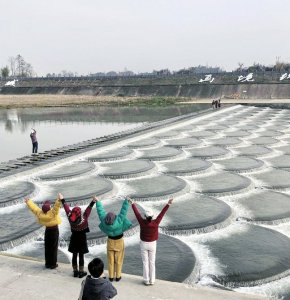
Core Insights - The article highlights the transformative water management initiatives in Sichuan during the "14th Five-Year Plan" period, focusing on the shift from major infrastructure projects to systematic governance of water resources, benefiting 51 million people [3][5]. Group 1: Water Management Achievements - Sichuan has constructed 151 national, provincial, and municipal "happy rivers and lakes," positively impacting 51 million residents [5]. - The "Shuihe Happiness River and Lake Construction Project" in Mianzhu spans 26.484 kilometers with a total investment of 128 million yuan, attracting over 20,000 tourists since October, boosting local economies [4][5]. Group 2: Rural Water Supply Improvements - The rural tap water coverage in Sichuan reached 94.12%, with a significant increase of 12 percentage points since the end of the "13th Five-Year Plan" [7]. - The integration of urban and rural water supply systems has improved drinking water conditions for over 36 million rural residents [7]. Group 3: Infrastructure Development - Sichuan is currently undertaking over 3,000 water conservancy projects, with a planned investment exceeding 70 billion yuan in 2025 and a total investment surpassing 280 billion yuan during the "14th Five-Year Plan" [9]. - The construction of the Gujun Reservoir, a key flood control project, aims to enhance flood protection and provide a significant water source for agricultural and tourism development [8][9].
常德澧县:构建“1+3+16”分级管理模式 城乡居民共饮“安心水”
Xin Lang Cai Jing· 2026-01-03 00:40
Group 1 - The core project of rural water supply construction in Linnan area aims to address drinking water safety for 50,000 residents, officially launched in September 2025 [1] - The project is part of the "14th Five-Year Plan" to tackle issues such as difficult access to drinking water, poor water quality, and inadequate management of water supply operations [1] - A four-level coordination mechanism has been established, involving county leadership, government initiatives, legislative supervision, and departmental collaboration, creating a strong force for reform [1] Group 2 - The county government has invested 220.53 million yuan in integrated urban-rural water supply construction, upgrading facilities in eight rural towns [2] - A smart management platform has been developed to connect residents' smart water meters, enabling remote data transmission, online payment, and fault alerts [2] - The company has implemented a comprehensive quality control network for water safety, conducting 104 tests in 2025, with all key indicators meeting standards [2] Group 3 - A service model has been established to enhance service delivery, featuring a hierarchical management system with one main company, three water plants, and 16 subsidiaries [2] - The county has provided water fee exemptions for 4,340 households in vulnerable groups, improving community satisfaction [2] - Over 1,367 kilometers of old pipelines have been updated, resolving seasonal water shortages for over 200,000 rural residents [2]