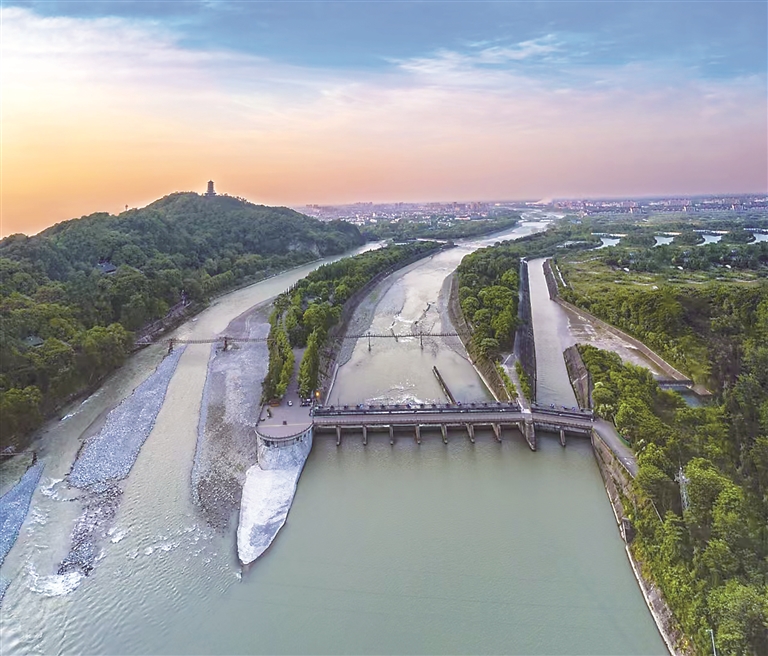
治水利民

Search documents
“十四五”以来,四川持续推动治水利民 水中奏响民生“三部曲”
Si Chuan Ri Bao· 2026-02-04 00:23
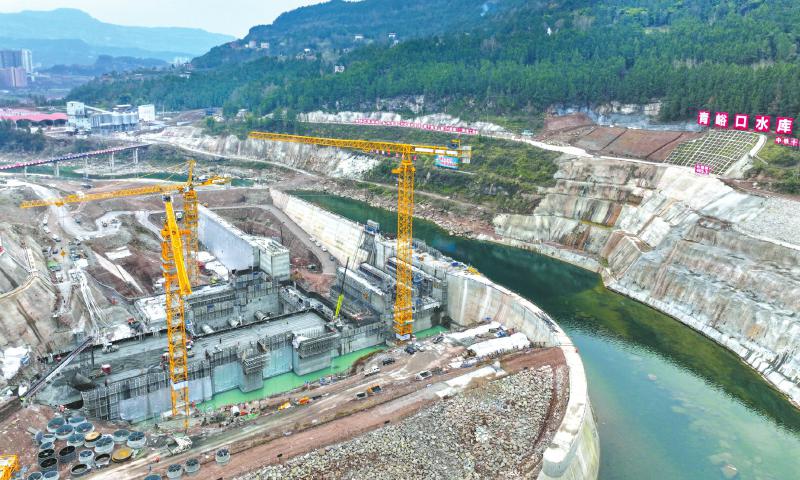
Core Insights - The article highlights the significant progress in water supply and management projects in Sichuan Province, aiming to improve drinking water quality and agricultural irrigation by 2025 [7][9][10]. Water Supply Projects - By the end of 2025, Sichuan will complete 20 rural water supply projects, benefiting over 520,000 people and achieving a rural water supply coverage rate of 94.12% [7][9]. - The new third water plant in Luojiang District is designed to supply 50,000 cubic meters of water daily, enhancing water security for several towns [6][7]. Agricultural Irrigation Improvements - Sichuan is implementing 99 medium-sized irrigation projects and 16 small irrigation projects, with the modernization of the Dujiangyan irrigation system expected to increase irrigated area by 220,000 acres and improve food production [10][11]. - The modernization efforts are projected to reduce water loss by 430 million cubic meters annually, benefiting over 30 million people [10]. Flood and Disaster Management - A pilot program for flood disaster prevention has been initiated in 5,761 channels across flood-prone areas, with a total of 21,000 personnel assigned for monitoring and early warning [12][13]. - The province has established a comprehensive monitoring network, including 73 new rain measurement radars, enhancing flood prediction capabilities [13][14]. Ecological and Community Benefits - The construction of 151 happiness rivers and lakes has improved community access to clean water and recreational spaces, benefiting 51 million people [15]. - The article emphasizes the transformation of the Ba River area through soil and water conservation projects, which have improved agricultural productivity and local livelihoods [16].

学习贯彻党的二十届四中全会精神 | “人民至上”:从治水之道中汲取的治国理政智慧
Xin Lang Cai Jing· 2026-01-12 06:39
Core Insights - The article emphasizes the importance of water management wisdom in governance, highlighting the historical significance of the Dujiangyan irrigation system as a model for modern governance practices [1][9][10] Group 1: Principles of Water Management - "People-oriented" is a fundamental principle in water management and governance, reflecting the integration of Marxist historical perspectives and Chinese philosophies [1][4] - The concept of "因地制宜" (adaptation to local conditions) is crucial for effective decision-making in water management, ensuring that strategies are based on specific local realities [2][3][4] - "顺势而为" (going with the flow) is highlighted as a systematic approach to water management, emphasizing the need to respect natural laws and utilize modern technology [5][6] Group 2: Modern Governance and Development - The article discusses the necessity of integrating regional differences into high-quality development strategies, transforming these differences into comparative advantages [4][8] - The "十五五" (14th Five-Year Plan) emphasizes the importance of localized strategies while maintaining a unified national framework, allowing for optimal solutions tailored to local conditions [4][10] - The governance approach must focus on achieving the fundamental interests of the people, ensuring that development outcomes are shared and evaluated based on public satisfaction [9][10] Group 3: Cultural and Historical Context - The concept of "天人合一" (harmony between humans and nature) is presented as a characteristic of Chinese culture, advocating for a holistic view of water management that considers ecological balance [7][8] - Historical water management practices, such as those from ancient figures like Da Yu, are cited as foundational to understanding contemporary governance challenges [5][7] - The article concludes that the wisdom derived from water management practices can guide modern governance, contributing to the realization of a prosperous society [10]
文化之约丨都江堰的“治”慧
Zhong Yang Ji Wei Guo Jia Jian Wei Wang Zhan· 2025-12-12 00:02
Core Insights - The Dujiangyan irrigation system is the only ancient water conservancy project still in use today, representing a successful practice of harmonious coexistence between humanity and nature [2][10] - It reflects the spirit of self-improvement, resilience, and innovation of the Chinese nation, showcasing wisdom in governance and water management [2][12] Group 1: Historical Significance - Dujiangyan was built during the Warring States period and has been operational for over 2,000 years, demonstrating its enduring value [2][10] - The project was initiated by Li Bing, who utilized local geographical features and hydrological knowledge to design an effective irrigation system [5][6] Group 2: Engineering Features - The system is characterized by a dam-free, self-flowing irrigation method, which is a world-first large-scale water conservancy project [4][10] - Key components include the fish-mouth diversion dam, which splits the river flow, and the flying sand weir, which manages excess water and sediment [6][9] Group 3: Ecological Impact - Dujiangyan has significantly improved the ecological environment of the Chengdu Plain, transforming it from a region prone to droughts and floods to one with abundant vegetation and stable water supply [10][12] - It serves as an important ecological barrier in the upper reaches of the Yangtze River and a vital water source for the city of Chengdu [10] Group 4: Cultural Legacy - The project embodies the philosophy of "harmony between heaven and humanity," emphasizing respect for nature and sustainable practices [9][12] - The historical figures associated with Dujiangyan, including Li Bing, are celebrated for their commitment to public welfare and ethical governance [12][13]