城市热岛效应

Search documents
法国研究显示巴黎绿化降低高温相关死亡风险
Xin Hua She· 2026-02-27 08:34
Core Insights - The French National Institute of Health and Medical Research indicates that areas in Paris with higher greenery have a lower risk of heat-related mortality during high-temperature periods [1] - Paris is identified as one of the cities in Europe with the highest excess mortality risk related to heat due to climate change and urban heat island effects [1] Group 1: Research Findings - Researchers analyzed heat-related excess mortality data across various administrative districts in Paris, correlating it with environmental features such as buildings and vegetation, as well as socioeconomic indicators, covering the period from 2008 to 2017 [1] - Green spaces, including trees, parks, gardens, and rooftop greenery, are effective in reducing heat-related excess mortality risk [1] - In extreme heat conditions, trees are more effective than lawns in lowering mortality risk due to their shading and cooling effects from transpiration [1] Group 2: Health Implications - The cooling effect of vegetation only partially explains its protective role on the health of Paris residents; factors such as pollution reduction and improved mental well-being may also play significant roles [1]
Nature新子刊Nature Health:周脉耕/阚海东团队揭示,小型且易达的城市公园可缓解热浪相关死亡风险
生物世界· 2026-01-26 02:06
Core Viewpoint - The article emphasizes the importance of urban green spaces in mitigating heat-related mortality risks, particularly in the context of increasing heatwaves and urbanization effects on climate change [2][5]. Group 1: Research Findings - A study published in Nature Health assessed the impact of different green space configurations on heatwave-related mortality across 265 cities in China, highlighting that small and accessible urban parks can significantly reduce mortality risks associated with heatwaves [2][5]. - The research utilized five landscape pattern indices to evaluate how varying green space configurations affect heatwave-related death risks, revealing that cities with higher green coverage (PLAND), more dispersed distribution (SPLIT), and more regular boundaries (LSI) have significantly lower mortality risks [5][6]. - For heatwaves with temperatures at or above the 92.5th percentile lasting two or more days, cities with low PLAND (relative risk RR=1.11), low SPLIT (RR=1.10), and high LSI (RR=1.13) exhibited significantly higher mortality risks compared to those with high PLAND (RR=1.04), high SPLIT (RR=1.04), and low LSI (RR=1.04) [5]. Group 2: Urban Planning Implications - The study underscores that beyond total green coverage, the configuration of green spaces plays a crucial role in reducing heatwave-related mortality risks, suggesting that urban planning should prioritize strategically distributed, well-shaped green spaces rather than merely increasing the quantity of green areas [6]. - This research integrates urban landscape ecology with epidemiological methods, revealing the dual importance of layout and quantity in the health benefits of green spaces, advocating for the development of more small parks that are easily accessible to community residents [6]. - The findings provide significant scientific evidence and policy insights for global cities to optimize green space configurations in response to health challenges posed by climate change, particularly in areas with limited land resources [6].


让“穿堂风”给市中心区域降温
Xin Lang Cai Jing· 2026-01-24 07:16
Core Viewpoint - The article discusses the exacerbation of the "urban heat island effect" in Shanghai, particularly in the Xuhui District, and suggests the construction of a cooling system comprising "cold sources—wind corridors—green networks" to mitigate extreme summer temperatures [1][2]. Group 1: Urban Heat Island Effect - Last summer, Shanghai experienced a record-breaking 25 consecutive days with temperatures exceeding 35°C, highlighting the severe urban heat island effect [1]. - There are significant temperature disparities within the city, with differences of 5°C to 8°C between urban areas and suburban regions, and up to 10°C between shaded and unshaded areas within Xuhui District [1][2]. Group 2: Proposed Solutions - The proposal includes utilizing natural cold sources such as the Huangpu River and green spaces, and developing a multi-layered wind corridor system to alleviate heat intensity [2]. - Recommendations also include enhancing ecological green networks and designing "pocket parks" for year-round use to create a climate-adaptive demonstration area [2][4]. Group 3: Wind Corridor Development - The establishment of two primary wind corridors is suggested: the "Huangpu River—Inland Corridor" and the "Botanical Garden—Hub Corridor," along with optimizing secondary ecological wind channels [3]. - New road constructions should be designed to be wide and straight to improve airflow, and a "wind corridor control zone" should be established to regulate building heights and densities [3]. Group 4: Ecological Enhancements - The article emphasizes the need for ecological river modifications to enhance water flow and cooling effects, as well as the promotion of high-performance permeable pavements and shading structures [4]. - A comprehensive ecological green network should be developed, particularly in new areas, and existing urban areas should undergo updates to increase tree coverage and improve microclimate conditions [4].
周二雨雪上线 周四早晨大部分地区气温跌破“冰点”
Mei Ri Shang Bao· 2026-01-19 03:16
Summary of Key Points Core Viewpoint - A significant cold wave is expected to impact Zhejiang province, bringing rain and snow, with temperatures dropping sharply, particularly in the mountainous areas [1][2]. Group 1: Weather Changes - The weather has shifted from sunny conditions to overcast, with the highest temperature in the main urban area dropping to 14.5℃ [1]. - The cold wave's front is expected to arrive in Zhejiang on the morning of the 19th, with rain starting in the central and northern regions by noon [1]. - The main impact of the cold wave will be felt on the 20th, with rain and snow expected in various areas, including the possibility of moderate to heavy snow in higher elevations [1]. Group 2: Temperature Forecast - The average daily temperature is projected to drop by 8℃ to 11℃, with some areas exceeding a 10℃ drop, meeting the criteria for a cold wave [1]. - On the 20th and 21st, maximum temperatures are forecasted to be between 1℃ and 3℃, with minimum temperatures in flat areas dropping to 0℃ to -2℃ and in mountainous areas to -6℃ to -3℃ [2]. - The coldest morning is expected on the 22nd, with temperatures across the province likely to remain below 0℃, and mountainous regions could see lows between -7℃ and -4℃ [1][2]. Group 3: Snowfall Conditions - Despite favorable conditions for snow, including low temperatures and sufficient moisture, the ground temperature remains too warm for significant accumulation, leading to a likelihood of rain mixed with snow in urban areas [2]. - The city is expected to experience mostly wet snow that will melt upon contact with the ground, making accumulation unlikely [2]. Group 4: Future Weather Outlook - The cold snap is expected to be brief, with temperatures gradually rising and returning to around 10℃ by the weekend of the 23rd to 25th, accompanied by sunny weather [3]. - Another potential rainfall event may occur from the 26th to 27th due to southwest airflow and low-level disturbances [3].
二十年数据支撑,未来北方高温多雨常态化!
经济观察报· 2025-10-13 12:40
Group 1 - The climate in northern China is experiencing a significant trend towards "warming and humidification," with increasing temperatures and precipitation levels [4][19][21] - The number of high-temperature days in northern cities has increased dramatically, with some cities like Xinyang seeing a rise from 5 days in 2000 to 35 days in 2022 [11][12][13] - The average annual precipitation in China has been increasing, with an average increase of about 6 millimeters every 10 years from 1961 to 2024 [24][25] Group 2 - The agricultural sector is adapting to the challenges posed by frequent high temperatures and increased rainfall, requiring proactive measures for crop management [30][31] - The cultural heritage sector faces significant threats from climate change, particularly in the preservation of ancient buildings and artifacts, which are vulnerable to increased humidity and temperature fluctuations [32][33][34] - The changing climate is expected to impact various industries, necessitating adaptations to new weather patterns that resemble those of southern China [28][34]
当北方不再“北方”:数据里的北方雨热变迁
Jing Ji Guan Cha Wang· 2025-10-11 08:12
Group 1: Climate Change Impact on Agriculture - The increasing frequency of high temperatures and heavy rainfall is forcing agricultural practitioners to adopt more proactive measures to mitigate challenges [18][19] - High temperatures above 35°C can lead to adverse effects on apple trees, including color changes and deformation, while excessive rainfall can cause root rot and other diseases [19] - Farmers are now closely monitoring weather forecasts to prepare for extreme weather conditions, ensuring timely application of fertilizers and pesticides to protect crops [19] Group 2: Impact on Cultural Heritage Preservation - The increase in rainfall poses significant threats to ancient buildings, particularly wooden structures, which are susceptible to decay in humid conditions [20][21] - The preservation of cultural relics requires continuous environmental monitoring, which is often lacking for lower-tier heritage sites, making them vulnerable to extreme weather [20] - Changes in temperature and humidity directly affect the integrity of murals and wall paintings, leading to deterioration and loss of cultural heritage [21][22] Group 3: Broader Implications for Industries - The shift towards a "warm and humid" climate in northern regions is expected to affect various industries, necessitating adaptations to new weather patterns [22][23] - The changing climate will have direct and indirect impacts on every sector and individual, highlighting the need for comprehensive strategies to address these challenges [22][23]
一下班就下大雨,是我的错觉吗?
36氪· 2025-08-19 10:36
Core Viewpoint - The article discusses the correlation between urban work hours and the occurrence of heavy rainfall, particularly during the summer months in China, highlighting how urbanization and human activities exacerbate this phenomenon [6][10][15]. Group 1: Rainfall Patterns and Timing - Statistical data from the China Meteorological Administration indicates that the peak intensity of summer rainfall in China occurs between 5 PM and 8 PM, coinciding with the end of the workday for many employees [6][12]. - Regions such as South China, Northeast China, North China, and the middle and lower reaches of the Yangtze River experience the highest rainfall during this time, particularly short-duration heavy rain lasting 1-3 hours [6][9]. Group 2: Urban Heat Island Effect - The urban heat island effect contributes to higher temperatures in cities, which in turn increases the likelihood of heavy rainfall during the evening hours due to the accumulation of heat and humidity [10][14]. - The presence of large buildings in urban areas retains heat, creating a "thermal blanket" effect that raises local temperatures significantly above surrounding areas [10][14]. Group 3: Impact of Urbanization - Rapid urbanization has led to a doubling of extreme hourly rainfall rates in regions like the Pearl River Delta since 1994, compared to the period before urbanization began [13][16]. - The frequency of extreme rainfall events has increased in urban areas compared to surrounding rural regions, indicating a direct correlation between urbanization levels and rainfall intensity [13][18]. Group 4: Human Activities and Pollution - Human activities during weekdays, such as increased vehicular traffic and industrial operations, intensify the urban heat island effect and contribute to higher pollution levels, which are linked to increased thunderstorm activity [15][19]. - Air pollution can alter rainfall patterns by affecting cloud formation and precipitation processes, leading to more intense and severe thunderstorms [16][19].
雷雨与高温“同台”!山东未来天气关键词:35℃+、阵风7~9级
Qi Lu Wan Bao· 2025-08-19 02:39
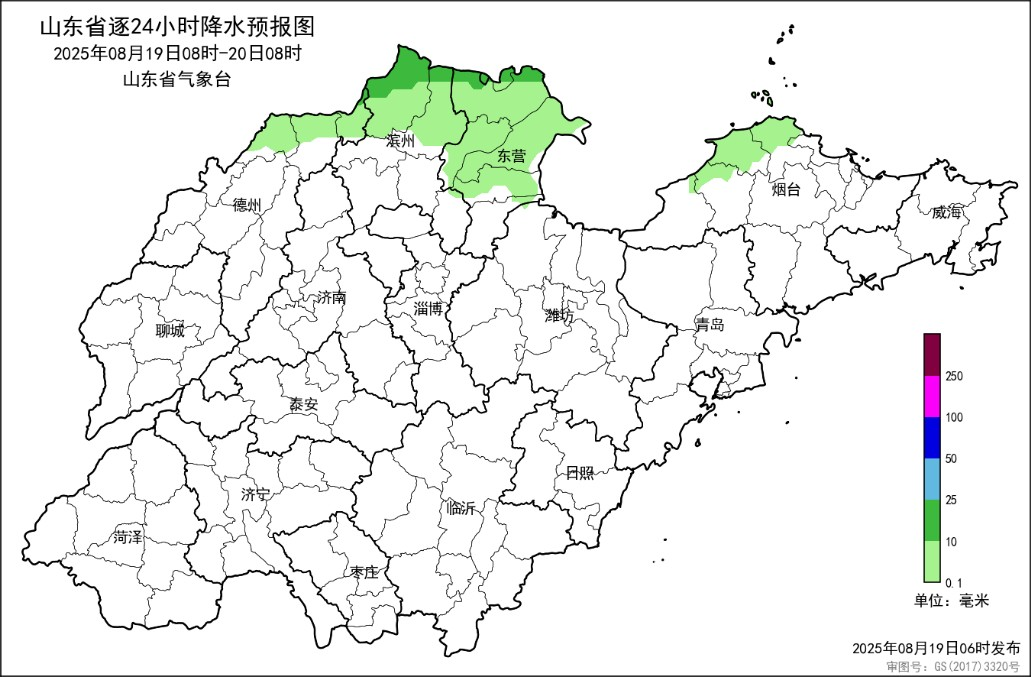
Core Viewpoint - The Shandong Meteorological Bureau has issued a yellow high-temperature warning, predicting temperatures above 35°C in inland areas from August 19 to 23 due to the influence of the subtropical high-pressure system [1]. Summary by Relevant Sections High-Temperature Forecast - From August 19 to 23, inland areas of Shandong are expected to experience high temperatures ranging from 35°C to 39°C, with some areas potentially reaching 40°C. Coastal regions will see temperatures between 30°C and 34°C [1]. Daily Weather Conditions - On August 19, cities such as Liaocheng, Dezhou (eastern), Binzhou (southern), Dongying (southern), Jinan, Zibo, Weifang, Tai'an, Heze, Jining, Zaozhuang, Linyi, Rizhao, and northern Qingdao will have temperatures between 35°C and 37°C, while other areas will range from 30°C to 34°C. The forecast for August 20 to 22 indicates similar high temperatures in inland areas [4][6][9]. Weather Patterns and Influences - The formation of high temperatures is attributed to specific weather systems, particularly the subtropical high-pressure system, which is known as a "messenger of high temperatures." Urban heat island effects and global warming are also contributing factors to the increasing frequency of extreme heat events [11].
新闻分析:为何同等数值的降雨,大家感受不同?
Xin Hua Wang· 2025-08-15 22:32
Group 1 - The article discusses the varying perceptions of rainfall despite identical measurements, emphasizing that the impact of rainfall is closely related to its intensity and duration [1][2] - It explains that a rainfall amount of 70 millimeters can have drastically different effects depending on whether it falls in a short period or is spread out over a longer duration, with urban drainage systems playing a critical role in managing excess water [1][3] - The article highlights that regional climate differences affect how rainfall is perceived, with the same amount of rain being considered extreme in one area but normal in another, illustrating the subjective nature of weather events [2][3] Group 2 - The article notes that geographical factors, such as soil type and urban infrastructure, significantly influence the consequences of rainfall, with areas prone to flooding or landslides being particularly vulnerable [3] - It mentions that global warming is expected to increase the frequency and intensity of extreme rainfall events, necessitating adaptive strategies for disaster prevention and mitigation [3]
今夏最嚣张的“顶流生物”,无差别攻击每一个路人
Hu Xiu· 2025-08-15 09:08
Core Points - The article discusses the recent surge in cicada populations and their impact on urban life, particularly in northern cities experiencing extreme weather conditions [4][5][6] - It highlights the relationship between cicada behavior and environmental factors such as temperature, humidity, and light, which have contributed to their increased activity this summer [7][45][52] - The phenomenon is linked to broader ecological changes and climate variations, indicating a shift in species behavior and interactions with human environments [70][71][92] Group 1 - The cicada has become a prominent symbol of summer, with its presence compared to extreme heat and weather conditions [4][5] - Increased cicada noise levels are attributed to environmental changes, with estimates suggesting a 3-5 times increase in cicada populations compared to previous years [29][45] - The article notes that cicadas are sensitive to temperature and humidity, which influence their mating calls and behaviors [48][50][52] Group 2 - The cicada's life cycle and population dynamics are affected by climate change, with overlapping life cycles leading to significant population surges [28][32][70] - Urbanization and changes in green spaces, such as the planting of cicada-preferred trees, have contributed to the increased cicada presence in cities [60][62][64] - The article emphasizes the interconnectedness of human activities, climate change, and ecological systems, showcasing how these factors influence cicada behavior and urban experiences [71][93][96]