AI capex

Search documents
The Tech Download: Can hyperscalers justify their huge AI capex?
CNBC· 2026-02-13 12:12
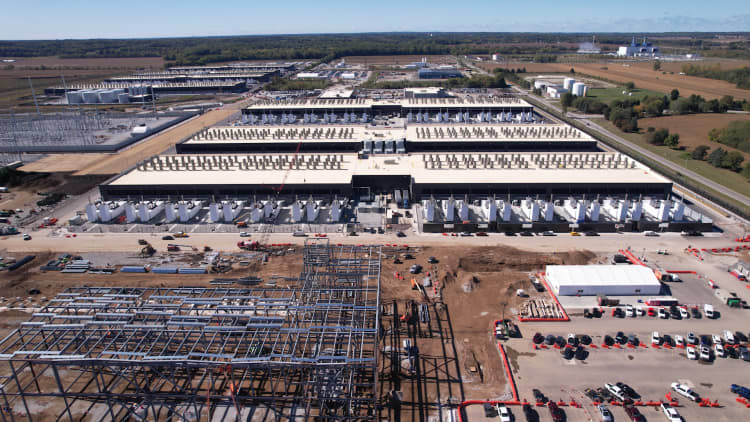
In this articleORCLGOOGLMSFTAMZNThis report is from this week's The Tech Download newsletter. Like what you see? You can subscribe here.The coreEarnings season has seen endless spending commitments from tech companies as they scramble to build out data center capacity amid the AI boom.Hyperscalers, including the likes of Amazon, Microsoft, Meta and Alphabet, announced capital expenditure could hit $700 billion on AI this year — that's more than the GDP of countries like the United Arab Emirates, Singapore a ...




中国工业行业:2025 年四季度业绩前瞻:盈利表现稳健-China Industrials-4Q25 Preview Solid Earnings
2026-02-04 02:32
Summary of Earnings Call Transcript Industry Overview - **Industry**: China Industrials - **Market Outlook**: Solid earnings expected for capital goods companies with double-digit revenue growth and margin expansion driven by strong AI capital expenditures, favorable product mix, and increased overseas sales contributions. High commodity prices negatively impact Hongfa Technology but have less effect on other companies [1][2][3]. Key Company Insights Leader Harmonious Drive Systems (688017.SS) - **Revenue Growth**: Expected to reach 46% YoY in 4Q25, driven by increased humanoid orders and industrial robots growth [5]. - **Margin Expansion**: Anticipated margin increase to 37%, up 5 percentage points YoY [5]. Zhejiang Shuanghuan Driveline Co. Ltd. (002472.SZ) - **Revenue Growth**: NEV gears revenue expected to grow mid-teens YoY, with total revenue growth projected at 22% YoY [5]. - **Net Profit**: Estimated at Rmb348 million, a 22% increase YoY [5]. Hongfa Technology Co. Ltd. (600885.SS) - **Revenue Growth**: Projected total revenue growth of 10% in 4Q25, with strong demand across various relay segments [5]. - **Margin Compression**: Expected margin decline of 0.6 percentage points YoY to 39.5% due to rising raw material prices [5]. - **Net Profit**: Anticipated at Rmb380 million, a 5% increase YoY, which is below consensus expectations [5]. Sany Heavy Industry Co., Ltd. (600031.SS) - **Sales Growth**: Expected mid-teens growth in both domestic and overseas sales, with 4Q25 sales projected to rise 18% YoY to approximately Rmb23.5 billion [5]. - **Net Profit**: Projected to increase by 32% YoY to around Rmb1.5 billion [5]. Zoomlion Heavy Industry (000157.SZ) - **Sales Growth**: Anticipated 20% YoY increase in sales for 4Q25, with net profit expected to rise 157% YoY to approximately Rmb981 million [5]. Jiangsu Hengli Hydraulic Co. Ltd. (601100.SS) - **Sales Growth**: Expected 25% increase in 4Q25 sales, driven by domestic up-cycle and market share gains [5]. - **Net Profit**: Projected to rise 19% YoY to Rmb855 million [5]. Shenzhen Inovance Technology (300124.SZ) - **Revenue Growth**: Automation business revenue expected to grow 18% YoY in 4Q25, with net profit projected to increase by 18% YoY to around Rmb1.1 billion [6]. WeiChai Power (2338.HK) - **Revenue Growth**: Anticipated 11% YoY growth in total revenue for 4Q25, supported by HDT industry sales growth [6]. - **Net Profit**: Expected to grow 23% YoY to Rmb3.7 billion [6]. Sinotruk (Hong Kong) Limited (3808.HK) - **Sales Growth**: Estimated 40% YoY growth in HDT volume sales in 2H25 [6]. - **Net Profit**: Projected to grow 34% YoY to Rmb3.4 billion [6]. Shenzhen Envicool Technology Co. Ltd. (002837.SZ) - **Revenue Growth**: Expected 24% YoY revenue growth in 4Q25, driven by data centers and ESS business [6]. - **Net Profit**: Anticipated to grow 98% YoY to Rmb198 million [6]. Additional Insights - **Commodity Prices**: High commodity prices are a concern for certain companies, particularly Hongfa Technology, which may face margin pressures [1][5]. - **Market Dynamics**: The overall positive outlook for the China Industrials sector is supported by technological advancements and increased demand for new energy vehicles [1][5]. This summary encapsulates the key points from the earnings call, highlighting the performance expectations and challenges faced by various companies within the China Industrials sector.
中国工业 - 催化剂前瞻:2026 年第一季度展望-China Industrials-Catalyst Previews What's Ahead in 1Q26
2026-01-07 03:05
Summary of Key Points from the Conference Call Industry Overview - **Industry Focus**: The report covers the **China Industrials** sector, specifically focusing on **Automation & Robotics**, **Construction Machinery**, **Heavy-duty Trucks**, and **New Energy** stocks that may influence share prices in the near future [1][2]. Core Insights and Arguments - **Automation Sector**: - Monthly new order intake growth and industrial robot production are expected to be reported at the beginning and mid-month respectively [5][6]. - Shenzhen Inovance Technology anticipates approximately **20% year-on-year growth** in new orders for January-February 2026, driven by a modest capital expenditure recovery and market share gains [8][9]. - **Heavy-duty Trucks (HDT)**: - Monthly sales volume data will be released at the beginning of each month [5]. - Negative growth is expected in the domestic HDT market for 1Q26 due to front-loading in 2025 and a **5% increase in NEV purchase tax** in 2026, although export growth is projected to remain resilient [9][11]. - **Construction Machinery**: - Monthly excavator sales volume will be reported at the beginning of each month, with expectations that export growth will offset high base pressure from domestic sales in January-February [8][9]. Company-Specific Catalysts - **Beijing Geekplus Technology Co., Ltd. (2590.HK)**: - Inclusion in the Southbound Stock Connect program is expected in **February 2026**, following its addition to the Hang Seng Composite Index [7]. - Launch of a wheel-based humanoid robot is anticipated, which could enhance its position as an unmanned warehouse solution provider [7]. - **Jiangsu Hengli Hydraulic Co., Ltd. (601100.SS)**: - Anticipated updates on Tesla's Optimus Gen 3 in 1Q26, which may lead to a revision of sales outlook for 2026 [7][8]. - **Wuxi Lead Intelligent (300450.SZ)**: - Expected improvement in liquid LiB equipment orders in 1Q26, driven by strong demand for energy storage systems [7]. - **Sany Heavy Industry Co., Ltd. (600031.SS)**: - Expected growth in excavator sales, with export growth anticipated to mitigate domestic sales pressures [8]. - **Zoomlion Heavy Industry (000157.SZ)**: - Anticipated cyclical recovery in non-excavator machinery sales, supported by solid export growth [8]. Additional Important Insights - **Market Conditions**: - Concerns remain regarding growth momentum amid an anti-involution and deflationary environment, alongside margin pressures from the NEV powertrain business [9]. - **Chinese Hyperscalers**: - Potential acceleration in AI capital expenditure for Chinese hyperscalers is expected, which should support demand for cooling solutions [11]. - **Profit Alerts**: - Estun Automation is expected to issue a profit alert in January, indicating a return to profitability after a net loss in 2024 [9]. Conclusion The conference call highlights significant catalysts and trends within the China Industrials sector, with a focus on automation, heavy-duty trucks, and construction machinery. Key companies are positioned to leverage upcoming developments, although challenges such as market conditions and regulatory changes remain pertinent.





Pfizer, Merck Are Boring Again — And That's Exactly Why 2026 Investors Are Circling Back
Benzinga· 2025-12-17 15:14
Core Insights - Pfizer and Merck are experiencing a shift in market perception, with both companies focusing on stability rather than high-growth narratives [1][7] - Pfizer's cautious outlook for 2026 indicates ongoing challenges post-COVID, with expectations for flat-to-low single-digit growth [2][3] - Merck has maintained better performance due to strong oncology cash flows and consistent execution, appealing to investors seeking reliability [4][6] Pfizer Overview - Pfizer's stock is trading below pandemic-era multiples, with a current yield exceeding 6%, making it one of the highest in large-cap pharmaceuticals [3] - The company is prioritizing targeted dealmaking, exemplified by a recent collaboration with Adaptive Biotechnologies valued at up to $890 million, focusing on autoimmune diseases [5][6] - The strategy reflects a balance-sheet-aware approach to pipeline development rather than aggressive expansion [6] Merck Overview - Merck's dividend yield is between 3-4%, attracting investors looking for dependable returns rather than speculative growth [4] - The company's pipeline does not rely on a single breakthrough, as incremental progress and steady oncology performance are sufficient to support its valuation [6] - Merck's strategy mirrors Pfizer's in its focus on maintaining a stable earnings base without significant balance-sheet stress [4][6] Market Implications for 2026 - The market may favor companies that demonstrate consistent execution over those that promise high growth but carry execution risks [7] - Pfizer and Merck's "boring" profiles may become advantageous in a market increasingly wary of volatility and uncertainty [7]



写在英伟达业绩前、谷歌十年磨一剑
傅里叶的猫· 2025-11-19 14:56
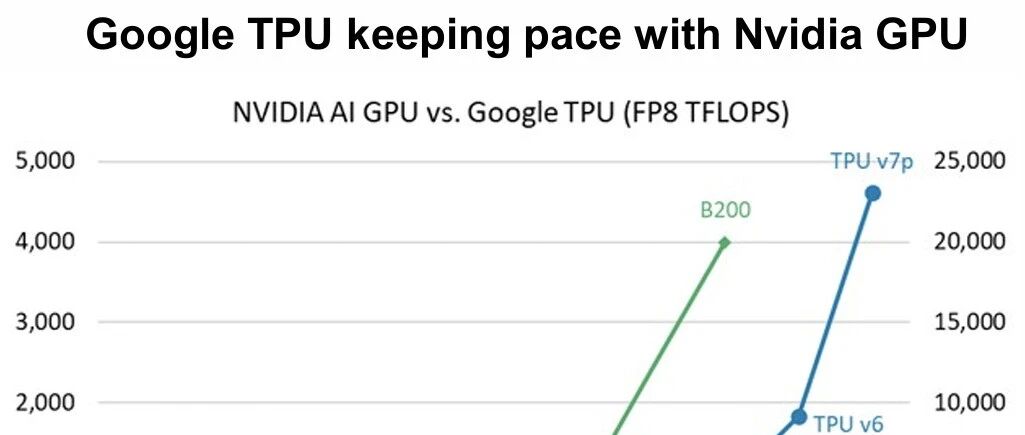
Core Insights - The article highlights the impressive performance of Google's Gemini 3, which has received positive evaluations across various benchmarks, outperforming competitors like Claude Sonnet 4.5 and GPT-5.1 in multiple dimensions [1][3] Benchmark Performance - Gemini 3 Pro achieved significant scores in various benchmarks, such as: - 91.9% in scientific knowledge without tools [1] - 95.0% in mathematics without tools [1] - 100% in mathematics with code execution [1] - 87.6% in knowledge acquisition from videos [1] - 72.7% in screen understanding [1] - The model's performance in complex reasoning tasks showcases its superiority in high-difficulty scenarios, indicating a breakthrough in AI capabilities [4][3] Technological Advancements - The advancements in Gemini 3 are attributed to improvements in pre-training and post-training methodologies [3] - The model was trained using Google's own TPU, which is a strategic advantage over NVIDIA's GPUs, potentially impacting NVIDIA's market position negatively [7][8] Cost Efficiency - Training costs using TPU V7 are reported to be only half of that of NVIDIA's B200, highlighting a significant cost advantage for Google [8][12] - The article emphasizes that the performance improvements are based on substantial computational power, suggesting that scaling laws still have room for growth [15] NVIDIA's Market Outlook - NVIDIA has consistently exceeded market expectations, with forecasts for Q3 revenue ranging from $555.56 billion to $567 billion, driven by sustained AI demand [17][19] - The company is expected to maintain high gross margins, with estimates around 73.5% to 74% for Q3, despite rising component costs [22][24] Competitive Landscape - NVIDIA faces competition from AMD's MI300 and in-house chip developments by major cloud providers like Google and Amazon, which could impact its market share [26] - The article notes that while NVIDIA's software ecosystem remains a stronghold, the emergence of alternative solutions may challenge its pricing power [26] AI Capital Expenditure Trends - Global AI capital expenditure is projected to reach $204.6 billion by 2026, with a significant increase in enterprise adoption of generative AI expected [27][28] - The demand for AI infrastructure is anticipated to support NVIDIA's growth, even if some startups reduce their GPU purchases [28]


Fed's hawkish rate cut tone is behind bitcoin pullback, says Pantera's Jiang
Youtube· 2025-11-18 19:09
Core Viewpoint - Bitcoin has recently experienced a significant decline, dropping to around $93,000, which is a 10% decrease in just one week and has turned negative for the year, raising questions about whether this marks the bottom or if further declines are expected [1]. Market Dynamics - A six-month rally in the crypto market has led to a reasonable consolidation phase, influenced by macroeconomic factors such as AI capital expenditures, credit concerns, and the Federal Reserve's plans for rate cuts [2]. - Bitcoin, being a higher growth asset, is subject to higher volatility, with historical patterns showing multiple 30% drawdowns during uptrends, making it premature to declare a sustained downtrend at this point [3]. Leverage and Market Sentiment - Recent events have seen a significant reduction in leverage within the Bitcoin ecosystem, following a large deleveraging event earlier in October, which has already caused considerable market pain [4][5]. - Negative reflexivity and market sentiment continue to play a role in driving Bitcoin's price movements, but the current market dynamics suggest a shift towards reduced volatility as institutional ownership increases [5][6]. Institutional Investment - Institutional ownership of Bitcoin has risen to 16%, up from virtually 0%, indicating a trend towards less sensitivity to market volatility and potentially smaller drawdowns in the future [6]. - The involvement of prestigious institutions, such as Harvard University's endowment fund investing in Bitcoin exchange-traded funds, highlights the growing institutional interest in the asset class [7]. Long-term Investment Perspective - The company views itself as a long-term investor in the digital assets ecosystem, with its Bitcoin fund launched in 2013 achieving nearly an 80% compound annual growth rate (CAGR) since inception, which is exceptional for over a decade [8][9]. - Despite the potential onset of a bear market, the company believes that a 30% pullback presents an interesting opportunity for gradual allocation into Bitcoin, given its historical performance and growth potential [9].

Tariffs still haven't hit earnings in aggregate, says NewEdge's Cameron Dawson
Youtube· 2025-10-30 20:16
Market Overview - The market has shifted focus from trade tensions to earnings performance, with earnings continuing to reach new 12-month forward highs driven by AI capital expenditures [3][4] - Despite concerns about potential impacts from tariffs, overall earnings have not been significantly affected, allowing the market to maintain upward momentum [2][3] Valuation and Historical Context - Current valuations for major tech companies (excluding Tesla) average between 35 to 38 times forward earnings, which is significantly lower than the over 200 times seen in 1999 for companies like Cisco and Intel [5][6] - The market is not in a euphoric state similar to the late 1990s, suggesting that the current AI-driven growth may continue to support performance [6] Federal Reserve and Interest Rates - The probability of a rate cut in December is currently at 71%, down from 84%, indicating a cautious market sentiment despite some expectations for cuts [8][9] - Analysts suggest that while the market is pricing in rate cuts, there is a risk that the Fed may not deliver as expected, especially if labor market data does not indicate significant weakness [9][10][14] Economic Implications - The market's reliance on further rate cuts implies a belief that the labor market is weaker than suggested by current data, which could lead to aggressive valuations if growth estimates are too high [14][15] - A balanced approach to rate cuts is preferred, as excessive cuts could signal deeper economic issues, impacting market stability [14][15]

The hidden risk behind the AI rally
Youtube· 2025-10-16 14:36
Core Viewpoint - The discussion centers around the growth of AI-related stocks and whether this growth indicates a bubble, with a focus on the sustainability of capital expenditure (capex) in the AI sector [2][4][10]. Group 1: AI Market Dynamics - AI-related stocks are experiencing supernormal growth due to a significant phase of capex buildout, but current earnings growth does not reflect the extreme valuations seen in past bubbles like 1999 [2][4]. - There is a concern that companies may be over-earning, and the pace of capex growth will be crucial to monitor through 2026 [3][4]. - The US equity market is being driven higher by AI capex, which in turn boosts consumer spending, creating a circular economic effect [9][10]. Group 2: Investment Strategies - The investment strategy suggests a balanced approach, incorporating optimism about technological advancements, caution regarding market corrections, and exploration of alternative investments [12][16]. - The optimistic view emphasizes the importance of investing in high-quality companies that benefit from AI capex rather than speculative names [17]. - The pessimistic perspective highlights the need for diversification in fixed income portfolios, particularly through municipal bonds, to mitigate risks associated with inflation [19]. Group 3: Alternative Investments - The nihilistic approach encourages looking beyond traditional asset allocations, with a focus on alternatives like crypto, which can provide lower correlation to public markets [21][22]. - Crypto is viewed as a psychological commodity sensitive to liquidity, making it a potential part of a risk asset allocation for investors with high risk tolerance [22].

We're seeing lots of evidence of 'bubble-like behavior' in AI space, says GMO's Ben Inker
Youtube· 2025-10-08 15:55
Market Overview - There is evidence of bubble-like behavior in the AI sector, characterized by speculative actions and aggressive pricing [1][2] - The US market is experiencing a two-speed economy, heavily reliant on AI capital expenditures, which could lead to vulnerability if there is a slowdown [6][12] Investment Opportunities - Europe and Japan are seen as attractive investment areas due to their cheap valuations and resilience against recession fears [3][4] - Value stocks in Europe, particularly in financials, industrials, and pharmaceuticals, are trading at significant discounts compared to US counterparts, presenting good return potential [5] AI Sector Dynamics - The AI ecosystem is increasingly dependent on debt financing rather than cash flow, raising concerns about sustainability [9][12] - Companies like Nvidia are investing heavily in non-profitable firms, which may indicate a shift in the capital structure of the tech industry [8][11] Capital Investment Trends - The tech industry is becoming more capital-intensive, which could challenge the historically high returns on capital that were previously maintained [15][16] - Innovative financing structures, such as special purpose vehicles for debt management, are emerging but may signal underlying risks [14]

There's a productivity boom in the U.S. similar to the 1990s, says KKR's Henry McVey
CNBC Television· 2025-09-25 13:30
Economic Outlook & Investment Strategy - KKR认为美国正在经历类似于1990年代的生产力繁荣,这能够支持更高的工资、承受关税对利润率的影响,并最终推动收入增长 [8][9] - KKR的基本观点是,美国经济将继续以1.5%到2%的速度增长,并且可能略有上升 [14] - KKR预计美联储今年将降息两次,明年将降息三次,以支持市场 [15][28] - KKR认为企业正在继续增加资本支出,消费者状况良好,因此当前市场水平相对安全 [16] Sector & Regional Analysis - AI资本支出增长超过了个人消费的所有增长,这是一个巨大的变化 [3] - 亚洲市场(尤其是韩国和日本)存在投资机会,这些市场的估值较低,且企业正在进行改革 [17][18][19] - 亚洲内部贸易正在增长,预计将从目前的48%-50%增长到70%,类似于欧洲和美洲的水平,这将推动物流基础设施的发展 [22][23] Risks & Concerns - 如果AI领域的回报率下降过快,可能会对GDP产生影响 [26] - 如果失业率大幅上升至5.5%,将对经济体系造成冲击 [26] - 低收入消费者正在感受到更高通胀的影响,一些杠杆实体因利率上升而面临压力 [15] Labor Market Dynamics - 政府部门就业岗位的减少和医疗保健及教育行业的窄幅关注可能会导致政府数据表现不佳 [10] - KKR观察到企业招聘速度放缓,但没有出现大规模裁员 [11] - 如果不是因为特朗普政府限制了劳动力供应,失业率可能会接近5% [12]