Attention Span

Search documents
Brain Rot Emergency: These Internal Documents Prove They’re Controlling You! 2
The Diary Of A CEO· 2026-02-16 08:00
You are actively rewiring your brain for the worst by engaging with social media, high volume, quick videos. >> And the social media executives don't let their kids use this stuff because they designed it to be addictive and they know that millions and millions of kids have been cyberbullied, sexed. Many have committed suicide. So, I'm getting angry. >> And then from the medical perspective, it's rewiring your body, increasing your risk of heart disease and PTSD. >> We've moved too far into the virtual worl ...


Mindset Over Metrics: Redefining Wellness and Womanhood | Snehil Dixit Mehra | TEDxLPU Women
TEDx Talks· 2026-02-03 17:08
हेलो एवरीवन। इट इज़ सच अ ब्लेसिंग टू बी हियर ऑन दिस स्टेज एंड आई विल टेल यू व्हाई। बिकॉज़ बैक इन 2020 व्हेन आई बिकम वेरी वायरल फॉर माय वीडियोस एंड आई वाज़ पॉपुलरली बीइंग कॉल्ड बीसी आंटी। देयर वाज़ वन इवनिंग ऑन नवंबर 18th 3:30 am व्हेन आई वास हैविंग अ पर्टिकुलरली रफ डे एंड आई वेंट टू द नोट्स ऑन माय फोन एंड आई रोट फॉर माइस सेल्फ दैट व्हाटएवर इज़ हैप्पेनिंग इन माय लाइफ राइट नाउ वन डे आई एम गोइंग टू टॉक अबाउट इट इन माय टेट टॉक एंड टुडे इज दैट डे शुक्रिया अब आप में से कुछ लोग कहेंगे कि यह तो हो सकता है मैनिफेस्टेशन ह ...

The TikTokification of Music | Amida Grego | TEDxHumanitree School
TEDx Talks· 2025-09-12 16:13
Music Industry Trends & Impact of TikTok - The music industry is shifting from a focus on artistic expression to algorithmic optimization, prioritizing virality over storytelling and emotional depth [5][7] - Music structure has changed, with songs now often prioritizing the chorus for immediate engagement, potentially sacrificing artistic development [4] - The lifespan of a hit song has drastically decreased, with TikTok hits becoming outdated in months, weeks, or even days [7] - Artists are increasingly creating music tailored to consumer preferences and the TikTok algorithm, potentially compromising their authenticity [7] Consumer Behavior & Attention Span - The average attention span has decreased significantly, from 2 minutes and 30 seconds to just 47 seconds in 2020, impacting focus and engagement [9] - Consumers are increasingly driven by a need for instant gratification and dopamine, leading to a preference for easily digestible content [9][11] - This craving for dopamine can lead to decreased inner creativity and a desire for sameness, potentially impacting individual taste and preferences [12] Potential Solutions & Recommendations - The industry should encourage consumers to explore diverse music genres and artists to broaden their perspectives and reclaim individual taste [15] - The industry should promote listening to full albums to appreciate the artist's complete vision and intent [15] - Consumers should consciously combat the algorithm by actively seeking out new music and engaging with the world around them [14][16]

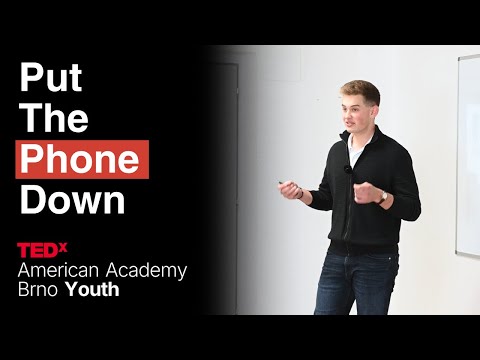
Put the phone down | Kryštof Chmel | TEDxAmerican Academy Brno
TEDx Talks· 2025-07-17 15:38
Core Argument - Excessive screen time and social media use can negatively impact mood, sleep, and overall well-being [5] - Social media's unpredictable rewards trigger dopamine release, leading to addiction [6] - Short videos on platforms like TikTok and Instagram quickly and constantly trigger the brain's reward system [7] - The brain can reset with the right habits and breaks from distractions [7] Strategies for Mitigation - Dedicate one hour each morning to activities without phone usage, such as reading and connecting with nature [8] - Utilize apps designed to reduce distractions and manage time intentionally [8] - Replace screen time with real-world activities like outdoor exercise and facing fears [9] - Prioritize activities that promote real dopamine release, such as sunlight exposure, exercise, and breath work [9] - Use blue light blocking glasses and change screen color to red at night to improve sleep [10] Behavioral Insights - Unexpected rewards cause a greater dopamine spike than expected rewards [5] - Discomfort can build confidence [10] - Phones can control individuals and steal time from living in the present moment [11]
X @BREAD | ∑:
BREAD | ∑:· 2025-07-01 14:25
User Attention - Most viewers stopped watching at 0:01, indicating extremely short attention spans [1] - The observed attention span is compared negatively to "SOL shitter hold time," suggesting a very low threshold for engagement [1] Social Media Trends - The content marks the beginning of a "tiktok arc," implying a shift towards short-form video content [1] - The content is shared on Twitter with the implication that it is representative of a broader trend [1]
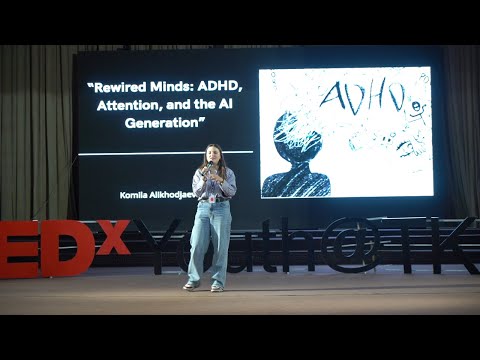
Rewired Minds: ADHD, Attention, and the AI Generation | Komila Alikhodjaeva | TEDxYouth@TKA
TEDx Talks· 2025-06-30 16:13
Attention Span & Digital Impact - Human attention span is currently 8 seconds, less than a goldfish's 9 seconds [3][4] - In 2004, human attention span was 2 and a half minutes, now it's 47 seconds [4] - The human brain processes 40 bits of information per second, while modern technology delivers 400,000 bits per second, leading to difficulty in focusing [5] - The modern brain is likened to a browser with 27 tabs open, struggling to focus in an ADHD world mixed with AI [6] AI & Cognitive Impact - AI tools may diminish the ability to think and interpret independently [8] - There are concerns about whether thoughts are one's own or influenced by AI [8] - AI can be used as a mirror to strengthen one's own thoughts, rather than replacing them [12] ADHD & Generational Trends - In the USA, 6 million kids are diagnosed with ADHD by age seven, a 1 in 10 ratio [9] - Over 60% of ADHD cases continue into adulthood [10] - The presentation suggests reframing ADHD not as a malfunction, but as a new variation of thinking [13] Solutions & Recommendations - Create friction by making it difficult to get distracted, such as putting phones in another room or using website blockers [11][12] - Think about problems for at least 20 minutes before using AI [12] - Rewire the brain, rethink habits, and rethink tools to avoid being lost in readily available answers [14]