
Humility

Search documents
The Most Important Lesson: Humility
Principles by Ray Dalio· 2025-12-01 21:25
Early Challenges & Near Collapse - Bridgewater experienced significant ups and downs early on, nearly collapsing, which proved to be a transformative experience [1] - The 1970s were a volatile period for the market [1] Economic Prediction & Misjudgment - Bridgewater predicted a major debt crisis due to American banks lending excessively to foreign countries, a controversial view that led to attention and congressional testimony [2] - Bridgewater incorrectly predicted a reduced level of liquidity preventing a return to stagflation [3] Financial Setback & Humility - Bridgewater lost money for itself and clients due to a misunderstanding of the impact of easing, coinciding with the stock market bottom [4] - The experience of financial loss and needing to borrow $4,000 from his dad was a painful but ultimately valuable lesson in humility for the founder [4]

The Gift of Not Being ‘Enough' | Dr. Rachel Jayaseelan | TEDxJainUniversity
TEDx Talks· 2025-11-24 17:11
Core Argument - The speech emphasizes the transformative power of embracing insecurities rather than battling them, leading to personal growth and genuine connection [7] - It contrasts human experiences, marked by insecurities and vulnerabilities, with AI's lack thereof, highlighting the unique capacity of humans for empathy and transformation [6][7] Six Pillars of Strength (Transformations) - From sympathy to empathy: Recognizing and understanding vulnerabilities in oneself and others [8][9][10] - From shame to humility: Accepting imperfections and finding beauty in being "average" [10][11][12] - From critical to reflective: Shifting from self-criticism to self-reflection to allow for personal growth [14][15] - From fearful to fierce and resilient: Transforming fear into strength and resilience by embracing vulnerabilities [15] - From feeling closed to being open to growth: Acknowledging insecurities to become more open to seeking support and growth [15] - From inauthenticity to authenticity: Embracing wholeness and self-love, including insecurities, to bridge the gap between the perceived and genuine self [15][16] Societal and Internal Narratives - Societal narratives and internal narratives shape perceptions of acceptability, influencing how individuals view and interact with their insecurities [17] - Acknowledging insecurities without shame is crucial for coexisting with them and fostering personal growth [18] Poem's Message - Every wound, scar, and lack contributes to shaping an individual, emphasizing the potential for strength and transformation found in pain and vulnerability [19][20]
The Two Questions Every Leader Should Ask | Phuc Huynh | TEDxLCCUniversity
TEDx Talks· 2025-11-11 17:20
Leadership & Humility - Leadership should be a dynamic experience, adapting to changing circumstances and team growth, rather than becoming a routine checklist [8][9][10] - The industry emphasizes the importance of questioning oneself and remaining open to the possibility of not always being right, highlighting humility as a key leadership trait [7] - Admitting mistakes is crucial for building trust and fostering a culture of honesty and growth within a team [14][15] Self-Reflection & Improvement - Leaders should regularly assess whether their leadership has become routine, as this can lead to stagnation and a failure to listen to fresh ideas [8][10] - The industry suggests that leaders should be able to admit their mistakes, even when praised or successful, to encourage a learning environment [12][14] - Continuous self-improvement is encouraged, with leaders striving to be better than they were yesterday [17]

Warren Buffett shares his biggest leadership lessons after decades at the top
Business Insider· 2025-11-10 22:38
Core Insights - The letter emphasizes the importance of humility and continuous learning for CEOs, as highlighted by Warren Buffett's reflections on his career and life experiences [1][2][3] Group 1: Leadership and Management - Buffett advocates for humility in leadership, noting that luck has played a significant role in his success and that recognizing this can foster a humble approach [2][3] - He stresses the need for boards to be vigilant about the health of CEOs, suggesting that directors should be proactive in addressing signs of cognitive decline [7][8] - The company should prioritize hiring leaders who are motivated by the right reasons, avoiding those who seek personal wealth or legacy [11] Group 2: Personal Development and Legacy - Buffett encourages individuals to reflect on their desired legacy, advising them to live in a way that aligns with how they want to be remembered [12] - He expresses confidence in his successor, Greg Abel, highlighting his managerial skills and integrity, which are essential for the company's future [13] - The letter concludes with a message of hope for personal growth, emphasizing that it is never too late to change and improve [14]


What we talk about at the secret world champions' meetings | AnnMaria De Mars | TEDxFargo
TEDx Talks· 2025-10-31 15:06
Key Success Factors - The industry emphasizes the importance of arrogance, humility, and perseverance as essential qualities for achieving exceptional success [1] - The industry recognizes that success requires a combination of believing in one's ability to change an industry while acknowledging the need for continuous learning [3] - The industry highlights that talent is a necessary but not sufficient condition for success, as many talented individuals may not achieve their full potential [5] Overcoming Challenges - The industry acknowledges that the path to success involves facing numerous failures and setbacks [1] - The industry stresses the importance of admitting failures and adapting to change in order to improve and progress [3] - The industry recognizes that external factors, such as limited access to resources or opportunities, can hinder success despite hard work and talent [5] Personal Development and Contribution - The industry encourages individuals to use their talents to make a positive impact on the world [5] - The industry values continuous learning and seeking knowledge from others, regardless of their perceived status or expertise [4]

Confidence and Humility | Sophia Al Lamki | TEDxReptonSchoolDubai
TEDx Talks· 2025-10-29 16:43
Core Argument - Balancing confidence and humility is crucial for lasting success in business innovation and life [3] - Confidence enables action, while humility ensures adaptability and learning [3] - Overconfidence leads to failure by ignoring critical details, while excessive humility causes missed opportunities [5][6][7] Case Studies - Adam's overconfidence led to his company's downfall due to neglected issues [6] - Yasmine's excessive humility resulted in missed opportunities and competitive disadvantage [7][8] - Steve Jobs' success stemmed from his confidence in revolutionary products, but his lack of humility eventually led to his ouster from Apple [9][10][18] - Elon Musk exemplifies the balance of confidence and humility, demonstrated by his willingness to learn from SpaceX failures [19][20][21] Practical Implications - Confidence is the "thrust" that propels vision, while humility acts as the "stabilizer" [20] - Leaders should embrace both confidence and humility to navigate challenges and achieve lasting success [23] - Innovation requires the courage to take risks and the humility to learn from failures [15][21] Key Takeaway - The future rewards those who balance confidence and humility, enabling them to adapt and thrive [23]
How to Navigate Between Self-Love & Egotism | Ikeji Ebubechukwu Jane-Frances | TEDxAshesiUniversity
TEDx Talks· 2025-10-22 15:52
Self-Improvement & Personal Growth - The speech emphasizes the importance of self-love as a balance between self-deprecation and egotism, advocating for nuance over absolutes [12][13] - It highlights the significance of self-reflection and constructive criticism in personal evolution, urging individuals to assess whether their actions foster growth and respect others [17][20] - The speech underscores that true self-love involves accepting imperfections while striving for self-improvement, recognizing one's worth without devaluing others [16] Overcoming Adversity & Building Resilience - The speaker shares a personal journey of coping with a PCOS diagnosis, illustrating the initial acceptance of flaws and the subsequent challenges in maintaining balance [3][7] - It discusses the speaker's experience of mistaking isolation for self-reliance and egotism for confidence, emphasizing the importance of external feedback and support systems [9][18] - The speech recounts the speaker's realization of how pain can manifest as pride, leading to a loss of self-awareness and the need for internal evaluation [11][12] Relationships & Interpersonal Dynamics - The speech stresses the value of having a supportive network of people who can provide honest feedback and help identify when one is "slipping up" [18] - It advocates for treating oneself with respect and dignity, which in turn creates a space for others to do the same, fostering personal growth [21] - The speaker emphasizes the importance of admitting when one is wrong, not just to avoid conflict, but to genuinely grow and improve relationships [16]

Beyond The Blueprint: One Step Back, Two Steps Forward | Ho Sing Foong | TEDxUKM
TEDx Talks· 2025-10-20 15:50
Career Development & Advice - The speaker, a banker, shares his career journey, emphasizing that it's not a race and it's okay to pivot [13][14][15] - Self-sacrifice is needed when pivoting, including self-study of new topics [15][16] - Grit, defined as perseverance and persistence, is a major predictor of success [17][18] - Humility is crucial; avoid being overly calculative and focus on building value [24][25] - Be ready to take one step back to move two steps forward when pivoting [26] - Embrace opportunities and avoid overthinking, even with pressure from parents and peers [30][31] - Parents primarily want their children to be happy and secure, which can be achieved by demonstrating effort and progress [32] Personal Journey & Background - The speaker grew up in a middle-class family; his father was a lecturer for 40 years [3] - He initially pursued chemical engineering due to parental influence and perceived job opportunities in the oil and gas industry [4] - He realized his interest lay in finance and investments during his third year of engineering studies [5] - He self-studied financial markets, attending courses in London while studying in Nottingham [6] - He faced challenges finding a job in the financial sector in London during the global financial crisis [9] - He applied for 40 jobs before starting his career in investment banking in Malaysia [10][11] - He has been in the banking industry for over 15 years and has no regrets [11][12]
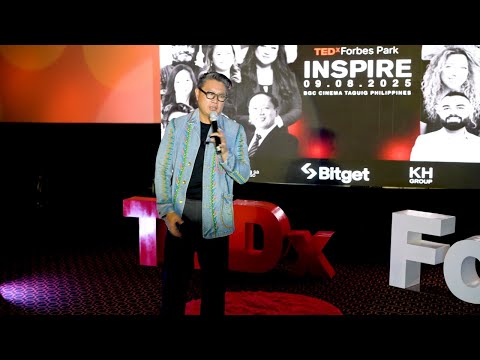
How to lead from behind | Hanky Lee | TEDxForbesPark
TEDx Talks· 2025-10-06 15:52
Leadership Philosophy - The core leadership philosophy shifts from a commanding, fear-instilling approach to servant leadership, emphasizing humility, service, and love [3][4] - Servant leadership involves prioritizing the needs of others and leading from behind, focusing on seeing and supporting everyone [6] - The traditional leadership style is contrasted with leading from behind, where one can observe and assist all team members [5][6] Core Values - Humility is defined as thinking of oneself less, not thinking less of oneself, and involves taking responsibility for mistakes [8][9] - Service is about helping and valuing others, rather than leveraging or manipulating them for personal gain [11] - Love is considered the foundation of success, particularly in the tourism industry, and involves showcasing the country's beauty and people [13] Business Impact - Embracing leading from behind led to growth from one property to 12 across the country [14] - The company overcame challenges in employing people and experienced positive outcomes, including gratitude and blessings [14] - The speaker emphasizes the potential positive impact of leading from behind on families, teams, businesses, and the country [15]
John Studzinski, a titan of finance and philanthropy, shares 4 simple tips to help you succeed
Yahoo Finance· 2025-10-05 17:00
Core Insights - John Studzinski emphasizes four crucial lessons for success in careers, particularly in finance and philanthropy, which include time management, persistence, humility, and trust [6] Group 1: Importance of Data and Time Management - Mastering the "Three D's" — data, details, and deadlines — is essential for success in any professional setting [2][6] - Effective time management involves deciding whether to do tasks independently, collaborate, or delegate [3] Group 2: Persistence and Tenacity - Persistence is highlighted as a vital skill, with the notion that success often requires multiple attempts, as one may need to "knock on the door" 19 or 20 times before achieving results [3] Group 3: Humility and Ego Management - Keeping ego out of decision-making is crucial, as focusing too much on status can lead to poor choices [4] - Individuals should reflect on what drives their actions, ensuring that decisions are not ego-driven [4] Group 4: Building Trust - Trust is identified as a key element in professional relationships, taking years to build but can be easily destroyed [5] - A reputation for ethical behavior and trustworthiness is beneficial in both finance and philanthropy [5]