MRO

Search documents
IPO对赌倒计时 赎回负债超45亿元 鑫谊麟禾卖身也还不起投资人债
Sou Hu Cai Jing· 2026-02-11 03:38
Core Viewpoint - The MRO (Maintenance, Repair, and Operations) sector, despite being a seemingly low-profile market, is attracting significant capital interest as traditional consumer e-commerce growth slows down. Companies like Xin Yi Lin He are attempting to capitalize on this trend through IPOs and strategic acquisitions [2][3]. Industry Overview - The MRO procurement service market in China is projected to grow from CNY 3.0 trillion in 2020 to CNY 3.7 trillion by 2024, with a compound annual growth rate (CAGR) of 5.6%, indicating a substantial market opportunity [3]. - MRO products include essential items like hardware, lubricants, and various chemicals, which are aggregated on platforms to reduce supply chain costs and enhance pricing [2]. Company Performance - Xin Yi Lin He, established in 2013, operates the B2B e-commerce platform Rui Gu Mall, ranking fifth in the domestic MRO sector. The company reported a revenue increase from CNY 5.05 billion in 2023 to CNY 8.77 billion in 2024, a growth rate of 73.7%. However, its MRO platform business revenue is declining, with a 17.82% drop expected in 2024 [3][5]. - In the first three quarters of 2025, Xin Yi Lin He's revenue reached CNY 11.24 billion, but the contribution from its digital platform continued to decrease, accounting for only 24.4% of total revenue [5]. Financial Challenges - Xin Yi Lin He's sales and marketing expenses were CNY 2.99 billion in 2023, representing 59.21% of its revenue. The company faced operating losses of CNY 3.51 billion in 2023 and CNY 3.83 billion in 2024, with cumulative losses of CNY 9.51 billion over three years [7][19]. - The company holds only a 0.9% market share in the online MRO procurement service market, indicating limited scale and profitability [8]. Strategic Shifts - To address the challenges of its platform business, Xin Yi Lin He has shifted towards acquisitions, purchasing Shanghai Hezong for CNY 90 million in December 2023 and acquiring a 40% stake in Ming Lei Group for CNY 300 million in November 2024, aiming to enhance its control over the supply chain [9][10][11]. - The revenue from manufacturing operations surpassed that of the digital platform for the first time in 2024, contributing CNY 4.63 billion, or 52.7% of total revenue [12]. Debt and Valuation Concerns - Xin Yi Lin He faces significant financial pressure, with redeemable preferred shares amounting to approximately CNY 4.45 billion by September 2025, while total assets were only CNY 32.35 billion, leading to a debt-to-asset ratio of 185.85% [18][19]. - The company’s goodwill balance was CNY 82.26 million as of September 2025, raising concerns about potential impairments if acquired assets underperform [16]. Conclusion - Xin Yi Lin He's upcoming IPO is seen as a critical juncture for the company, which is navigating the complexities of transitioning from an e-commerce platform to a manufacturing entity while managing substantial debt and operational losses. The success of this transition will be pivotal for its long-term sustainability and investor confidence [20].


鑫谊麟禾港股IPO:成本失控数字平台业务增长停滞 频陷劳动争议纠纷社保欠缴数百万元
Xin Lang Cai Jing· 2026-02-05 08:49
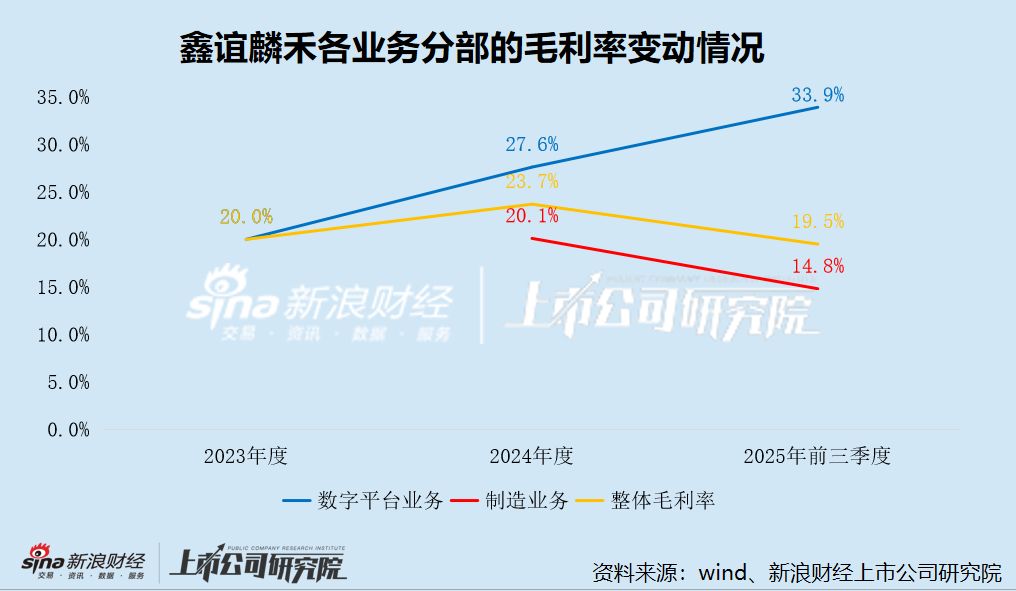
Core Viewpoint - Shanghai Xinyi Linhe Technology Co., Ltd. (referred to as "Xinyi Linhe" or "the company") is facing significant financial challenges, including a high level of redeemable debt and ongoing losses, despite rapid revenue growth from its manufacturing business [1][4][20]. Financial Performance - As of September 30, 2025, Xinyi Linhe's redeemable debt reached 4.445 billion yuan, exceeding total assets by approximately 1.381 billion yuan, resulting in a technical insolvency with a debt-to-asset ratio of 185.85% and negative working capital of -3.465 billion yuan [4][19]. - The company reported revenues of 505 million yuan, 877 million yuan, and 1.124 billion yuan for the years 2023, 2024, and the first three quarters of 2025, respectively, with a year-on-year growth of 166.61% in the most recent period [20]. - Despite revenue growth, Xinyi Linhe has not achieved profitability, recording net losses of 653 million yuan, 774 million yuan, and 489 million yuan for the same periods, with an accumulated unabsorbed loss of 3.644 billion yuan as of September 30, 2025 [20][31]. Business Segments - The company transitioned into manufacturing by acquiring 80% of Shanghai Hezong Welding Equipment Manufacturing Co., Ltd. for 90 million yuan in December 2023 and 40% of Zhejiang Minglei Lithium Energy Technology Co., Ltd. for 300 million yuan in November 2024, which significantly contributed to revenue growth [6][21]. - In 2024, the manufacturing segment generated 463 million yuan, accounting for 52.7% of total revenue, and by the first three quarters of 2025, this segment's revenue surged by 493.63%, making up 75.6% of total revenue [21][23]. Profitability and Margins - The manufacturing business has a lower gross margin, with 20.1% in 2024 and dropping to 14.8% in the first three quarters of 2025, compared to a gross margin of 33.9% for the digital platform business [8][23]. - Overall gross margin for the company declined from 23.3% to 19.5% during the same period, indicating a significant impact from the lower-margin manufacturing operations [8][23]. Operational Challenges - The company has faced high operating expenses, with total sales, management, and R&D expenses consuming 93.81%, 58.24%, and 37.52% of total revenue in 2023, 2024, and the first three quarters of 2025, respectively [10][25]. - Despite increasing R&D expenditures, the effectiveness of these investments is questionable, as only 3 patents have been filed by Xinyi Linhe since its establishment, with only one granted [11][26]. Legal and Labor Issues - Xinyi Linhe has been involved in multiple labor disputes, with several lawsuits filed against the company for labor contract disputes and failure to pay social insurance and housing fund contributions [12][28]. - The company has also seen a significant increase in executive compensation, with the total remuneration for the executive director and vice president reaching 9.273 million yuan, 10.02 million yuan, and 6.666 million yuan over the reporting periods [31].
美国家居“双雄”争霸, 中国出海如何“借力”?
Hu Xiu· 2025-06-13 09:12
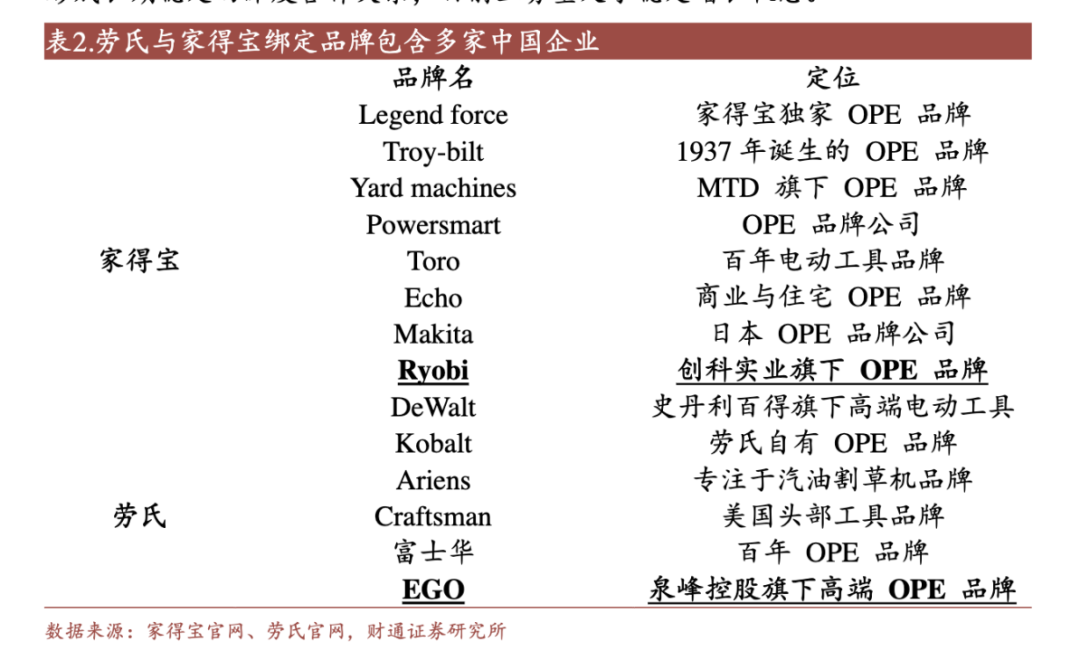
Core Insights - The U.S. home improvement market is dominated by two major players: Home Depot and Lowe's, which together hold a market share of 76.7% [1][2] - Home Depot's revenue for 2024 is projected at $159.5 billion, while Lowe's is expected to reach $83.674 billion [2] - Home Depot has successfully cultivated the DIY market and established a warehouse-style retail model, which has allowed it to offer competitive pricing [5][10] Market Positioning - Home Depot and Lowe's have distinct customer bases; Home Depot targets DIY consumers and professional contractors, while Lowe's initially focused on contractors before shifting towards DIY [13][18] - Home Depot's market share in the DIY segment was 17% in 2022, while Lowe's derived 75% of its revenue from DIY customers [16][22] Competitive Strategies - Home Depot's strategy includes a focus on low pricing and a wide range of products, with a significant portion of its sales coming from "explosive products" [6][9] - Lowe's has made efforts to expand into the professional market, including acquisitions like Maintenance Supply Headquarters and Artisan Design Group [19][22][23] Financial Performance - Home Depot's Pros sales have surpassed DIY sales as of Q4 2024, indicating a successful shift in focus [20] - Lowe's has faced challenges with declining DIY customer spending due to inflation and rising interest rates [18][25] Supply Chain and Logistics - Both companies have established strong supply chain management practices, with Home Depot sourcing over 50% of its products from the U.S. and reducing reliance on Chinese suppliers [38][39] - Home Depot's logistics system is highly developed, with 98% of its goods transported through its own logistics network [42] Online Business Development - Home Depot has been more aggressive in its online sales strategy, achieving a higher online sales percentage compared to Lowe's [45]