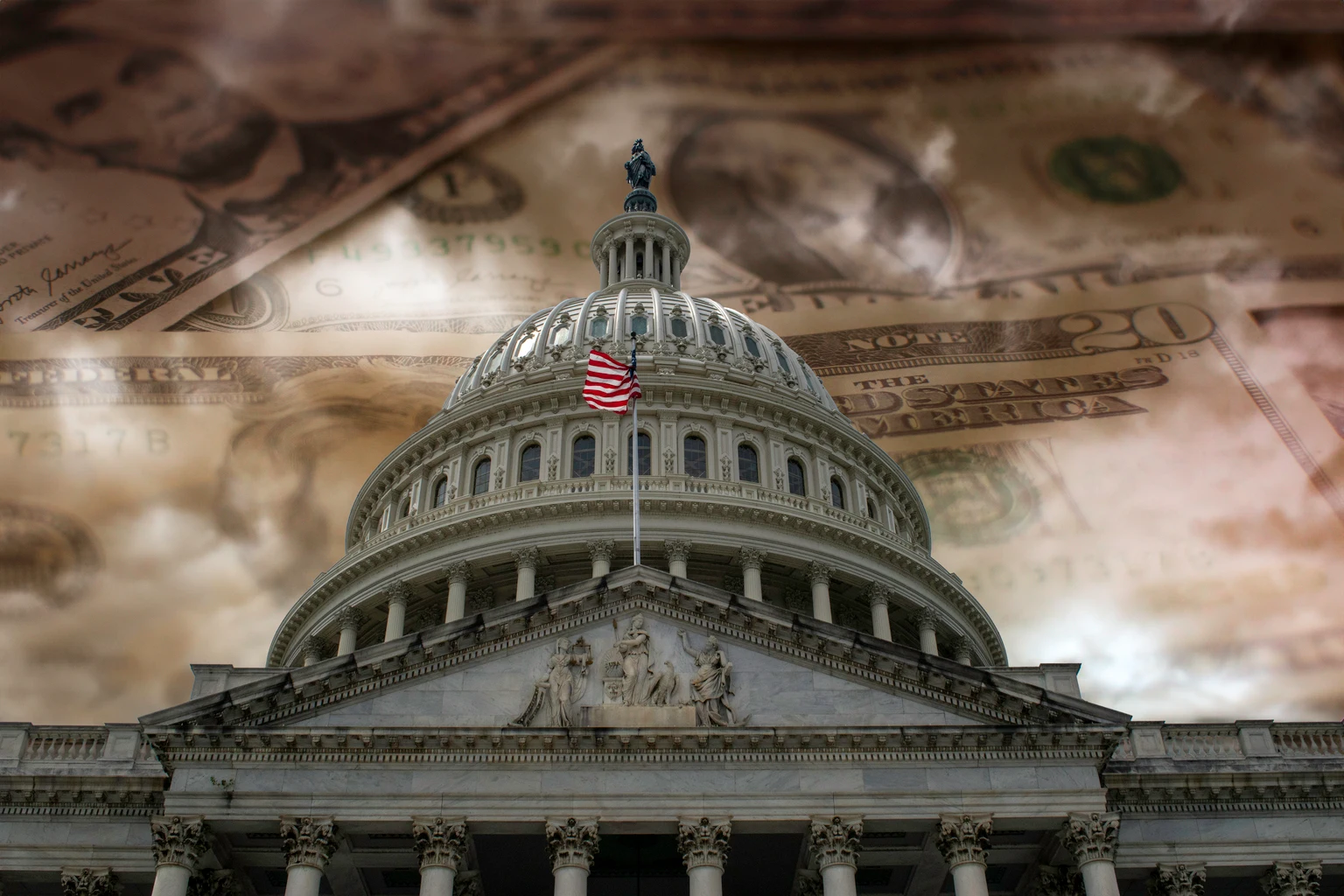
National debt

Search documents
5 Ways Elections in 2026 Could Impact Middle Class Budgets
Yahoo Finance· 2026-02-17 15:42
Core Insights - The 2026 elections are perceived as a potential reset for the middle class, with a significant portion of voters feeling that a middle-class lifestyle is increasingly unattainable [1][2] Group 1: Economic Impact of Elections - Rising costs in housing, healthcare, and education are outpacing wage growth, making the outcomes of the 2026 elections critical for future tax rates and relief measures [2] - Tax changes resulting from the elections will directly affect take-home pay, with potential extensions or redesigns of income tax cuts being a key focus [3][4] - The national debt concerns are leading some leaders to consider deficit reduction plans that may limit future tax breaks, impacting middle-income tax relief [4] Group 2: Healthcare Costs - Healthcare expenses have become the top financial concern for Americans, surpassing groceries, housing, and utilities, with a significant portion of the population worried about affording care [6] - The expiration of enhanced Affordable Care Act premium tax credits has led to increased premiums, influencing voter decisions regarding candidates who may restore these subsidies [7] Group 3: Interest Rates and Debt Costs - Federal Reserve decisions on interest rates are influenced by election outcomes, affecting mortgage and credit card payments for consumers [8] - Predictions suggest that if inflation continues to ease, the Federal Reserve could lower interest rates to around 3% by 2026, impacting overall debt costs [8]
Why the $38 trillion national debt doomed Fed independence regardless of the Trump/Powell drama, top economist says
Yahoo Finance· 2026-01-13 19:09
Core Insights - The U.S. is facing a significant debt crisis, with inflation being viewed as the most politically viable solution to manage obligations without resorting to tax increases or spending cuts [2][6][7] - The independence of the Federal Reserve is increasingly compromised, with market reactions indicating a broader acceptance of this reality among investors [4][12] - The potential for a productivity miracle driven by artificial intelligence could alter the economic landscape, but skepticism remains regarding its ability to significantly impact the sluggish sectors of the economy [10][11] Group 1: Debt and Inflation - Ray Dalio's "Big Cycle" framework suggests that nations with high debt face limited options, leading to a preference for inflation as a means to manage debt [1][6] - Cowen argues that the U.S. may require several years of 7% inflation to effectively reduce the debt burden relative to the economy [6][7] - The U.S. government's high debt levels and chronic deficits limit the Federal Reserve's ability to act independently, leading to a reliance on inflation [3][8] Group 2: Federal Reserve Independence - The current political climate has eroded the Federal Reserve's independence, with market participants acknowledging this shift [4][12] - The investigation into Fed Chair Jerome Powell highlights the pressures faced by the central bank, which may lead to interest rate cuts [5] - Cowen emphasizes that the loss of Fed independence is a significant concern, suggesting that it has already been compromised prior to recent events [4][12] Group 3: Economic Outlook and Productivity - The potential for AI to boost U.S. GDP growth could provide an alternative to high inflation, but doubts persist about its effectiveness in less productive sectors [10][11] - Economists note a recent 4.9% boost to annualized productivity, but the sustainability and drivers of this acceleration remain uncertain [12][13] - The structural sluggishness of half the U.S. economy poses challenges to achieving significant productivity gains necessary to alleviate the debt situation [11]
Trump has negotiated better U.S. trade deals but tariffs do worry me, says Stephen Moore
Youtube· 2025-12-29 14:27
Economic Growth and Forecasts - The economy is performing better than previously forecasted, with growth rates over the last three quarters being almost twice the expected 1.9% for 2025 [3][4] - The Atlanta Federal Reserve Board has provided updated growth rate estimates through December 23rd, indicating stronger economic performance [4] Tariffs and Trade Deals - Tariffs are viewed as a double-edged sword; while they may have negative effects on the economy, they have also led to better trade deals with countries like Korea, China, Japan, Canada, and Europe [5][6] - The potential influx of capital into the U.S. is significant, with estimates suggesting $8 trillion could be brought in, although a more conservative estimate of $1-2 trillion is still substantial [5][6] Future Economic Projections - There are expectations for strong economic growth in the coming year, with discussions around achieving growth rates between 3% and 4% [9][10] - Achieving a growth rate over 3% is crucial for managing national debt and deficits, as it could help turn the debt curve downwards [10][11]


There's no guarantee the Fed's rate cuts will lower the rates that matter
Yahoo Finance· 2025-12-10 10:59
Core Insights - The article discusses the puzzling behavior of bond yields in the context of the Federal Reserve's rate cuts, highlighting a disconnect between expected outcomes and actual market reactions [2][4][5]. Group 1: Federal Reserve Actions - The Federal Reserve began easing rates last September, with a total reduction of 1.5 percentage points expected to continue through 2025 [4]. - A further quarter-point rate cut is anticipated, with traders pricing in additional cuts in 2026 [4]. Group 2: Bond Market Reactions - Despite the Fed's rate cuts, the 30-year Treasury yield is around 4.8% and the 10-year yield is approximately 4.17%, both of which have risen over the past month [6]. - Higher yields are impacting borrowing costs across the economy, contrary to the administration's goal of lowering mortgage rates and business loan costs [7]. Group 3: Investor Sentiment and Economic Factors - Investors are concerned about shifts in trade policy and increasing national debt, leading to a sell-off in government debt and rising yields [8]. - Historically, deficits have had minimal impact on Treasury yields due to the U.S.'s economic dominance, but current trade dynamics may be altering this relationship [9]. - Higher yields indicate that investors are demanding greater compensation for risks associated with rising deficits and policy uncertainties, reflecting skepticism about the Fed's continued rate cuts amid persistent inflation [11].
Trump says national debt is ‘peanuts’ and his tariff income will pay everyone a $2,000 dividend too—but the math doesn’t add up
Yahoo Finance· 2025-12-03 16:05
Core Insights - President Trump claims that the tariff regime will generate significant revenue, allowing for debt reduction and potential dividends to American citizens [1][2] - The projected revenue from tariffs is currently falling short of expectations, with actual customs duties for fiscal year 2025 at $195.9 billion, while interest payments on national debt are significantly higher at $1.22 trillion [3][4] - The Congressional Budget Office has revised its long-term projections for tariff revenue down from $4 trillion to $3 trillion, indicating a decrease in expected effectiveness of the tariff scheme [5] Revenue Generation - Tariffs are expected to bring in trillions of dollars to the U.S. economy in the long term, but current figures show only $195.9 billion generated in customs duties for fiscal year 2025 [3] - In October, tariffs generated a record monthly income of $31.4 billion, an increase from $29.7 billion in September [3] Debt Impact - The yearly income from tariffs is estimated to be within the $300 billion to $400 billion range, which is insufficient to cover the interest payments on the national debt [4] - For fiscal year 2026, the government has already incurred $104 billion in interest payments at a rate of 3.355% [4] Economic Projections - The Congressional Budget Office's recent report indicates a downward revision of tariff revenue projections, with a reduction of $1 trillion in expected deficit reduction [5] - The CBO attributes two-thirds of this revision to new data and adjustments in tariff rates, which have lowered the effective tariff rate overall [5]
AI Bubble About To Burst? Expert Warns 40% Of US Growth Is Concentrated In Single Narrative: 'America Is Now One Big Bet On AI' - First Trust DJ Internet Index Fund (ARCA:FDN), Fidelity MSCI Informati
Benzinga· 2025-11-24 06:30
Core Viewpoint - The U.S. economy is heavily reliant on AI, with significant risks stemming from this concentration, as it masks deeper structural vulnerabilities [2][4][5]. Economic Dependency on AI - Approximately 40% of U.S. economic growth in 2023 is attributed to capital expenditure on AI infrastructure [2]. - Nearly 80% of recent gains in the U.S. stock market are driven by AI-related investments, indicating a "maniacal focus" on this sector [3]. Structural Vulnerabilities - The enthusiasm for AI is obscuring critical issues such as a fiscal deficit exceeding 6% of GDP and national debt surpassing 100% of GDP [4]. - Global investors are currently overlooking these deficits, betting on an AI-driven productivity boom to mitigate the debt concerns [4]. Market Bubble Concerns - The current market environment is characterized as a bubble, with the potential for inflation to trigger a tightening of monetary policy by the Federal Reserve, which could end the prevailing euphoria [5][6]. Investment Strategy Recommendations - To mitigate concentration risk, diversification into undervalued assets in international markets such as China, India, and recovering European markets is advised [7]. - The performance gap between U.S. and international markets is narrowing, suggesting opportunities for investors to explore [7]. ETF Performance - Notable U.S.-listed AI-linked exchange-traded funds (ETFs) have shown positive year-to-date and one-year performance, indicating investor interest in this sector [9][10].

X @CoinDesk
CoinDesk· 2025-11-18 12:36
🇺🇸 Can a Bitcoin treasury fix the national debt? 🧐Mike Novogratz (@novogratz) calls it "smoke and mirrors.""It's almost like saying 'we're the reserve currency, but not really... we don't believe in it ourselves.'" https://t.co/pgoFFiQaEY ...
Reality Is One Thing, Markets Are Another
Seeking Alpha· 2025-11-03 20:47
Group 1 - The article expresses skepticism about the likelihood of a market crash, suggesting that the current bearish sentiment may be overstated and more applicable to the short-term [1] - It highlights concerns regarding national debt and its implications for the market, indicating that this is a recurring theme in current discussions [1] Group 2 - The author emphasizes a focus on actionable, hype-free analysis in their market report, which includes technical, macroeconomic, and sentiment analysis [1]

How soaring national debt impacts mortgage rates and the housing market
Yahoo Finance· 2025-10-23 19:32
Economic Impact of Government Shutdown - The ongoing government shutdown is significantly hindering the economy, with the national debt exceeding $38 trillion, marking a record level of federal indebtedness [1] - The increasing national debt is expected to lead to higher borrowing costs, particularly affecting the housing market and mortgage rates in the medium to long term [3][6] Mortgage Rate Trends - Current mortgage rates are unlikely to return to the previous levels of 3% or even 4%, with a shift towards a higher interest rate environment anticipated [2][3] - The 10-year Treasury yield, which influences mortgage rates, is expected to rise, potentially leading to mortgage rates near or above 7.5% by 2054 due to the increasing national debt [7] Predictions from Industry Experts - Former Treasury Secretary Larry Summers predicts that the bond market may "hit a wall," causing bond yields and mortgage rates to rise significantly, with a potential increase of 75 basis points in the 10-year Treasury yield [5] - MBA chief economist Mike Fratantoni forecasts that mortgage interest rates will remain in the 6% to 6.5% range through the end of 2028, with a likelihood of long-term rates increasing due to fiscal pressures [6] Housing Market Adjustments - The housing market must adapt to a new reality of higher interest rates, with buyers advised not to rely on future refinancing opportunities to lower their rates [9] - Families may face fewer choices and higher mortgage costs due to debt-driven high interest rates, which could also lead to housing scarcity as developers may abandon projects [8]
Who Is Keeping Tabs On Government Spending?
Seeking Alpha· 2025-10-23 11:30
Group 1: Economic Indicators - The gross federal debt of the United States has surpassed $38 trillion, marking the fastest addition of $1 trillion outside of a pandemic, with a rate of increase now twice that seen since 2000 [4][5] - The U.S. now has a gross debt to GDP ratio of approximately 119% and an annual deficit exceeding 7%, placing it among nations with lower credit ratings than its former AAA peers [5] Group 2: Government Spending and Fiscal Policy - There is a lack of political will to address popular entitlement programs and defense expenditures, contributing to the unsustainable trajectory of national debt [5][6] - The ongoing government shutdown, now the second-longest on record, is tied to disputes over fiscal spending, including tax credits under the Affordable Care Act [6] Group 3: Market Reactions - Safe havens like gold have seen significant gains this year, reflecting investor concerns over rising debt levels and a weakening dollar [5] - WTI crude futures increased following new U.S. sanctions against Russia's top oil companies, indicating market sensitivity to geopolitical events [3]