Open Banking

Search documents
Canadian Household Debt Reaches $2.6 Trillion as Balanced Growth Emerges at Both Ends of the Risk Spectrum
Globenewswire· 2026-02-25 11:00
Key findings from TransUnion report: Nearly one-in-five Canadians improved their credit score over the past yearCanadian consumer credit delinquencies remained stable as consumers and lenders have adjusted to the evolving economic landscapeCanada’s credit market poised for growth as economic conditions improve, and innovation creates opportunities for expanded credit access TORONTO, Feb. 25, 2026 (GLOBE NEWSWIRE) -- In the fourth quarter of 2025, Canadian household debt reached $2.6 trillion across all cred ...



Digital payments sovereignty: Industry responds to UK domestic card payments alternative
Yahoo Finance· 2026-02-18 13:40
Core Perspective - The UK is moving towards establishing payment card sovereignty to reduce reliance on US-owned networks like Visa and Mastercard, reflecting a broader trend of payment independence in Europe [3][5][9]. Group 1: Current Landscape - Approximately 95% of UK card transactions are processed through Visa and Mastercard, indicating a high level of centralization and concentration risk in the payment system [3][4][13]. - The UK's National Payments Vision emphasizes the need for infrastructure modernization to enhance resilience and reduce dependency on a few global technology providers [3][4]. Group 2: Domestic Payment Initiatives - UK banks are accelerating plans for a domestic card payments alternative, which has been discussed for years as a government-backed initiative to provide a backup to existing systems [4][12]. - The move towards a dedicated domestic payments rail is significant, as it aims to align incentives, liability frameworks, and technology to build consumer trust and merchant acceptance [17][18]. Group 3: Challenges and Considerations - Open Banking is not yet a complete substitute for card payments, as it lacks the full range of use cases and consumer familiarity associated with traditional cards [14][16]. - Structural challenges exist within the Open Banking sector, including profitability issues and intense competition, which hinder its ability to serve as a core national payments infrastructure [15][16]. Group 4: Strategic Importance - Payments are increasingly recognized as strategic national infrastructure, necessitating coordinated public-private investment and interoperability with European schemes to ensure resilience [12][18]. - The geopolitical landscape has heightened concerns about the UK's exposure to risks associated with reliance on US payment networks, making the development of domestic alternatives more critical [8][9].


Truist launches secure open banking experience
Prnewswire· 2026-02-12 13:03
Core Insights - Truist Financial Corporation has launched its first open banking integration, connecting with Mastercard's open finance technology to enhance consumer and small business clients' control over their financial data [1] Group 1: Open Banking Integration - The new API-based platform allows clients to securely access their financial data, promoting transparency, personalization, and control across various fintech applications [1] - Clients can connect to their preferred apps through direct connections to Mastercard's open finance platform, enabling secure, tokenized access without sharing usernames or passwords [1] Group 2: Client Empowerment - The open banking platform aims to empower clients and small business owners by providing personalized experiences and a comprehensive view of their financial health [1] - It offers secure data sharing, new opportunities for individuals with limited credit histories, and improved payment options [1] Group 3: Strategic Partnership - Truist has chosen Mastercard as its first direct API integration partner, ensuring clients have access to secure and trusted data-driven experiences [1] - The collaboration emphasizes the importance of trust and security in delivering seamless financial experiences to clients and businesses [1] Group 4: Company Overview - Truist Financial Corporation is a purpose-driven financial services company with total assets of $548 billion as of December 31, 2025, and has a strong market presence in high-growth U.S. markets [1]


Paysafe CEO Says Pandemic Accelerated Payments Shift by Five Years
PYMNTS.com· 2026-02-06 09:00
Core Insights - Adaptability is identified as a key competitive advantage in the payments industry, emphasizing the need for companies to be flexible in response to rapid changes [1][5] Industry Trends - The pandemic accelerated the shift towards digital and contactless payment methods, making speed and convenience essential expectations for consumers [3] - Global digital wallet transaction value reached $10 trillion in 2024, a significant increase from $3.9 trillion in 2020, driven by the dominance of mobile payments and Gen Z adoption [7] - AI-driven tools for fraud prevention, such as tokenization and multi-factor authentication (MFA), have reduced eCommerce fraud by up to 30%, with real-time detection processing over a billion transactions daily [7] - Embedded payments are projected to hit $6.5 trillion in volume by 2025, while open banking adoption is growing, albeit slowly in the U.S. due to regulatory challenges [7] - Cash usage has declined sharply in mature markets, yet it remains resilient globally, indicating diverse consumer preferences for payment methods [7] Merchant Needs - Small and medium-sized businesses (SMBs) are increasingly seeking seamless financial management solutions, expecting immediate access to funds and a consolidated view of their performance [7] Payment Innovations - The anticipated rise of real-time payments has been validated, with UPI in India and Pix in Brazil leading the way, although the U.S. has not scaled as expected [7] - The rapid adoption of AI, particularly following the introduction of ChatGPT in November 2022, has shifted consumer behavior towards seeking advice from AI rather than traditional search engines [7]


TrueLayer and Stripe expand Pay by Bank to Finland
Yahoo Finance· 2026-01-22 11:49
TrueLayer, a UK-based payments network, has launched Pay by Bank payments in Finland. The service will be available via Kustom Checkout, which provides checkout services to more than 24,000 online merchants across the Nordics. Stripe, an investor in TrueLayer, powers the rollout as part of the implementation. Under the arrangement, merchants using Kustom Checkout can offer shoppers an instant bank payment option at checkout. TrueLayer’s open banking technology enables customers to pay directly from thei ...
Canada finally about to get real-time payments, open banking
Yahoo Finance· 2026-01-12 12:20
Core Insights - The Canadian government is implementing a ban on using screen-scraping interfaces for accessing customer data to provide financial services, with a timeline for enforcement to be determined after the Consumer Driven Banking Framework is operational [1] - Canada is set to introduce real-time payments alongside an open banking regime, allowing consumers to share banking information with fintechs and initiate payment transactions from their bank accounts [2] - The Real-Time Rail (RTR) payment system is expected to launch in 2026, following comprehensive testing, and will support faster, irrevocable payments using the ISO 20022 messaging standard [4][6] Regulatory Developments - The Retail Payment Activities Act (RPAA) was introduced to regulate fintechs participating in the payment network, with 1,500 payment service providers (PSPs) supervised by the Bank of Canada as of September 2025 [7] - Amendments to the Canadian Payments Act have expanded membership eligibility for Payments Canada to include registered PSPs, credit unions, and clearing houses, facilitating broader participation in national payment systems [9][11] Industry Impact - The RTR will enable fintechs to access payment rails directly, allowing for competition with traditional financial institutions and enhancing the overall payment ecosystem [10] - Compliance with the RPAA is expected to enhance the credibility of fintechs, enabling them to form partnerships with financial institutions and innovate faster [15][16] Technological Advancements - The RTR will utilize the ISO 20022 financial messaging standard, which is anticipated to improve data accuracy, fraud prevention, and efficiency in payment processing [23][24] - The government is developing a consumer-driven banking framework to allow secure data transfer through APIs, expected to be fully operational by early 2026 [22]
What will happen to fintech and crypto in 2026?
Chris Skinner'S Blog· 2026-01-09 05:50
Core Trends - The transition from reactive, siloed systems to proactive, integrated systems is a key trend, with AI expected to reshape various sectors by anticipating needs rather than merely responding to requests [3][9] - Digital infrastructure is becoming foundational, with real-time processes and embedded services expected to be standard rather than innovative [4][9] - Regulatory environments are maturing but remain fragmented globally, with some regions providing clearer rules while others create uncertainty [5][13] AI and Automation - AI, particularly agentic and conversational AI, is anticipated to become invisible infrastructure, embedded in decision-making processes across industries [3][7] - The importance of trust, resilience, and security is rising as new risks emerge from AI and digitization, leading to increased investment in advanced security technologies [6][9] Financial Services Landscape - The financial services landscape in 2026 will be characterized by agentic AI, digital assets like stablecoins, and divergent regulatory environments [11][12] - Embedded finance is expected to expand beyond payments, allowing non-financial companies to enter financial services profitably [12][20] Market Dynamics - The fintech sector is entering a pivotal moment of convergence and divergence, with traditional institutions and technology firms increasingly overlapping in roles and capabilities [10][8] - The stablecoin market is projected to reach $1 trillion by the end of 2026, indicating its growing importance in bridging traditional and decentralized finance [43] Regulatory Challenges - Regulatory fragmentation is expected to increase cross-border friction, complicating compliance for global fintechs and financial institutions [39][40] - Compliance will become a competitive differentiator, with firms needing to modernize their systems to meet regulatory requirements [33][34] Predictions for 2026 - Predictions indicate that 2026 will be a year of consolidation, with fewer but stronger integrated platforms emerging as experimentation gives way to established models [7][9] - The embedded finance market is forecasted to reach $7.2 trillion by 2030, highlighting the significant growth potential in this area [20]


Generational shift brings competition to Canada’s banks
MoneySense· 2025-12-21 05:16
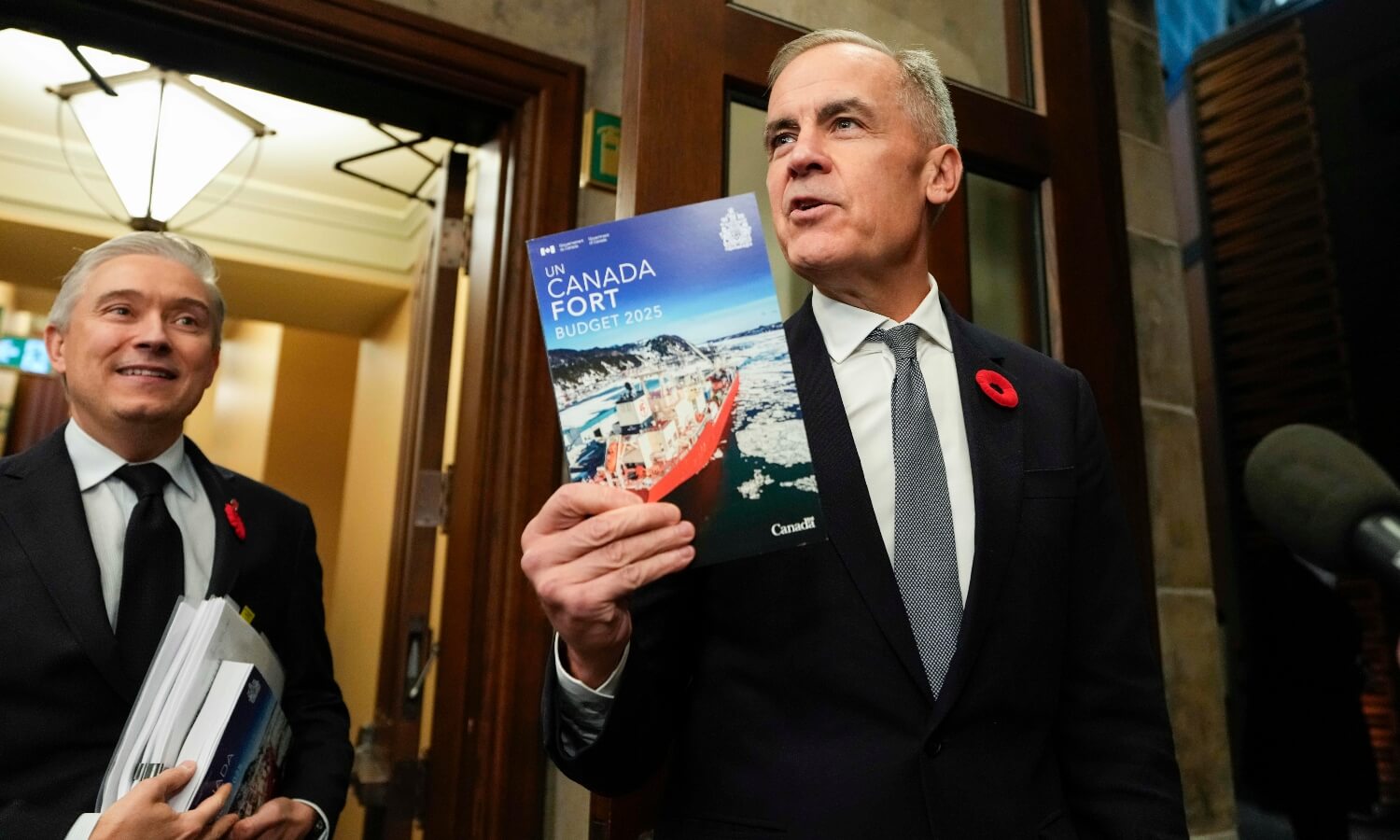
Core Insights - Canadian banking is undergoing significant changes, including consolidation among smaller players, the rise of tech-based competitors, and government initiatives aimed at increasing competition [1][7][6] - The government has made commitments to enhance competition through open banking legislation, which is expected to empower consumers by giving them control over their financial data [2][4][3] Group 1: Government Initiatives - The Canadian government has introduced legislation to advance open banking, which aims to foster competition in the financial sector [4][6] - The budget included measures to ban fees for switching investment and registered accounts, which currently cost consumers around $150 [9] - The Financial Consumer Agency of Canada has been tasked with examining the structure and transparency of fees charged by banks [10] Group 2: Industry Dynamics - The emergence of open finance is seen as a transformative force in the Canadian banking landscape, allowing consumers to manage multiple accounts and switch providers more easily [3][4] - Recent consolidation trends, such as RBC's acquisition of HSBC Canada and National Bank's purchase of Canadian Western Bank, raise questions about competition but do not necessarily indicate a reduction in market competitiveness [7][8] - Consumer empowerment, driven by transparency in fees and ease of switching banks, is crucial for maintaining competition in the sector [9][8]
US consumer bureau to issue 'interim final' open banking rule, cites funding shortfall
Reuters· 2025-12-09 20:56
Core Viewpoint - The U.S. consumer financial protection agency plans to issue interim regulations for "open banking" and consumer data rights due to anticipated funding shortages before completing the ongoing rewrite of Biden-era regulations [1] Group 1 - The agency is the top watchdog for consumer financial protection in the U.S. [1] - The decision to issue interim regulations is driven by the expectation of running out of money [1] - The current process involves rewriting regulations established during the Biden administration [1]

Inverite's AI Platform Becomes Core Data Layer for a Global Fintech's Tier 1 Canadian Wealth Management Clients
Newsfile· 2025-11-28 13:00
Core Insights - Inverite Insights Inc. has been selected by a global fintech enterprise as a core integrated data and verification provider for its Canadian wealth management ecosystem, enhancing its role in the financial sector [1][4]. Partnership Details - The partnership will embed Inverite's AI-enabled, real-time data intelligence layer into the fintech provider's Canadian wealth management infrastructure, facilitating onboarding, payment initiation, identity verification, and compliance workflows [2][5]. - This integration allows Tier-1 financial institutions to access Inverite's services without requiring separate integrations, streamlining operations [2][3]. Market Positioning - The agreement establishes a scalable distribution channel for Inverite, reinforcing its position in Canada's open banking ecosystem and supporting recurring revenue growth as its services are utilized across a national Tier-1 client base [3][4]. - The global wealth management technology provider involved manages over US$2 trillion in assets and serves more than 26 million end investors, indicating a significant market presence [5]. Product Offerings - Inverite's AI-driven Real-Time Data Platform will provide automated EFT collection and real-time KYC confirmation, enhancing the onboarding process and ensuring regulatory compliance [5][6]. - Automated EFT Collection offers a faster, more secure, and less error-prone onboarding process, while Real-time KYC Confirmation allows for instant verification of account ownership and identity [6]. Financial Activities - The company has announced a non-brokered private placement of $0.25 units, aiming for gross proceeds of up to $1,000,000, with each unit consisting of a Common Share and one-half Warrant [7].