Stock Buybacks

Search documents
Bill Gates Has Nearly 30% of His $36.6 Billion Portfolio Invested in One of Warren Buffett's Favorite Stocks
The Motley Fool· 2026-02-20 09:30
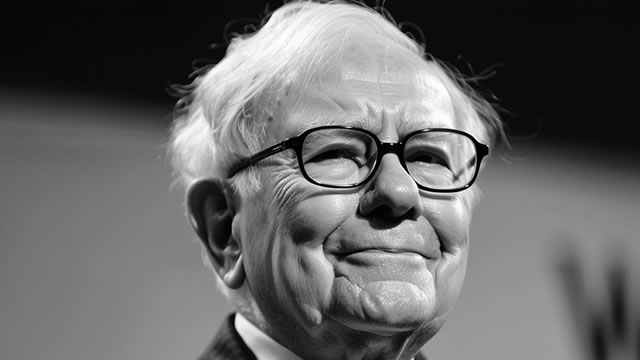
分组1 - The Bill & Melinda Gates Foundation Trust has a portfolio valued at approximately $36.6 billion, with nearly 30% (just under $11 billion) invested in a single stock, Berkshire Hathaway [1][2] - Berkshire Hathaway is the largest holding in the foundation's portfolio, more than double the size of its investment in Microsoft [2] - Warren Buffett, a close friend of Bill Gates, has been a significant influence on Gates' investment decisions and has pledged a substantial portion of his fortune to the Gates Foundation [2] 分组2 - Berkshire Hathaway operates as a diversified investment fund, owning a variety of businesses including insurance (GEICO), railroads (BNSF), and energy (Berkshire Hathaway Energy) [6] - The company also maintains a public equity portfolio worth hundreds of billions, with major stakes in companies like Apple, American Express, and Coca-Cola [7] - As of the last disclosure, Berkshire holds a record $382 billion in cash and short-term Treasury bills, providing significant liquidity for future investments [8] 分组3 - Berkshire Hathaway has not repurchased shares recently, as Buffett does not see the stock trading at a discount that justifies buybacks [4] - The company has a history of making strategic investments during market downturns, such as during the 2007-2009 financial crisis, which resulted in substantial profits [9][10] - The transition of leadership from Buffett to Greg Abel is underway, with Abel having significant operational experience and the company's decentralized structure allowing for continuity [11][14] 分组4 - Berkshire Hathaway is viewed as a long-term wealth builder, providing stability and balance to portfolios that may be heavily invested in technology [15][16] - The stock is not expected to deliver explosive growth like high-flying tech stocks but is considered a reliable investment that can help mitigate risks during market corrections [16]

Enterprise Products Partners' Monster Payout Could Get Even Bigger
The Motley Fool· 2026-02-06 09:44
Core Viewpoint - Enterprise Products Partners is positioned for continued growth with a strong distribution yield and a solid financial outlook, making it an attractive option for income investors. Financial Performance - Enterprise Products Partners achieved record cash flow from operations in 2025 and all-time high EBITDA in Q4, with stock prices at a decade high [2] - The company reported a negative discretionary free cash flow of $1.6 billion due to significant capital investments [4] - Management anticipates lower capital expenditures in the current year, projecting discretionary cash flow around $1 billion [5] Distribution and Buybacks - The company has a forward distribution yield of 6.3% and has increased its distribution for 27 consecutive years [1] - Future distribution increases are expected, supported by a payout ratio of 58% based on adjusted cash flow from operations [7] - The strategy includes using discretionary cash flow for unit buybacks (up to 60%) and debt reduction (40%) [5] Growth Prospects - Modest growth is anticipated for 2026, but significant growth is expected beyond that due to new projects coming online [10][11] - The second train at the Neches River facility and a new processing plant in the Midland Basin are set to enhance capacity [11] - Predictions indicate double-digit growth in 2027, with expected 10% year-over-year adjusted EBITDA and cash flow growth [12] Investment Appeal - The company is characterized by a strong distribution track record, high yield, solid balance sheet, and visibility for future cash flow growth [13] - The forward price-to-earnings ratio of 12.1 may attract value investors [13]


PulteGroup: Earnings Durability And Buybacks Amid Housing Headwinds
Seeking Alpha· 2026-02-04 14:52
Company Overview - PulteGroup (PHM) has shifted from a growth-at-all-costs strategy to a disciplined, returns-focused approach, consistently delivering above-average returns [1] Industry Context - The homebuilding industry is currently facing a soft market that has persisted through 2025 and is expected to continue [1]


Truist Financial Corporation's Performance Overview
Financial Modeling Prep· 2026-01-21 23:00
Core Insights - Truist Financial Corporation reported earnings per share of $1, which was below the estimated $1.09, but exceeded revenue expectations with approximately $5.3 billion, surpassing the estimated $5.2 billion [2][6] - The company has a price-to-earnings (P/E) ratio of approximately 12.46 and a price-to-sales ratio of about 2.14, indicating a favorable market valuation despite the earnings miss [3][6] - Truist plans to return value to shareholders through a $4 billion stock buyback and offers a 4.2% dividend yield, demonstrating its commitment to capital returns [4][6] Financial Performance - Truist's recent increase in fourth-quarter profit was driven by higher interest income and investment banking fees, showcasing its ability to capitalize on favorable market conditions [5] - The company's solid loan growth, supported by low exposure to commercial real estate, underscores its financial stability [4]


Are Megabanks Next in Trump's Crackdown on Stock Buybacks?
WSJ· 2026-01-19 10:30
Core Viewpoint - The risk for bank shareholders has increased following the Trump administration's threats directed at defense contractors and home builders [1] Group 1: Impact on Defense Contractors - The Trump administration's threats have created uncertainty in the defense sector, potentially affecting contracts and future revenue streams for defense contractors [1] Group 2: Impact on Home Builders - Home builders are facing heightened risks due to the administration's stance, which may lead to fluctuations in market confidence and project financing [1] Group 3: Broader Implications for Banks - The increased risk for shareholders in banks is linked to the potential fallout from the administration's actions, which could impact lending and investment strategies within the banking sector [1]

Trump Takes on Buybacks, Dividends and Executive Pay at U.S. Defense Contractors
Investopedia· 2026-01-07 22:45
Core Insights - President Trump has announced that defense companies will no longer be allowed to engage in stock buybacks and dividend programs, marking a significant shift in corporate finance practices [2][5] - This move reflects a broader desire from the Trump administration to exert greater control over public companies, particularly in sectors deemed critical for national security [3][4] Defense Sector Impact - Shares of major defense contractors such as Lockheed Martin, Northrop Grumman, and General Dynamics fell by at least 4% following Trump's announcement [5] - The administration's intervention in the defense sector is part of a larger trend of government involvement in corporate affairs, which has included equity stakes in companies like Nvidia and Intel [4][8] Historical Context - The discussion around stock buybacks has gained traction, with President Biden previously implementing a 1% excise tax on such repurchases, although this has not significantly reduced the practice [7] - Companies in the S&P 500 spent over $1 trillion on stock buybacks in the year ending September 2025, an increase from over $918 billion the previous year, indicating a strong trend in corporate cash utilization [7]


Trump Orders Crackdown on Defense Industry Stock Buybacks
WSJ· 2026-01-07 20:13
Core Viewpoint - The president's executive order aims to limit the compensation of defense executives and requires contractors to enhance their production capacity [1] Group 1 - The executive order will cap the pay of defense industry leaders, indicating a shift towards more regulated compensation structures within the sector [1] - Contractors in the defense industry will be mandated to invest in their production capabilities, which may lead to increased operational efficiency and capacity expansion [1]

Berkshire Hathaway beyond Warren Buffett: The legacy and future
Youtube· 2025-12-25 11:00
Core Insights - Warren Buffett is stepping down as CEO of Berkshire Hathaway, with Greg Abel set to take over, marking a significant leadership transition for the company [3][27] - Berkshire Hathaway is characterized as a unique conglomerate with three main business engines: operating businesses, a stock portfolio, and an insurance business that provides a structural advantage through its float [4][5][6] - The company has shown strong performance, with a 120% increase over the last five years, outperforming the S&P 500, which increased by 80% during the same period [8] Business Structure - Berkshire Hathaway operates as a holding company with distinct segments: wholly-owned businesses, a diverse stock portfolio led by significant investments in companies like Apple, and an insurance business that generates float for investment [4][5][6] - The insurance segment, particularly Geico, plays a crucial role in providing capital for investments, allowing Berkshire to maintain a patient investment strategy [17][18] Financial Performance - Berkshire Hathaway's stock has performed well, particularly during market downturns, indicating resilience and effective capital allocation strategies [8][12] - The company currently holds over $300 billion in cash, raising questions about future capital deployment strategies under new leadership [13][31] Leadership Transition - The transition from Buffett to Abel is seen as a pivotal moment, with expectations that Abel may implement changes to enhance profitability and operational efficiency [28][30] - Shareholders express a desire for Abel to focus on capital management, including potential dividends and share buybacks, while maintaining the company's long-term value investment philosophy [31][43] Market Position and Valuation - Berkshire Hathaway is viewed as a lower-risk alternative to broader market investments, with a diverse portfolio that includes both cyclical and counter-cyclical businesses [54] - Current valuations are considered reasonable, with a price-to-earnings ratio that aligns closely with the overall market, although slightly above historical averages [55][56] Investor Sentiment - There is cautious optimism among investors regarding the future of Berkshire Hathaway post-Buffett, with expectations that the company's core values and operational culture will remain intact [58] - Concerns exist about the potential loss of the "Buffett premium," as many investors are drawn to the company due to Buffett's iconic status rather than its underlying fundamentals [60][61]

Sally Beauty Has Several Incremental Growth Drivers Now
Seeking Alpha· 2025-12-23 08:43
Core Thesis - The investment thesis for Sally Beauty (SBH) is based on the expectation of rapid EPS growth driven by significant stock buybacks and an efficiency plan aimed at cost reduction [1] Financial Performance - The implementation of the efficiency plan is anticipated to further enhance EPS by lowering operational costs [1] Investment Strategy - The focus is on long-term investment opportunities, with a strategy to hold stocks for several years, particularly in sectors like restaurants, retailers, and food manufacturers [1]


Trump Targets Defense Firms on Weapons Speed, Stock Buybacks
WSJ· 2025-12-23 00:25
Core Viewpoint - The president advocates for companies to allocate their resources towards the establishment of new plants instead of other expenditures [1] Group 1 - The emphasis is on encouraging companies to invest in infrastructure and manufacturing capabilities [1]