Trade policy

Search documents
5 Best Stocks That Can Rise Above Trump Tariffs And Macro Uncertainty
Seeking Alpha· 2026-02-27 12:00
Group 1 - The article discusses the return of trade policy to the forefront of the investment landscape, highlighting the opportunities for stock pickers to look beyond headlines [1] - The Supreme Court's recent decision has reshaped tariff authority, impacting investment strategies and stock selection [1] - Steven Cress, as the Head of Quantitative Strategies at Seeking Alpha, emphasizes a data-driven approach to investment decisions, aiming to remove emotional biases [1] Group 2 - Seeking Alpha's platform includes a quantitative stock rating system and analytical tools designed to interpret data for investors, providing insights on investment directions [1] - The Alpha Picks initiative selects two attractive stocks to buy each month and determines optimal selling times, aiding long-term investors in portfolio management [1] - Steven Cress has over 30 years of experience in equity research, quantitative strategies, and portfolio management, positioning him as a knowledgeable figure in investment topics [1]



Investors brace for a State of the Union speech that may fuel anxiety
Reuters· 2026-02-24 19:53
Skip to main content Exclusive news, data and analytics for financial market professionalsLearn more aboutRefinitiv Investors brace for a State of the Union speech that may fuel anxiety February 24, 20267:53 PM UTCUpdated ago By Suzanne McGee and Laura Matthews PROVIDENCE, Rhode Island/NEW YORK, Feb 24 (Reuters) - The State of the Union speech from President Donald Trump on Tuesday evening comes at a pivotal point for investors, sideswiped by market turbulence in recent months and craving stability. Days af ...

FedEx Leads Corporate Surge in Tariff Refund Lawsuits After SCOTUS Ruling; ASX 200 Gains
Stock Market News· 2026-02-23 23:38
Core Insights - FedEx has initiated legal action against the U.S. government to reclaim millions in tariff payments following a Supreme Court ruling that deemed the administration's use of the International Emergency Economic Powers Act (IEEPA) to impose global tariffs as exceeding its legal authority [2][9] - The lawsuit is part of a broader movement among major corporations, including Costco, Revlon, and Bumble Bee Foods, seeking compensation for tariffs that have been invalidated, with estimates of the total refund pool potentially reaching $175 billion [3][9] - The Trump administration is facing significant legal challenges in opposing these refund requests, with legal analysts suggesting that the Supreme Court's ruling complicates the government's ability to deny refunds [4][5] Market Reaction and Global Impact - In response to the Supreme Court ruling, President Trump announced a new temporary 15% global tariff under Section 122 of the 1974 Trade Act, which has introduced volatility into international markets and affected trade negotiations with the EU and Japan [6][9] - Despite the uncertainty in global trade, Australia's S&P/ASX 200 index rose by 0.3% to 9,049.80, driven by gains in the materials and gold sectors, as investors sought safe-haven assets amid the turmoil [7][9]


Analysis-US tariff turmoil leaves Treasury markets dazed
Yahoo Finance· 2026-02-23 05:49
By Laura Matthews and Sinéad Carew NEW YORK/LONDON, Feb 23 (Reuters) - Far from being a source of relief, the Supreme Court's takedown of President Donald Trump's tariffs has infused new risks and uncertainties into trade policy, U.S. debt and the dollar. The Court made no decision on refunds, leaving open the possibility of a hole of around $170 billion in U.S. finances. Trump's furious rush to impose replacement levies has already raised hackles in Europe and fresh confusion about trade policy. The ...
USTR Jamieson Greer Affirms Tariff Continuity Following Supreme Court Setback
Stock Market News· 2026-02-22 21:08
Key TakeawaysU.S. Trade Representative Jamieson Greer confirmed that all negotiated trade agreements, including those with the European Union and China, remain in force despite a Supreme Court ruling striking down previous tariff authorities.The Trump Administration has pivoted to Section 122 of the Trade Act of 1974, implementing a temporary 15% global tariff to maintain economic leverage and policy continuity.The European Commission is demanding "full clarity" from Washington, warning that "tariff chaos" ...
Striking down Trump’s tariffs proved the Supreme Court ‘can still set boundaries’
MSNBC· 2026-02-21 18:58
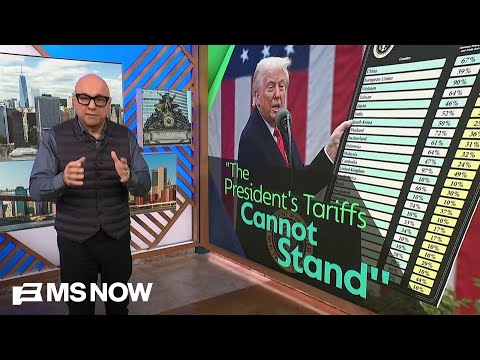
Yesterday the Supreme Court underscored a principle that's in part of the Constitution of the United States of America from the very beginning. Even the most powerful president in the world cannot rewrite the Constitution to win an argument about economics. 24 hours ago, President Trump suffered a significant legal defeat on one of the defining policies of his political identity, his tariffs.For years, Donald Trump described tariffs as a kind of economic superpower, a way to punish foreign countries and ric ...
Industry reaction to US Supreme Court ruling on Trump's global tariffs
Reuters· 2026-02-20 20:26
Industry reaction to US Supreme Court ruling on Trump's global tariffs | ReutersSkip to main content[Exclusive news, data and analytics for financial market professionalsLearn more aboutRefinitiv]Feb 20 (Reuters) - Businesses and industry groups [hailed] the U.S. Supreme Court's move to [overturn] Donald Trump's emergency tariffs, a ruling that brings relief but leaves companies bracing for the complicated refund process ahead.Here are some comments from industry groups and companies:Sign up [here.]## STEVE ...

US Supreme Court rules against Trump's tariffs, raising questions for trade policy
Proactiveinvestors NA· 2026-02-20 17:02
About this content About Emily Jarvie Emily began her career as a political journalist for Australian Community Media in Hobart, Tasmania. After she relocated to Toronto, Canada, she reported on business, legal, and scientific developments in the emerging psychedelics sector before joining Proactive in 2022. She brings a strong journalism background with her work featured in newspapers, magazines, and digital publications across Australia, Europe, and North America, including The Examiner, The Advocate, ...

Supreme Court deals blow to Trump's trade agenda in landmark tariff case
Fox Business· 2026-02-20 15:36
Core Viewpoint - The Supreme Court ruled against President Trump's tariffs, stating that the law cited does not authorize the President to impose such tariffs, which has significant implications for U.S. trade policy and economic strategy [1]. Group 1: Legal and Political Context - The Supreme Court's decision was made by a 6–3 vote, with Chief Justice John Roberts delivering the opinion, while Justices Thomas, Alito, and Kavanaugh dissented [1]. - The cases challenging the tariffs were brought by Learning Resources Inc., an educational toy manufacturer, and a family-owned wine and spirits importer, highlighting the legal scrutiny of Trump's trade policies [5]. - The central question in these cases was whether the International Emergency Economic Powers Act (IEEPA) granted the President the authority to impose tariffs, or if it overstepped constitutional boundaries [6]. Group 2: Economic Impact of Tariffs - Tariff revenue has surged significantly, with collections jumping from $9.6 billion in March to $23.9 billion in May, and reaching $215.2 billion for fiscal 2025 [9]. - Since Trump's return to office, tariff collections have increased by approximately 300%, with January alone seeing duties of $30.4 billion, a 275% rise from the previous year [10]. - The revenue from tariffs is seen as a critical component of Trump's economic agenda, intended to fund domestic priorities and reduce national debt, although it represents a small fraction of total obligations [13]. Group 3: Consumer and Business Implications - Tariffs act as a tax on imports, often leading U.S. importers to pass increased costs onto consumers, affecting prices for a wide range of goods [11]. - The economic impact of tariffs is complex, as it depends on how much of the cost burden is absorbed by consumers and how domestic producers respond [12]. - With rising consumer prices being a central concern ahead of midterm elections, any policies that increase costs are likely to face significant political scrutiny [14].

Mercedes-Benz CEO rejects Trump admin pitch to move headquarters to US: report
New York Post· 2026-01-28 19:52
Core Viewpoint - Mercedes-Benz CEO Ola Källenius rejected the Trump administration's proposal to relocate the company's headquarters to the United States, emphasizing the company's deep-rooted history in Germany and its global presence [1][3][4]. Company Position - Källenius stated that while Mercedes-Benz is a global company, it cannot be "uprooted" from its origins in Swabia, Germany, where its headquarters are located [1][3]. - The company traces its roots back to 1886, marking the beginning of the automobile industry with the formation of Benz & Cie. and Daimler-Motoren-Gesellschaft [8][11]. Industry Context - The proposal from Commerce Secretary Howard Lutnick reflects the intense competition for capital that European industrial centers are facing [4]. - The Trump administration has utilized tariffs to incentivize companies to expand manufacturing operations in the U.S., impacting various sectors including automotive and technology [5][6]. - Several major corporations, both U.S. and foreign, have announced plans to increase manufacturing capacity in the U.S. since the Trump administration's return to office, highlighting a trend towards domestic production [6][10].