
关税问题

Search documents
黄金:继续演绎关税+联储独立性扰动
NORTHEAST SECURITIES· 2025-07-28 00:45
Investment Rating - The report rates the industry as "Outperform" [1] Core Views - Gold prices are expected to fluctuate due to tariff agreements and Federal Reserve independence issues, with prices initially rising before declining [2][9] - Copper prices are supported by positive market sentiment and upcoming tariff implementation, despite potential supply and demand pressures [10][12] - The aluminum sector is experiencing price fluctuations influenced by macroeconomic sentiment and inventory levels, with long-term demand expected to remain strong [11][12] Summary by Sections Weekly Research Insights - Gold prices are under pressure due to evolving tariff agreements and scrutiny of the Federal Reserve's independence, with a long-term bullish outlook on gold [9] - Copper prices are supported by positive sentiment in the domestic commodity market and upcoming tariff changes, with a long-term optimistic outlook [10] - Aluminum prices are influenced by macroeconomic factors and inventory levels, with expectations of sustained high profitability in the sector [11] Market Performance - The non-ferrous metal index increased by 7.10%, outperforming the broader market by 5.43%, ranking third among 30 sub-industries [12] - The top-performing sectors include tungsten, lithium, and rare earth materials, with significant individual stock gains [12] Metal Prices and Inventory - Prices for various metals, including lithium and cobalt, have shown significant increases, indicating strong demand and market dynamics [22][24][27] - Basic metals have generally seen price increases both domestically and internationally, with specific price movements detailed for copper, aluminum, zinc, lead, nickel, and tin [27][28] - Inventory levels for metals such as copper and aluminum have shown mixed trends, impacting market supply dynamics [35][36]





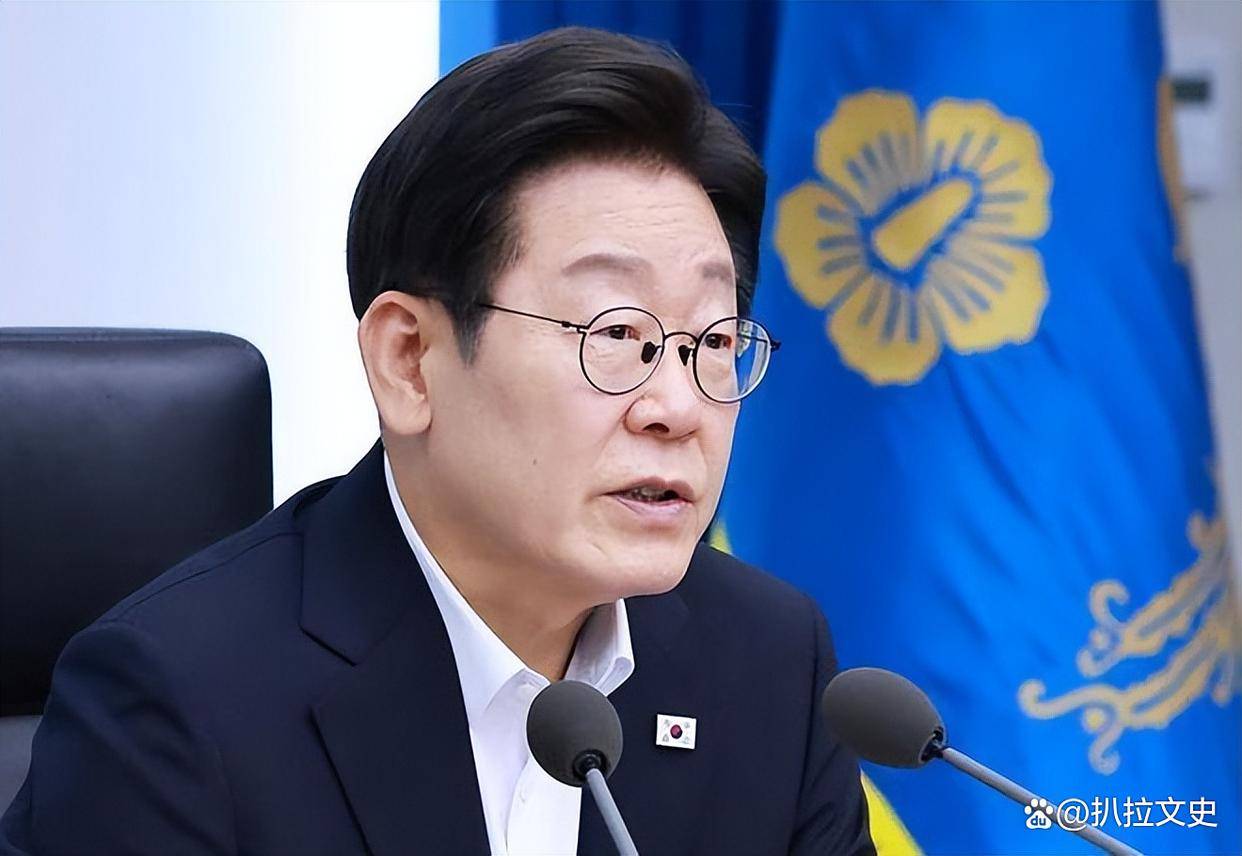
搞不定特朗普,韩国决定对中国征税,还要插手台海?
Sou Hu Cai Jing· 2025-07-27 14:20
Core Viewpoint - The South Korean government, led by Lee Jae-myung, is facing significant challenges regarding tariffs and trade relations with the United States, particularly after a planned high-level economic meeting was abruptly canceled by U.S. Treasury Secretary Janet Yellen [1][3]. Group 1: Trade Relations and Tariffs - South Korea is attempting to negotiate tariff exemptions with the U.S. by offering deeper industrial cooperation in sectors like shipbuilding and semiconductors [1][3]. - The South Korean government has previously struggled to convince the Trump administration to ease tariffs, indicating a history of diplomatic challenges in this area [3]. - In response to U.S. pressure, South Korea is considering opening its fuel market and encouraging domestic companies to present a substantial investment package to the U.S. [3][4]. Group 2: Domestic and International Implications - South Korea has decided to impose temporary anti-dumping duties on hot-rolled steel plates imported from China, which is seen as a move to protect domestic industries during an investigation [4][6]. - The decision to impose tariffs on Chinese imports is coupled with similar measures against Japanese steel, suggesting a broader strategy rather than a direct attack on China [6]. - The South Korean media has reported that the U.S. is pressuring South Korea to expand the scope of the U.S.-Korea Mutual Defense Treaty to include the entire Indo-Pacific region, particularly concerning Taiwan [6][8]. Group 3: Economic Consequences - China remains South Korea's largest trading partner, with bilateral trade expected to exceed $310 billion in 2024, raising concerns about the economic impact of tariff measures against Chinese goods [8][10]. - The potential involvement of South Korea in Taiwan-related issues could severely damage the political foundation of Sino-Korean relations, reminiscent of past tensions caused by the THAAD missile defense system [8][10]. Group 4: Strategic Considerations - The South Korean business community generally favors maintaining good relations with China, while the government faces pressure from the U.S. to take actions that may harm these relations [10][12]. - Analysts suggest that while South Korea may increase military spending under U.S. pressure, direct involvement in Taiwan conflicts is unlikely due to regional security concerns [10][12]. - The Chinese government has firmly stated its opposition to any agreements that compromise its interests, warning South Korea against using Chinese interests as leverage in negotiations with the U.S. [12][14].

美国商务部长卢特尼克:8月1日关税截止日期(到期)后不再有宽限期。特朗普仍准备在8月1日后继续就关税问题进行谈判。
news flash· 2025-07-27 13:16
特朗普仍准备在8月1日后继续就关税问题进行谈判。 美国商务部长卢特尼克:8月1日关税截止日期(到期)后不再有宽限期。 ...
巴西总统:可以就关税问题与美谈判但拒绝“侮辱与恐吓”
news flash· 2025-07-25 14:13
Core Viewpoint - Brazilian President Lula emphasizes the defense of national sovereignty and protection of Brazil's interests regarding tariff issues, while calling for respect for Brazil's internal affairs [1] Group 1: Tariff Issues - Lula states that Brazil will take reciprocal measures if negotiations with the U.S. are ineffective [1] - The U.S. President Trump announced a 50% tariff on goods imported from Brazil starting August 1 [1] Group 2: Judicial Independence - Lula criticizes Trump's request for Brazil to halt judicial investigations into former President Bolsonaro, labeling it an insult to Brazil's judicial system [1] - Lula asserts that Brazil will not tolerate any form of "insult and intimidation" [1]
大摩闭门会-亚洲市场贸易交易阅读;日本参议院选举;印度繁荣的基石
2025-07-25 00:52
Summary of Key Points from Conference Call Records Industry and Company Involved - The conference call primarily discusses the **Japan-U.S. trade agreement** and its implications for the **Japanese economy** and **automobile sector**. It also touches on the broader **Asian market** dynamics. Core Insights and Arguments 1. The Japan-U.S. trade agreement reduces economic downside risks for Japan and uncertainty regarding U.S. tariffs, but the actual fiscal impact may be limited due to the nature of the investment plan, which may include uncertain guarantee frameworks [1][2][3] 2. Japanese automobile stocks have seen a rise mainly due to short covering, but uncertainties regarding potential tariffs on exports from Canada or Mexico and the ability to pass on costs to consumers may suppress future profit growth [1][3] 3. The ruling coalition in Japan did not secure a majority in the upper house elections, which raises concerns about governance reforms and potential increases in corporate tax rates [1][3] 4. Prime Minister Kishida's low approval rating (8%) compared to potential successor candidates suggests that if a new leader is elected, there may be higher expectations for fiscal stimulus policies [4][5] 5. The Asian trade agreements have generally exceeded investor expectations, but high tariffs imposed by the U.S. on countries like Vietnam, Indonesia, and the Philippines could negatively impact profit margins for exporting companies [1][6] 6. Japan's stock market has been under pressure from tariffs, while China and South Korea have recently shown signs of recovery [7] 7. The overall valuation of Asian markets has risen above previous expectations, suggesting a cautious approach to investment is warranted, with a focus on domestic and reform-driven stocks [9][13] Other Important but Potentially Overlooked Content 1. The investment plan of $55 billion from the U.S. may not lead to significant fiscal spending for Japan, as it could involve guarantees from government financial institutions [2] 2. The potential for a coalition government between the ruling party and opposition could lead to policy adjustments that may dampen expectations for expansionary fiscal policies [5] 3. The performance of individual states in India, particularly Maharashtra, is highlighted as a significant economic driver, with a GDP of $536 billion, indicating the importance of regional dynamics in investment considerations [10][11] 4. Japan's ongoing tariff issues, particularly on steel and aluminum, remain a concern, with a 50% tariff still in place, while agreements on semiconductors and agricultural products may provide some relief [12] 5. The potential for a shift in Japan's consumption tax policy could occur if there is a change in leadership, which may impact inflation management strategies [12]
墨西哥总统:不排除与特朗普就关税问题通话
news flash· 2025-07-24 22:04
Core Viewpoint - The Mexican government is actively working to prevent the imposition of a 30% tariff on goods exported to the United States, which is set to take effect on August 1 [1] Group 1 - Mexican President López Obrador announced efforts to negotiate with the U.S. to avoid the tariff [1] - The U.S. President Trump declared a 30% tariff on imports from Mexico and the European Union starting August 1 [1] - López Obrador mentioned the possibility of seeking communication with Trump if an agreement is not reached [1]
欧盟发言人:欧盟继续就关税问题与美国进行密切磋商。
news flash· 2025-07-24 10:23
Group 1 - The European Union is continuing close consultations with the United States regarding tariff issues [1]
7月24日电,欧盟发言人表示,欧盟继续就关税问题与美国进行深入接触。
news flash· 2025-07-24 10:18
Group 1 - The European Union is continuing in-depth discussions with the United States regarding tariff issues [1]
马来西亚贸易部长:与美国在关税问题上的讨论进展顺利,有望按时完成。
news flash· 2025-07-24 08:26
Core Viewpoint - The Malaysian Trade Minister announced that discussions with the United States regarding tariff issues are progressing smoothly and are expected to be completed on time [1] Group 1 - The discussions focus on tariff issues between Malaysia and the United States [1] - The Malaysian Trade Minister expressed optimism about the timely completion of these discussions [1]
美国财长贝森特:特朗普始终是有计划的,但并不总是显而易见。特朗普在关税问题上创造了最大限度的谈判筹码。
news flash· 2025-07-23 11:33
特朗普在关税问题上创造了最大限度的谈判筹码。 美国财长贝森特:特朗普始终是有计划的,但并不总是显而易见。 ...