关税问题

Search documents
现场曝光,高市早苗被批:像“黑社会头目威胁下属”
Xin Lang Cai Jing· 2026-02-28 02:00
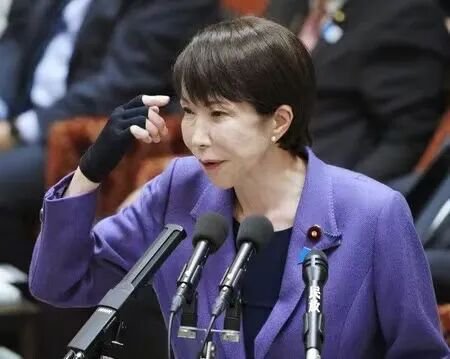
Core Viewpoint - Japanese Prime Minister Sanna Takashi's comments during a parliamentary session regarding the Trump administration's tariffs have sparked significant controversy, with many Japanese netizens criticizing her remarks as "typical workplace bullying" [1][4]. Group 1: Tariff Issues - The U.S. Supreme Court recently ruled that most tariff measures implemented by Trump under the International Emergency Economic Powers Act were unconstitutional, leading the Trump administration to invoke other laws to impose additional tariffs [3][6]. - Previously, a U.S.-Japan trade agreement established a uniform 15% tariff on Japanese goods, with new rates not exceeding this threshold for items already subject to tariffs. However, following the Supreme Court's ruling, some Japanese products may face tariffs exceeding 15% [3][6]. Group 2: Government Response - Japanese Minister of Economy, Trade and Industry, Akizawa Ryozo, stated that he had communicated with U.S. Commerce Secretary Wilbur Ross to ensure that tariffs on Japan would not worsen compared to the conditions of the previous trade agreement, but ultimately, decisions would rest with President Trump [3][6]. - During the parliamentary questioning, lawmakers urged Prime Minister Takashi to ensure that U.S. tariffs on Japan would not exceed the previously agreed 15% and that Japan would not make further concessions [3][6]. Group 3: Public Reaction - Takashi's remarks have led to strong backlash online, with many netizens comparing her statements to threats from a "gang leader" to subordinates, expressing a desire not to work under such leadership [3][6]. - Observers noted that Takashi's comment about not wanting to be embarrassed linked significant diplomatic issues to personal pride, reflecting a narrow perspective on international relations [3][6].

【白银etf持仓量】1月20日白银ETF较上一交易日上涨149.42吨
Jin Tou Wang· 2026-01-21 08:41
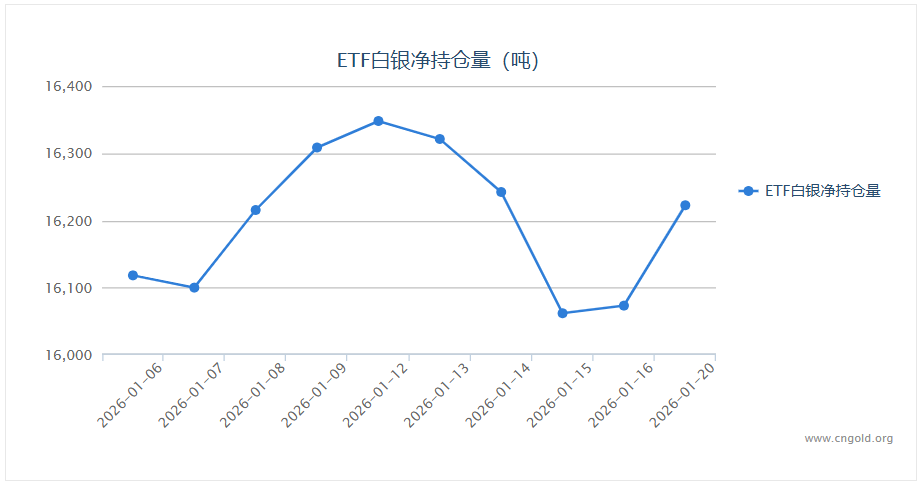
Group 1 - The iShares Silver Trust, the world's largest silver ETF, reported a holding of 16,222.48 tons of silver as of January 20, an increase of 149.42 tons from the previous trading day [1] - On January 20, the spot silver price closed at $94.57 per ounce, up 0.14%, with an intraday high of $95.87 and a low of $92.56 [1]
美股“恐慌指数”大涨,金价续创历史新高
Zhong Guo Zheng Quan Bao· 2026-01-20 23:27
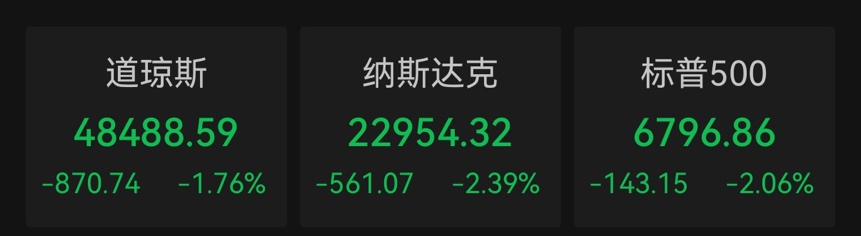
Market Overview - On January 20, U.S. stock indices collectively declined, with the Dow Jones falling by 1.76%, the S&P 500 down by 2.06%, and the Nasdaq dropping by 2.39% [2][4] - The technology sector faced significant selling pressure, while the storage chip sector experienced gains, with companies like SanDisk and Micron Technology reaching historical highs [5] Volatility and Safe-Haven Assets - The "fear index" VIX surged over 6%, surpassing the 20-point mark, indicating increased market volatility and investor anxiety [4] - Gold prices continued to rise, breaking through $4,760 per ounce, marking a new historical record, driven by heightened demand for safe-haven assets [6] Currency Movements - The U.S. dollar index fell by 0.41%, closing at 98.642 against a basket of six major currencies, reflecting market reactions to economic uncertainties [4] Commodity Prices - International oil prices also saw an increase, with light crude oil futures for February rising by $0.90 to $60.34 per barrel, a 1.51% increase, and Brent crude for March up by $0.98 to $64.92 per barrel, a 1.53% increase [6] Corporate Responses and Future Outlook - President Trump indicated that if the Supreme Court makes an unfavorable ruling regarding tariffs, alternative measures, such as a licensing system, could be employed [4] - Trump expressed confidence that a previously negotiated $1 trillion investment commitment from Europe would not be jeopardized, emphasizing the importance of the U.S.-Europe agreement [4]
狗拉雪橇都能装下!欧洲7国向格陵兰岛派兵共37人
Sou Hu Cai Jing· 2026-01-18 15:29
Group 1 - Trump's persistent interest in purchasing Greenland is driven by its strategic location and rich resources, but Denmark has refused to sell, leading to opposition from several European countries [2] - In response to the opposition, Trump imposed tariffs starting at 10% on eight European countries, including Denmark, the UK, France, and Germany, with plans to increase them to 25% [2] - The EU decided to pause the approval of a previously negotiated trade agreement with the US, signaling a potential reevaluation of business relations due to the tariff imposition [2] Group 2 - European experts criticize Trump's use of tariffs as a retaliatory measure during tense times, questioning the wisdom of pursuing a US-EU trade agreement under such circumstances [2][3] - Observations suggest that only China's strong countermeasures have previously forced Trump to back down on tariffs, prompting Europe to consider a more assertive response to the US [5] - Several European countries have symbolically sent small military contingents to Greenland to express support for Denmark, with troop numbers being minimal [5]
宏观金融类:文字早评2026/01/13星期二-20260113
Wu Kuang Qi Huo· 2026-01-13 00:53
1. Report Industry Investment Rating No relevant content provided. 2. Core Viewpoints of the Report - For stocks, with the entry of incremental funds at the beginning of the year, the financing scale has increased significantly, and the market trading volume has rapidly expanded. In the long - term, the policy support for the capital market remains unchanged. Strategically, the idea of buying on dips is recommended [4]. - For bonds, the improvement of economic expectations may put pressure on the bond market, but the sustainability of economic recovery momentum needs to be observed. The central bank's attitude of caring for funds remains, and the bond market is expected to be volatile and weak [8]. - For precious metals, if the silver price stabilizes, it will continue a new upward trend, and the driving force for the gold price remains strong. It is recommended to pay attention to the support of gold and silver prices around the BCOM and tariff adjustment nodes and buy on dips after short - term negative factors end [10]. - For non - ferrous metals, most metal prices are expected to be volatile. For example, copper prices are expected to fluctuate and consolidate in the short term; aluminum prices are expected to remain high; zinc and lead prices are expected to fluctuate widely following the sentiment of the non - ferrous sector [13][15][18]. - For black building materials, steel prices are expected to continue to fluctuate at the bottom; iron ore prices are expected to fluctuate at a relatively high level; glass and soda ash markets are generally weak; coking coal and coke prices are expected to fluctuate in a range [32][34][37]. - For energy and chemicals, different products have different trends. For example, rubber is recommended to be treated neutrally; the valuation of heavy - quality oil products is raised; methanol has the feasibility of buying on dips; urea is recommended to take profits on rallies [55][57][59]. - For agricultural products, the short - term trend of hog prices is expected to be stable or slightly rising, and different trading strategies are recommended for different contract periods; egg prices are expected to be stable or rising, and different strategies are also recommended for different contract periods [79][80][81]. 3. Summary by Relevant Catalogs 3.1 Macro - financial 3.1.1 Stock Index - **Market Information**: China Chamber of Commerce for Import and Export of Machinery and Electronic Products promoted a "soft landing" of the EU's anti - subsidy case on electric vehicles; Lihong No.1 completed its first sub - orbital flight test; Brain - Machine Haihe Laboratory completed the first "space brain - machine interface experiment"; prices of multiple non - ferrous and precious metal futures reached new highs [2]. - **Basis Ratio of Stock Index Futures**: Different ratios are provided for IF, IC, IM, and IH contracts in different periods [3]. - **Strategy Viewpoint**: With incremental funds entering at the beginning of the year, the financing scale has increased significantly, and the market trading volume has rapidly expanded. In the long - term, the policy support for the capital market remains unchanged. Strategically, the idea of buying on dips is recommended [4]. 3.1.2 Treasury Bonds - **Market Information**: On Monday, the closing prices of TL, T, TF, and TS main contracts changed by 0.30%, 0.07%, 0.05%, and 0.00% respectively. The Canadian Prime Minister will visit China, and the National Development and Reform Commission and other departments issued relevant policies on government investment funds [5]. - **Liquidity**: The central bank conducted 861 billion yuan of 7 - day reverse repurchase operations on Monday, with a net investment of 361 billion yuan [6][7]. - **Strategy Viewpoint**: The improvement of economic expectations may put pressure on the bond market, but the sustainability of economic recovery momentum needs to be observed. The central bank's attitude of caring for funds remains, and the bond market is expected to be volatile and weak [8]. 3.1.3 Precious Metals - **Market Information**: Shanghai gold rose 1.31%, and Shanghai silver rose 7.23%. The US federal prosecutor launched a criminal investigation into Fed Chairman Powell, which impacted the Fed's independence [9]. - **Strategy Viewpoint**: If the silver price stabilizes, it will continue a new upward trend, and the driving force for the gold price remains strong. It is recommended to pay attention to the support of gold and silver prices around the BCOM and tariff adjustment nodes and buy on dips after short - term negative factors end [10]. 3.2 Non - ferrous Metals 3.2.1 Copper - **Market Information**: Silver prices were strong, and the domestic equity market strengthened, driving copper prices to rise. LME copper inventory decreased, and domestic electrolytic copper social inventory increased [12]. - **Strategy Viewpoint**: The Fed's interest - rate cut expectation has weakened, and short - term sentiment may cool down. The copper mine supply is in a tight pattern, and copper prices are expected to fluctuate and consolidate in the short term [13]. 3.2.2 Aluminum - **Market Information**: The general atmosphere of bulk commodities was strong, and aluminum prices fluctuated and rose. LME aluminum inventory decreased, and domestic aluminum ingot and aluminum rod social inventories increased [14]. - **Strategy Viewpoint**: The high - level fluctuations of precious metals and non - ferrous metals have increased, and short - term sentiment may cool down. Aluminum prices are expected to remain high [15]. 3.2.3 Zinc - **Market Information**: The Shanghai zinc index rose, and LME zinc also increased. Zinc ingot social inventory decreased slightly [16][17]. - **Strategy Viewpoint**: The zinc price has a large room for catch - up compared with copper and aluminum. It is expected to fluctuate widely following the sentiment of the non - ferrous sector [18]. 3.2.4 Lead - **Market Information**: The Shanghai lead index rose, and LME lead also increased. Lead ingot social inventory increased [19]. - **Strategy Viewpoint**: The lead price is approaching the upper edge of the long - term oscillation range, and it is expected to fluctuate widely following the sentiment of the non - ferrous sector [19]. 3.2.5 Nickel - **Market Information**: Nickel prices rebounded, and the prices of nickel ore and nickel iron also changed accordingly [20]. - **Strategy Viewpoint**: The oversupply pressure of nickel is still large, and it is expected to fluctuate widely in the short term. It is recommended to wait and see in the short term [20][21]. 3.2.6 Tin - **Market Information**: Tin prices rose significantly. The supply in Myanmar is gradually recovering, and the demand is mainly for rigid needs [22]. - **Strategy Viewpoint**: The tin market demand is weak, and the supply is expected to improve. It is recommended to wait and see. The price is expected to fluctuate following the market risk preference [22]. 3.2.7 Carbonate Lithium - **Market Information**: The spot index of carbonate lithium rose, and the futures price also increased [23]. - **Strategy Viewpoint**: The "rush to export" effect has increased the demand expectation, but the rapid rise may increase the callback risk. It is recommended to wait and see or try with a light position [23]. 3.2.8 Alumina - **Market Information**: The alumina index rose, and the inventory continued to accumulate [24]. - **Strategy Viewpoint**: The mine price is expected to decline, and the alumina market continues to face over - capacity. It is recommended to wait and see and consider shorting on rallies [25]. 3.2.9 Stainless Steel - **Market Information**: The stainless steel main contract price was stable, and the social inventory decreased [26]. - **Strategy Viewpoint**: The optimistic expectation of Indonesia's RKAB supports the price. The price is expected to remain high and volatile in the short term [27]. 3.2.10 Casting Aluminum Alloy - **Market Information**: The price of casting aluminum alloy rose, and the inventory increased slightly [28]. - **Strategy Viewpoint**: The cost is strong, and the supply is disturbed. The price is expected to remain high in the short term [29]. 3.3 Black Building Materials 3.3.1 Steel - **Market Information**: The prices of rebar and hot - rolled coil increased, and the inventory of rebar increased slightly while that of hot - rolled coil decreased slightly [31]. - **Strategy Viewpoint**: The steel price is expected to continue to fluctuate at the bottom. It is necessary to pay attention to the de - stocking of hot - rolled coil and relevant policies [32]. 3.3.2 Iron Ore - **Market Information**: The iron ore main contract price rose, and the port inventory continued to accumulate [33]. - **Strategy Viewpoint**: The overseas iron ore shipment is in the off - season, and the iron ore price is expected to fluctuate at a relatively high level. It is necessary to pay attention to the steel mill's replenishment and iron - making rhythm [34]. 3.3.3 Glass and Soda Ash - **Market Information**: The glass main contract price decreased slightly, and the inventory decreased. The soda ash main contract price increased, and the inventory increased [35][37]. - **Strategy Viewpoint**: The glass price is expected to fluctuate, and it is recommended to wait and see. The soda ash market is generally weak [36][37]. 3.3.4 Coking Coal and Coke - **Market Information**: The prices of coking coal and coke rose. The spot prices of coking coal and coke also changed [38]. - **Strategy Viewpoint**: The commodity market sentiment is positive, but the fundamental support for the price is limited. The price is expected to fluctuate in a range [40][41]. 3.3.5 Manganese Silicon and Ferrosilicon - **Market Information**: The prices of manganese silicon and ferrosilicon rose. The spot prices also changed [42]. - **Strategy Viewpoint**: The future market trend is mainly affected by the overall market sentiment and cost factors. It is recommended to pay attention to manganese ore and "dual - carbon" policies [45]. 3.3.6 Industrial Silicon and Polysilicon - **Market Information**: The price of industrial silicon rose slightly, and the price of polysilicon decreased. The inventory of industrial silicon may increase, and the supply of polysilicon may be adjusted [46][48]. - **Strategy Viewpoint**: Industrial silicon is expected to face inventory pressure, and polysilicon is expected to be weak and volatile. It is necessary to pay attention to relevant policies and production plans [47][49]. 3.4 Energy and Chemicals 3.4.1 Rubber - **Market Information**: The rubber price fluctuated and rebounded. The tire start - up rate had marginal fluctuations, and the inventory increased [51][53]. - **Strategy Viewpoint**: The overall commodity atmosphere is positive, but the rubber seasonality is weak. A neutral strategy is recommended, and short - selling can be considered if the price falls below a certain level [55]. 3.4.2 Crude Oil - **Market Information**: The main contract price of INE crude oil rose, and the inventories of refined oil products changed [56]. - **Strategy Viewpoint**: The Latin American geopolitical situation does not have enough positive impact on the overall oil price, but the valuation of heavy - quality oil products is raised [57]. 3.4.3 Methanol - **Market Information**: The regional spot prices of methanol changed, and the main contract price decreased [58]. - **Strategy Viewpoint**: The current valuation of methanol is low, and it has the feasibility of buying on dips [59]. 3.4.4 Urea - **Market Information**: The regional spot prices of urea changed slightly, and the main contract price increased [60]. - **Strategy Viewpoint**: The import window has opened, and it is recommended to take profits on rallies [62]. 3.4.5 Pure Benzene and Styrene - **Market Information**: The prices of pure benzene and styrene rose. The inventory of pure benzene increased, and the inventory of styrene decreased [63]. - **Strategy Viewpoint**: The non - integrated profit of styrene can be long - bought before the first quarter [64]. 3.4.6 PVC - **Market Information**: The PVC main contract price rose, and the inventory increased [65]. - **Strategy Viewpoint**: The domestic PVC market has a pattern of strong supply and weak demand. It is recommended to short on rallies [66]. 3.4.7 Ethylene Glycol - **Market Information**: The ethylene glycol main contract price rose, and the inventory increased [67]. - **Strategy Viewpoint**: The ethylene glycol market needs to increase production cuts to improve the supply - demand pattern. It is necessary to beware of rebound risks [68]. 3.4.8 PTA - **Market Information**: The PTA main contract price rose, and the inventory decreased [69]. - **Strategy Viewpoint**: The PTA is expected to enter the Spring Festival inventory - accumulation stage. It is recommended to pay attention to long - buying opportunities on dips [70]. 3.4.9 p - Xylene - **Market Information**: The p - xylene main contract price rose, and the inventory decreased [71][72]. - **Strategy Viewpoint**: The p - xylene load is high, and it is recommended to pay attention to long - buying opportunities following the crude oil price [73]. 3.4.10 Polyethylene (PE) - **Market Information**: The PE main contract price rose, and the inventory increased [74]. - **Strategy Viewpoint**: The PE price may be supported, and it is recommended to long - buy the LL5 - 9 spread on dips [75]. 3.4.11 Polypropylene (PP) - **Market Information**: The PP main contract price rose, and the inventory situation was complex [76]. - **Strategy Viewpoint**: The PP price may bottom out in the first quarter of next year [77]. 3.5 Agricultural Products 3.5.1 Hogs - **Market Information**: The domestic hog price was mixed, and the price may stabilize or rise slightly [79]. - **Strategy Viewpoint**: The short - term hog price may support the futures price, but in the medium - term, supply pressure exists. Different trading strategies are recommended for different contract periods [80]. 3.5.2 Eggs - **Market Information**: The national egg price mostly rose, and the price is expected to be stable or rise [81]. - **Strategy Viewpoint**: The short - term egg price may support the futures price, but in the medium - term, supply pressure exists. Different trading strategies are recommended for different contract periods [82]. 3.5.3 Soybean and Rapeseed Meal - **Market Information**: The protein meal futures price fluctuated. The import cost of soybeans may have a bottom, but the fundamental situation is weak [83][84]. - **Strategy Viewpoint**: It is recommended to wait and see in the short term due to the combination of long - and short - term factors [84]. 3.5.4 Oils and Fats - **Market Information**: The oil futures price fluctuated. The palm oil inventory in Malaysia increased, and the domestic three - major oil inventories were at a relatively high level [85][86]. - **Strategy Viewpoint**: The current fundamental situation is weak, but the long - term expectation is optimistic. The oil price may be close to the bottom [86]. 3.5.5 Sugar - **Market Information**: The Zhengzhou sugar futures price fluctuated. The spot price of sugar decreased slightly [87]. - **Strategy Viewpoint**: The international sugar price may rebound after February, and it is recommended to wait and see in the short term [89]. 3.5.6 Cotton - **Market Information**: The Zhengzhou cotton futures price decreased. The cotton supply and demand situation changed [90]. - **Strategy Viewpoint**: The cotton price may fluctuate after rising. It is recommended to wait for a callback to buy [91].
调查:美国企业CFO平均预期明年物价涨幅4.2%
Ge Long Hui A P P· 2025-12-18 04:01
Core Insights - The confidence of CFOs regarding their companies and the overall U.S. economy has declined, with the optimism index dropping from 62.9 in Q3 to 60.2, lower than the high of 66 following the election of Donald Trump [1] Group 1: Economic Outlook - The median expectations for employment and economic growth for the next year are 1.7% and 1.9%, respectively [1] - Only 40% of respondents indicated that their companies are hiring for new positions, while nearly 20% stated they are not hiring at all [1] - Approximately 9% of CFOs expect layoffs within their companies [1] Group 2: Concerns and Predictions - The primary concern among CFOs remains the issue of tariffs [1] - The average expected inflation rate for the coming year is 4.2%, with half of the respondents predicting inflation rates of 3.5% or higher [1] - The average forecast for company revenue growth is nearly 8% [1]
美联储最新调查:企业CFO们预计明年美国物价上涨4.2%,关税仍是最担心的问题
Hua Er Jie Jian Wen· 2025-12-17 13:57
Core Insights - CFOs in the U.S. expect significant price increases in 2026, averaging a 4.2% rise, challenging the Federal Reserve's inflation targets [1][2] - Concerns over tariffs remain a primary risk for businesses, with many CFOs indicating that inflation pressures may persist longer than anticipated [1][3] Group 1: Inflation Expectations - The survey conducted among 548 CFOs revealed an average expected price increase of 4.2% for 2026, with half of the respondents anticipating increases of 3.5% or more [2] - This expectation contrasts sharply with the Federal Reserve's forecast, which suggests inflation could slow to within 0.5 percentage points of its 2% target by 2026 [2] Group 2: Tariff and Cost Pressures - Tariffs and trade policies remain the top concern for CFOs, despite a slight decrease in anxiety compared to earlier in the year [3] - CFOs expect unit costs to rise slightly above price increases, indicating that a 4.2% price hike may only marginally cover rising costs [3] Group 3: Business Confidence and Economic Outlook - Business optimism has declined, with the U.S. economic optimism index dropping from 62.9 to 60.2 [4] - Companies project a modest economic growth rate of approximately 1.9% for 2026, with employment expected to increase by 1.7% [4] - Less than half of the surveyed companies are actively hiring, with a notable percentage indicating no hiring plans or potential layoffs [4]
2026年最佳投资机遇在哪里?全球亿万富豪加码押注:中国和西欧
凤凰网财经· 2025-12-14 12:51
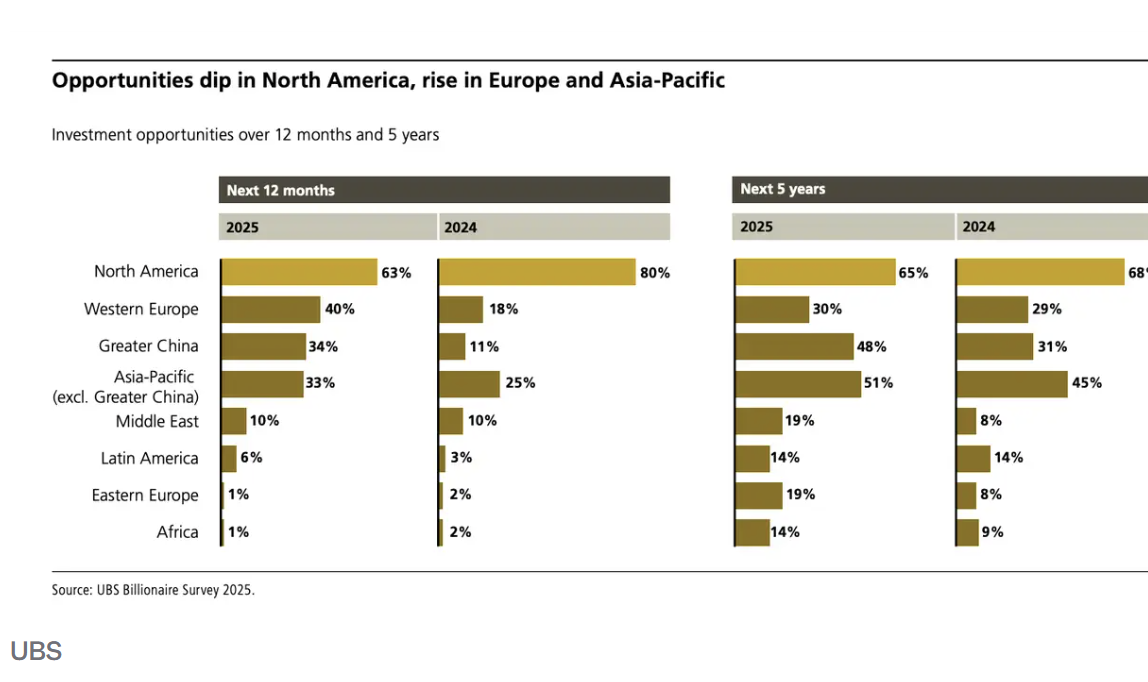
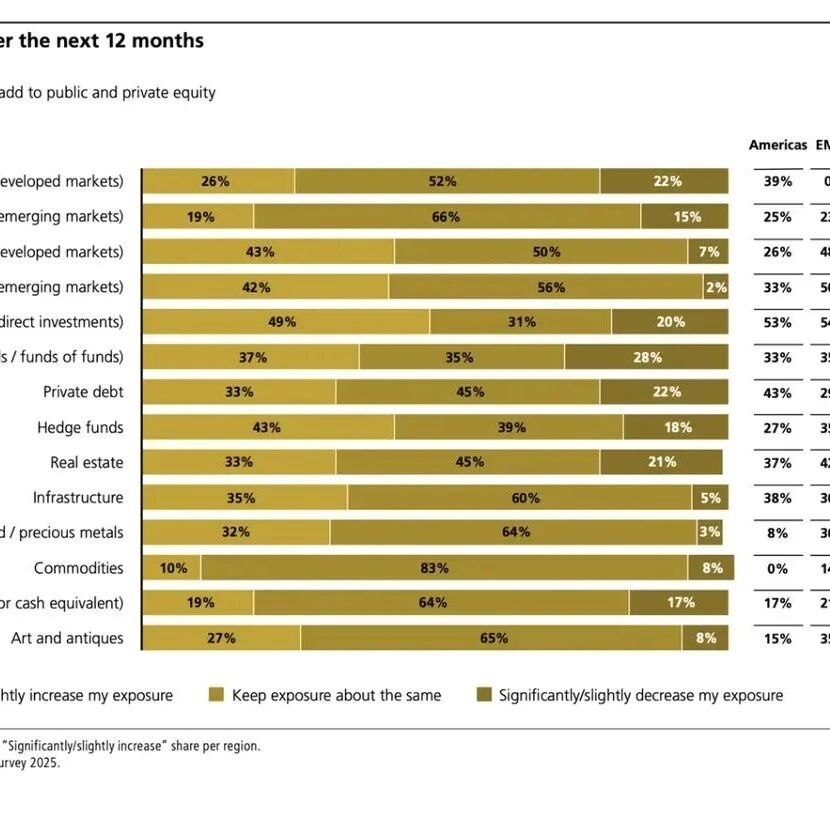
Group 1 - The global stock market has shown strong performance in 2025, driven by the AI investment boom and loose monetary policies, with many indices, including the US stock market, reaching historical highs [1] - Billionaires are optimistic about investment opportunities in China and Western Europe, with 40% of respondents favoring Western Europe for the next 12 months, up from 18% in 2024, and 34% favoring the Greater China market, significantly higher than 11% last year [5] - Over a five-year outlook, the percentage of respondents optimistic about the Greater China market rose from 31% in 2024 to 48% in 2025 [6] Group 2 - There has been a significant decline in optimism regarding the North American market, with only 63% of billionaires favoring it in 2025, down from 80% in 2024, primarily due to concerns over multiple risk factors, particularly tariffs [9] - 66% of respondents identified tariffs as the most likely negative factor affecting the market environment in the next 12 months, followed by geopolitical conflicts (63%), policy uncertainty (59%), and higher inflation (44%) [9] - Billionaires plan to increase investments in private equity, hedge funds, developed market equities, and emerging market equities, with 49% intending to increase exposure to private equity in the next 12 months, followed by hedge funds (43%), developed market equities (43%), and emerging market equities (42%) [11]

2026年最佳投资机遇在哪里?全球亿万富豪加码押注:中国和西欧!
天天基金网· 2025-12-14 07:00
Core Insights - The global stock market has shown strong performance in 2025, driven by the AI investment boom and loose monetary policies, with many indices, including US stocks, reaching historical highs [2] - Billionaires are optimistic about investment opportunities in China and Western Europe, with 40% of respondents favoring Western Europe and 34% favoring Greater China for the next 12 months, significantly up from 18% and 11% respectively in 2024 [2] - Over a five-year horizon, the outlook for Greater China has also improved, with the percentage of respondents expecting positive investment opportunities rising from 31% in 2024 to 48% in 2025 [2] North America Market Sentiment - There has been a significant decline in optimism regarding the North American market, with only 63% of billionaires favoring it in 2025, down from 80% in 2024 [4] - Concerns over multiple risk factors, particularly tariffs, have influenced this shift, with 66% of respondents identifying tariffs as a major potential negative impact on the market environment [4] - Other concerns include geopolitical conflicts (63%), policy uncertainty (59%), and higher inflation (44%) [4] Investment Preferences - Billionaires plan to increase their investments in private equity, hedge funds, developed market equities, and emerging market equities over the next 12 months, with 49% indicating plans to increase exposure to private equity [4] - The survey indicates that 43% of respondents plan to increase investments in hedge funds and developed market equities, while 42% are looking to invest more in emerging market equities [4] Regional Investment Trends - The UBS Billionaire Survey 2025 highlights varying investment preferences across regions, with significant interest in private equity and hedge funds in the Americas and EMEA [5] - In the Asia-Pacific region, 61% of billionaires plan to increase their exposure to hedge funds, indicating a strong regional preference for alternative investments [5]

2026年最佳投资机遇在哪里?全球亿万富豪加码押注:中国和西欧
Feng Huang Wang· 2025-12-14 05:30
Core Insights - The global stock market has shown strong performance in 2025, driven by the AI investment boom and loose monetary policies, with many indices, including the US stock market, reaching historical highs [1] Group 1: Investment Sentiment - Billionaires are increasingly optimistic about investment opportunities in China and Western Europe, with 40% of respondents favoring Western Europe for the next 12 months, up from 18% in 2024 [1] - Similarly, 34% of billionaires see potential in the Greater China market for the next 12 months, a significant increase from 11% in the previous year [1] - Over a five-year horizon, the outlook for Greater China has also improved, with the percentage of respondents optimistic rising from 31% in 2024 to 48% in 2025 [1] Group 2: North America Market Sentiment - In contrast, optimism towards the North American market has sharply declined, with only 63% of billionaires favoring it in 2025, down from 80% in 2024 [4] - Concerns over multiple risk factors, particularly tariffs, are driving this shift, with 66% of respondents identifying tariffs as a major potential negative impact on the market environment [4] - Other significant concerns include geopolitical conflicts (63%), policy uncertainty (59%), and higher inflation (44%) [4] Group 3: Investment Areas - Billionaires plan to increase their exposure to private equity, with 49% indicating plans to invest more in this area over the next 12 months [5] - Other areas of interest include hedge funds (43%), developed market equities (43%), and emerging market equities (42%) [5] - The survey indicates a strong preference for public and private equity investments among billionaires, reflecting a strategic shift in their investment focus [6]