日本军国主义

Search documents
妄言台湾问题,开启“潘多拉魔盒”? | 新漫评
Zhong Guo Xin Wen Wang· 2025-11-20 07:10
Core Viewpoint - The recent remarks by Japanese Prime Minister Sanae Takaichi regarding Taiwan potentially constituting a "survival crisis" for Japan suggest a possible military intervention in the Taiwan Strait, which raises concerns about reviving militaristic tendencies in Japan and escalating tensions in East Asia [3]. Group 1: Historical Context - Japan's militaristic past includes multiple invasions under the guise of "self-defense," such as the Mukden Incident and the invasion of China, as well as colonization efforts in Korea, the Philippines, Malaysia, and Singapore, leading to significant suffering across Asia and the world [3]. - The article emphasizes the importance of remembering history to prevent the repetition of past atrocities committed by Japanese militarism [3]. Group 2: International Response - The international community is urged to reject any attempts by Japanese militaristic leaders to deny historical facts and provoke further conflict, as this would be a blatant challenge to international justice and the post-war order [3]. - The opening of the "Pandora's box" of Japanese militarism is viewed as a dangerous move that could lead to severe consequences if not addressed promptly [3].


国际社会必须高度警惕、坚决阻击任何复活军国主义的图谋
Ren Min Ri Bao· 2025-11-19 22:20
Core Points - The spokesperson of the Ministry of Foreign Affairs, Mao Ning, emphasized that Japan's use of "existential crisis" and "self-defense" as justifications for external aggression is a common tactic of militarism [1][2] - Mao Ning highlighted that Japan's historical actions, such as the invasion of Northeast China in 1931 and the declaration of the "Greater East Asia Co-Prosperity Sphere," were framed as matters of national survival, leading to significant military conflicts [2] Summary by Sections - **Japan's Militaristic Tactics** - Japan has historically invoked "existential crisis" to justify military aggression, as seen in events like the Mukden Incident in 1931 and the Pacific War [2] - The international community must remain vigilant against any resurgence of militarism from Japan [2] - **Legal and Historical Context** - The concept of "collective self-defense" was established under the UN Charter to maintain international security and prevent the resurgence of fascism [1] - Post-World War II, Japan was restricted from exercising this right, as outlined in the Potsdam Declaration and its own constitution, which commits to renouncing war and military threats [1]
中方:以所谓“存亡危机”发动对外侵略是日本军国主义惯用伎俩
Zhong Guo Xin Wen Wang· 2025-11-19 08:11
Core Viewpoint - The Chinese government criticizes Japan's potential military intervention in the Taiwan Strait, linking it to historical patterns of Japanese militarism and aggression under the guise of "self-defense" and "survival crisis" [1][2]. Group 1: Historical Context - Japan has historically used the concept of "survival crisis" to justify military aggression, such as the invasion of Northeast China in 1931 and the broader conflicts during World War II [2]. - The notion of "self-defense" has been manipulated by Japan to initiate conflicts, as seen in the lead-up to the Pacific War [2]. Group 2: Legal Framework - The Chinese government emphasizes that Japan's post-World War II constitution prohibits the use of military force for resolving international disputes and mandates a principle of self-defense [1]. - The United Nations Charter's provision for "collective self-defense" was established to maintain international security and prevent the resurgence of fascism, which Japan is seen as violating by considering military actions in the Taiwan Strait [1].
“毒苗”结“恶果”,谁是罪人? | 新漫评
Zhong Guo Xin Wen Wang· 2025-11-18 08:51
Core Viewpoint - Recent remarks by Japanese Prime Minister Sanae Takaichi in the National Diet have escalated tensions regarding Taiwan, with explicit military threats and calls for war [2] Group 1: Political Statements - Takaichi's comments are seen as a blatant provocation and an attempt to interfere in Taiwan Strait affairs, which China views as a serious violation of international justice and a challenge to the post-war international order [2] - The Chinese Foreign Ministry has issued strong statements against Japan's potential military intervention, labeling it as an act of aggression that would be met with a decisive response from China [2] Group 2: Regional Implications - The rise of militaristic rhetoric in Japan is perceived as a spreading "toxin" that threatens regional cooperation and seeks to revive militarism in a context that should be peaceful [2] - There is a call to eliminate these disruptive influences to ensure that international justice prevails and peace is maintained in the region [2]

人民日报钟声:警惕日本战略走向的危险转向
财联社· 2025-11-16 23:54
Core Viewpoint - The remarks made by Japanese Prime Minister Kishi Nobuo regarding Taiwan represent a dangerous historical and strategic perspective, necessitating vigilance from the international community, especially Asian nations [1][2][3]. Group 1: Japan's Military and Strategic Posture - Kishi Nobuo's assertion that "Taiwan's issues equate to Japan's issues" reflects a troubling trend in Japanese politics, linking China's national unification with Japan's security [2]. - The historical context of Japanese militarism is invoked, highlighting past aggressions justified under the guise of "survival crises," which raises concerns about a potential resurgence of militaristic policies [2][3]. - Japan's recent shifts in security policy, including increased defense budgets and the pursuit of offensive capabilities, indicate a significant and concerning strategic pivot [3]. Group 2: Historical Context and Implications - Japan's historical actions in Taiwan, including colonization and wartime aggression, are emphasized, underscoring the moral implications of current political rhetoric [3]. - The article stresses that Taiwan is a core interest for China, and any external interference in its resolution is unacceptable, reinforcing China's sovereignty [3]. - The 80th anniversary of the victory in the Anti-Japanese War is highlighted, contrasting Japan's historical aggressions with China's current resolve to maintain territorial integrity [3].

警惕日本战略走向的危险转向(钟声)
Ren Min Ri Bao· 2025-11-16 22:10
Core Viewpoint - The statements made by Japanese Prime Minister Kishi Nobuo regarding Taiwan represent a dangerous historical and strategic perspective, necessitating vigilance from the international community, especially Asian nations [1][2][3] Group 1: Political Implications - Kishi Nobuo's assertion that "Taiwan's issues equate to Japan's issues" reflects a troubling trend in Japanese politics, linking China's national unity with Japan's security [2] - The rhetoric surrounding "survival crisis" has historical precedents in Japan's militaristic past, raising concerns about a potential resurgence of militarism [2][3] Group 2: Historical Context - Japan has a significant historical responsibility regarding Taiwan, having occupied it for half a century and committing numerous atrocities [3] - The return of Taiwan to China post-World War II is supported by international legal documents, yet Japan's current stance undermines this historical resolution [3] Group 3: Military and Security Concerns - Japan's recent shifts in security policy, including increased defense budgets and the potential development of offensive weapons, indicate a move towards militarization [3] - The current administration's ambiguous stance on nuclear policies raises alarms about Japan's intentions, suggesting a departure from its post-war pacifism [3]
晨枫:“很有精神”的江田岛,最终葬送了日本
Guan Cha Zhe Wang· 2025-10-08 00:33
Core Points - The article discusses the historical significance of Etajima, a location in Japan that played a crucial role in the development of the Japanese Navy and military ideology during the Meiji Restoration and beyond [4][5][12] - It highlights the transformation of Japan's military from traditional samurai influences to a modern naval power, emphasizing the importance of the Navy in Japan's rise and fall [4][12] - The narrative also touches on the legacy of key figures in Japanese naval history, such as Tōgō Heihachirō and Yamamoto Isoroku, and their impact on Japan's military ethos [7][12] Summary by Sections Historical Context - Etajima is located in the Seto Inland Sea, near Hiroshima, and is part of Hiroshima Prefecture, which is significant for understanding modern Japanese history [1][3] - The Meiji Restoration marked a shift towards Westernization and militarism in Japan, with the Navy being a central element of this transformation [4][12] Naval Education and Legacy - The Etajima Naval Academy, established in 1870, is compared to prestigious naval academies in the UK and the US, serving as a training ground for Japan's naval leaders [5][7] - The academy has historical ties to significant naval victories, such as the Battle of Tsushima, which established Japan's dominance in East Asia [9][12] Cultural and Military Significance - The article discusses the "Etajima Spirit," which embodies loyalty and sacrifice, but also critiques the loss of the pursuit of excellence that once characterized Japan's military ethos [12][24] - The narrative reflects on the remnants of Japan's naval history, including museums and memorials that preserve the legacy of the Imperial Navy [11][19] Modern Implications - The discussion extends to the current state of Japan's Self-Defense Forces and their naval capabilities, highlighting advancements and comparisons with other nations [15][17] - The article concludes with a call for awareness of Japan's militaristic past and the importance of historical understanding in fostering future peace between Japan and its neighbors [24][25]
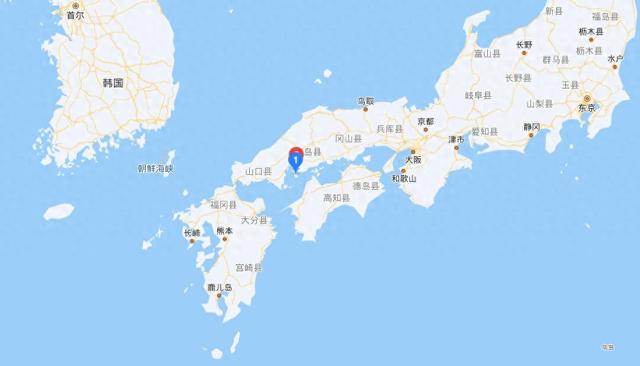
日本将部署导弹,射程覆盖中国沿海?国防部:决不允许日本军国主义卷土重来
Zheng Quan Shi Bao· 2025-09-10 10:56
Core Viewpoint - Japan's defense budget for fiscal year 2026 is set to reach a record high of 8.85 trillion yen, indicating a significant military expansion that raises concerns about a resurgence of militarism in Japan [1] Group 1: Defense Budget and Military Expansion - The Japanese Ministry of Defense has announced a budget draft that will result in a defense budget of 8.85 trillion yen for fiscal year 2026, marking a historical peak [1] - Japan plans to deploy improved Type 12 land-based anti-ship missiles in Kyushu, which will have a range covering the coastal areas of China [1] Group 2: International Concerns and Historical Context - The spokesperson for the Ministry of National Defense expressed that Japan's accelerated military expansion and development of offensive weaponry exceed the requirements of its "defensive-only" policy, raising alarms among peace-loving nations [1] - The statement highlighted the historical context of Japan's militarism, referencing the 80th anniversary of the victory in the Chinese People's Anti-Japanese War and the global anti-fascist war, emphasizing the need for Japan to reflect on its invasion history and respect the security concerns of Asian neighbors [1]
日本将部署导弹,射程覆盖中国沿海?国防部:决不允许日本军国主义卷土重来
证券时报· 2025-09-10 10:11
Group 1 - The core viewpoint of the article highlights Japan's military expansion, with the defense budget for FY2026 reaching a record high of 8.85 trillion yen, raising concerns about the resurgence of militarism in Japan [2] - The article emphasizes the deployment of improved Type 12 land-based anti-ship missiles in Kyushu, which can reach coastal areas of China, indicating a shift towards offensive military capabilities [2] - The spokesperson from the Ministry of National Defense expresses strong opposition to the revival of Japanese militarism, urging Japan to reflect on its historical invasions and respect the security concerns of neighboring Asian countries [2]

日本将部署导弹,射程覆盖中国沿海?国防部:决不允许日本军国主义卷土重来
财联社· 2025-09-10 08:35
Core Viewpoint - Japan is accelerating its military expansion, developing military capabilities that exceed the requirements of its "self-defense" policy, raising concerns among peace-loving nations about Japan's intentions [1] Summary by Sections Military Budget - Japan's defense budget for the fiscal year 2026 is projected to reach 8.85 trillion yen, marking a historical high [1] Military Equipment Development - Japan plans to deploy an improved version of the Type 12 land-based anti-ship missile in Kyushu, with a range that covers coastal areas of China [1] Historical Context and Regional Concerns - The spokesperson emphasized the historical context of Japan's militarism, recalling the suffering caused by Japanese militarism during the invasion 80 years ago, and stated that regional countries are increasingly determined to safeguard peace [1] - There is a call for Japan to deeply reflect on its history of invasion and to respect the security concerns of neighboring Asian countries and the international community [1]