端到端自动驾驶

Search documents
拿到offer了,却开心不起来。。。
自动驾驶之心· 2025-09-02 23:33
Group 1 - The article discusses the importance of the autumn recruitment season, highlighting a student's experience of receiving an offer from a tier 1 company but feeling unfulfilled due to a desire to transition to a more advanced algorithm position [1] - The article encourages perseverance and self-challenge, emphasizing that pushing oneself can reveal personal limits and potential [2] Group 2 - A significant learning package is introduced, including a 499 yuan discount card for a year of courses at a 30% discount, various course benefits, and hardware discounts [4][6] - The focus is on cutting-edge autonomous driving technologies for 2025, particularly end-to-end (E2E) and VLA autonomous driving systems, which are becoming central to the industry [7][8] Group 3 - The article outlines the development of end-to-end autonomous driving algorithms, emphasizing the need for knowledge in multimodal large models, BEV perception, reinforcement learning, and more [8] - It highlights the challenges faced by beginners in synthesizing knowledge from fragmented research papers and the lack of practical guidance in transitioning from theory to practice [8] Group 4 - The introduction of a 4D annotation algorithm course aims to address the increasing complexity of training data requirements for autonomous driving, emphasizing the importance of automated 4D annotation [11][12] - The course is designed to help newcomers navigate the challenges of entering the field and to optimize their learning paths [12] Group 5 - The article discusses the emergence of multimodal large models in autonomous driving, noting the rapid growth of job opportunities in this area and the need for systematic learning platforms [14] - It emphasizes the importance of practical experience and project involvement for job seekers in the autonomous driving sector [21] Group 6 - The article mentions various specialized courses available, including those focused on perception, model deployment, planning control, and simulation in autonomous driving [16][18][20] - It highlights the importance of community engagement and support through VIP groups for course participants, facilitating discussions and problem-solving [26]


自动驾驶之心开学季活动来了(超级折扣卡/课程/硬件/论文辅导福利放送)
自动驾驶之心· 2025-09-02 09:57
Core Viewpoint - The article reflects on the evolution of autonomous driving over the past decade, highlighting significant technological advancements and the ongoing need for innovation and talent in the industry [2][3][4]. Group 1: Evolution of Autonomous Driving - Autonomous driving has progressed from basic image classification to advanced perception systems, including 3D detection and end-to-end models [3]. - The industry has witnessed both failures and successes, with companies like Tesla, Huawei, and NIO establishing strong technological foundations [3]. - The journey of autonomous driving is characterized by continuous efforts rather than sudden breakthroughs, emphasizing the importance of sustained innovation [3]. Group 2: Importance of Talent and Innovation - The future of autonomous driving relies on a steady influx of talent dedicated to enhancing safety and performance [4]. - Innovation is identified as the core of sustainable business growth, with a focus on practical applications and real-world problem-solving [6]. - The article encourages a mindset of continuous learning and adaptation to keep pace with rapid technological changes [6]. Group 3: Educational Initiatives and Resources - The company has developed a series of educational resources, including video tutorials and courses covering nearly 40 subfields of autonomous driving [8][9]. - Collaborations with industry leaders and academic institutions are emphasized to bridge the gap between theory and practice [8]. - The article outlines various courses aimed at equipping learners with the necessary skills for careers in leading autonomous driving companies [9][10]. Group 4: Future Directions in Technology - Key technological directions for 2025 include end-to-end autonomous driving and the integration of large models [12][20]. - The article discusses the significance of multi-modal large models in enhancing the capabilities of autonomous systems [20]. - The need for advanced data annotation techniques, such as automated 4D labeling, is highlighted as crucial for improving training data quality [16].

自动驾驶多传感器融合感知1v6小班课来了(视觉/激光雷达/毫米波雷达)
自动驾驶之心· 2025-09-02 06:51
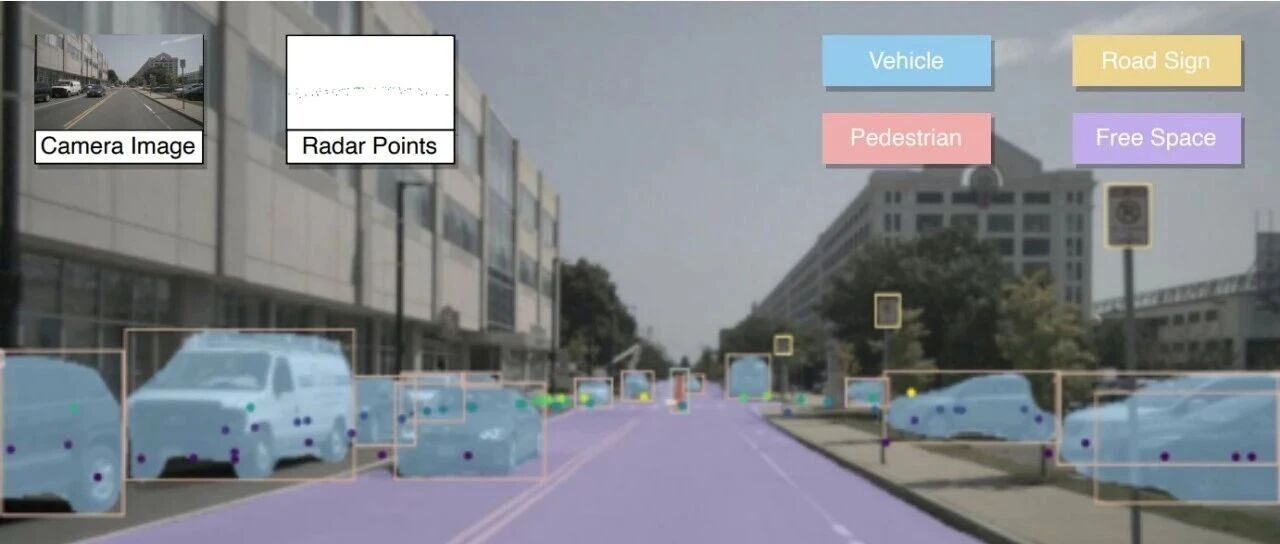
Core Insights - The article emphasizes the necessity of multi-modal sensor fusion in autonomous driving to overcome the limitations of single sensors like cameras, LiDAR, and millimeter-wave radar, enhancing robustness and safety in various environmental conditions [1][34]. Group 1: Multi-Modal Sensor Fusion - Multi-modal sensor fusion combines the strengths of different sensors: cameras provide semantic information, LiDAR offers high-precision 3D point clouds, and millimeter-wave radar excels in adverse weather conditions [1][34]. - Current mainstream fusion techniques include mid-level fusion based on Bird's Eye View (BEV) and end-to-end fusion using Transformer architectures, which significantly improve the performance of autonomous driving systems [2][34]. Group 2: Challenges in Sensor Fusion - Key challenges in multi-modal sensor fusion include sensor calibration, data synchronization, and the design of efficient algorithms to handle the heterogeneity and redundancy of sensor data [3][34]. - Ensuring high-precision spatial and temporal alignment of different sensors is critical for successful fusion [3]. Group 3: Course Structure and Content - The course outlined in the article spans 12 weeks of online group research, followed by 2 weeks of paper guidance and 10 weeks of paper maintenance, focusing on classic and cutting-edge papers, innovative ideas, and practical coding implementations [4][34]. - Participants will gain insights into research methodologies, experimental methods, and writing techniques, ultimately producing a draft paper [4][34].
端到端自动驾驶的万字总结:拆解三大技术路线(UniAD/GenAD/Hydra MDP)
自动驾驶之心· 2025-09-01 23:32
Core Viewpoint - The article discusses the current development status of end-to-end autonomous driving algorithms, comparing them with traditional algorithms and highlighting their advantages and limitations [3][5][6]. Group 1: Traditional vs. End-to-End Algorithms - Traditional autonomous driving algorithms follow a pipeline of perception, prediction, and planning, where each module has distinct inputs and outputs [5][6]. - The perception module takes sensor data as input and outputs bounding boxes for the prediction module, which then outputs trajectories for the planning module [6]. - End-to-end algorithms, in contrast, take raw sensor data as input and directly output path points, simplifying the process and reducing error accumulation [6][10]. Group 2: Limitations of End-to-End Algorithms - End-to-end algorithms face challenges such as lack of interpretability, safety guarantees, and issues related to causal confusion [12][57]. - The reliance on imitation learning in end-to-end algorithms limits their ability to handle corner cases effectively, as they may misinterpret rare scenarios as noise [11][57]. - The inherent noise in ground truth data can lead to suboptimal learning outcomes, as human driving data may not represent the best possible actions [11][57]. Group 3: Current End-to-End Algorithm Implementations - The ST-P3 algorithm is highlighted as an early example of end-to-end autonomous driving, focusing on spatiotemporal learning with three core modules: perception, prediction, and planning [14][15]. - Innovations in ST-P3 include a perception module that uses a self-centered cumulative alignment technique, a dual-path prediction mechanism, and a planning module that incorporates prior information for trajectory optimization [15][19][20]. Group 4: Advanced Techniques in End-to-End Algorithms - The UniAD framework introduces a multi-task approach by incorporating five auxiliary tasks to enhance performance, addressing the limitations of traditional modular stacking methods [24][25]. - The system employs a full Transformer architecture for planning, integrating various interaction modules to improve trajectory prediction and planning accuracy [26][29]. - The VAD (Vectorized Autonomous Driving) method utilizes vectorized representations to better express structural information of map elements, enhancing computational speed and efficiency [32][33]. Group 5: Future Directions and Challenges - The article emphasizes the need for further research to overcome the limitations of current end-to-end algorithms, particularly in optimizing learning processes and handling exceptional cases [57]. - The introduction of multi-modal planning and multi-model learning approaches aims to improve trajectory prediction stability and performance [56][57].
驾驭多模态!自动驾驶多传感器融合感知1v6小班课来了
自动驾驶之心· 2025-09-01 09:28
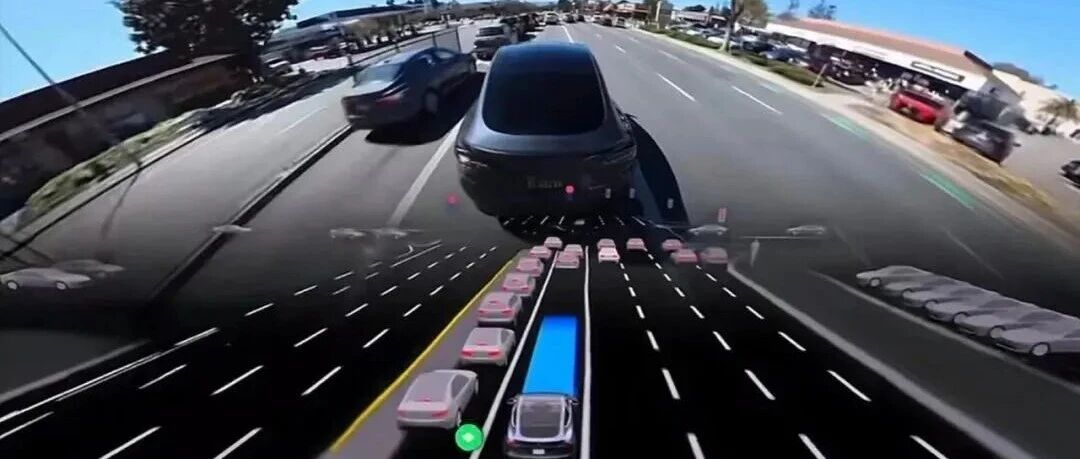
Core Insights - The article emphasizes the necessity of multi-sensor data fusion in autonomous driving to enhance environmental perception capabilities, addressing the limitations of single-sensor systems [1][2]. Group 1: Multi-Sensor Fusion - The integration of various sensors such as LiDAR, millimeter-wave radar, and cameras is crucial for creating a robust perception system that can operate effectively in diverse conditions [1]. - Cameras provide rich semantic information and texture details, while LiDAR offers high-precision 3D point clouds, and millimeter-wave radar excels in adverse weather conditions [1][2]. - The fusion of these sensors enables reliable perception across all weather and lighting conditions, significantly improving the robustness and safety of autonomous driving systems [1]. Group 2: Evolution of Fusion Techniques - Current multi-modal perception fusion technology is evolving from traditional methods to more advanced end-to-end fusion and Transformer-based architectures [2]. - Traditional fusion methods include early fusion, mid-level fusion, and late fusion, each with its own advantages and challenges [2]. - The end-to-end fusion approach using Transformer architecture allows for efficient and robust feature interaction, reducing error accumulation from intermediate modules [2]. Group 3: Challenges in Sensor Fusion - Sensor calibration is a primary challenge, as ensuring high-precision spatial and temporal alignment of different sensors is critical for successful fusion [3]. - Data synchronization issues must also be addressed to manage inconsistencies in sensor frame rates and delays [3]. - Future research should focus on developing more efficient and robust fusion algorithms to effectively utilize the heterogeneity and redundancy of different sensor data [3].
研究生开学,被大老板问懵了。。。
自动驾驶之心· 2025-09-01 03:17
Core Insights - The article emphasizes the establishment of a comprehensive community focused on autonomous driving and robotics, aiming to connect learners and professionals in the field [1][14] - The community, named "Autonomous Driving Heart Knowledge Planet," has over 4,000 members and aims to grow to nearly 10,000 in two years, providing resources for both beginners and advanced learners [1][14] - Various technical learning paths and resources are available, including over 40 technical routes and numerous Q&A sessions with industry experts [3][5] Summary by Sections Community and Resources - The community offers a blend of video, text, learning paths, and Q&A, making it a comprehensive platform for knowledge sharing [1][14] - Members can access a wealth of information on topics such as end-to-end autonomous driving, multi-modal large models, and data annotation practices [3][14] - The community has established a job referral mechanism with multiple autonomous driving companies, facilitating connections between job seekers and employers [10][14] Learning Paths and Technical Focus - The community has organized nearly 40 technical directions in autonomous driving, covering areas like perception, simulation, and planning control [5][14] - Specific learning routes are provided for beginners, including full-stack courses suitable for those with no prior experience [8][10] - Advanced topics include discussions on world models, reinforcement learning, and the integration of various sensor technologies [4][34][46] Industry Engagement and Expert Interaction - The community regularly invites industry leaders for discussions on the latest trends and challenges in autonomous driving [4][63] - Members can engage in discussions about career choices, research directions, and technical challenges, fostering a collaborative environment [60][64] - The platform aims to bridge the gap between academic research and industrial application, ensuring that members stay updated on both fronts [14][65]
闭环端到端暴涨20%!华科&小米打造开源框架ORION
自动驾驶之心· 2025-08-30 16:03
Core Viewpoint - The article discusses the advancements in end-to-end (E2E) autonomous driving technology, particularly focusing on the introduction of the ORION framework, which integrates vision-language models (VLM) for improved decision-making in complex environments [3][30]. Summary by Sections Introduction - Recent progress in E2E autonomous driving technology faces challenges in complex closed-loop interactions due to limited causal reasoning capabilities [3][12]. - VLMs offer new hope for E2E autonomous driving but there remains a significant gap between VLM's semantic reasoning space and the numerical action space required for driving [3][17]. ORION Framework - ORION is proposed as an end-to-end autonomous driving framework that utilizes visual-language instructions for trajectory generation [3][18]. - The framework incorporates QT-Former for aggregating long-term historical context, VLM for scene understanding and reasoning, and a generative model to align reasoning and action spaces [3][16][18]. Performance Evaluation - ORION achieved a driving score of 77.74 and a success rate of 54.62% on the challenging Bench2Drive dataset, outperforming previous state-of-the-art (SOTA) methods by 14.28 points and 19.61% in success rate [5][24]. - The framework demonstrated superior performance in specific driving scenarios such as overtaking (71.11%), emergency braking (78.33%), and traffic sign recognition (69.15%) [26]. Key Contributions - The article highlights several key contributions of ORION: 1. QT-Former enhances the model's understanding of historical scenes by effectively aggregating long-term visual context [20]. 2. VLM enables multi-dimensional analysis of driving scenes, integrating user instructions and historical information for action reasoning [21]. 3. The generative model aligns the reasoning space of VLM with the action space for trajectory prediction, ensuring reasonable driving decisions in complex scenarios [22]. Conclusion - ORION provides a novel solution for E2E autonomous driving by achieving semantic and action space alignment, integrating long-term context aggregation, and jointly optimizing visual understanding and path planning tasks [30].
用QA问答详解端到端落地:[UniAD/PARA-Drive/SpareDrive/VADv2]
自动驾驶之心· 2025-08-29 16:03
Core Viewpoint - The article discusses various end-to-end models in autonomous driving, focusing on their architectures and functionalities, particularly the UniAD framework and its modular components for perception, prediction, and planning [4][13]. Group 1: End-to-End Models - End-to-end models are categorized into two types: completely black-box models like OneNet, which optimize the planner directly, and modular end-to-end models that reduce error accumulation through interactions between perception, prediction, and planning modules [3]. - The UniAD framework consists of four main parts: multi-view camera input, backbone for BEV feature extraction, perception for scene-level understanding, and prediction for multi-mode trajectory forecasting [4]. Group 2: Specific Model Architectures - TrackFormer utilizes three types of queries: detection, tracking, and ego queries, with a dynamic length for the tracking query set based on object disappearance [6]. - MotionFormer operates similarly to RNN structures, processing sequential blocks to predict future states based on previous outputs, focusing on agent-level knowledge [9]. - MapFormer employs Panoptic Segformer for environment segmentation, distinguishing between countable instances and uncountable elements [10]. Group 3: Advanced Techniques - PARA-Drive modifies the UniAD framework by adjusting the connections between perception, prediction, and planning modules, allowing for parallel training and improved inference speed [13]. - Symmetric sparse perception is divided into two parallel parts for agent detection and map perception, utilizing a DETR paradigm for both tasks [20]. - The planning transformer integrates various tokens to output action probabilities, selecting the most probable action based on human trajectory data [23]. Group 4: Community and Learning Resources - The article highlights the establishment of numerous technical discussion groups related to autonomous driving, covering over 30 learning paths and involving nearly 300 companies and research institutions [27][28].
死磕技术的自动驾驶全栈学习社区,近40+方向技术路线~
自动驾驶之心· 2025-08-27 01:26
Core Viewpoint - The article emphasizes the establishment of a comprehensive community for autonomous driving enthusiasts, aiming to connect learners and professionals in the field, providing resources, networking opportunities, and industry insights. Group 1: Community and Resources - The "Autonomous Driving Heart Knowledge Planet" has over 4,000 members and aims to grow to nearly 10,000 in two years, serving as a hub for communication and technical sharing [1][12] - The community offers a variety of resources including video content, articles, learning paths, Q&A, and job exchange opportunities [1][2] - Nearly 40 technical routes have been organized within the community, catering to various interests such as industry applications and the latest benchmarks [2][5] Group 2: Learning and Development - The community provides structured learning paths for beginners, including full-stack courses suitable for those with no prior experience [7][9] - Members can access detailed information on end-to-end autonomous driving, multi-modal models, and various data sets for training and fine-tuning [3][26] - Regular discussions with industry leaders are held to explore trends, technological directions, and production challenges in autonomous driving [4][58] Group 3: Job Opportunities and Networking - The community has established internal referral mechanisms with multiple autonomous driving companies, facilitating job placements for members [9][11] - Members are encouraged to engage in discussions about career choices and research directions, receiving guidance from experienced professionals [55][60] - The platform aims to connect members with job openings and industry opportunities, enhancing their career prospects in the autonomous driving sector [1][62]
某新势力智驾团队最后一位留守高管已于近日离职
自动驾驶之心· 2025-08-23 16:03
Core Viewpoint - The departure of key personnel from a leading new force car company's intelligent driving team may significantly impact its research and development progress, team stability, and sales momentum in the second half of the year [1][2][3]. Group 1: Company Developments - The intelligent driving team of the new force car company has experienced significant turnover, with a reported attrition rate exceeding 50% in some teams this year [1]. - The company has initiated a full-scale non-compete agreement to retain talent, even requiring recent graduates to sign such agreements [1]. - The departure of the R&D head, who was a core member of the team, raises concerns about the company's ability to achieve its ambitious goals for 2024 [2]. Group 2: Industry Trends - The movement of core intelligent driving talent across the industry may present new opportunities for technological advancements [3]. - The intelligent driving landscape is evolving, with a trend towards convergence in technology routes driven by competitive pricing strategies [3]. - The departure of key figures from various intelligent driving teams, including those from Xiaopeng and NIO, indicates a broader industry shift and a new cycle of updates within the intelligent driving teams [3]. Group 3: Strategic Implications - The company is expected to launch a new paradigm of intelligent driving, which could significantly influence the sales of new models [2]. - The loss of three high-level executives responsible for critical aspects of intelligent driving may disrupt the company's overall R&D timeline and stability [2].