Tariffs

Search documents
Trump's Trade Gamble Will Continue, Despite Supreme Court Rebuke
Nytimes· 2026-02-21 20:46
Core Viewpoint - The president remains committed to tariffs and claims success in his trade agenda, despite a lack of substantial evidence to support these assertions [1] Group 1 - The president's focus on tariffs continues to be a central aspect of his trade policy [1] - There is a notable absence of evidence that substantiates the claims of success in the trade agenda [1]


Trump Now Says Global Tariff Will Be 15%, Not 10%
Benzinga· 2026-02-21 20:20
Core Points - President Trump announced an increase in the worldwide tariff rate from 10% to 15%, effective immediately, as a response to a Supreme Court ruling he criticized [1][2] - The Supreme Court's 6-3 decision stated that the president does not have the authority to impose tariffs under the International Emergency Economic Powers Act, limiting presidential power in this area [3][7] - Public opinion is shifting against Trump's tariff policies, with 60% of Americans supporting the Supreme Court's decision and many linking tariffs to rising consumer prices [8][4] Economic Impact - Trump's tariff strategy has been met with skepticism, as official figures indicated a 95% increase in the trade deficit by November 2025, contradicting claims of improvement [5] - Economists estimate that nearly 90% of the costs associated with tariffs are borne by U.S. companies and consumers rather than foreign exporters [6] - A Pew Research survey found that 53% of U.S. adults believe Trump's policies have negatively impacted the economy, with inflation and tariffs cited as major concerns [4] Political Context - The upcoming midterm elections may influence how candidates address trade and inflation, particularly in light of the Supreme Court ruling and public sentiment regarding consumer costs [9]
Five key takeaways from the Supreme Court's landmark decision against Trump's tariffs
CNBC· 2026-02-21 14:44
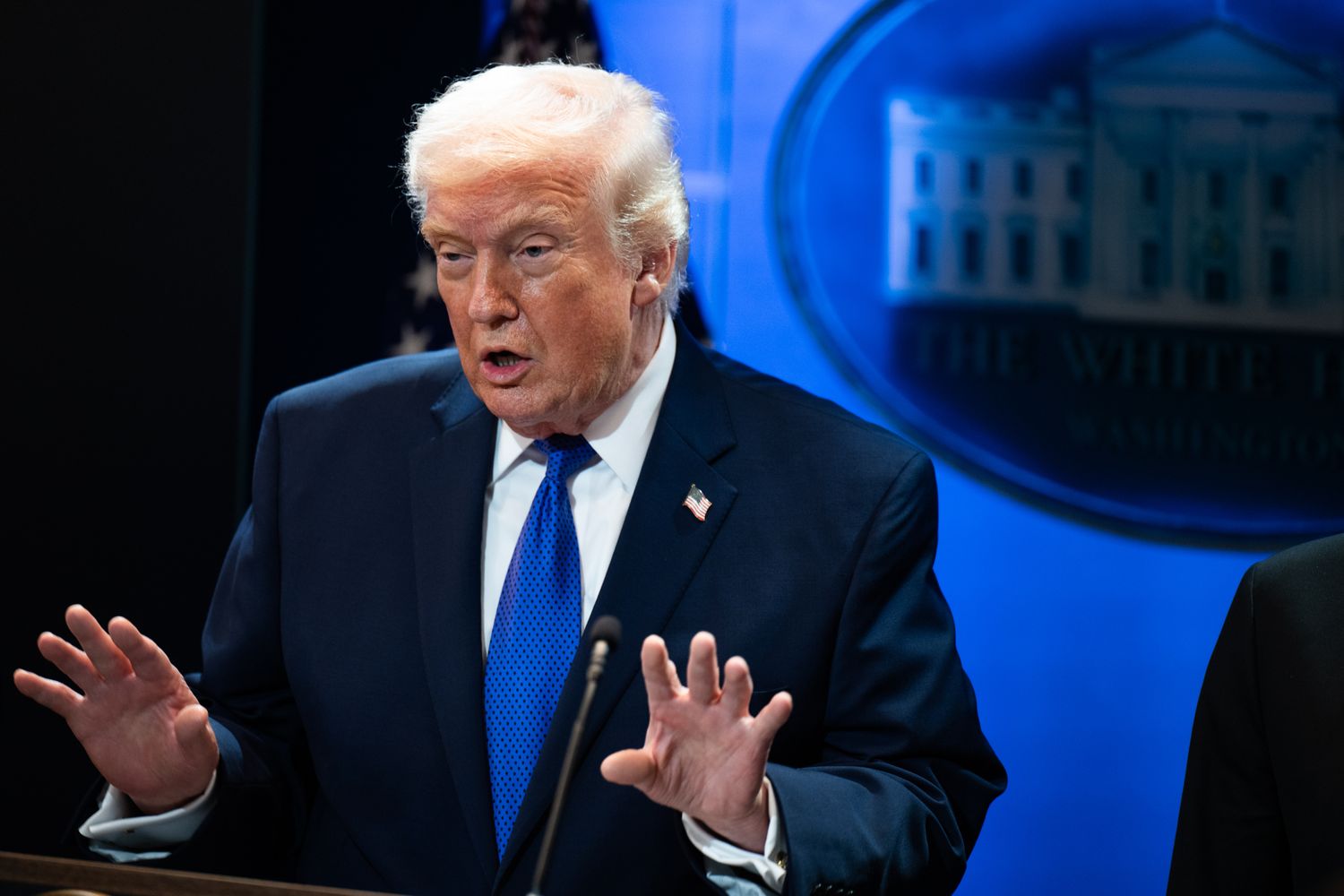
U.S. President Donald Trump gestures as he speaks during a press briefing at the White House, following the Supreme Court's ruling that Trump had exceeded his authority when he imposed tariffs, in Washington, D.C., U.S., January 20, 2026.The Supreme Court's decision Friday to throw out a large number of tariffs that President Donald Trump imposed on imports was widely expected. What's far less certain is the longer-run impacts as the economy and markets again adjust to a changed landscape.Trump and other Wh ...

ECB’s Panetta Says Tariffs Have Damaged the US More Than Others
Yahoo Finance· 2026-02-21 10:24
Photographer: Alessia Pierdomenico/Bloomberg The US economy has borne most of the burden of tariffs imposed by President Donald Trump, according to European Central Bank Governing Council member Fabio Panetta. Photographer: Alessia Pierdomenico/Bloomberg “Foreign exporters seem to have shouldered a portion of it, estimated at around 10%,” he said Saturday in Venice. “Initially, the impact was absorbed by US firms’ profit margins, and was then partially passed on to consumers, who now bear about half of ...
SCOTUS Kills the Tariff, So Trump Invents a New One: A Market Love Story
Stock Market News· 2026-02-21 06:00
Nothing says “Friday afternoon in Washington” quite like a constitutional crisis followed by a spontaneous tax on every single thing you own. On February 20, 2026, the U.S. Supreme Court decided to remind the executive branch that the International Emergency Economic Powers Act (IEEPA) isn’t actually a “do whatever you want” card. In a 6-3 ruling that left the White House fuming and trade lawyers salivating, the Court struck down President Donald Trump’s sweeping reciprocal tariffs as unlawful. Naturally, t ...



Larry Elder: There are ‘other ways' to implement tariffs
Youtube· 2026-02-21 04:00
Core Viewpoint - The Supreme Court's ruling on tariffs is seen as a setback for the U.S. government, particularly affecting President Trump's ability to impose tariffs as a tool for foreign policy and national security [1][10]. Group 1: Tariff Implementation - President Trump announced the imposition of a 10% global tariff under section 122, in addition to existing tariffs, to combat unfair trading practices [2][6]. - The ruling allows the president to maintain trade embargos against entire nations, indicating that while tariffs are limited, other forms of trade restrictions remain available [3][10]. Group 2: Impact on National Security - The removal of certain tariff powers is viewed as detrimental to national security, particularly in light of previous successful tariffs that led to a decline in fentanyl deaths [8][12]. - The Supreme Court's decision is perceived as diminishing the president's leverage in negotiations, although it still allows for full embargoes [10][11]. Group 3: Political Implications - The ruling has sparked discussions about the balance of power between the presidency and Congress regarding trade policies, with some suggesting it may affect future judicial appointments and political strategies [5][6]. - The ongoing debate highlights the importance of tariffs in protecting U.S. jobs and industries, as emphasized by various political figures [7].

The End of Tariffs? Not a Chance, These Economists Say
Barrons· 2026-02-21 03:51
The End of Tariffs? Not a Chance, These Economists Say. - Barron'sSkip to Main ContentThis copy is for your personal, non-commercial use only. Distribution and use of this material are governed by our Subscriber Agreement and by copyright law. For non-personal use or to order multiple copies, please contact Dow Jones Reprints at 1-800-843-0008 or visit www.djreprints.com.# The End of Tariffs? Not a Chance, These Economists SayShareResize---ReprintsThis commentary was issued recently by money managers, resea ...
The End of Tariffs? Not a Chance, These Economists Say.
Barrons· 2026-02-21 03:51
Core Viewpoint - The Supreme Court's decision to invalidate the Trump administration's tariffs represents a significant legal change rather than a shift in policy according to Wells Fargo [1] Group 1: Economic Indicators - Commentary on GDP trends indicates ongoing economic fluctuations that may impact investment strategies [1] - Insights into AI spending suggest a growing trend in technology investments, which could present new opportunities for investors [1] Group 2: Federal Reserve Policy - Analysis of Federal Reserve policy highlights potential implications for interest rates and market liquidity, affecting overall investment climate [1] Group 3: Investment Holdings - Berkshire Hathaway's holdings are under review, with potential implications for market movements and investment strategies [1]

Today's ruling affects the ‘composition' of GDP, markets: Economic advisor
Youtube· 2026-02-21 03:00
Economic Growth - GDP growth for Q4 was unexpectedly weak at 1.4% annual rate, down from 4.4% in Q3 and 3.8% in Q2, indicating a significant slowdown [1] - Private domestic final sales, a core component of GDP, were at 2.4%, which was lower than anticipated [1][2] Investment and Consumption - Despite the weak GDP, there are signs of strong economic activity with rising production and manufacturing, suggesting a potential for a 4% economy [3][4] - Business capital expenditure (capex) and durable goods orders are increasing, which is promising for future productivity [4][5] Employment Concerns - There are worries about the disconnect between economic growth and employment, with the unemployment rate currently at 4.3% [5][6] Market and Regulatory Environment - The stock market remains strong, and corporate profits are robust, indicating positive economic conditions for the future [6] - Recent Supreme Court rulings have introduced uncertainty regarding tariffs and refunds, which may impact individual companies differently [7][9][12] Trade Policy - The current administration's trade policies, including tariffs, are expected to remain in place, with a focus on reciprocity in trade agreements [10][14] - American businesses are noted for their agility and adaptability in response to changing trade landscapes [13]

Trump's 'Plan B' On Tariffs Is Taking Shape: It's More Tariffs
Investopedia· 2026-02-21 01:00
Core Insights - The Supreme Court's ruling against President Trump's tariffs has prompted him to announce a new global 10% tariff on all countries, utilizing different legal mechanisms [1][2][4] - The new tariff will be implemented under Section 122 of the Trade Expansion Act, allowing tariffs to address trade imbalances for up to 150 days, and Section 301 investigations will be initiated against several countries for unfair trade practices [3][7] - The ruling has resulted in a decrease in the effective tariff rate for Americans, dropping from 16% to 13%, with Trump indicating intentions to raise tariffs back to previous levels or higher [6][7] Economic Implications - The introduction of new tariffs adds uncertainty to an already unpredictable trade policy environment, highlighting the limitations of Trump's remaining tariff powers following the Supreme Court's decision [4][5] - Investigations under Section 301 may take months to complete, contrasting with Trump's previous rapid tariff announcements and adjustments, which were often communicated via social media [5] - Economists have noted that while the administration can reimpose tariffs, the immediate power to do so is not as broad as it was under the International Emergency Economic Powers Act (IEEPA) [5]