
多边主义

Search documents
《北京宣言》和《行动纲领》影响深远持久——访乌拉圭知名社会活动家露西·加里多
Xin Hua She· 2025-10-10 03:07
Core Points - The Beijing Declaration and Platform for Action have had a profound and lasting impact on gender equality worldwide [1] - The upcoming global women's summit is seen as necessary to address new challenges in women's rights and empowerment [1][2] Summary by Sections Historical Context - The 1995 UN Fourth World Conference on Women in Beijing was a significant event for gender equality, providing action goals and specific measures for women's empowerment [1] - The conference brought together activists, government, and non-governmental organizations to discuss women's rights [1] Current Perspectives - The global women's summit is expected to inherit the spirit of the Beijing conference and further promote gender equality [2] - There have been significant changes in the socio-economic and technological environment over the past 30 years, presenting new challenges for women's rights [1][2] Future Outlook - The upcoming summit is anticipated to open a new chapter for women's and gender equality initiatives globally [2] - China's contributions to multilateralism and the UN-centered international system are recognized as vital for advancing women's issues [2]
中方提出12个反对
第一财经· 2025-10-10 01:24
Core Viewpoint - The article emphasizes the importance of upholding international rule of law and global governance, presenting six key proposals to strengthen these principles in international relations [3][4]. Summary by Sections Section 1: Principles of International Law - The core principles of international law include the equality of sovereignty, non-interference in internal affairs, and peaceful dispute resolution, which must be collectively defended [3]. Section 2: Diversity in International Legislation - International legislation should respect cultural diversity and ensure equal participation of all countries, particularly enhancing the voice of Global South nations [3][4]. Section 3: Equality in Sovereignty - True sovereignty equality requires uniform application of international rules, opposing exceptionalism and double standards [4]. Section 4: Treaty Obligations - Adherence to treaties is a fundamental principle of international law, and all countries should fulfill their treaty obligations responsibly [4]. Section 5: Emerging Areas of International Rules - There is a need to accelerate the formulation of international rules in emerging fields such as cyberspace, outer space, and climate change, reflecting real needs and common interests [4]. Section 6: Peaceful Dispute Resolution - Peaceful resolution of disputes is a basic principle of international law, with mediation being a key method, and the establishment of an International Mediation Institute is encouraged [4]. Section 7: Commitment to Rule of Law - China is committed to the rule of law and aims to work with other countries to uphold the principles of the UN Charter and promote a democratic and law-based international order [4].

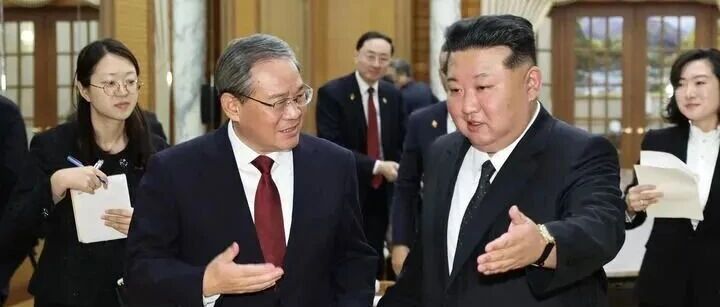
李强会见金正恩
第一财经· 2025-10-10 00:22
吴政隆参加会见。 2025.10. 10 本文字数:770,阅读时长大约1分钟 当地时间10月9日下午,中共中央政治局常委、国务院总理李强在平壤朝鲜劳动党中央委员会会见朝 鲜劳动党总书记、国务委员长金正恩。 李强首先转达习近平总书记对金正恩总书记的亲切问候和良好祝愿,热烈祝贺朝鲜劳动党建党80周 年。李强表示,上个月,金正恩总书记赴北京出席纪念中国人民抗日战争暨世界反法西斯战争胜利 80周年活动,习近平总书记同你举行会晤,就进一步深化中朝关系指明了方向,擘画了蓝图。中国 党和政府始终从战略高度和长远角度看待中朝关系,维护好、巩固好、发展好中朝传统友好合作关系 是我们坚定不移的方针。中方愿同朝方遵循两党两国最高领导人的共同指引,推动双边关系不断取得 新发展。 李强指出,中方愿同朝方加强高层交往和战略沟通,进一步弘扬传统友谊,深化务实合作,密切在国 际地区事务中的协调配合,加强多边协作,坚定捍卫和践行多边主义,推动国际秩序朝着更加公正合 理的方向发展。 金正恩请李强转达对习近平总书记的诚挚问候和良好祝愿,热烈欢迎中国党政代表团此次来朝出席庆 祝活动,表示在习近平总书记英明领导下,中国社会主义建设取得巨大成就。朝中 ...
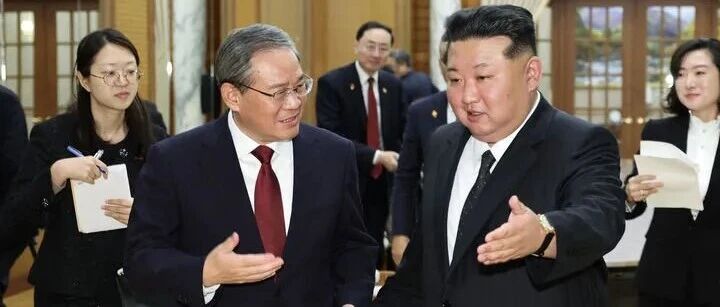
李强会见金正恩
财联社· 2025-10-09 23:30
Group 1 - The meeting between Chinese Premier Li Qiang and North Korean leader Kim Jong-un emphasizes the importance of strengthening the traditional friendship and cooperation between China and North Korea, marking the 80th anniversary of the founding of the Workers' Party of Korea [3][4] - Li Qiang conveyed greetings from President Xi Jinping and highlighted the strategic significance of China-North Korea relations, aiming for new developments in bilateral ties through high-level exchanges and strategic communication [3] - Kim Jong-un expressed North Korea's unwavering commitment to solidifying and developing friendly relations with China, supporting China's stance on various issues, and enhancing cooperation across multiple fields [4]
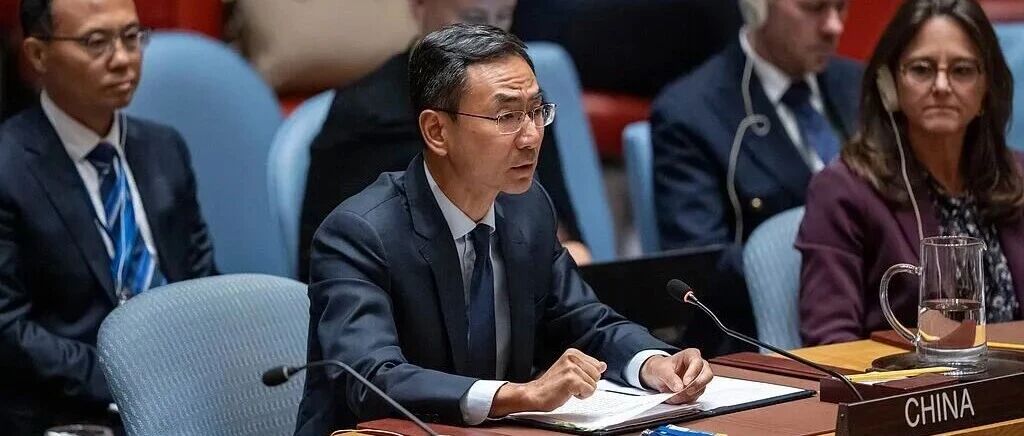
中方在联大六委就坚持国际法治提出六点主张
Zhong Guo Xin Wen Wang· 2025-10-09 22:48
Core Points - The Chinese representative at the UN emphasized six key proposals to strengthen global governance through international rule of law [1][2] Group 1: Principles of International Law - The UN Charter's purposes and principles are fundamental to international relations and must be defended, including sovereignty equality and non-interference in internal affairs [1] - International legislation must respect civilizational diversity and ensure equal participation, particularly enhancing the voice of Global South countries [1] - Sovereign equality is the foundation of modern international law, requiring uniform application of international rules without double standards [1] Group 2: Treaty Obligations and Compliance - Adherence to treaties is a basic principle of international law, and all countries should fulfill their treaty obligations responsibly [2] - There is a call to accelerate the development of international rules in emerging fields such as cyberspace, outer space, and artificial intelligence, as well as in non-traditional security areas like climate change [2] Group 3: Peaceful Dispute Resolution - Peaceful resolution of disputes is a fundamental principle of international law, with mediation being a method outlined in the UN Charter [2] - China, along with like-minded countries, has initiated the establishment of an International Mediation Institute to complement existing mechanisms [2]
中国主场外交为推动世界和平与发展搭建重要平台(专题深思)
Ren Min Ri Bao· 2025-10-09 22:20
Core Views - The recent events in Beijing and Tianjin highlight China's proactive role in global diplomacy, showcasing its contributions to international order and governance [1][2][5] Group 1: Main Venue Diplomacy - Main venue diplomacy is a significant approach for China to engage in global governance, reflecting its influence and leadership in international affairs [2][3] - Xi Jinping's leadership during these diplomatic events emphasizes China's strategic autonomy and responsibility as a major power [1][2][5] Group 2: Communication of China's Voice - Main venue diplomacy effectively communicates China's development path and values to the international community, countering misinterpretations and enhancing global understanding [3][4] - Various high-profile summits and forums have served as platforms for China to present its proposals and initiatives, such as the Asian security concept and global security initiatives [3][5] Group 3: National Image Presentation - China's main venue diplomacy showcases its governance efficiency and cultural richness, enhancing its national image through well-organized events and thematic focus [4][5] - Events like the G20 Summit and the Winter Olympics have provided opportunities for foreign guests to experience China's achievements and cultural heritage firsthand [4][5] Group 4: Contributions to Global Governance - Under Xi Jinping's diplomatic vision, China's main venue diplomacy has introduced significant initiatives in governance, security, and development, playing a crucial role in global economic cooperation [5][9] - Key decisions made during major summits, such as the APEC Free Trade Area roadmap and the BRICS expansion, illustrate China's commitment to enhancing international collaboration [5][9] Group 5: Future Directions for Main Venue Diplomacy - There is a need to strengthen the planning and execution of main venue diplomacy to enhance China's international influence and voice in global governance [7][8] - Expanding the functions of main venue diplomacy to include diverse fields such as digital economy and cultural exchanges can create more opportunities for international cooperation [9][10]
中方就坚持国际法治加强全球治理提出六点主张
Xin Hua Wang· 2025-10-09 21:03
Core Points - The world is entering a new period of turmoil and transformation, with unilateralism and hegemonic actions on the rise, challenging the principles of sovereignty and non-interference in internal affairs as fundamental tenets of international law [1] - China emphasizes the need for multilateralism and international rule of law to address global challenges, advocating for the rejection of the jungle law and the realization of international justice [1] Group 1: China's Proposals on International Law - The principles of the UN Charter are recognized as the fundamental guidelines for international relations, emphasizing the need to uphold sovereignty, non-interference, and peaceful dispute resolution [1] - International legislation must respect civilizational diversity and ensure equal participation of all countries, particularly enhancing the voice of Global South nations [2] - Sovereign equality is the foundation of modern international law, requiring equal application of international rules regardless of a country's size or power [2] Group 2: Compliance and New Areas of Governance - Treaties must be adhered to as a basic principle of international law, with all countries expected to fulfill their treaty obligations responsibly [2] - There is a call to accelerate the establishment of international rules in emerging fields such as cyberspace, outer space, and artificial intelligence, as well as in non-traditional security areas like climate change and public health [2][3] Group 3: Peaceful Dispute Resolution - Peaceful resolution of disputes is a fundamental principle of international law, with mediation being one of the methods outlined in the UN Charter [3] - China, along with like-minded countries, has initiated the establishment of an International Mediation Institute to complement existing mechanisms [3] - China is committed to the rule of law and aims to provide a strong legal guarantee for its modernization while promoting a multilateral international order based on international law [3]
意大利总统马塔雷拉会见王毅
Xin Hua Wang· 2025-10-09 16:57
新华社罗马10月9日电 当地时间2025年10月9日,意大利总统马塔雷拉在罗马会见中共中央政治局委 员、外交部长王毅。 马塔雷拉请王毅转达对习近平主席的诚挚问候,祝贺第12次意中政府委员会会议取得积极成果,表示意 中都是文明古国,都倡导和平、合作的价值理念,都坚持通过对话解决分歧。当今世界复杂动荡,对抗 没有赢家,对话才是出路。中国在国际社会中享有盛望,担当着日益关键和重要的角色,意方期待中国 为世界和平稳定做出更大贡献。 王毅转达习近平主席的亲切问候,表示总统先生是中国的好朋友,任内两度对华国事访问,体现发展中 意关系的积极意愿和对中国人民友好情谊。中方也重视意大利在欧洲和世界上的影响,愿同意方一道落 实两国领导人共识,加快推进中意全面战略伙伴关系行动计划,确保两国关系更加稳健、更具韧性、更 富成果,不仅助力两国发展振兴,提高人民福祉,也为世界和平承担应尽责任。 王毅说,当今世界乱象丛生、信任缺失,需要更多对话沟通,以增进彼此了解,深化相互合作。正像您 所说,我们需要更多现代版的"马可·波罗",发挥不同文明间的桥梁纽带作用。中意都是文明古国,悠 久的文化积淀和深厚的历史定力,使我们能够以包容看待彼此不同,以 ...
李强会见朝鲜劳动党总书记、国务委员长金正恩
Xin Hua She· 2025-10-09 16:49
李强指出,中方愿同朝方加强高层交往和战略沟通,进一步弘扬传统友谊,深化务实合作,密切在 国际地区事务中的协调配合,加强多边协作,坚定捍卫和践行多边主义,推动国际秩序朝着更加公正合 理的方向发展。 金正恩请李强转达对习近平总书记的诚挚问候和良好祝愿,热烈欢迎中国党政代表团此次来朝出席 庆祝活动,表示在习近平总书记英明领导下,中国社会主义建设取得巨大成就。朝中关系牢不可破,无 论国际形势如何变化,巩固和发展朝中友好合作关系是朝鲜党和政府坚定不移的立场,符合双方共同利 益,也有利于地区和平稳定发展。朝方坚定支持一个中国原则,坚决反对"台独"分裂行径以及任何外部 干涉,支持中方在涉港、涉疆、涉藏问题上的立场。朝方愿同中方密切高层交往,促进各领域合作,强 化多边协作,推进各自社会主义事业发展,为两国人民带来更多福祉。 吴政隆参加会见。 新华社平壤10月9日电(记者 王超 朱超)当地时间10月9日下午,中共中央政治局常委、国务院总 理李强在平壤朝鲜劳动党中央委员会会见朝鲜劳动党总书记、国务委员长金正恩。 李强首先转达习近平总书记对金正恩总书记的亲切问候和良好祝愿,热烈祝贺朝鲜劳动党建党80周 年。李强表示,上个月,金正恩 ...
外交部:中方将继续推动国际人权事业健康发展
Xin Hua Wang· 2025-10-09 09:20
郭嘉昆表示,10月6日,联合国人权理事会第60届会议以协商一致方式,通过中国代表玻利维亚、埃 及、巴基斯坦和南非等近70国提交的"消除不平等背景下促进和保护经济社会和文化权利"决议。决议呼 吁加强多边主义和国际合作,充分发挥中方提议设立的"联合国经社文权利知识中心"平台作用,为有需 要国家提供技术援助,加强能力建设支持。 "各国代表纷纷祝贺该决议获协商一致通过。发展中国家普遍表示,决议反映了各国民众的真实需求, 有力回应了发展中国家希望加大经社文权利投入的强烈呼声。"郭嘉昆说,中方将继续坚持真正的多边 主义,在平等和相互尊重基础上同各方加强对话合作,推动国际人权事业健康发展。 新华社北京10月9日电(记者曹嘉玥、董雪)联合国人权理事会第60届会议近日协商一致通过中国主提 的经社文权利决议。对此,外交部发言人郭嘉昆9日在例行记者会上表示,中方将继续坚持真正的多边 主义,在平等和相互尊重基础上同各方加强对话合作,推动国际人权事业健康发展。 ...