
爱国主义

Search documents
文化新观察·聚焦暑期档|主创谈电影《南京照相馆》:守护不能忘却的历史真相
Xin Hua Wang· 2025-07-30 20:31
Core Viewpoint - The film "Nanjing Photo Studio," based on real historical evidence from the Nanjing Massacre, has sparked significant interest, grossing over 600 million yuan within five days of release, leading the daily box office charts [2] Group 1: Film Narrative and Themes - The film tells the story of ordinary citizens in Nanjing who, while seeking refuge in a photo studio, are forced to assist Japanese soldiers in developing photographs that document war crimes, ultimately planning to expose these atrocities [4] - The narrative centers around the concept of photography as a dual tool for both documentation and propaganda, highlighting the manipulation of images during wartime [4][5] - The film emphasizes the importance of discerning truth from propaganda, reflecting on the historical context while drawing parallels to contemporary issues of misinformation [5] Group 2: Character and Storytelling - The film employs a multi-character narrative to depict the awakening of ordinary people from survival to resistance against the invaders, showcasing their diverse backgrounds and experiences [7] - Characters represent various societal roles, enhancing relatability and engagement for the audience, with the protagonist embodying the spirit of resilience and courage [9] - The collective effort of these characters to preserve evidence of war crimes illustrates the theme of unity and shared struggle against oppression [9] Group 3: Historical Context and Research - The production team conducted extensive research, visiting memorials and archives to ensure historical accuracy and depth in storytelling [10] - The film references real events, such as the preservation of crucial photographic evidence that played a significant role in post-war trials against Japanese war criminals [12] - The narrative also critiques the ongoing influence of militaristic ideologies in Japan, emphasizing the need for continued awareness and education regarding historical truths [12] Group 4: Audience Reception and Impact - Viewers have expressed that the film effectively connects historical events to contemporary realities, enhancing understanding of the past and the value of peace [13] - The film's portrayal of resilience and the importance of memory resonates with audiences, prompting reflections on national identity and collective memory [13]

三部门联合下发通知要求做好“八一”期间拥军优属拥政爱民工作
Xin Hua She· 2025-07-23 09:24
Core Viewpoint - The notification emphasizes the importance of strengthening military-civilian unity and promoting patriotic education in the context of the upcoming 98th anniversary of the founding of the People's Liberation Army, while also highlighting the significance of the 80th anniversary of the victory in the Chinese People's War of Resistance Against Japanese Aggression [1][2]. Group 1: Military-Civilian Unity and Support - The notification calls for extensive patriotic-themed activities to promote the historical significance of the anti-Japanese war and the advantages of military-civilian unity, encouraging public participation in commemorative events and educational activities [1][2]. - Localities are urged to address the needs of military personnel, particularly in terms of training and operational support, by coordinating resources and services to facilitate military readiness [2][3]. Group 2: Economic and Social Development Support - The military is instructed to support high-quality economic and social development, particularly in rural revitalization efforts, by optimizing assistance measures and ensuring smooth implementation of aid programs [3]. - Activities aimed at providing warmth and assistance to vulnerable groups, such as low-income individuals and the elderly, are to be organized during the holiday period to enhance the military's public image [3]. Group 3: Legal Rights and Welfare of Military Personnel - The notification emphasizes the need to uphold the legal rights and welfare of military personnel and veterans, ensuring compliance with relevant laws and regulations [3]. - Initiatives such as job fairs for military families and outreach programs to support military households are encouraged to alleviate concerns and enhance the sense of honor among military families [3]. Group 4: Conduct and Efficiency - Activities conducted during the holiday period must adhere to the principles of frugality and effectiveness, in line with the central government's regulations [4].
山河壮歌丨白布写忠烈 “死”字见忠魂
Yang Guang Wang· 2025-07-22 06:21
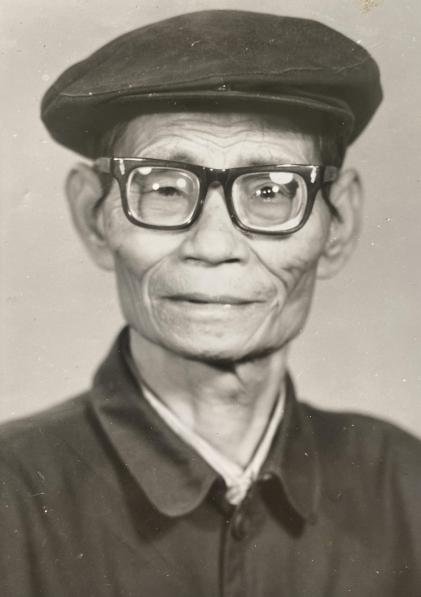
Core Viewpoint - The article highlights the emotional and historical significance of a "death" flag created by a father during the Second Sino-Japanese War, symbolizing patriotism and sacrifice for the nation [1][9]. Group 1: Historical Context - The "Lugou Bridge Incident" on July 7, 1937, marked the beginning of Japan's full-scale invasion of China, leading to the retreat of the Nationalist government to Chongqing [1]. - In response to the dire situation, a local teacher, Wang Jiantang, organized a group of over 170 young men to fight against the Japanese invaders, forming the "Northwest Youth Volunteer Army" [1][4]. Group 2: Personal Stories - Wang Jiantang's father, Wang Zhecheng, expressed his deep understanding of the national crisis and the necessity of sacrifice, despite the pain of sending his son to war [2][4]. - The emotional farewell at a rally attended by around 3,000 people was marked by heavy rain, symbolizing the somber mood as Wang Jiantang received the "death" flag from his father [6][8]. Group 3: The "Death" Flag - The flag, made of white cloth with a large "death" character, carried a message urging loyalty to the nation over personal safety, emphasizing the importance of sacrifice during national crises [4][9]. - Wang Jiantang carried the flag throughout his military service, which included participation in significant battles such as the Wuhan and Changsha campaigns, earning multiple commendations for his bravery [6][8]. Group 4: Legacy and Education - The story of the "death" flag and its significance has been preserved and is now shared by Wang Jiantang's descendants, who view it as a symbol of national pride and a tool for educating future generations about patriotism [10]. - The flag has been replicated and displayed in the Jianchuan Museum, serving as a poignant reminder of the sacrifices made during the war and the enduring spirit of the Chinese people [9][10].
汇聚在爱国主义旗帜下(观沧海)
Ren Min Wang· 2025-07-12 22:10
Core Viewpoint - The article commemorates the 88th anniversary of the all-nation anti-Japanese war, emphasizing the patriotic spirit and collective efforts of Chinese people, both domestically and abroad, in the fight against foreign aggression [1][2][3] Group 1: Historical Context - The anti-Japanese war began on July 7, 1937, marked by the gunfire at Lugou Bridge, uniting the Chinese people in a struggle for national survival [1] - Historical records highlight the contributions of overseas Chinese, who engaged in various forms of support, including donations and military service [1][2] Group 2: Contributions of Overseas Chinese - Over 3,000 overseas Chinese workers returned to China to support the war effort, transporting 450,000 tons of military supplies despite facing numerous dangers [2] - Significant financial contributions from overseas Chinese amounted to 5.3 billion French francs from July 1937 to December 1941, accounting for 43% of China's military expenditures during that period [1] Group 3: National Unity and Patriotism - The article underscores the importance of national unity and patriotism as key factors in the success of the anti-Japanese war, calling for a collective effort to achieve national rejuvenation [3] - Prominent patriotic leaders emerged from the overseas Chinese community, demonstrating a unified commitment to the nation's cause [2][3]
天天学习|爱国是立德之源、立功之本
Yang Shi Wang· 2025-07-09 15:25
Group 1 - The core message emphasizes the importance of patriotism and the responsibility of individuals to contribute to national strength and prosperity [1][2] - Xi Jinping encourages the youth to embody patriotic values and strive for personal development in alignment with national goals [1][2] - The historical significance of patriotism in Chinese culture is highlighted as a driving force for national independence and dignity [1] Group 2 - The call to action includes integrating personal aspirations with national interests, promoting a sense of duty towards the country and its people [2] - Xi Jinping's remarks serve as a motivational framework for the youth to engage in national development and contribute to the rejuvenation of the Chinese nation [2]
焦点访谈 | 走进这场重磅大展,一起重温红色岁月探寻革命印记
Yang Shi Wang· 2025-07-09 13:52
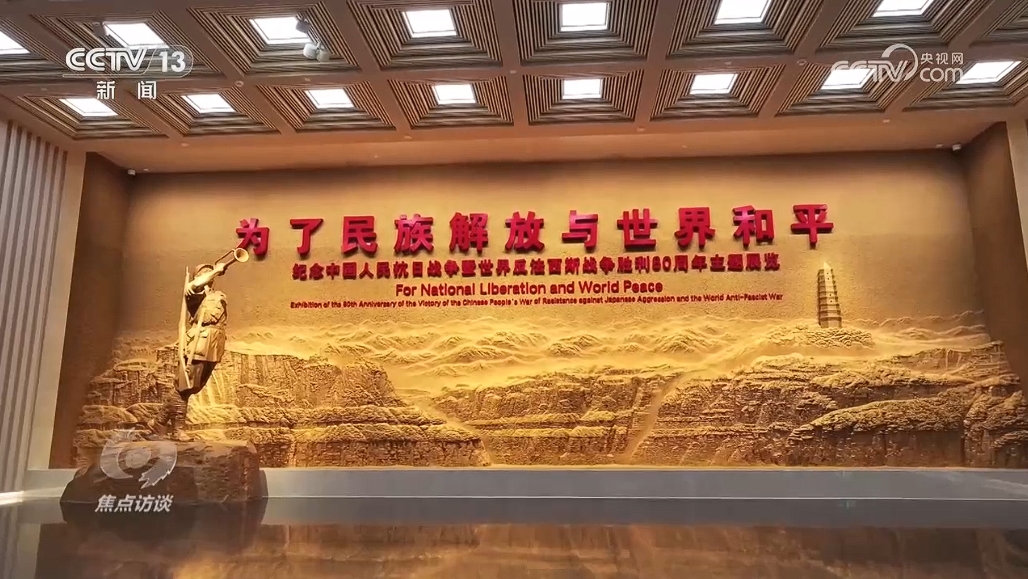
Core Viewpoint - The exhibition commemorating the 80th anniversary of the victory in the Chinese People's Anti-Japanese War and the World Anti-Fascist War emphasizes the significance of the "great spirit of resistance" as a precious spiritual asset for the Chinese people, inspiring them to overcome challenges and strive for national rejuvenation [1][17]. Group 1: Exhibition Highlights - The exhibition opened to the public on July 8 and serves as a permanent display, showcasing the stories of youth during the Anti-Japanese War [1]. - It features numerous young individuals and their heroic stories, with many images being exhibited for the first time [3]. - The exhibition highlights the passionate patriotism of youth who fought bravely on the battlefield and in guerrilla warfare, contributing to the national cause [3][6]. Group 2: Personal Stories of Sacrifice - The story of Li Lin, a young female soldier, exemplifies the spirit of sacrifice, as she chose to fight despite being pregnant and ultimately gave her life for her country at the age of 24 [5][11]. - Another poignant account is from the Liu Laozhuang battle, where a group of young soldiers, outnumbered and outgunned, fought valiantly until their last breath, demonstrating unwavering courage [10][11]. - The letters written by these soldiers to their families reflect their deep emotional ties and commitment to their country, even in the face of death [10][11]. Group 3: Thematic Reflections - The exhibition illustrates various effective guerrilla warfare tactics employed during the Anti-Japanese War, such as the "sparrow war" strategy, which played a crucial role in the eventual victory [13][15]. - The narratives of young heroes like Li Dianbing, who led successful guerrilla operations against Japanese forces, highlight the innovative and resilient spirit of the youth during this tumultuous period [15]. - The overarching theme emphasizes that the great spirit of resistance is an integral part of the spiritual heritage of the Chinese Communist Party and the Chinese people, serving as a source of strength for future generations [17].
记者手记:夜泊维多利亚湾
Xin Hua She· 2025-07-07 11:51
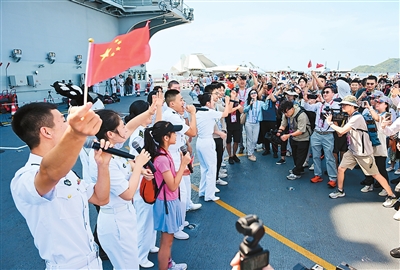
Core Points - The article reflects on the historical significance of Victoria Harbour, highlighting the contrast between past events during the Japanese occupation and the current presence of the Chinese Navy's Shandong aircraft carrier [1][2] - The Shandong carrier has attracted over 30,000 visitors since its arrival in Hong Kong, showcasing a strong sense of national pride among the attendees, especially the younger generation [1][2] - The narrative emphasizes the emotional connection of older generations to the site, recalling their experiences during wartime and the eventual return of Hong Kong to China in 1997 [2][3] Group 1 - The Shandong carrier's presence in Victoria Harbour symbolizes a shift from historical turmoil to national strength, with a focus on the emotional resonance for both older and younger generations [1][2] - The article mentions the participation of local citizens, including veterans and children, in the carrier tours, fostering a sense of patriotism and connection to the military [2][3] - The interaction between the Navy personnel and the public, including members of Hong Kong's disciplined forces, highlights a spirit of unity and respect [3] Group 2 - The historical context of Victoria Harbour is underscored, detailing significant events such as the British surrender in 1941 and the return of sovereignty in 1997, marking the area as a site of both loss and reclamation [2][3] - The Shandong carrier's visit is framed as a celebration of national pride, with activities such as a light show and interactions with the public reinforcing a positive image of the Chinese military [1][2] - The article concludes with a personal reflection from a naval officer, symbolizing dedication and optimism for the future, despite the challenges faced [4]
纪录片《里斯本丸沉没》在港首映
Xin Hua Wang· 2025-07-07 03:11
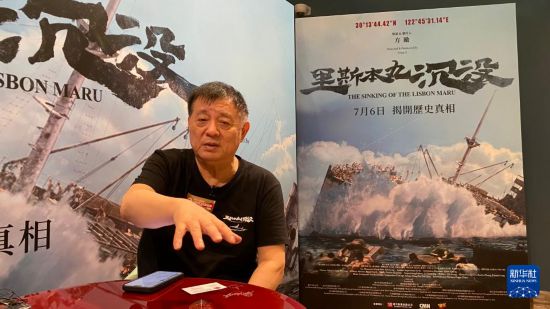
Core Viewpoint - The documentary "The Sinking of Lisbon Maru" premiered in Hong Kong on July 6, commemorating the 80th anniversary of the victory in the Chinese People's War of Resistance against Japanese Aggression and the World Anti-Fascist War [1]. Group 1: Historical Context - The documentary is based on a true historical event during the Pacific War, where the Japanese transport ship "Lisbon Maru," carrying over 1,800 British POWs, was hit by American forces due to the Japanese failure to mark the ship according to international conventions [2]. - The film highlights the bravery of fishermen from Zhoushan who risked their lives to rescue 384 POWs amidst gunfire when the Japanese military failed to provide timely assistance [2]. Group 2: Production and Significance - The documentary took eight years to produce, involving interviews with survivors and their descendants, as well as historians, to uncover valuable historical documents and footage [2]. - The film's director, Fang Li, emphasized the deep connection of this lesser-known historical event to Hong Kong, making it particularly significant to the local audience [6]. Group 3: Audience Reception and Future Plans - The premiere event was attended by notable figures, including Li Huiqiong, who remarked that this history serves as a living patriotic lesson, reminding the audience of the importance of remembering history and the value of peace [4]. - The documentary is set to be released in Hong Kong theaters on July 24, with plans for screenings at Hong Kong Polytechnic University to engage the student community [8].
山东舰航母编队访港掀起爱国热潮——“无比自豪,无比安心”
Ren Min Ri Bao Hai Wai Ban· 2025-07-07 01:20
Core Viewpoint - The visit of the Chinese aircraft carrier Shandong and its accompanying naval fleet to Hong Kong has sparked a wave of patriotism among the local citizens, showcasing the advancements in national defense and fostering a sense of national pride [4][6][9]. Group 1: Event Overview - The Shandong aircraft carrier fleet, including destroyers and frigates, arrived in Hong Kong on July 3 for a five-day visit, coinciding with the 28th anniversary of Hong Kong's return to China [4][6]. - The visit has been met with enthusiasm from Hong Kong citizens, who expressed their happiness and pride in witnessing the capabilities of the Chinese Navy [5][6]. Group 2: Public Engagement - The public was eager to participate in the visit, with tickets for tours of the Shandong being highly sought after, often selling out within minutes [7][8]. - Citizens reported a profound sense of national pride and security during their interactions with the naval personnel and while touring the aircraft carrier [9][10]. Group 3: Educational Impact - The visit served as an educational opportunity for students and the public, highlighting the achievements in national defense and fostering a deeper understanding of military capabilities [6][8]. - Educational institutions organized activities to prepare students for the visit, emphasizing the importance of national defense knowledge [6]. Group 4: Symbolism and Sentiment - The presence of the Shandong carrier was seen as a symbol of national strength and a reminder of the progress made since Hong Kong's return to China [4][9]. - The event was marked by emotional expressions of pride from attendees, who felt a strong connection to their national identity through the naval visit [10].
赓续伟大抗战精神 汲取团结奋斗力量
Ren Min Ri Bao· 2025-07-05 22:02
Core Viewpoint - The 80th anniversary of the victory in the Chinese People's War of Resistance Against Japanese Aggression and the World Anti-Fascist War is a significant moment for reflection and education on national spirit and history [1][2][3][4] Group 1: Historical Reflection - Visitors to museums and memorials express their thoughts through messages, emphasizing the importance of remembering history and learning from it [2][3] - The messages highlight a collective commitment to peace and the aspiration to avoid repeating past mistakes, focusing on the lessons learned from history [2][4] Group 2: National Spirit and Patriotism - The core of the national spirit, centered on patriotism, is identified as a decisive factor in the victory during the war, showcasing the unity and determination of the Chinese people [3][4] - The messages from visitors reflect a desire to continue the legacy of patriotism and the spirit of resistance, encouraging future generations to uphold these values [3][4] Group 3: Call to Action - There is a strong call for unity and collective effort among all sectors of society to pursue the goal of national rejuvenation, emphasizing the importance of solidarity under the leadership of the central government [4] - The historical journey of the Chinese nation is framed as a transition from standing up to becoming prosperous and strong, reinforcing the narrative of progress and resilience [4]