
国防建设

Search documents
将温情关怀送达“最可爱的人”身边
Guang Xi Ri Bao· 2026-02-10 02:15
Group 1 - The article highlights the efforts of the Guangxi Veterans Affairs System in providing support and care to overseas peacekeeping soldiers' families, veterans, and struggling retired soldiers, emphasizing the importance of respect and warmth in the community [1][2] - Multiple departments in Yizhou District, Hechi City, have collaborated to visit and support the families of overseas peacekeeping soldiers, ensuring that these soldiers can focus on their duties with peace of mind [1] - The article discusses the integration of veteran care with rural revitalization efforts, showcasing initiatives in cities like Guigang, Nanning, and Liuzhou to provide medical assistance, celebrate veterans, and foster cultural exchanges [1] Group 2 - In Fangchenggang City, a comprehensive outreach program has been implemented to support 277 combat heroes, addressing practical issues such as medical reimbursements and employment assistance [2] - The series of activities not only conveys warmth from the government but also fosters a strong collective effort to care for veterans and support national defense, promoting a culture of respect for military personnel across the region [2]
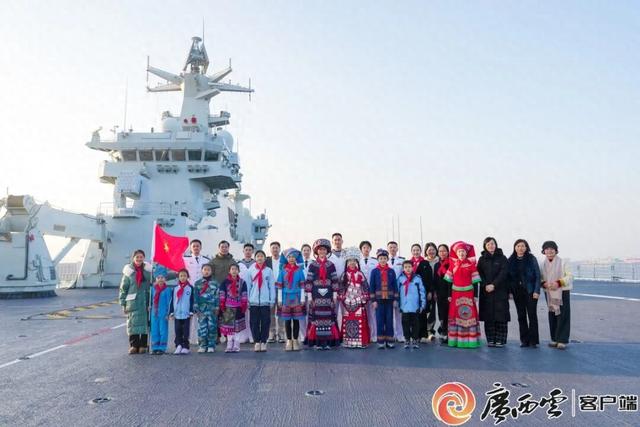
捐钱造航母的男孩,登上军舰
Xin Lang Cai Jing· 2026-02-07 16:42
Group 1 - The article highlights the story of Chen Yuwen, who, 27 years ago, sent his pocket money to support the construction of an aircraft carrier in China, reflecting a personal wish that has now become a collective celebration with local youth [1][3][6] - In 1999, Chen Yuwen, then a kindergarten student, donated 140 yuan to the Chinese People's Liberation Army's General Equipment Department to contribute to national defense [6][7] - In 2025, with the commissioning of the Fujian aircraft carrier, Chen Yuwen's story gained popularity online, leading to an invitation from China Shipbuilding Group for him to visit and receive a commemorative watch [7]

印度新财年国防拨款创新高
Xin Lang Cai Jing· 2026-02-03 04:22
Group 1: Defense Budget - India's defense budget for the fiscal year 2026-2027 has been increased to 7.85 trillion rupees, marking a nearly 15% rise from the previous year's budget of 6.81 trillion rupees, reflecting the government's focus on military preparedness amid security threats from Pakistan and China [1][2] - The capital expenditure for defense has significantly increased to 2.31 trillion rupees, a 28% rise compared to last year, indicating the government's intent to procure advanced weapon systems and promote domestic defense manufacturing [1][2] Group 2: Infrastructure and Manufacturing - The Indian government plans to increase infrastructure spending, raising the capital expenditure target in this sector to 12.2 trillion rupees, which is approximately a 9% increase from the previous year, as part of efforts to address global uncertainties [2] - The government aims to expand manufacturing in seven strategic sectors, including semiconductors, data centers, textiles, and rare earths, in response to a slowdown in private investment and foreign capital outflows [2] - The establishment of rare earth corridors in mineral-rich states like Odisha, Kerala, Andhra Pradesh, and Tamil Nadu is intended to enhance the extraction, processing, research, and manufacturing of critical minerals, addressing India's reliance on China for rare earth imports, which account for over 45% of its total imports in this category [2]
印度新财年国防拨款创新高,达7.85万亿卢比
Xin Lang Cai Jing· 2026-02-02 23:09
Core Insights - India's budget for the fiscal year 2026-2027 has been announced, with a historic increase in defense spending by nearly 15% compared to the previous year [1][2] - The budget reflects India's strategic focus on enhancing infrastructure and manufacturing, particularly in critical sectors such as rare earths and semiconductors [1][2] Defense Spending - The total defense budget has been raised from 6.81 trillion rupees to 7.85 trillion rupees, marking an increase of approximately 15% [2] - Capital expenditure for defense has significantly increased to 2.31 trillion rupees, a growth of 28% from the previous year, indicating a commitment to procure advanced weapon systems and promote domestic defense manufacturing [2][3] - The government has also eliminated tariffs on imported raw materials necessary for defense equipment maintenance and repair [2] Infrastructure and Manufacturing - The budget includes an increase in infrastructure spending, with capital expenditure targets raised to 12.2 trillion rupees, reflecting a growth of about 9% from the previous year [2] - The government aims to expand manufacturing in seven strategic sectors, including semiconductors, data centers, textiles, and rare earths, in response to increasing global uncertainties [2] Rare Earth Corridor - The government plans to support the construction of a rare earth corridor in mineral-rich states such as Odisha, Kerala, Andhra Pradesh, and Tamil Nadu to enhance the extraction, processing, research, and manufacturing of critical minerals [3] - India has been increasingly reliant on China for rare earth imports, with over 45% of its rare earth imports coming from China, highlighting the need for domestic production capabilities [3] Geopolitical Context - The budget reflects a balancing act between military defense spending and fiscal discipline, with the highest allocation going to defense among various ministries [3] - The Indian government's recent diplomatic moves towards China, including easing visa restrictions and increasing trade, contrast with domestic media narratives that emphasize confrontation, indicating a complex relationship [3]
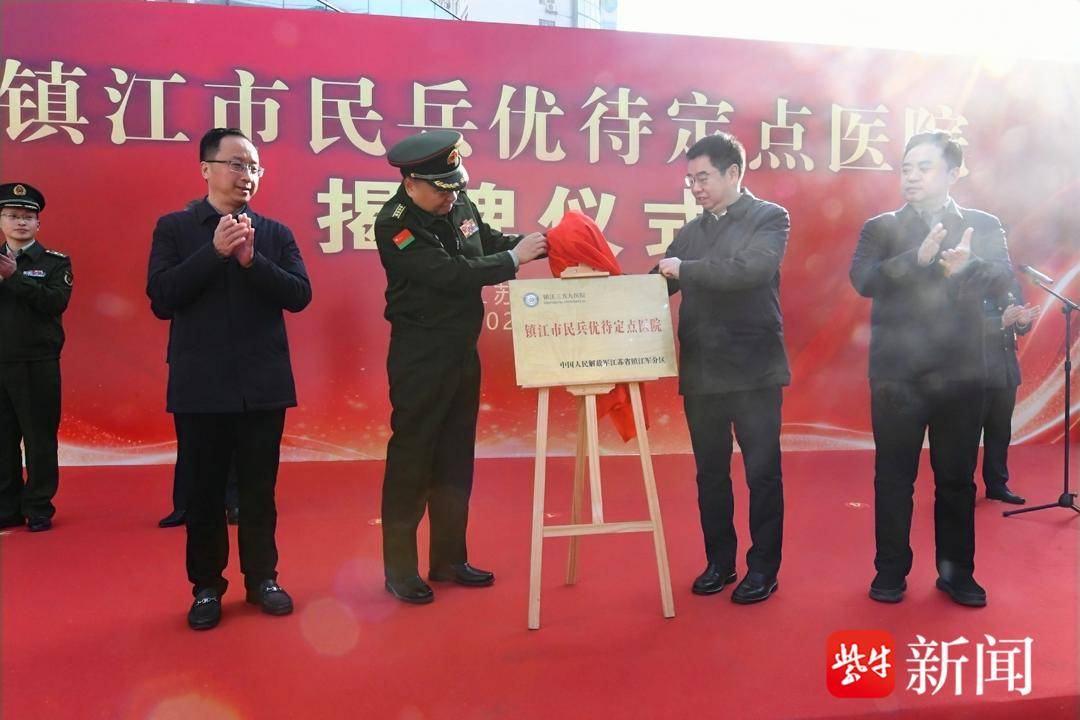
全省首家!镇江三五九医院挂牌 “民兵优待定点医院” 推出 “三减免五全免”
Yang Zi Wan Bao Wang· 2026-01-13 14:21
Core Viewpoint - The establishment of Jiangsu Province's first "Militia Preferential Designated Hospital" at Zhenjiang 359 Hospital marks a significant step in enhancing the rights and benefits of militia personnel, providing them with convenient and quality medical services [1][5]. Group 1: Hospital Initiatives - Zhenjiang 359 Hospital has introduced a special medical preferential policy featuring "three reductions and five exemptions" for militia and specialized armed personnel [1][9]. - The hospital aims to prioritize military personnel by optimizing service processes and ensuring quality medical resources are available [5][9]. Group 2: Policy Details - The "three reductions" include a 20% reduction in personal cash payments for outpatient services, a 30% reduction for hospitalization, and a 50% reduction in health check fees for the individual and their immediate family [5]. - The "five exemptions" cover waiving registration and consultation fees, regular check-up fees, same-day parking fees, hospitalization companion bed fees, and providing a free set of toiletries for hospitalized patients [5]. Group 3: Community Engagement - Following the unveiling ceremony, a meeting was held to discuss militia medical services, sign a preferential agreement, and distribute the "Benefit for Soldiers Handbook" [9]. - This initiative is part of the hospital's ongoing commitment to support national defense and military construction, reinforcing military-civilian unity and promoting high-quality development of dual-support work in the new era [9].
轰6首飞57周年:致敬不老战神的蓝天传奇
Xin Lang Cai Jing· 2025-12-24 15:44
Core Viewpoint - The articles commemorate significant milestones in China's aviation history, particularly focusing on the H-6 bomber's development and its role in national defense and military capabilities over the past 57 years [1][3][15]. Group 1: Historical Significance - December 24 marks the anniversary of the successful first flight of the H-6 bomber in 1968, which filled a gap in China's medium to long-range bomber capabilities [3]. - The H-6 was developed based on the Soviet Tu-16 bomber and was the largest and most complex aircraft manufactured in China at the time, incorporating numerous new technologies and materials [3]. - The H-6 series has evolved continuously, symbolizing the expansion of the Chinese Air Force's operational capabilities [3][15]. Group 2: Key Achievements - In 1965, the H-6 successfully executed China's first air-drop of a nuclear bomb, followed by the first air-drop of a hydrogen bomb in 1967 [4]. - The H-6 made its public debut during the National Day parade in 1984, showcasing its significance to the nation [6]. - The H-6K variant has achieved several milestones, including successful aerial refueling operations in 1991 and conducting patrols near strategic areas such as Huangyan Island in 2016 [8][12]. Group 3: Future Aspirations - The article emphasizes the commitment of successive generations of aviation professionals to innovate and strengthen China's aerospace capabilities, aiming to build a robust national defense [15][16]. - The narrative suggests a vision for the future where the H-6 continues to play a crucial role in safeguarding national interests and contributing to the construction of a strong aviation power [16].

马克龙:法国将新建一艘航母
第一财经· 2025-12-22 02:31
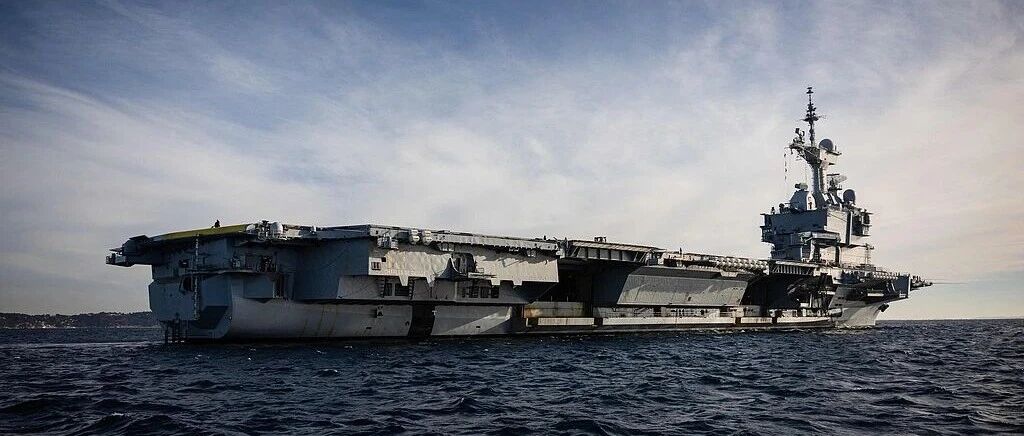
Group 1 - The core viewpoint of the article is that France plans to build a new aircraft carrier to replace the current "Charles de Gaulle" carrier, as announced by President Macron [2] - The decision to construct the new aircraft carrier is part of France's recent military spending bills and aims to boost the French economy directly [2] - The new aircraft carrier is expected to be operational by the end of the 2030s, replacing the "Charles de Gaulle," which has been in service since 2001 and is France's only nuclear-powered aircraft carrier with a full displacement of over 40,000 tons [2]

马克龙:法国将新建一艘航母
财联社· 2025-12-21 23:49
Core Viewpoint - France plans to build a new aircraft carrier to replace the current "Charles de Gaulle" carrier, which will have a direct positive impact on the French economy [1] Summary by Relevant Sections Aircraft Carrier Development - The new aircraft carrier is set to replace the "Charles de Gaulle" by the end of the 2030s [1] - The "Charles de Gaulle" has been in service since 2001 and is currently France's only nuclear-powered aircraft carrier, with a full load displacement of over 40,000 tons [1] Economic Impact - The decision to initiate this "large-scale project" is expected to stimulate the French economy directly [1]
外交部:日方无端指责、恶意抹黑中国正当国防建设,态度恶劣,令人不齿
Huan Qiu Wang· 2025-12-16 07:56
Core Viewpoint - The article discusses Japan's military spending increase and China's response, highlighting the disparity in defense expenditures and raising concerns about Japan's militarization efforts [1][2]. Group 1: Japan's Military Spending - Japan's defense budget has increased significantly, with a 60% rise over the past five years and a continuous increase for 13 years [1]. - In the fiscal year 2025, Japan's per capita defense spending and per capita defense personnel costs are projected to be three times and more than twice that of China, respectively [1]. Group 2: China's Response - China criticizes Japan's accusations as baseless and malicious, asserting that its own defense spending is reasonable and necessary for national security and international responsibilities [1]. - The Chinese government emphasizes its historical commitment to peace and security, contrasting it with Japan's militaristic past and current military policy shifts [2]. Group 3: Regional Implications - Japan's military expansion raises concerns among neighboring countries and the international community, with fears of a resurgence of militarism [2]. - The article suggests that Japan's actions could lead to increased regional tensions and a reevaluation of its military intentions by other nations [2].
【早盘三分钟】11月25日ETF早知道
Xin Lang Ji Jin· 2025-11-25 01:31
Core Insights - The defense and military industry is experiencing significant investment inflows, driven by geopolitical factors and increased defense spending, with a notable surge in the defense military ETF (512810) which saw a single-day increase of 3.78% and total inflows exceeding 13.3 billion yuan [3][6]. Market Temperature - The market temperature indicators show that the Shanghai Composite Index, Shenzhen Component Index, and ChiNext Index have percentile PE ratios of 88.44%, 71.66%, and 31.43% respectively, indicating varying levels of market valuation [1]. Sector Performance - The top three sectors with inflows include Defense and Military (2.498 billion yuan), Media (2.027 billion yuan), and Retail (0.407 billion yuan), while the sectors with the highest outflows are Electronics (-4.019 billion yuan), Computers (-2.693 billion yuan), and Electric Equipment (-2.527 billion yuan) [2]. ETF Performance - The Defense and Military ETF (512810) has shown a 15.38% increase over the past six months, indicating strong performance in the sector [3]. - The Hong Kong Internet ETF (513770) has also performed well, with a 2.2% increase on the day and a notable recovery in the past six months [6]. Investment Opportunities - The current market conditions suggest that the Hong Kong AI sector may be entering a favorable investment phase, with significant interest in technology companies involved in AI, cloud computing, and semiconductors, which are becoming increasingly integrated into global supply chains [6][8].
