
爱国主义

Search documents
特朗普国情咨文高调宣称“美国更富有更强大”,无视民调低迷
Xin Lang Cai Jing· 2026-02-25 03:01
Core Viewpoint - President Trump delivered a strong defense of his policies and economic achievements during a prime-time address, aiming to regain support from voters ahead of the midterm elections, despite declining approval ratings and challenges in foreign policy and trade [2][3][4]. Economic Performance - Trump claimed that the nation is "greater, better, richer, and stronger" than before, asserting that the economy is thriving and inflation is decreasing [2][3]. - He emphasized the security of the borders, rapid income growth, and a strong military presence, portraying a prosperous America [3][4]. Public Sentiment - Recent polls indicate that approximately 60% of Americans disapprove of Trump's performance, with support among independents dropping to a new low of 26% [4][15]. - Trump attributed the economic difficulties faced by Americans to the Biden administration, claiming he inherited a country in crisis [4][19]. Midterm Election Strategy - Trump's remarks and the Democratic response are expected to set the tone for the upcoming midterm elections, which could threaten Republican control of Congress [5][15]. - The White House plans to focus on job creation, attracting foreign and private investments, and efforts to control high prices, including prescription drug costs [5][15]. Legislative Focus - Trump intends to advocate for the restoration of funding for the Department of Homeland Security and promote his interventions in the Western Hemisphere [6][16]. - He also plans to push for legislation limiting institutional investors from purchasing single-family homes and to hold tech companies accountable for energy costs [5][15]. Foreign Relations - Trump praised the new Venezuelan government as a partner and mentioned that the U.S. has received 80 million barrels of oil from Caracas [7][17]. Political Messaging - Trump aims to connect his presidency with patriotism and the upcoming 250th anniversary of the United States, seeking to unite dissatisfied Americans [7][18]. - He expressed frustration over his poll numbers and the issue of affordability, indicating a growing divide within his party regarding his policies [9][19]. Federal Reserve Nomination - Trump announced plans to nominate Kevin Walsh as the new Federal Reserve Chair, hoping for significant interest rate cuts to stimulate growth, although this could potentially reignite inflation [10][20].

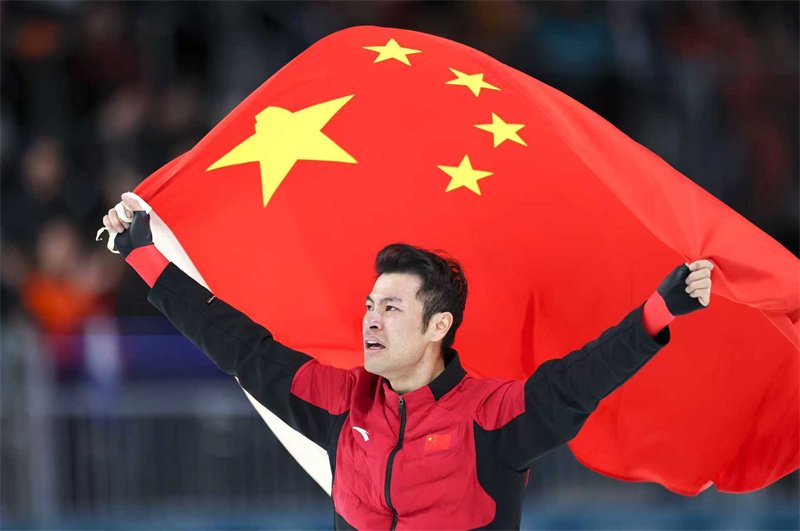
冬奥会丨我和国旗有个约定
Xin Lang Cai Jing· 2026-02-21 23:22
Core Viewpoint - The article emphasizes the deep-rooted patriotic spirit of Chinese athletes at the Milan Winter Olympics, showcasing their commitment to representing their country and the emotional connection they have with the national flag [1][10]. Group 1: Athletes' Achievements and Symbolism - Ning Zhongyan broke the Olympic record in men's 1500m speed skating with a time of 1:41.98, expressing his dedication to the national flag during the award ceremony [3]. - Su Yiming won the first gold medal for the Chinese sports delegation in men's snowboard slopestyle, highlighting the importance of raising the national flag and playing the national anthem as a personal and national achievement [5]. - Sun Long secured a silver medal in men's short track speed skating, demonstrating respect for the national flag by carefully folding it after his victory, which he views as a symbol of honor [7]. Group 2: Commitment Beyond Medals - Not all athletes reach the podium, but their commitment to the national flag remains unwavering, as exemplified by Gao Tingyu, who dyed his hair red and competed despite an injury [8]. - Yan Xingyuan, the only male athlete from the Chinese biathlon team, expressed his determination to represent China on the international stage, emphasizing the significance of the national flag in his participation [8]. Group 3: National Pride and Identity - The athletes' performances reflect a profound sense of patriotism, with their dedication to training and competition embodying the essence of love for their country [10]. - The national flag serves as a beacon of hope and inspiration for Chinese athletes, symbolizing their dreams and aspirations on the world stage [12].
醉梦里的纯粹与超越时代的史观
Xin Lang Cai Jing· 2026-02-08 18:30
Core Viewpoint - The lecture by writer A Lai focuses on the life journey and poetic creation of Lu You after he entered Sichuan, exploring the tension between ideals and harsh realities faced by the poet over 800 years ago [3][4][5]. Group 1: Analysis of Lu You's Poetry - A Lai begins with a close reading of Lu You's poem "Written While Drunk on March 17," highlighting the poet's heroic imagery and grand aspirations for reclaiming lost territories [3][4]. - The poem's abrupt shift in tone reflects Lu You's disillusionment as he transitions from a warrior to a "cold official" in Chengdu, symbolizing the crushing defeat of his ideals [4]. - A Lai emphasizes the intricate word choices in the poem, illustrating Lu You's despair and frustration as a warrior whose ambitions are thwarted by reality [4][5]. Group 2: Historical Context and National Sentiment - A Lai discusses Lu You's poem "Reflections on the Great Dispersal Pass," which presents a more rational construction of patriotism, contrasting the idealistic visions with the harsh historical realities [5][6]. - The poet's longing for a united China is rooted in historical texts and maps rather than personal experience, leading to a sense of melancholy in his works [6][7]. - The phrase "志大浩无期" (great aspirations without end) encapsulates Lu You's awareness of his personal fate and the broader historical context, marking the tragic core of his life [6][7]. Group 3: The Essence of Purity and Sacrifice - A Lai identifies the central theme of Lu You's poetry as patriotism, intertwined with the contradiction of his unfulfilled aspirations amidst a declining national power [7][8]. - Lu You's unwavering commitment to his ideals, despite facing political risks and personal sacrifices, showcases a profound sincerity that transcends mere words [8]. - The comparison between Lu You and Xin Qiji highlights their differing experiences, with Lu You's passion stemming from imagination rather than direct military engagement, emphasizing a unique form of patriotic expression [8][9]. Group 4: Broader Historical Perspective - A Lai expands the discussion to a larger historical context, urging a view of Lu You's loyalty to the Southern Song as a noble choice within a complex historical framework [9]. - The lecture advocates for a dual approach to reading classical poetry, combining literary appreciation with historical reflection to understand the intricate relationship between individual destinies and historical trajectories [9].

见贤思齐丨记忆的星火
Zhong Yang Ji Wei Guo Jia Jian Wei Wang Zhan· 2026-01-12 00:18
Core Viewpoint - The article emphasizes the importance of veterans' oral histories in preserving national spirit and inspiring future generations, highlighting the resilience, responsibility, and faith of these individuals as a driving force for contemporary youth [1][2][3]. Group 1: Historical Significance - Veterans' recollections serve as valuable oral historical materials that complement existing literature, filling gaps and providing detailed insights into historical events [3]. - Personal narratives from veterans illustrate the significant role of the populace in historical processes, showcasing their contributions during critical moments in history [3][4]. Group 2: National Spirit - The stories of veterans encapsulate the essence of patriotism as a core component of national spirit, demonstrating qualities such as resilience, selflessness, and determination [4]. - The experiences shared by veterans reflect a deep commitment to the nation, with examples of personal sacrifice and unwavering loyalty to the Communist Party during times of war [5][6]. Group 3: Legacy and Responsibility - The article highlights the responsibility of the current generation to inherit and carry forward the historical legacy and spirit of the veterans, emphasizing the need for dedication and effort in contemporary society [4][7]. - The call to action for youth to embody the values of patriotism and innovation is underscored, linking historical experiences to modern aspirations for national rejuvenation [4][7].
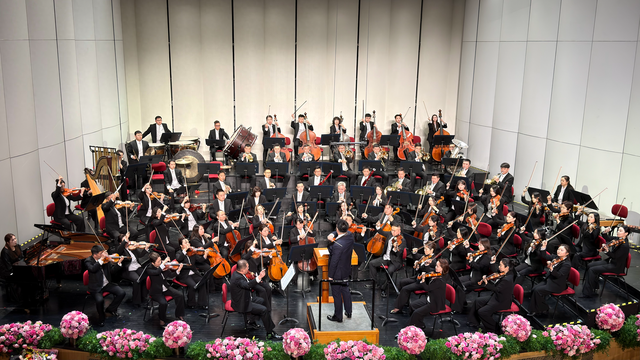
红色旋律绘盛景!《江山如画》交响音乐会燃情春城|文化中国行·百年剧场 焕然新“声”
Xin Lang Cai Jing· 2026-01-11 04:50
Core Viewpoint - The concert "Rivers and Mountains as a Painting" presented by the Jilin Symphony Orchestra showcased classic patriotic melodies, intertwining national sentiment with artistic expression, providing a profound auditory and visual experience for the audience [1]. Group 1: Concert Overview - The concert was conducted by Zhang Siwei, with principal player Lü Xiaolei leading the performance, both bringing their expertise to enhance the artistic quality of the event [3]. - The concert focused on themes of patriotism, with each piece reflecting different historical memories of the nation, and the newly renovated Jilin Provincial Concert Hall provided an excellent venue for the performance [3]. Group 2: Musical Selections - The program featured over ten well-known classic pieces, starting with the grand melody of "Ode to the Red Flag," which depicted the rising of the national flag [5]. - Other notable pieces included the "Red Detachment of Women" suite, "Long Live the People," and "My Chinese Heart," each evoking strong emotions and memories associated with the revolutionary past and the present [5]. Group 3: Audience Reception - The concert resonated deeply with the audience, who experienced a strong connection to the beauty of the country and its cultural depth through familiar melodies [7]. - Audience member Li Yun expressed excitement, highlighting the concert as a powerful patriotic education experience, emphasizing the clarity of the music in the professional venue [7].
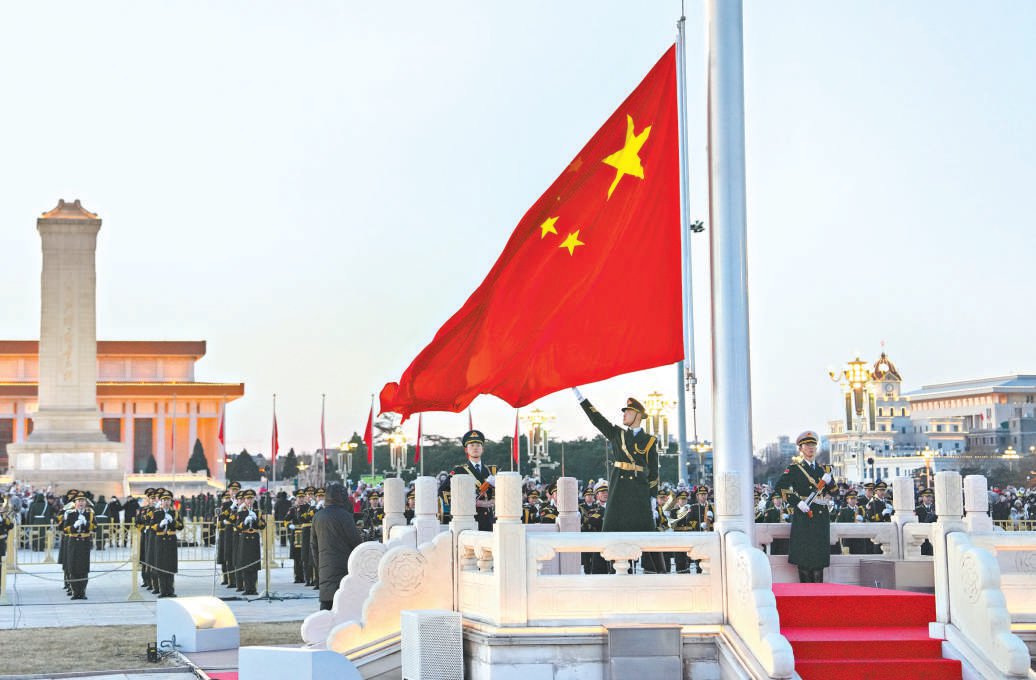
国旗在新年晨光中升起
Xin Lang Cai Jing· 2026-01-01 22:54
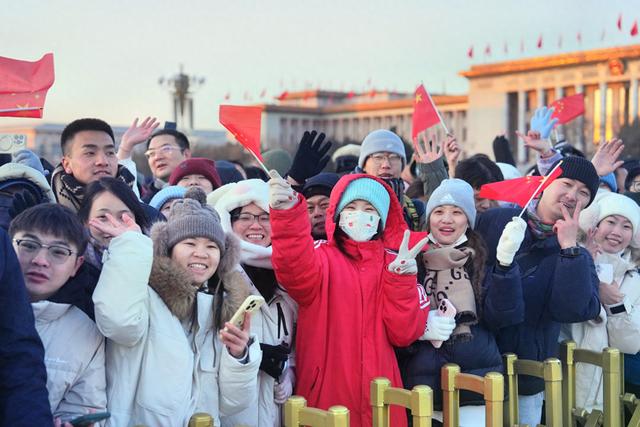
Core Viewpoint - The event at Tiananmen Square on the morning of January 1, 2026, attracted 46,000 citizens and tourists from across the country to witness the flag-raising ceremony, symbolizing national pride and unity [2][3]. Group 1: Event Details - The temperature was -8°C, but it did not deter the enthusiasm of the attendees [2]. - Participants included students and families who arrived early to secure good viewing spots, showcasing their dedication to experiencing the ceremony in person [2]. - The ceremony began at 7:30 AM with the sound of the flag-raising horn, leading to a moment of silence among the crowd [3]. Group 2: Emotional Reactions - The sight of the flag being raised evoked strong emotions, with many attendees singing the national anthem and some shedding tears [3]. - The event was described as a solemn ceremony, with participants expressing their excitement and pride in witnessing the national flag being raised [2][3]. - The atmosphere was filled with cheers and songs, reflecting the collective love for the country and hopes for the new year [4].
国旗在新年的阳光中升起,4.6万人天安门广场观升旗迎新年
Xin Lang Cai Jing· 2026-01-01 01:16
Core Viewpoint - The article highlights the enthusiasm and patriotic spirit of 46,000 people who gathered at Tiananmen Square to witness the flag-raising ceremony on New Year's Day 2026, despite the cold weather [1]. Group 1: Event Description - The event took place at Tiananmen Square, where people from all over the country came together to witness the raising of the national flag [1]. - The temperature was recorded at minus eight degrees Celsius, yet it did not diminish the fervor of the attendees [1]. - The ceremony began at 7:30 AM with the sound of the flag-raising bugle, leading to a moment of silence among the crowd [10]. Group 2: Attendee Experiences - Attendees included university students and families who traveled long distances, with some arriving the night before to secure a good viewing spot [6][12]. - A university student expressed her excitement about witnessing the ceremony in person after being moved by last year's live broadcast [6]. - A teacher from Jiangxi planned to share the experience with his students, emphasizing the importance of the event in teaching about national pride [12]. Group 3: Ceremony Highlights - The flag-raising ceremony featured the national anthem, with attendees singing along and many moved to tears as the flag ascended [10][12]. - At 7:36 AM, the flag reached the top of the pole, coinciding with the first rays of sunlight, and doves were released, symbolizing peace [12]. - The atmosphere was filled with cheers and patriotic slogans, showcasing the collective love for the country and hopes for the new year [14].

闻一多《七子之歌》发表100周年诗歌音乐会举行
Xin Lang Cai Jing· 2025-12-20 09:50
Core Viewpoint - The 100th anniversary of Wen Yiduo's "Seven Sons' Song" was commemorated with a poetry and music event in Hubei Province, highlighting Wen's deep patriotism and artistic charm [1][3] Group 1: Event Details - The poetry music event took place on December 20 at the Wen Yiduo Memorial Hall in Hubei Huanggang Xishui, featuring participants from mainland China, Hong Kong, and Macau [3] - The event was organized in a progressive performance style, allowing attendees to engage with Wen Yiduo's legacy through various artistic expressions, including poetry recitation and musical performances [3] Group 2: Historical Context - Wen Yiduo, a native of Xishui, Hubei, was a prominent patriot and an early leader of the China Democratic League, known for his scholarly and poetic contributions [1] - In 1925, while studying in the United States, Wen wrote "Seven Sons' Song" in response to China's suffering from foreign oppression, using personification to express the pain of lost territories and the longing for their return [1] Group 3: Significance of the Event - The event coincided with the 26th anniversary of Macau's return to China, adding emotional weight to the recitation of "Seven Sons' Song" [3] - Participants emphasized the connection between national strength and regional stability, with remarks highlighting the importance of cherishing peace and contributing to national development [3]
金句|国家公祭日,从总书记重要讲话中汲取前行力量
Xin Hua She· 2025-12-14 01:54
Core Viewpoint - The articles emphasize the importance of remembering history, particularly the Chinese people's struggle during the Anti-Japanese War, and the need to cherish peace while drawing strength from past sacrifices for national rejuvenation [1][2][3][4][5][6] Group 1: Historical Remembrance - The Chinese people's resistance during the Anti-Japanese War is highlighted as a significant achievement, marking the first complete victory against foreign invasion in modern history [2] - The speeches underscore the collective effort of various ethnic groups in China, who united to fight against invaders, thus safeguarding national independence and freedom [2][3] - The importance of acknowledging the historical facts of events like the Nanjing Massacre is stressed, with a firm stance against any denial of these atrocities [3][4] Group 2: National Spirit and Unity - The articles discuss the "Great Anti-Japanese Spirit," which embodies patriotism, resilience, and the determination to overcome challenges, serving as a motivational force for the Chinese people [4][5] - The need for unity and a strong spirit among all ethnic groups in China is emphasized as essential for achieving the Chinese Dream of national rejuvenation [5] Group 3: Commitment to Peace - The commitment to peaceful development and the construction of a community with a shared future for humanity is reiterated, reflecting China's historical aversion to aggression [6] - The speeches convey that the Chinese people have a deep understanding of the value of peace, shaped by their experiences of suffering from invasions and internal conflicts [6]

金句丨国家公祭日,从总书记重要讲话中汲取前行力量
Xin Hua She· 2025-12-13 08:47
Core Viewpoint - The article emphasizes the importance of remembering history, particularly the Nanjing Massacre, and draws on significant speeches by President Xi Jinping to inspire national strength and unity in the pursuit of national rejuvenation and peace [1][5]. Group 1: Historical Remembrance - December 13 marks the twelfth National Memorial Day for the victims of the Nanjing Massacre, highlighting the need to remember history and cherish peace [1]. - The Chinese people, under the banner of the Anti-Japanese National United Front, achieved a complete victory against foreign invasion during the Anti-Japanese War, marking a significant moment in modern history [3]. - The great historical contributions of the Chinese people in defending national independence and freedom during the Anti-Japanese War are to be remembered and cherished [4]. Group 2: Spirit of Resistance - The Anti-Japanese War fostered a great spirit of resistance characterized by patriotism, heroism, and an unwavering belief in victory, which continues to inspire the Chinese people [7]. - The spirit of resistance is viewed as a precious spiritual asset that motivates the Chinese people to overcome challenges and strive for national rejuvenation [7]. Group 3: Commitment to Peace - China is committed to peaceful development and aims to build a community with a shared future for humanity, emphasizing that the nation does not have a history of aggression or expansion [10][11]. - The Chinese people have a deep understanding of the value of peace due to their historical experiences of suffering from foreign invasions and internal turmoil [13]. - The article stresses the importance of maintaining peace and stability for national development and improving people's lives, rejecting the path of achieving modernization through war or colonization [11][12].
