Generative AI

Search documents
Stitch Fix(SFIX) - 2026 Q1 - Earnings Call Transcript
2025-12-04 23:02
Financial Data and Key Metrics Changes - Revenue for Q1 Fiscal 2026 was $342.1 million, representing a 7.3% year-over-year increase, exceeding expectations [5][17] - Adjusted EBITDA was $13.4 million, or 3.9% of revenue, outperforming expectations [17] - Average order value (AOV) rose 9.6% year-over-year, marking the ninth consecutive quarter of AOV growth [17][18] - Revenue per active client (RPAC) reached $559, up 5.3% year-over-year, indicating increased client engagement [17][18] - Gross margin was 43.6%, consistent with the FY26 range of 43%-44% [18] Business Line Data and Key Metrics Changes - Women's business saw a 19% year-over-year growth in key seasonal categories such as sweaters and coats [8] - Men's business delivered double-digit revenue growth, with fleece and outerwear growing 57% combined [9] - Non-apparel categories are contributing to growth, capturing a greater share of client spending [8][10] Market Data and Key Metrics Changes - The company's 7.3% revenue growth significantly outpaced the broader U.S. apparel market's estimated 1% growth [8] - Active clients reached 2.3 million, marking the sixth consecutive quarter of improvement in year-over-year growth rates [10][18] Company Strategy and Development Direction - The company is focused on enhancing client engagement through AI technology and personalized shopping experiences [5][12] - Strategic expansion into non-apparel categories aims to capture a larger share of client spending [8][10] - The introduction of family accounts and gifting options is expected to drive further engagement and sales [33] Management's Comments on Operating Environment and Future Outlook - Management expressed confidence in continued growth, citing strong demand and positive trends in client engagement [19][22] - The company anticipates some headwinds in the latter half of the year due to consumer confidence and inflation impacts [20] - Full-year revenue guidance has been raised to between $1.32 and $1.35 billion [19] Other Important Information - The company ended Q1 with $244.2 million in cash and short-term investments, with no debt [18] - Inventory increased by 18.8% year-over-year to $141.5 million, reflecting investments in larger Fix offerings [18] Q&A Session Summary Question: Insights on new customer behavior and stickiness - Management noted nine consecutive quarters of improving lifetime value (LTV) for new clients, with increased engagement and spending from re-engaged clients [25][26] Question: Market share gains and gifting performance - Market share gains are attributed to delivering a personalized shopping experience, with gifting becoming more significant due to family accounts [29][33] Question: Early adoption of consumer-facing AI tools - Early adoption of Stitch Fix Vision has exceeded expectations, with clients engaging in various ways, including sharing on social media [39][40] Question: Gross margin performance and expectations - The decline in gross margin is attributed to transportation costs, investments in lower-margin categories, and tariffs, with expectations for Q2 margins to remain stable [43][45] Question: Opportunities with different brands and active client demographics - The company is attracting brands by providing a personalized experience, leading to improved average order values and client LTV [51][53]

Stitch Fix(SFIX) - 2026 Q1 - Earnings Call Transcript
2025-12-04 23:00
Financial Data and Key Metrics Changes - Revenue for Q1 2026 was $342.1 million, representing a 7.3% year-over-year increase, exceeding expectations [5][15] - Adjusted EBITDA was $13.4 million, or 3.9% of revenue, outperforming expectations [5][16] - Average order value (AOV) rose 9.6% year-over-year, marking the ninth consecutive quarter of AOV growth [15][16] - Revenue per active client reached $559, up 5.3% year-over-year, indicating the seventh consecutive quarter of growth [15][16] - Gross margin was 43.6%, consistent with the FY26 range of 43%-44% [16][18] Business Line Data and Key Metrics Changes - Women's business saw a 19% year-over-year growth in key seasonal categories such as sweaters and coats [7] - Men's business delivered double-digit revenue growth, with fleece and outerwear growing 57% combined [8] - Sneakers grew 63% year-over-year, driven by brands like New Balance and Adidas [8] - The company is expanding into non-apparel categories, which is further accelerating growth [7] Market Data and Key Metrics Changes - The company's 7.3% revenue growth significantly outpaced Circana's estimated 1% growth for the broader U.S. apparel market [7] - Active clients reached 2.3 million, at the high end of expectations, marking the sixth consecutive quarter of improvement in active client growth rates [9][15] Company Strategy and Development Direction - The company is focused on enhancing client engagement, cultivating client-stylist relationships, and offering a best-in-class assortment [6] - Strategic expansion into non-apparel categories aims to capture a greater share of clients' spending [7] - The company is leveraging generative AI technology to enhance the client experience and drive engagement [11][12] Management's Comments on Operating Environment and Future Outlook - Management expressed confidence in the resilience of client demand and the positive trends observed in Q1 and early Q2 [17][19] - The company anticipates some headwinds in the latter half of the year due to inflation and tougher AOV comparisons [18] - Full-year revenue guidance has been raised to between $1.32 and $1.35 billion, reflecting strong performance [17] Other Important Information - The company ended Q1 with $244.2 million in cash and short-term investments, with no debt [16] - Inventory was $141.5 million, up 18.8% year-over-year, reflecting investments in larger Fix offerings [16] Q&A Session Summary Question: Insights on new customer behavior and stickiness - Management noted nine consecutive quarters of improving lifetime value (LTV) for new client acquisition and a decrease in dormant clients [21][22] Question: Market share gains and gifting performance - Market share gains are attributed to delivering a personalized shopping experience, with gifting becoming a stronger use case due to family accounts [25][30] Question: Consumer-facing AI and visualization tools - Early adoption of Stitch Fix Vision has exceeded expectations, with clients engaging in various ways, including sharing images on social media [35][36] Question: Gross margin performance - The decline in gross margin is attributed to transportation expenses, investments in lower-margin categories, and minor tariff impacts [38][39] Question: Opportunities with different brands - The company provides a unique value proposition for third-party brands, leading to improved partnerships and brand engagement [43][46]
AI race's leadership changeup, options, and meme stocks: What investors need to know
Yahoo Finance· 2025-12-04 22:58
Big Tech & AI Leadership - Big tech experienced a pullback and uneven recovery, with a perceived shift in leadership [1] - A macro rotation from tech to defensives occurred in November, with healthcare outperforming IT by the largest spread in 20 years, driven by potential rate cuts [2] - Leadership within tech is shifting towards Nvidia and "team Open AI" (Microsoft, etc), while investors are re-evaluating other players like Google and Amazon in the generative AI space [3] Magnificent Seven (Mag 7) ETF - The Magnificent Seven ETF (MAGS) offers equal-weight exposure to the Mag 7 stocks, providing diversification among big cap tech leaders [5] - MAGS rebalances quarterly, selling winners and buying losers to maintain equal-weight exposure [6] Options Market Impact - The options tail is now wagging the equity dog, with single stock options influencing intraday stock movements [7] - Options volume, particularly in smaller single stocks, can act as a price setter, leading to significant intraday swings [8] - Leveraged options trades can amplify both upside and downside movements in stocks [8][9] Meme Stock ETF - The meme ETF is designed for investors interested in speculative areas of the market, offering access to a basket of meme stocks [12] - Meme stock activity is influenced by the macro environment and individual risk appetite, experiencing volatility related to rate cut expectations [12][15] - Some meme stocks exhibit outsized trading volume relative to their market cap, indicating active trading [14]


Argan(AGX) - 2026 Q3 - Earnings Call Presentation
2025-12-04 22:00
Financial Highlights - Q3 2026 consolidated revenues reached $251 million, a 2% decrease year-over-year but a 6% increase sequentially compared to Q2 2026[5] - Q3 2026 earnings per diluted share increased by 9% year-over-year to $2.17[5] - Q3 2026 EBITDA was $40.3 million, representing 16% of revenue[5] - The quarterly dividend increased by 33% to $0.50 per common share[5] Backlog and Projects - The project backlog reached a record of approximately $3.0 billion as of October 31, 2025[5] - The current backlog represents approximately 6GW in new energy builds[5] - Recent additions to the backlog include a 1,350 MW combined cycle power plant and an 860 MW natural gas-fired power plant, both in Texas[5] - Natural Gas projects account for 79% of the backlog, Renewable projects 16%, and Industrial projects 5%[20] Market Drivers and Growth - Electricity demand is projected to increase by 25% by 2030 and 78% by 2050[21, 40] - Data center power demand is projected to double to 945 TWh by 2030[14] - Electricity demand from EVs is projected to reach 780 TWh in 2030, increasing from 180 TWh in 2024[16] Balance Sheet and Capital Allocation - Cash, cash equivalents, and investments totaled $727 million as of October 31, 2025[28] - Net liquidity was $377 million as of October 31, 2025[28] - $109.6 million has been returned to shareholders through share repurchases since November 2021[33]

HIVE showcases Paraguay operations, highlights renewable energy focus
Proactiveinvestors NA· 2025-12-04 20:43
Group 1 - Proactive provides fast, accessible, informative, and actionable business and finance news content to a global investment audience [2] - The news team covers medium and small-cap markets, as well as blue-chip companies, commodities, and broader investment stories [3] - Proactive's content includes insights across various sectors such as biotech, pharma, mining, natural resources, battery metals, oil and gas, crypto, and emerging technologies [3] Group 2 - Proactive is committed to adopting technology to enhance workflows and content production [4] - The company utilizes automation and software tools, including generative AI, while ensuring all content is edited and authored by humans [5]


NVIDIA Nemotron Integration with Amazon Bedrock
NVIDIA· 2025-12-04 20:11
Generative AI and Model Architecture - NVIDIA introduces Neotron, a hybrid architecture combining state-based models and transformers for efficient inferencing [1] - Neotron is available on AWS Bedrock [3] Early Adopters and Use Cases - CrowdStrike is utilizing Neotron for specialized security AI agents deployed on their Charlotte AI agent works platform [2] - Bridgewise is leveraging Neotron to deliver reliable investment intelligence [3] Call to Action - Individuals can explore Neotron, Cosmos, and World Foundation models for physical AI at build.nvidia.com [3] - More information about Neotron models on Bedrock is available in NVIDIA's announcement blog and at their AWS re:Invent booth [3]


3 Homebuilders in Focus Despite Challenging Market Backdrop
ZACKS· 2025-12-04 18:21
Industry Overview - The U.S. homebuilding industry is facing a complex mix of challenges, including affordability issues, cautious buyer psychology, and elevated incentives that pressure margins, compounded by rising land costs and material inflation [1][4] - Demand is highly sensitive to interest rates, and while mortgage rates have started to ease, this has not yet led to consistent buyer conversion due to economic uncertainty [1][4] - The industry is characterized by a severe shortage of buildable lots, rising construction costs, and labor shortages, which restrict pricing flexibility and profitability [1][5] Long-term Support Factors - Despite current challenges, industry fundamentals suggest resilience due to tight housing supply, eventual Federal Reserve easing, and steady demand for homeownership [2][8] - Builders are adapting by utilizing mortgage buydown programs and balancing speculative and build-to-order activities to cater to diverse buyer segments [2][9] - Leading companies like PulteGroup, Green Brick Partners, and Century Communities are benefiting from disciplined cost controls, operational leverage, and strategic acquisitions, positioning them for long-term growth [2][10] Economic Trends - Economic uncertainties, including high interest rates and construction costs, continue to stifle growth, with the Federal Reserve recently reducing interest rates to a range of 3.75% to 4.00% [4][5] - The Fed projects GDP growth of 1.8% and inflation of 2.6% for 2026, indicating a cautious economic outlook [4] - The housing market is under pressure from rising material and labor costs, a shortage of buildable lots, and financial strain on homebuilders, leading to price cuts and sales incentives [5][6] Supply and Demand Dynamics - There is a significant shortage of new and existing homes due to over a decade of under-building relative to population growth, which is driving demand for new homes [7][8] - The adoption of mortgage rate buydowns is helping to stimulate demand by easing borrowers into full mortgage payments [9] - Builders are focusing on entry-level homes and utilizing technology to improve efficiency and reduce costs, which supports competitiveness in the market [10][11] Industry Performance and Valuation - The Zacks Building Products - Home Builders industry has underperformed the S&P 500 Index, declining 14.8% over the past year compared to the sector's 7.8% growth [16] - The industry currently trades at a forward P/E ratio of 12.34, significantly lower than the S&P 500's 23.44 and the sector's 19.2 [19] - Earnings estimates for the industry have decreased, indicating a loss of confidence in growth potential, with 2025 and 2026 estimates revised downwards [14] Company Highlights - **Green Brick Partners**: This company is expanding strategically in high-demand markets and has a strong pipeline of low-cost lots, which supports pricing flexibility [24][25] - **Century Communities**: Focused on affordable new homes, the company is enhancing competitiveness through cost control and operational efficiency [28][29] - **PulteGroup**: The company benefits from a diversified footprint and operational discipline, with a strong brand presence and favorable market conditions in key regions [32][33]


Are We Building Tomorrow’s Classrooms Wrong? | Tarang Tripathi | TEDxDikshant School
TEDx Talks· 2025-12-04 17:36
[music] [music] So we're going to start off talking about something that I coined called the distance and the journey of learning. Before we get into it, let's just understand what AI is or more specifically what generative AI is. AI or generative AI can be understood as a sophisticated guessing machine.It's got a lot of data and every single time you ask a question it's pulling on all of that data using mathematical like equation like regression to try to figure out what the next word is. So in a way it's ...

How AI is killing promotions
CNBC· 2025-12-04 17:00
Layoff announcements skyrocketed toward the end of 2025 as generative AI and economic tightening pressure corporations to restructure their workforces. Many companies are cutting costs by trimming middle management and [music] in certain industries eliminating entry-level roles that can be replaced by AI. But layoffs aren't the only thing experts are concerned about.Generative AI is speeding up how people work, but that efficiency can come at the tradeoff of maintaining skills and rising up the corporate la ...

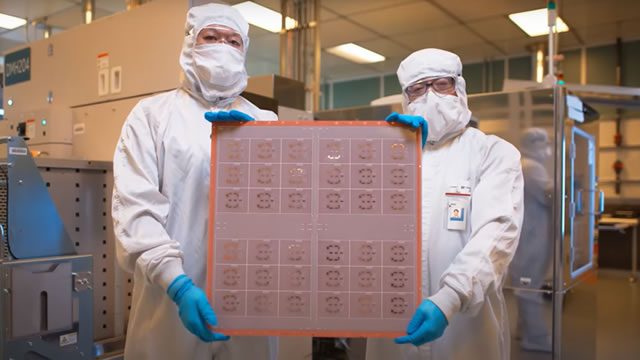
Intel to retain networking unit NEX following strategic review
Proactiveinvestors NA· 2025-12-04 16:23
Company Overview - Proactive is a financial news publisher that provides fast, accessible, informative, and actionable business and finance news content to a global investment audience [2] - The company operates with a team of experienced and qualified news journalists across key finance and investing hubs including London, New York, Toronto, Vancouver, Sydney, and Perth [2] Market Focus - Proactive specializes in medium and small-cap markets while also covering blue-chip companies, commodities, and broader investment stories [3] - The content delivered by the team includes insights across various sectors such as biotech and pharma, mining and natural resources, battery metals, oil and gas, crypto, and emerging digital and EV technologies [3] Technology Utilization - Proactive is recognized for its forward-looking approach and enthusiastic adoption of technology to enhance workflows [4] - The company employs automation and software tools, including generative AI, while ensuring that all content is edited and authored by humans to maintain quality and best practices in content production [5]