药物研发

Search documents
人福医药集团股份公司关于HW231019片进入II期临床试验研究的公告
Zhong Guo Zheng Quan Bao - Zhong Zheng Wang· 2025-11-13 05:12
Group 1 - The company announced that its subsidiary, Yichang Renfu Pharmaceutical Co., Ltd., has registered the Phase II clinical trial for HW231019 tablets, aimed at evaluating its efficacy and safety for postoperative pain relief after abdominal surgery [1] - The trial is a multicenter, randomized, double-blind, parallel, placebo-controlled study, with the objective to explore the efficacy and safety of HW231019 tablets and to preliminarily investigate its dosage for postoperative pain [1] - HW231019 tablets received approval for clinical trials in March 2025 for the treatment of acute pain, and the cumulative R&D investment in this project has reached approximately 20 million RMB [1] Group 2 - Currently, there is one company in the same target and type of drug for acute pain that has entered Phase II/III clinical stages, four companies in Phase II, and two companies in Phase I clinical stages [1] - The company emphasizes that drug registration requires completion of clinical trials and approval from the National Medical Products Administration before market launch, highlighting the lengthy and uncertain nature of drug development [2]

海通国际:维持百济神州“优于大市”评级目标价213.10港元
Xin Lang Cai Jing· 2025-11-12 03:11
Core Viewpoint - Haitong International has raised its revenue forecasts for BeiGene (06160) for FY25-27 to $5.3 billion, $6.4 billion, and $7.1 billion respectively, reflecting a three-year revenue CAGR of 23% due to stronger-than-expected market performance of Zebrutinib in the US and Europe [1] Group 1: Financial Performance - In Q3 2025, BeiGene achieved revenue of $1.41 billion, representing a year-on-year increase of 41% and a quarter-on-quarter increase of 7.7%, with product revenue at $1.40 billion [1] - The company reported a gross margin of 86.1%, an increase of 3.1 percentage points year-on-year [1] - R&D expenses were $520 million, reflecting a year-on-year increase of 5.5% [1] Group 2: Product Performance - Zebrutinib's global revenue is expected to approach $3.9 billion in 2025, with Q3 2025 global revenue at $1.04 billion, a year-on-year increase of 50.8% and a quarter-on-quarter increase of 9.6% [1] - In the US, Zebrutinib generated $740 million, a year-on-year increase of 46.7% and a quarter-on-quarter increase of 8.0% [1] - In Europe, Zebrutinib's revenue was $160 million, a year-on-year increase of 67.5% [1] Group 3: Pipeline Developments - In the hematological malignancies area, the focus is on BCL-2 inhibitors and BTK CDAC [1] - Management anticipates data for Sotigalimab (BCL-2 inhibitor) in R/R MCL to be released at the 2025 ASH meeting, with plans to submit a US marketing application for R/R MCL [1] - For BTK CDAC, phase II clinical data for R/R CLL is expected in 1H26, and a phase III trial has been initiated [1] Group 4: Solid Tumor Developments - The company is focusing on CDK4 inhibitors, with ongoing phase II clinical trials exploring two dosage levels, showing high response rates that support the initiation of phase III trials [2] - The B7-H4 ADC (BG-C9074) has completed dose escalation and is currently undergoing dose optimization studies in ovarian cancer, endometrial cancer, and breast cancer [2] - The PRMT5i (BGB-58067) has shown good safety and efficacy data, while the GPC3-targeting T-cell activator has demonstrated effectiveness in previously treated liver cancer patients [2]

真实生物“再战”港交所!知名VC一路陪跑
Zheng Quan Shi Bao Wang· 2025-11-11 11:03
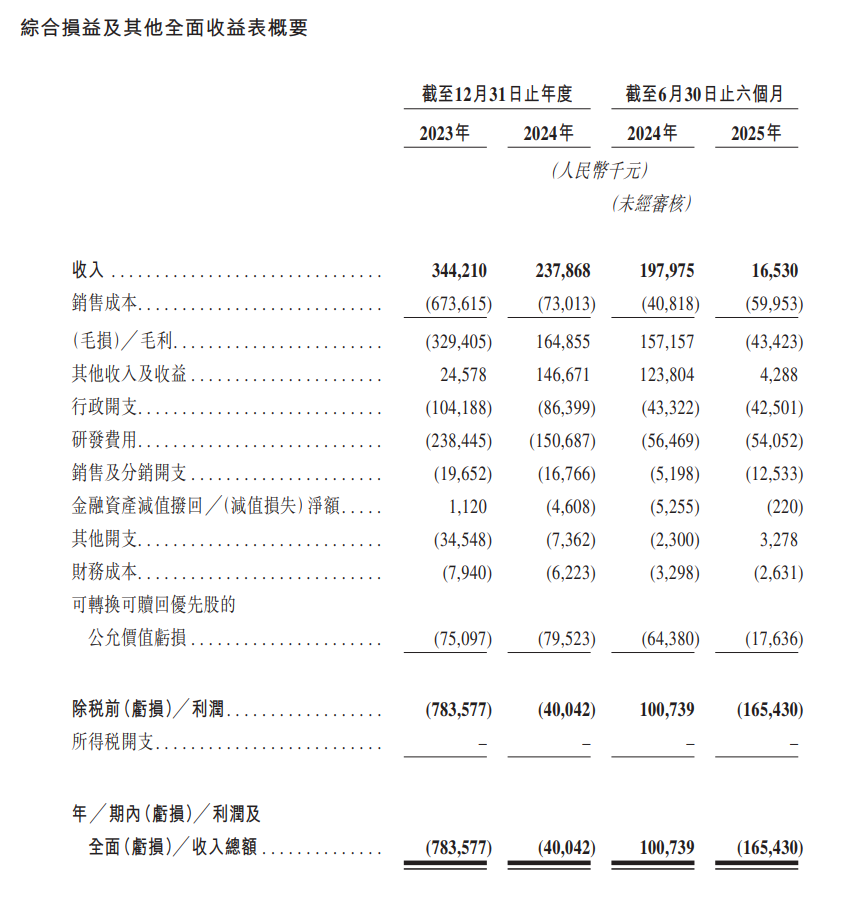
Core Viewpoint - Real Bio, the first domestic manufacturer of oral COVID-19 medication in China, has refiled for an IPO on the Hong Kong Stock Exchange after previous attempts in 2022 and February 2023 did not progress [1] Company Overview - Real Bio, established in 2012, focuses on the development, manufacturing, and commercialization of innovative drugs targeting viral infections, tumors, and cardiovascular diseases [2] - The company's core product, Azvudine, received conditional approval from the National Medical Products Administration (NMPA) for treating HIV in July 2021 and for COVID-19 in July 2022, making it the first oral antiviral drug for COVID-19 developed by a Chinese company [2] Financial Performance - Real Bio has not yet achieved profitability, with revenues of RMB 344.21 million in 2023, RMB 237.87 million in 2024, and RMB 16.53 million in the first half of 2025, alongside significant losses of RMB 783.58 million, RMB 40.04 million, and RMB 165.43 million respectively [4][5] - The majority of Real Bio's revenue comes from Azvudine, primarily through a partnership with Fosun Pharma, which accounted for 99.2% of total sales in 2024 [3][4] Product Development and Market Strategy - Real Bio is expanding its product pipeline beyond Azvudine, with additional drugs targeting non-small cell lung cancer, malignant tumors, and acute ischemic stroke [3] - Following the termination of its agreement with Fosun Pharma, Real Bio has engaged 65 offline distributors and nine online distributors to sell Azvudine, anticipating that revenue in 2025 will largely derive from these distributors [4] Investment and Shareholding - Real Bio has raised a total of RMB 713 million through two rounds of financing, with significant investments from Yifeng Capital and other firms [9][10] - The largest shareholder is Wang Chaoyang, controlling 48.12% of the shares, while CEO Du Jinfang holds a significant position in the company [6][8]

Theravance Biopharma(TBPH) - 2025 Q3 - Earnings Call Transcript
2025-11-10 23:00
Financial Data and Key Metrics Changes - Theravance Biopharma achieved non-GAAP break-even in Q3 2025, reflecting strong execution and financial discipline [3][19] - The company ended the quarter with approximately $333 million in cash and no debt, indicating a robust financial position [4][19] - Collaboration revenue increased to $20 million, up 19% year-over-year, driven by UPELRI's strong operating leverage [19] Business Line Data and Key Metrics Changes - UPELRI net sales increased 15% year-over-year to $71.4 million, supported by strong demand growth and favorable net pricing [6][19] - UPELRI's profit margins reached record levels, with hospital volume increasing 29% year-over-year [8][10] - The company is on track to achieve a $25 million milestone from Viatris based on UPELRI's year-to-date sales performance [3][4] Market Data and Key Metrics Changes - UPELRI's share in the long-acting nebulized hospital market reached approximately 21%, a new launch-to-date high [8] - The strong growth trends for Trelegy are expected to lead to a $100 million milestone in 2026, with GSK reporting $1 billion in sales for the quarter [4][18] Company Strategy and Development Direction - The company is focused on advancing the pivotal phase III Cypress trial of ampraloxetine, with top-line results expected in early 2026 [3][16] - Theravance is committed to raising awareness of neurogenic orthostatic hypotension (NOH) associated with multiple system atrophy (MSA) through a new disease education campaign [5] - The management emphasizes the importance of executing the Cypress study and preparing for the potential launch of ampraloxetine [24][26] Management's Comments on Operating Environment and Future Outlook - Management expressed confidence in the upcoming Cypress data readout, viewing it as a significant milestone for the company [16][21] - The company remains optimistic about the transformational potential of ampraloxetine for patients with MSA-related NOH [4][21] - The management highlighted the importance of financial strength and operational execution in maximizing shareholder value [24][26] Other Important Information - The company plans to host a KOL event for investors on December 8 to discuss the unmet medical need for patients with MSA and the potential of ampraloxetine [4][17] - The company reiterated its expense guidance for 2025, expecting results to remain broadly consistent in Q4 [20] Q&A Session Summary Question: How is the company thinking about returning capital to shareholders while preparing for the launch of ampraloxetine? - Management emphasized the importance of financial strength and the need to evaluate capital return timing based on the execution of the Cypress study [24] Question: Are there any pipeline assets being considered for future opportunities? - Management stated that the focus remains on the success of ampraloxetine and UPELRI, with potential evaluations of other options post-launch [26] Question: How does the recently published manuscript inform expectations for the Cypress data? - The publication is important as it establishes a clinically meaningful difference that the company aims to replicate in the Cypress study [32][34] Question: Can the company share enrollment numbers for the randomized withdrawal portion of the Cypress study? - Management expressed confidence in the operational execution and stated that they believe the study is adequately powered [39][40]

MannKind (NasdaqGM:MNKD) Update / Briefing Transcript
2025-11-10 15:00
MannKind Corporation Investor Call Summary Company Overview - **Company**: MannKind Corporation (NasdaqGM: MNKD) - **Date of Call**: November 10, 2025 - **Focus**: Clinical trial update regarding MannKind's product candidates, specifically the discontinuation of the ICON one Phase three clinical trial for nebulized clofazamine inhalation suspension (MannKind-one hundred one) for treating refractory non-tuberculosis mycobacterium (NTM) lung disease [1][2][4] Key Points and Arguments 1. **Discontinuation of Clinical Trial**: The ICON one Phase three clinical trial was discontinued due to futility, as none of the first 46 participants showed evidence of sputum culture conversion [4][5][6] 2. **Acquisition Background**: MannKind acquired Q Rum Pharma in 2020, which had developed the nebulized formulation of clofazamine, with plans to transition to a dry powder formulation [4] 3. **Safety Profile**: The Data Safety Monitoring Board (DSMB) did not identify any safety concerns during the study, indicating that the lack of efficacy is likely related to the nebulized formulation rather than the molecule itself [6][9] 4. **Next Steps**: MannKind is investigating the reasons for the unexpected trial outcome, focusing on the suspension formulation and its handling instructions [7][8] 5. **Future Development**: The company is advancing the MannKind-one hundred two dry powder formulation of clofazamine towards Phase one trials, with hopes for its efficacy in treating NTM lung disease [8][9] 6. **DPI Candidate Confidence**: There is increased confidence in the dry powder inhaler (DPI) formulation due to better predictability of delivered doses compared to the nebulized formulation, which requires more patient intervention [13][21] 7. **Partial Conversions Observed**: While there were no complete sputum culture conversions, some partial conversions were noted, and the team is analyzing patient-reported outcomes for further insights [14][15][34] 8. **Regulatory Engagement**: MannKind plans to meet with the FDA to discuss findings and next steps for the DPI formulation, with updates expected in Q2 2026 [29][30] Additional Important Information 1. **Human Capital Investment**: The company has invested significant resources in developing both nebulized and DPI formulations, reflecting its commitment to innovative patient-centric solutions [5] 2. **Training and Preparation Issues**: The trial's failure may be linked to improper handling and preparation of the nebulized formulation, highlighting the importance of adherence to protocols [20][22] 3. **Ongoing Research**: MannKind is conducting a 1b trial for another product (02/2001) in idiopathic pulmonary fibrosis (IPF) patients, which is expected to provide insights into the tolerability of the dry powder formulation [35][36] 4. **Market Position**: Despite the setback, MannKind remains committed to developing therapies for serious lung diseases and is monitoring the competitive landscape for potential impacts on its pipeline [40]

重庆发文支持创新药发展,外媒称“中国制药企业正在崛起”
Huan Qiu Wang· 2025-11-09 01:09
Group 1 - The Chinese government is supporting the high-quality development of innovative drugs by providing up to 10 million yuan in funding for eligible projects, including first-class innovative drugs, second-class improved new drugs, and biosimilars [1] - Chinese pharmaceutical companies are transitioning from raw material producers to innovative drug manufacturers, with their share in global drug research and development nearing 30%, while the share of US companies has decreased to approximately 48% [4] - The number of Chinese innovative drugs included in global conference abstracts has reached a record high this year, indicating a growing recognition of China's contributions to drug development [4] Group 2 - In the first half of this year, US and Chinese pharmaceutical companies completed 14 licensing deals worth $18.3 billion, highlighting increasing collaboration between the two markets [4] - The expiration of patents for blockbuster drugs before 2030 is creating opportunities for collaboration between US and Chinese pharmaceutical companies, as US firms need to replenish their drug development pipelines [4] - The high costs associated with drug development in the US present challenges, further opening the door for partnerships with Chinese companies [4]
江苏恒瑞医药股份有限公司关于2022年员工持股计划部分份额解锁条件成就暨第三个锁定期届满的提示性公告
Shang Hai Zheng Quan Bao· 2025-11-07 19:44
Core Viewpoint - Jiangsu Hengrui Medicine Co., Ltd. has announced the completion of the third lock-up period for its 2022 employee stock ownership plan, with specific conditions for unlocking portions of the shares based on performance metrics [1][4][5]. Summary by Sections Employee Stock Ownership Plan Progress - The 2022 employee stock ownership plan was approved during meetings held on August 19, 2022, and September 8, 2022 [1][2]. - A total of 12 million shares were transferred to the employee stock ownership plan account at a price of 4.97 yuan per share [2]. - The first meeting of the plan's participants was held on November 7, 2022, where a management committee was established to oversee the plan [3]. Lock-up Period and Unlocking Conditions - The employee stock ownership plan has three unlocking phases: 40% after 12 months, 30% after 24 months, and 30% after 36 months [4][5]. - The third lock-up period ended on November 7, 2025, and the management committee will manage the rights of the participants based on market conditions [5]. Performance Assessment for Unlocking - Company-level performance metrics include sales revenue from innovative drugs, the number of new molecular entity IND approvals, and the number of NDA applications accepted [6][7]. - For the third unlocking phase, the company achieved over 32 billion yuan in cumulative innovative drug revenue, more than 33 IND approvals, and over 21 NDA applications, meeting the 100% unlocking criteria [6]. Subsequent Arrangements Post Unlocking - After the third lock-up period, the management committee will handle the rights of the participants according to the employee stock ownership plan [7][8]. New Employee Stock Ownership Plan - The company has initiated a new employee stock ownership plan for 2025, with 13.51 million shares transferred at a price of 30.95 yuan per share, representing 0.20% of the total share capital [10][11]. - The new plan will also have three unlocking phases similar to the previous plan, with performance assessments determining the actual unlocking ratios [11]. Clinical Trial Approvals - The company has received approval for clinical trials of SHR-4610 injection, an innovative anti-tumor drug, and HRS-2430 injection, a general anesthetic, indicating ongoing investment in R&D [19][24]. - The total R&D investment for SHR-4610 is approximately 7.36 million yuan, while HRS-2430 has seen an investment of about 24.6 million yuan [21][25].

百济神州(06160):三季度业绩:泽布替尼销售稳健增长,管理层上调全年指引
Haitong Securities International· 2025-11-06 23:32
Investment Rating - The report assigns an "Outperform" rating for BeiGene, indicating an expected total return over the next 12-18 months that exceeds the relevant market benchmark by more than 10% [16]. Core Insights - In Q3 2025, BeiGene achieved revenue of USD 1.4 billion, a year-on-year increase of 41%, and a quarter-on-quarter increase of 7.7% from USD 1.3 billion in Q2 2025. The U.S. market contributed USD 743 million, reflecting an 8.5% increase from the previous quarter. GAAP operating profit was USD 163 million, up 73.4% quarter-on-quarter [5][6]. - Management has updated its full-year guidance for 2025, projecting total revenue between USD 5.1 billion and USD 5.3 billion, with GAAP operating expenses expected to be between USD 4.1 billion and USD 4.3 billion [5][6]. Revenue Breakdown - Global revenue for Zanubrutinib reached USD 1.0 billion, representing a 51% year-on-year increase and a 5.3% quarter-on-quarter increase. In the U.S., revenue was USD 740 million, up 47% year-on-year and 8% quarter-on-quarter. European revenue was USD 160 million, a 68% year-on-year increase and an 8.7% quarter-on-quarter increase [2][6]. - Tislelizumab revenue in Q3 2025 was USD 190 million, reflecting a 17% year-on-year increase but a slight decline of 1.5% quarter-on-quarter [6]. Clinical Development Progress - Sonrotoclax (BCL2 inhibitor) received Breakthrough Therapy Designation for RR MCL, and patient enrollment for a potential registrational Phase 2 study in RR WM has been completed [7]. - BGB-16673 (BTK CDAC) has initiated a global Phase 3 trial against pirtobrutinib in R/R CLL, with patient enrollment currently underway [7]. - BGB-45035 (IRAK4 CDAC) has started a Phase 2 trial for moderate-to-severe rheumatoid arthritis, with patient enrollment initiated [7]. Expected R&D Milestones - BGB-43395 (CDK4 inhibitor) plans to initiate a Phase 3 trial in 1L HR+/HER2- breast cancer in H1 2026 [8]. - BGB-16673 (BTK CDAC) expects data readout in R/R CLL in H1 2026 to support an accelerated approval application [8]. - Sonrotoclax plans to initiate patient enrollment for a Phase 3 trial combining with BTK inhibitor versus acalabrutinib + venetoclax in H1 2026, and a Phase 3 trial in multiple myeloma in H2 2026 [8].
AbCellera Biologics(ABCL) - 2025 Q3 - Earnings Call Transcript
2025-11-06 23:00
Financial Data and Key Metrics Changes - The company reported revenue of $9 million for Q3 2025, an increase from approximately $7 million in the same quarter of the previous year, primarily from research fees related to partnered programs [9] - Research and development expenses for the quarter were $55 million, an increase of about $14 million compared to the same quarter last year, driven by specific investments of $15 million in two internal programs [10] - The net loss for the quarter was approximately $57 million, compared to a loss of about $51 million in the same quarter of the previous year, resulting in a loss of $0.19 per share [10][11] - The company ended the quarter with approximately $680 million in available liquidity, including $520 million in cash and cash equivalents and $160 million in committed government funding [4][12] Business Line Data and Key Metrics Changes - The company initiated one additional partner-initiated program in Q3 2025, bringing the cumulative total to 103 programs with downstream participation [7] - The cumulative total of molecules that have reached the clinic remained at 18, including both the company's own pipeline and those led by partners [7][8] Market Data and Key Metrics Changes - The company is transitioning from a partnership model to focusing on internal drug development, with the first two programs now in clinical development [16] - The company aims to advance at least one more development candidate into IND enabling studies by the end of the year [4][25] Company Strategy and Development Direction - The company has completed its transition from a platform company to a clinical-stage biotech, with a focus on advancing its internal pipeline [4] - The appointment of Dr. Sarah Nunberg as Chief Medical Officer is seen as a strategic move to enhance clinical development capabilities [5][17] - The company is confident in its ability to fund pipeline investments well beyond the next three years [12] Management's Comments on Operating Environment and Future Outlook - Management acknowledged that the progress of partner-initiated programs has been slower than anticipated, with some programs taking up to six years to move into clinical development [16] - The company is encouraged by the progress of its clinical trials and expects to provide updates on its pipeline in the coming year [21][36] Other Important Information - The company has received commitments for funding from the Government of Canada's Strategic Innovation Fund and the Government of British Columbia, which are not reflected on the balance sheet [11][12] - The company is focused on advancing its two lead programs through their phase I clinical studies while building a strong pre-clinical pipeline [12] Q&A Session Summary Question: How to think about partner-initiated programs in the clinic? - Management noted that the partner-initiated programs have been stagnant since 2024, but they expect some to move forward into clinical development, albeit at a slower pace than initially anticipated [16] Question: Why was now the appropriate time to bring Dr. Nunberg in as CMO? - Management indicated that the transition to drug development on their own behalf necessitated the need for a senior executive with clinical development experience [17] Question: What is the data disclosure strategy for the phase I 635 study? - Management expects to make a single disclosure after completing the proof of concept part, likely around mid-next year, focusing on safety and efficacy [21] Question: How is enrollment going in the phase I trial for 575? - Management confirmed that enrollment is proceeding as expected and is on track [24] Question: What are the benefits of 635 versus existing hormonal treatments for hot flashes? - Management clarified that 635 is being developed as an alternative to menopausal hormone therapy, targeting women who cannot use MHT due to contraindications or adverse events [31]

UroGen Pharma(URGN) - 2025 Q3 - Earnings Call Transcript
2025-11-06 16:00
Financial Data and Key Metrics Changes - Total revenues for Q3 2025 were $27.5 million, consisting of $25.7 million from Gemyto and $1.8 million from Zesturi, with Gemyto sales showing a 13% year-over-year growth when excluding CreateX sales from the previous year [22][24] - Net loss for Q3 2025 was $33.3 million, or $0.69 per share, compared to a net loss of $23.7 million, or $0.51 per share in Q3 2024 [24] - Cash, cash equivalents, and marketable securities totaled $127.4 million as of September 30, 2025 [24] Business Line Data and Key Metrics Changes - Gemyto generated net product revenue of $25.7 million, reflecting a 13% increase in underlying demand revenue over the same period in 2024 [6][22] - Zesturi sales were $1.8 million in Q3 2025, with a preliminary demand revenue estimate of $4.5 million for October, indicating strong early momentum [15][22] Market Data and Key Metrics Changes - Zesturi addresses an estimated $5 billion annual market, with expectations to become a standard of care and deliver over $1 billion in peak revenue [5][6] - The company has secured broad coverage across major payers, with Zesturi now accessible to over 95% of covered lives, approximately 296 million eligible patients [16] Company Strategy and Development Direction - The company is focused on the ongoing commercialization of Zesturi and Gemyto, with Zesturi being the primary growth driver [3][4] - A permanent product-specific J code for Zesturi is expected to take effect on January 1, 2026, which is anticipated to accelerate adoption [19][20] - The company plans to submit a New Drug Application (NDA) for UGN-103 in the second half of 2026, with potential approval anticipated in 2027 [8][10] Management's Comments on Operating Environment and Future Outlook - Management expressed confidence in the long-term potential for Zesturi, citing positive physician feedback and increasing patient enrollment forms [4][5] - The company acknowledged logistical and operational challenges affecting the conversion of patient enrollment forms to actual patient dosing but expects improvements as practices gain experience [18][32] - Management emphasized the importance of the upcoming permanent J code in simplifying reimbursement and reducing barriers to adoption [19][20] Other Important Information - R&D expenses for Q3 2025 were $14 million, primarily driven by costs associated with the phase 3 Utopia trial for UGN-103 [22] - Selling, general, and administrative expenses increased to $37.6 million, driven by Zesturi commercial preparation activities and expansion of the sales force [23] Q&A Session Summary Question: Can you explain the timing for revenue recording and remittance? - Management indicated that the average lag time between patient enrollment form submission and patient dosing is currently 45-60 days, with expectations for gradual improvement as practices gain experience [31][33] Question: What visibility is there into physicians waiting for the permanent J code? - Management noted that many physicians are interested in prescribing Zesturi but are waiting for the permanent J code to take effect [36][40] Question: How are patient enrollment forms tracking month over month? - Management reported steady growth in patient enrollment forms, with some weeks showing equal or greater numbers compared to Gemyto [45][48] Question: What is the expected impact of the J code on lag time for patient dosing? - Management anticipates that the lag time will gradually decrease, potentially reaching below 30 days as practices become more familiar with the process [58][61] Question: Will additional capital be needed in 2026? - Management expressed confidence in their current cash position and operational plans, believing they can reach profitability without needing additional capital [70]