
城乡融合发展

Search documents
福建深入实施新时代山海协作
Ren Min Ri Bao· 2025-12-17 22:11
投料、研磨、分离、提纯……在福建龙岩市厦龙合作区,鑫鹭钨业有限公司全流程智能化生产线满产运 行,灰白色的钨精矿石"变身"为工业制造的重要材料仲钨酸铵。 自投产以来,这家由厦门、龙岩两地合资培育的企业,充分利用沿海资金、技术、管理优势和山区土 地、劳动力、资源优势,实现快速壮大。"今年前三季度实现产值9.3亿元,带动200多人就业,助力闽 西革命老区增强发展动能。"公司总经理朱宾权说。 2024年10月,习近平总书记在福建考察时指出:"要在推动区域协调发展和城乡融合发展上作出示范。 健全深化山海协作机制,加强山海统筹、强化功能互补。" 深入贯彻落实习近平总书记重要指示精神,福建着力念好新时代"山海经",探索具有福建特色的共同富 裕之路。2024年,全省常住人口城镇化率71.8%,城乡居民可支配收入比缩小至2.06,优于全国平均水 平。 党的二十届四中全会提出:"优化区域经济布局,促进区域协调发展。"中央经济工作会议强调:"坚持 协调发展,促进城乡融合和区域联动。"福建坚持区域差异化特色化协同发展,深入实施新时代山海协 作,构建沿海人口经济集中集聚、山区生态重点保护、山海之间协同联动的区域发展格局。 在泉州市洛江 ...
新华社评论员:以协调发展促进城乡融合和区域联动
Xin Lang Cai Jing· 2025-12-17 14:19
(来源:统战新语) "千钧将一羽,轻重在平衡。""协调"是新发展理念的重要内容,区域协调发展是中国式现代化的内在要 求,是高质量发展的战略支撑。新时代以来,以习近平同志为核心的党中央在全局上谋势、在关键处落 子,不断丰富完善协调发展的理念、战略和政策体系。在习近平经济思想科学指引下,我国城乡融合、 区域协调发展扎实推进,经济发展空间格局持续向纵深拓展,逐步构建优势互补、高质量发展的区域经 济布局,积蓄推动高质量发展的强大势能。 中央经济工作会议着眼经济社会发展全局,强调坚持协调发展,促进城乡融合和区域联动。会议聚焦推 动协调发展作出的一系列决策部署、提出的实践要求,既一以贯之、持续深入,又与时俱进、因势而 谋,为做好明年经济工作、进一步推动高质量发展指明了努力方向。 "千钧将一羽,轻重在平衡。""协调"是新发展理念的重要内容,区域协调发展是中国式现代化的内在要 求,是高质量发展的战略支撑。新时代以来,以习近平同志为核心的党中央在全局上谋势、在关键处落 子,不断丰富完善协调发展的理念、战略和政策体系。在习近平经济思想科学指引下,我国城乡融合、 区域协调发展扎实推进,经济发展空间格局持续向纵深拓展,逐步构建优势互 ...
以协调发展促进城乡融合和区域联动——六论学习贯彻中央经济工作会议精神
Xin Hua She· 2025-12-17 13:40
Core Viewpoint - The Central Economic Work Conference emphasizes coordinated development, promoting urban-rural integration and regional linkage as essential for high-quality economic growth in China [1][2]. Group 1: Coordinated Development - Coordinated development is a key component of the new development philosophy, essential for China's modernization and high-quality growth [1][2]. - The conference outlines a series of decisions and practical requirements to enhance coordination in economic and social development, aiming for a balanced approach [1][2]. Group 2: Urban-Rural Integration - Urban-rural integration is identified as a critical area for improvement, addressing the shortcomings in agricultural and rural development [2]. - The focus is on promoting new urbanization centered on people, facilitating the urbanization of agricultural transfer populations, and ensuring the high-quality development of county economies [2]. Group 3: Regional Linkage - Economic powerhouses are seen as vital for national development, with a call for these regions to lead in technological and industrial innovation, deep reforms, and high-level openness [3]. - The need for coordinated efforts among key city clusters is highlighted, promoting efficient collaboration between innovation and industrial chains [3].
新华社评论员:以协调发展促进城乡融合和区域联动——六论学习贯彻中央经济工作会议精神
Xin Hua Wang· 2025-12-17 10:01
中央经济工作会议着眼经济社会发展全局,强调坚持协调发展,促进城乡融合和区域联动。会议聚焦推 动协调发展作出的一系列决策部署、提出的实践要求,既一以贯之、持续深入,又与时俱进、因势而 谋,为做好明年经济工作、进一步推动高质量发展指明了努力方向。 习近平总书记强调:"协调既是发展手段又是发展目标,同时还是评价发展的标准和尺度,是发展两点 论和重点论的统一,是发展平衡和不平衡的统一,是发展短板和潜力的统一。"迈向"十五五",在发展 实践中,下好协调发展全国"一盘棋",推动城乡融合发展、区域协调发展向更高水平和更高质量迈进, 必将持续激发活力、释放潜能,为推动高质量发展、推进中国式现代化提供更加坚实有力支撑。 "千钧将一羽,轻重在平衡。""协调"是新发展理念的重要内容,区域协调发展是中国式现代化的内在要 求,是高质量发展的战略支撑。新时代以来,以习近平同志为核心的党中央在全局上谋势、在关键处落 子,不断丰富完善协调发展的理念、战略和政策体系。在习近平经济思想科学指引下,我国城乡融合、 区域协调发展扎实推进,经济发展空间格局持续向纵深拓展,逐步构建优势互补、高质量发展的区域经 济布局,积蓄推动高质量发展的强大势能。 当 ...
从“葡萄藤”到“产业链” 盘城街道城乡融合的“双向奔赴”
Xin Hua Ri Bao· 2025-12-16 22:03
在南京江北新区盘城街道,一幅城乡深度融合的生动画卷正徐徐展开。这里,不再是简单的城市扩张或 乡村保留,而是一场以产业为纽带、以服务为基石、以人才为引擎的"双向奔赴"。盘城街道通过系统性 的探索与实践,正将城乡二元结构转化为互补共生的有机整体,走出一条富有特色的城乡融合发展新路 径。 城乡产业链协同并进 保障"一体化",关爱"零距离"。街道便民服务中心打造的"零工驿站",将招聘会开进小区、夜市甚至音 乐节,全年促成815人达成就业意向,并创新开发"陪诊服务"培训,拓展灵活就业渠道。构建起立体化 的"一老一小"关爱体系:"时间银行"互助养老完成1342单服务,为全街近万名老人购买意外险;"葡萄 树下的童年"未成年人保护工作品牌,为未成年人成长保驾护航。医疗保障网同样坚实,居民医保参保 率达108%,报销流程便捷高效,基金安全监管有力。 青春力量"下沉"乡村 激发内生增长新动能 城乡融合,关键在于产业协同。盘城街道摒弃了产业发展的"单线思维",推动都市经济动能与乡村特色 资源深度融合,构建起城乡互补、上下游联动的现代产业体系。 乡村新业态"出圈",都市消费力"下沉"。传统的葡萄种植园旁,"外婆桥.咖啡与茶"悄然成为 ...
锚定使命担当 赋能高质量发展
Jin Rong Shi Bao· 2025-12-16 02:35
Core Insights - The Central Economic Work Conference emphasizes the importance of aligning financial services with the high-quality development of the real economy, encouraging banks to contribute to the "14th Five-Year Plan" and the upcoming "15th Five-Year Plan" [1][2]. Group 1: Financial Institutions' Responses - Bank employees express a commitment to implementing the conference's spirit, focusing on enhancing service efficiency for small and micro enterprises and technology companies [2]. - Agricultural Bank's focus on rural development and urban-rural integration is reinforced, aiming to inject financial resources into key areas such as industry and rural construction [2]. - Postal Savings Bank plans to leverage its extensive rural network to innovate in property mortgage and digital inclusive finance, aligning with the conference's call for expanding domestic demand [3]. Group 2: Strategic Directions for Banking - The conference highlights the need for innovation-driven growth, guiding banks to deepen their involvement in technology finance and support regional industrial upgrades [4]. - Emphasis on green finance is noted, with banks encouraged to focus on sustainable development and the dual carbon goals, particularly in new energy and green industry sectors [4]. - Construction Bank aims to optimize housing finance policies to meet the needs of new citizens and families, enhancing service efficiency through financial technology [4]. Group 3: Community and Regional Development - Traffic Bank plans to collaborate with government departments to support new economy workers, utilizing its wealth management expertise [5]. - Banks are encouraged to actively participate in local economic development, with a focus on supporting unique regional industries and enhancing financial services [6]. - Postal Savings Bank aims to transform potential consumer demand into a driving force for domestic circulation, focusing on local consumption growth [7].






坚定信心用好优势 不断巩固拓展经济稳中向好势头——韩文秀解读中央经济工作会议精神
Xin Hua Wang· 2025-12-14 01:29
Core Viewpoint - The recent Central Economic Work Conference outlines the economic work for 2025 and 2026, emphasizing the need to maintain confidence and leverage advantages to address challenges, ensuring a stable and positive economic momentum [1][2]. Economic Performance and Goals - The economic and social development goals for 2025 are expected to be achieved smoothly, with a projected GDP growth of around 5% year-on-year, making China the largest engine of global economic growth [2][3]. - The "14th Five-Year Plan" is nearing completion, with 20 key indicators set to be met, showcasing resilience and vitality in the face of challenges such as the pandemic [2][3]. Key Challenges - The economy faces persistent issues, including weak domestic demand and risks in key sectors, which are seen as challenges that can be addressed through concerted efforts [2][3]. Five Imperatives for Economic Work - The conference highlighted five essential strategies for economic work: 1. Fully explore economic potential by expanding consumption, investment, and regional development [3][4]. 2. Combine policy support with reform innovation to address intertwined economic issues [4]. 3. Balance deregulation with effective governance to enhance productivity while maintaining market order [4]. 4. Invest in both physical and human capital to promote comprehensive development and improve public welfare [4]. 5. Strengthen internal capabilities to face external challenges and enhance self-innovation [5]. Economic Work for 2026 - The economic work for 2026 will focus on maintaining stable growth, ensuring employment and price stability, and promoting income growth alongside economic growth [6][7]. - A proactive fiscal policy will be implemented, maintaining necessary fiscal deficits and optimizing expenditure structures to support strategic initiatives [6][7]. - A moderately loose monetary policy will be adopted to ensure liquidity and support key sectors such as technology and small enterprises [7][8]. Eight Key Tasks for 2026 - The conference identified eight key tasks for economic work in 2026, including: 1. Prioritizing domestic demand and building a strong domestic market. 2. Accelerating innovation and nurturing new growth drivers. 3. Enhancing high-quality development through reform. 4. Promoting cooperation in various fields through openness. 5. Coordinating urban-rural integration and regional development. 6. Leading with carbon neutrality to drive green transformation. 7. Focusing on people's livelihoods and addressing practical issues. 8. Safeguarding against risks in key areas [9][10]. Employment and Risk Management - Employment remains a priority, with policies aimed at stabilizing job markets for key demographics such as graduates and migrant workers [10]. - Measures will be taken to stabilize the real estate market and manage local government debt risks, ensuring no systemic risks arise [10].
中央经济工作会议部署城乡融合发展:重点破题二元结构
Jing Ji Guan Cha Bao· 2025-12-13 04:40
(原标题:中央经济工作会议部署城乡融合发展:重点破题二元结构) 中央经济工作会议12月11日至12日在北京举行。 一方面,收入分配格局不断优化,城乡居民生活水平差距减小,农村基础设施和社会保障配套不断完 善。城乡要素市场初步形成,城乡就业融合的趋势进一步增强,土地市场建设和改革持续推动,金融资 源从农村单向流出的局面逐步改善。 会议确定了明年的重点任务,其中包括,统筹推进新型城镇化和乡村全面振兴,促进城乡融合发展。严 守耕地红线,严格耕地占补平衡管理。抓好粮食和重要农产品稳产保供,提高农业综合效益和竞争力。 保护种粮农民和粮食主产区积极性,健全粮食价格形成机制。因地制宜推动兴业、强县、富民一体发 展,千方百计拓宽农民增收渠道。发展现代化都市圈,提升超大特大城市现代化治理水平,大力发展县 域经济。 村庄,是乡村振兴的基本单元。村庄,也是亿万农民生长于斯的家园。 在"十五五"规划的开局之年,如何坚持城乡融合,推动城乡一体化发展,成为解题的关键。 城乡融合不仅是空间连接,更是资本、土地、劳动力、技术、数据等要素在城乡间自由流动与高效配 置。长期以来,城乡在收入、公共服务、基础设施和产业层级上的落差,既是发展不平衡的 ...
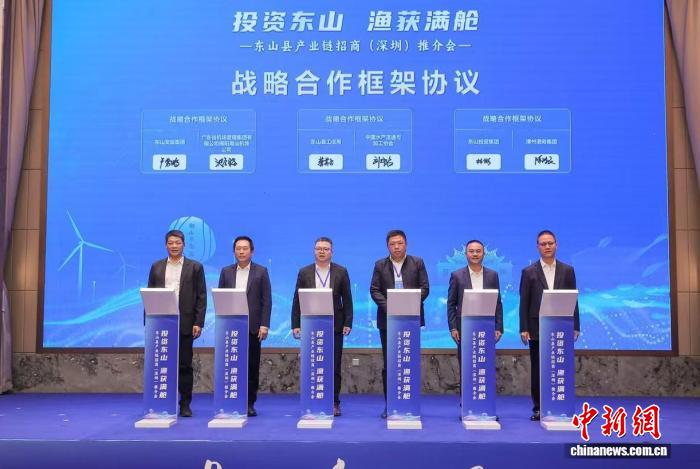
福建东山对接大湾区资源 签约项目投资逾150亿元
Zhong Guo Xin Wen Wang· 2025-12-12 13:47
福建东山对接大湾区资源 签约项目投资逾150亿元 中新网深圳12月12日电 (程景伟 林翰玲 徐泽炜)以"投资东山 渔获满舱"为主题的福建省东山县产业链招 商(深圳)推介会12日在深圳举行,23个项目现场签约,总投资150.84亿元,涉及科技创新与绿色低碳等 领域。 此次推介会由福建省漳州市东山县人民政府主办,旨在深度对接粤港澳大湾区优势资源,推介东山特色 产业与投资环境,推动县域经济高质量发展迈上新台阶。 推介会现场。漳州市东山县政府 供图 东山县不仅是一座美丽海岛,更是一片充满活力、开放包容的投资热土。这里天蓝水碧、沙白林绿,享 有"全国十大美丽海岛""全国深呼吸小城100佳"等美誉,更是首批"国家级海洋生态文明示范区"和"国家 级生态保护与建设示范区"。 东山县委书记何霭在致辞中推介了这座位于北纬23°的"海上福地"。他表示,东山自然资源和文化资源 禀赋优越。依托高铁入岛的发展机遇,以及福建省出台的相关政策,该县全面推进城乡融合发展,实 施"1663"强县富民工程,大力发展新材料新能源、水产品精深加工、海上风光电、文旅康养、现代渔业 等产业链。 推介会展示了东山的文旅资源、高铁片区规划及海洋保税产业园政 ...

盛阅春到长江新区调研并召开座谈会 坚定信心 把握机遇 干字当头 以干促上 加快推动长江新区实现突破性发展
Chang Jiang Ri Bao· 2025-12-12 00:40
Core Viewpoint - The development of the Yangtze River New Area is emphasized as a key focus for achieving breakthrough growth and contributing to the high-quality development of Wuhan, aligning with the directives from the provincial and municipal governments [1][3]. Group 1: Development Goals and Strategies - The Yangtze River New Area aims to become a hub for industry, quality, and vitality, focusing on the integration of port, industry, and city development [3]. - There is a strong emphasis on attracting high-end resources and distinctive industries to accelerate project construction and create "explosion points" for development [2][3]. - The area is positioned to play a crucial role in supporting the development of the Yangtze River Economic Belt and the dual circulation strategy, enhancing its status as a new growth engine for the city's economy [2][3]. Group 2: Infrastructure and Public Services - Plans include improving urban infrastructure and enhancing the quality of public services in education, healthcare, and culture, while also focusing on ecological protection and resource attraction [3]. - The development of modern urban agriculture and the promotion of rural revitalization are highlighted as essential for achieving urban-rural integration and mutual prosperity [3]. Group 3: Innovation and Reform - There is a call for innovative reforms and practical measures to address development challenges, with a focus on enhancing the capabilities of the workforce and fostering a proactive work culture [4]. - The importance of completing economic and social development goals for the current year and ensuring a strong start for the next five-year plan is underscored [4].