
Inflation

Search documents
Trump defends economy, CPI report returns, monster Medline IPO, and more in Morning Squawk
CNBC· 2025-12-18 12:45
Economic Indicators - The November consumer price index (CPI) report is expected to show a 12-month inflation rate of 3.1%, with a core CPI (excluding food and energy) forecasted at an annual rate of 3.0% [2] - The Bureau of Labor Statistics noted that the release will not include 1-month percent changes for November 2025 due to the cancellation of the October inflation report [3] IPO Market - Medline, a medical supply giant, had a successful IPO, with shares jumping 41% on its debut, bringing its market capitalization to approximately $54 billion after opening at $35, up from its $29 IPO price [4] - Over 200 IPOs have been priced this year despite market volatility, marking the largest U.S. listing since Rivian's $13.7 billion deal in November 2021 [5] Corporate Leadership Changes - Glen Hauenstein, president of Delta Air Lines, will retire at the end of February after 20 years with the company, during which he helped position Delta as a leader in profitability [7] - Some of Delta's strategies, such as raising entry requirements for its SkyClubs, have faced customer pushback [8]


X @Bloomberg
Bloomberg· 2025-12-18 12:40
US CPI Report November 2025: Live News on Inflation, Consumer Price Index https://t.co/TLhAL8DJPu ...
BOE Cuts Rates and Suggests It May Ease Further in 2026
Bloomberg Television· 2025-12-18 12:28
A split decision. Although the consensus was to cut rates as widely as expected. Yeah, it looks like that.Weaker than expected UK CPI print that we got yesterday didn't actually make this more dovish or cut as perhaps was expected. I was speaking to Bonnie Bhatia of UBS this morning. He had thought that maybe it would be a90 vote split for a cut.It is exactly what was expected before the CPI print five four. You've got the governor as the deciding vote, Andrew Bailey, going for a cut this time rather than a ...

Meacham on address: Maybe showmanship doesn't wear as well if people aren't feeling results
MSNBC· 2025-12-18 12:23
Yeah, I mean members are skipping town after today's session and they'll be home through the holidays and you can bet they'll be hearing from their voters as you say. I mean the polls, the American people are very clear. They tell us in poll after poll after poll and interview after interview after interview that they are not feeling what Donald Trump is describing in this country just full stop that things are too expensive that inflation is bad that groceries are cost too much when you go through the the ...
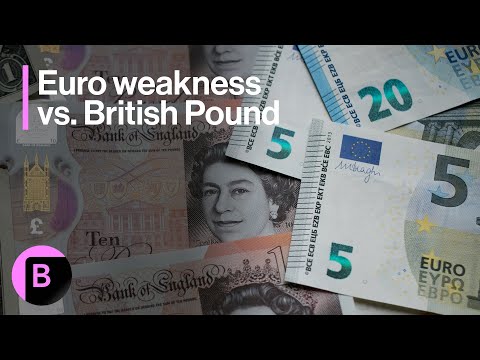
Policy Decisions Tilt Risks Toward EUR/GBP Downside: 3-Minute MLIV
Bloomberg Television· 2025-12-18 12:17
The market context today is dominated by two big central banks here in Europe, of course, the Riksbank as well. So as we look ahead to those, is there anything that unites them or should we tackle them separately. I think separately, let's take a step back.Also, don't forget, there's the Nordics Bank. Oh, yes. There's four big European ones that we're looking at.I think, you know, Bank of England is, I think, the biggest surprise there. There's been a lot of dovish pricing. You had inflation comin significa ...
'I INHERITED A MESS': Trump UNLEASHES explosive economic victory speech
Youtube· 2025-12-18 12:15
Economic Performance - President Trump highlighted a significant reduction in inflation, stating it was the worst in 48 years when he took office, and now it is projected to be at 3.1% [1][4] - The federal deficit has decreased by 19% in the first two months of the fiscal year [1] - Gas prices have dropped by 3% compared to the previous year, and the grocery price index has decreased by about 5% since Trump took office [2] Tax Cuts and Refunds - The largest tax cuts in American history are expected to save families between $11,000 and $20,000 annually, with projections for the largest tax refund season ever [1] - A special "warrior dividend" of $1,776 is being sent to 1,450,000 military service members as a holiday gift [1] Wage Growth and Affordability - Real wage growth is being emphasized, with wages reportedly increasing faster than inflation, leading to better affordability for Americans [5][6] - The messaging around affordability has been improved, focusing on the contrast between real wage growth under Trump and wage losses under Biden [5]
CPI data will leave Fed in a cutting bias, says Vanguard's Joe Davis
CNBC Television· 2025-12-18 12:09
Economic Outlook & Inflation - Vanguard expects a mixed CPI picture with some components trending down, but pressures remain due to tariffs and food prices [2] - Tariffs and a less restrictive Fed than perceived could keep inflation above 2% [10] - The focus for 2026 is expected to shift from inflation to growth [11] Labor Market - The US labor market has effectively stalled and is in a holding pattern due to supply and demand factors [5][6] - Acceleration in retirements and slowed immigration have pushed down the break-even rate [7] - Job growth is strong in occupations with high AI exposure [7] - Younger worker job growth is at historical levels, contradicting some narratives [8] Investment & Growth - AI-related investment will be the ultimate factor influencing the US economy, particularly in the back half of the year, posing an upside risk [4][5] - Investment spending and business confidence will determine the risk to the economy in 2026 [9] - Higher productivity and innovation rates could lead to higher growth without higher rates, similar to the late 1990s [12][13] - A 4% 10-year Treasury yield is possible with stable inflation and a 2.5-3% GDP growth due to increased capacity, not just demand [13][14]
CPI data will leave Fed in a cutting bias, says Vanguard's Joe Davis
Youtube· 2025-12-18 12:09
Economic Outlook - Vanguard's economic outlook for 2026 indicates a mixed picture for inflation, with some components decreasing while others, particularly food prices and tariffs, exert upward pressure [1][2] - The Federal Reserve is expected to maintain a modest easing bias, reflecting ongoing economic challenges [3] Investment and Job Market - The potential for AI-related investments in the latter half of the year could provide upside risk to the US economy, despite current headwinds [4][5] - The labor market is currently in a holding pattern, influenced by factors such as an increase in retirements and slowed immigration, which has reduced the supply of new entrants [6][8] Inflation Dynamics - Tariffs are a significant factor in the inflation outlook, with expectations that inflation could rise above 2% due to tariff-related uncertainties [10][11] - The focus for 2026 is anticipated to shift more towards growth rather than inflation, suggesting a potential for non-inflationary growth similar to the late 1990s [11][12] Federal Reserve Policy - The Federal Reserve's approach should consider the potential for higher productivity and growth without necessarily increasing rates, as seen in historical contexts [12][13] - A scenario is proposed where higher growth could coexist with a 4% yield on 10-year Treasuries, indicating that the Fed needs to focus on capacity and productivity for future policy decisions [13][14]
'One exaggeration after another': Trump blames Dems for problems that continue under his WH
MSNBC· 2025-12-18 12:08
Let's get into some of the speech last night. It took place in the diplomatic room and then we'll talk through some of the claims he made afterward. >> 11 months ago, I inherited a mess and I'm fixing it. When I took office, inflation was the worst in 48 years and some would say in the history of our country, which caused prices to be higher than ever before, making life unaffordable for millions and millions of Americans. Our border was open and because of this our country was being invaded by an army of 2 ...

X @Bloomberg
Bloomberg· 2025-12-18 12:08
The Bank of England cut interest rates to the lowest in almost three years in a pre-Christmas boost for UK households, and suggested inflation is cooling enough for it to ease policy further in 2026 https://t.co/hNkvwj1kmy ...