寒潮

Search documents
寒潮来袭 中国气象局启动四级应急响应
Yang Shi Wang· 2026-01-17 01:26
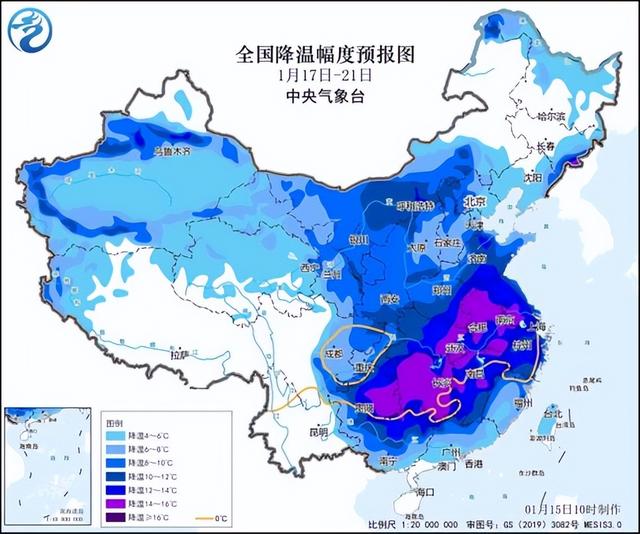
据中央气象台17日06时最新发布的寒潮蓝色预警,预计1月17日至21日,我国大部地区将自西北向东南 出现降温大风,日平均或最低气温普遍下降6~12℃,黄淮、江淮、江汉东部、江南中西部及贵州东 部、广西北部等地部分地区下降12~14℃,局地降温可达16℃以上。1月21日早晨,最低温度0℃线将南 压至贵州到浙江南部一带。 央视网消息:据中国天气网消息,受寒潮影响,预计1月17日至21日,我国中东部地区将出现雨雪冰冻 天气,经综合研判和应急会商,中国气象局启动重大气象灾害(寒潮)四级应急响应。 ...
17日起寒潮将影响我国大部地区 最低气温普降6~12℃
Xin Lang Cai Jing· 2026-01-17 01:16
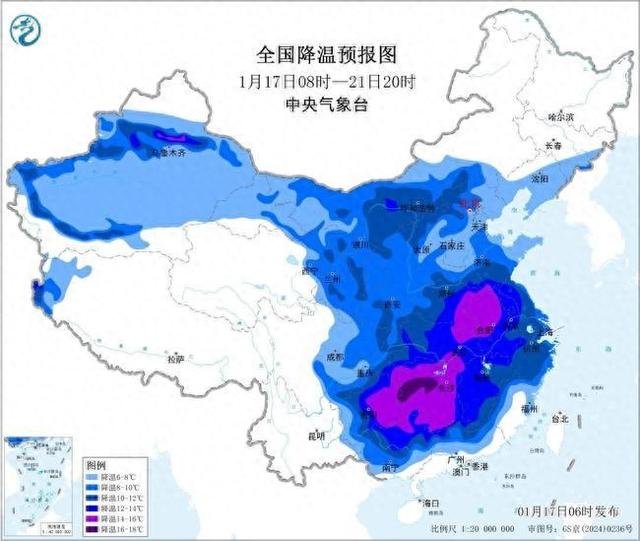
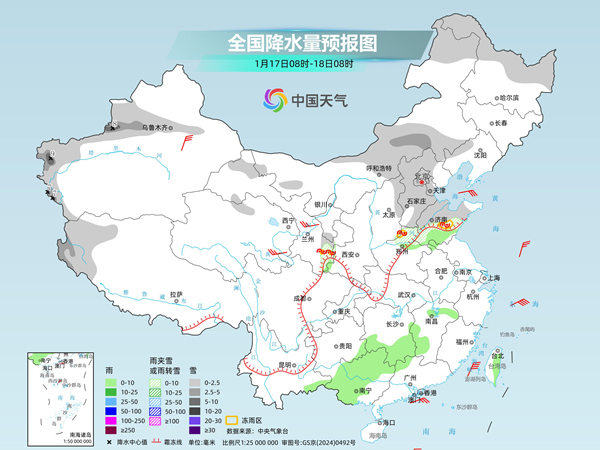
中新网1月17日电 据中央气象台网站消息,预计17日至21日,受寒潮影响,我国大部地区将出现大风降 温,中东部有大范围雨雪、部分地区有冻雨,其中黄淮、江汉、江淮及陕西、山西等地部分地区有大到 暴雪;需关注雨雪冰冻和持续低温对能源供应、人体健康、农业生产、通信设施等的影响,加强交通和 城市运行安全管理。 17日起寒潮将影响我国大部地区 受寒潮影响,1月17日至21日,我国大部地区将自西北向东南出现降温大风,日平均或最低气温普遍下 降6~12℃,黄淮、江淮、江汉东部、江南中西部及贵州东部、广西北部等地部分地区下降12~14℃, 局地降温可达16℃以上;上述地区并伴有4~5级偏北风,阵风6~8级。1月21日早晨,最低温度0℃线将 南压至贵州到浙江南部一带。中央气象台1月17日06时继续发布寒潮蓝色预警。 全国降温预报图(1月17日08时-21日20时) 中东部地区自北向南将先后出现大范围雨雪天气过程,秦岭—淮河以南地区降水相态复杂,有雨雪及冻 雨的转换:西北地区东部、华北南部、黄淮、江汉、江淮西部、江南北部等地有中到大雪或雨夹雪,其 中,陕西南部、山西南部、河南、山东、湖北中西部、湖南北部、安徽等地部分地区有暴雪, ...


寒潮预警!我国大部将出现大风降温,普降6℃~12℃
Xin Lang Cai Jing· 2026-01-17 01:16
( 全国降温预报图 1月17日08时-19日08时 中央气象台 哈尔滨 长春 四大将 戏阳 关键 石家庄 济南 ¥849 13 2 片床 谷肥 精细 武汉 成都 投萨 富庆 商品 长沙 福井 明阳 台北 图例 昆明 take 12 2014 12 | 降温6-8℃ | 降温8-10℃ 南宁 * 12 3 第四日本 降温10-12℃ | 降温14-16℃ *演口 01月17日06时发布 風 降温12-14℃ 比例尺 1:20 000 000 申冊号: CS系(2024)0236号 1 - 4 4 8 中央气象台1月17日06时继续发布寒潮蓝色预警: 受寒潮影响,1月17日至21日,我国大部地区将自西北向东南出现降温大风,日平均或最低气温普遍下 降6℃~12℃,黄淮、江淮、江汉东部、江南中西部及贵州东部、广西北部等地部分地区下降12℃~ 14℃,局地降温可达16℃以上。1月21日早晨,最低温度0℃线将南压至贵州到浙江南部一带。 预计,1月17日08时至19日08时,新疆、甘肃、内蒙古中西部、宁夏、陕西北部、华北北部、黄淮西 部、江汉、湖南北部等地气温下降6℃~10℃,其中,新疆伊犁河谷及沿天山一带地区、内蒙古中部 ...
四九开场今年首场寒潮发货 雨雪冰冻天气逐渐增多
Yang Shi Wang· 2026-01-17 01:14
Core Viewpoint - A significant cold wave is set to impact a large part of China, leading to drastic temperature drops and severe weather conditions including rain, snow, and ice from January 17 to 21 [1][2][3] Group 1: Temperature Changes - The cold wave will cause temperatures in the central and eastern regions to drop significantly, with daily maximum temperatures decreasing by around 10°C in areas such as southern Huanghuai, northern Jianghuai, and northern Jianghan [2] - The average or minimum temperatures across most regions will decline by 6 to 12°C, with some areas experiencing drops of 12 to 14°C, and localized decreases exceeding 16°C [2][3] Group 2: Weather Conditions - The cold wave will bring widespread rain and snow, with complex precipitation patterns expected in the regions south of the Qinling-Huaihe line, including rain, snow, and freezing rain [3][5] - Areas such as southern Shaanxi, southern Shanxi, Henan, Shandong, and parts of Hubei and Hunan may experience heavy snow, while freezing rain is anticipated in regions like central Henan and western Hubei [3][5] Group 3: Public Safety and Preparedness - The public is advised to take precautions against the cold and potential health risks associated with respiratory and cardiovascular diseases due to the sudden temperature changes [2] - Authorities recommend monitoring weather alerts and taking measures to ensure safety on roads due to possible ice and slippery conditions [6]
今年首场寒潮来袭 南方地区尤需防范冻雨风险
Ren Min Ri Bao· 2026-01-17 01:11
Core Viewpoint - The first cold wave of the year is expected to bring significant rain, snow, and freezing weather to the central and eastern regions of China, with temperatures dropping by 6 to 10 degrees Celsius, particularly affecting southern areas where snow and freezing rain are anticipated [1][2]. Summary by Sections Weather Impact - The cold wave will affect China from January 17 to 21, with widespread temperature drops of 6 to 10 degrees Celsius across most regions, and significant impacts in southern areas [1]. - The central meteorological station has issued a blue alert for the cold wave, and a level four emergency response has been activated due to the anticipated severe weather [1]. Regional Differences - The cold wave's impact will vary significantly by region, with northern areas like Northeast China and Beijing-Tianjin-Hebei experiencing less severe effects, while southern regions will face more substantial impacts [2]. - In the Yangtze River basin, temperature drops could exceed 12 degrees Celsius, with localized areas experiencing drops of up to 16 degrees Celsius [2]. Precipitation Characteristics - The cold wave will bring complex precipitation patterns, including rain transitioning to sleet, freezing rain, and snow, particularly in areas south of the Qinling-Huaihe line [2]. - The risk of freezing rain is highlighted as being significantly higher than that of heavy snow, with potential for severe disruptions to transportation and power infrastructure [2]. Agricultural Concerns - The Ministry of Agriculture and Rural Affairs, along with the China Meteorological Administration, has issued warnings regarding frost damage risks to winter wheat and rapeseed crops, advising farmers to take preventive measures [2][3].
寒潮来袭,四川冷暖大反转
Xin Lang Cai Jing· 2026-01-16 22:13
本报讯(四川日报全媒体记者 陈婷)三九天像入春,四九天今冬最冷,四川冷暖大反转。2026年 第一场寒潮天气即将来袭——中央气象台1月15日发布重要天气提示,预计1月17日至21日,寒潮 过程将影响我国,带来大风降温天气,南方地区气温下降显著;中东部地区将出现入冬以来最强 雨雪冰冻天气过程,部分地区有冻雨。 1月17日,是今年四九天第一天。1月20日,我国将迎来大寒节气。气象资料记载,"小寒"是气温 最低的节气,只有少数年份的"大寒"气温低于"小寒"。四川省气候中心的资料也印证了"小寒胜大 寒"之说:常年三九天全省平均气温为4.7摄氏度,盆地平均气温为6.1摄氏度;常年四九天全省平 均气温为5摄氏度,盆地平均气温为6.4摄氏度。但今年可能不一样。从1月8日进入三九天以来, 四川多地暖出新纪录。随着1月17日进入四九天后,强冷空气来袭,有气象专家表示,四九天可能 成为四川今冬数九寒天中最冷的九天。 天气过程,盆地大部和凉山州东北部日平均气温累计下降6摄氏度至9摄氏度,局部可达10摄氏度 及以上,冷空气影响盆地时伴有大风天气,高海拔山区有雨夹雪或雪。 寒潮对四川盆地的影响,预计最早在1月18日夜间显现。四川省气象台 ...
寒潮预警中国气象局启动四级应急响应
Xin Lang Cai Jing· 2026-01-16 19:05
16日20时至18日20时,新疆、甘肃、内蒙古中西部、宁夏、陕西北部、华北北部预计气温将下降6℃至 10℃,其中新疆伊犁河谷及沿天山一带地区、内蒙古中部等地局地降温可达10℃至14℃。 秦岭—淮河以南地区降水相态复杂,有雨雪及冻雨转换。 受寒潮影响,17日至21日,我国大部地区将自西北向东南出现降温大风,日平均或最低气温普遍下降 6℃至12℃,黄淮、江淮、江汉东部、江南中西部及贵州东部、广西北部等地部分地区下降12℃至 14℃,局地降温可达16℃以上。 新华社电 中央气象台1月16日18时发布寒潮蓝色预警,17日至21日我国中东部地区将出现雨雪冰冻天 气,中国气象局启动重大气象灾害(寒潮)四级应急响应。 ...
寒潮暴雪将至!山东五预警齐发
Xin Lang Cai Jing· 2026-01-16 18:01
Group 1 - The core weather event affecting Shandong province includes a strong cold air mass leading to a significant drop in temperatures, with forecasts indicating a temperature decrease of 10℃ to 12℃, and in some areas exceeding 14℃ [1][2] - A series of weather warnings have been issued, including a blue snow warning, orange road icing warning, yellow cold wave warning, and yellow low-temperature warning, indicating severe weather conditions expected from January 17 to January 19 [1][2] - The expected minimum temperatures for various regions include -16℃ to -14℃ in the northwest and central mountainous areas, with coastal regions experiencing lows of -8℃ to -6℃, and other areas ranging from -10℃ to -8℃ [1] Group 2 - The precipitation forecast indicates an average accumulation of 8mm to 15mm, with snow depth reaching 3cm to 8cm, and potentially exceeding 12cm in some areas, which may significantly impact transportation due to road icing [2] - The weather conditions are expected to improve soil moisture and reduce forest fire risks, but the prolonged low temperatures and snow accumulation could adversely affect transportation, urban operations, and agricultural facilities [2] - The north winds are anticipated to negatively impact maritime transportation and coastal aquaculture, necessitating enhanced preventive measures [2]
今年首场大寒潮将至 成都最高气温降幅超10℃
Xin Lang Cai Jing· 2026-01-16 18:01
Core Viewpoint - Chengdu is experiencing an unusually warm winter during the "Three Nine" period, with temperatures significantly higher than historical averages, attributed to specific weather patterns and the influence of high-pressure systems [1][2]. Group 1: Current Weather Conditions - As of January 16, Chengdu's average temperature during the "Three Nine" period is 6.6℃, which is 0.9℃ higher than the historical average, with a daily maximum temperature average of 14.7℃, exceeding the historical average by 5.6℃, marking the second highest in nearly 50 years [1]. - The city has recorded a total of 49.9 hours of sunshine during this period, which is approximately three times more than the historical average [1]. Group 2: Upcoming Weather Changes - A significant cold wave is expected to impact Chengdu starting on the evening of January 18, with temperatures projected to drop by 6-8℃ from current levels, bringing maximum temperatures down to around 7℃ by January 21 [3]. - The cold front will also bring 3-5 level north winds and light rain, with potential for mixed rain and snow in western mountainous areas, along with risks of road icing [3]. Group 3: Meteorological Insights - The warm weather in Chengdu is primarily due to the influence of a high-pressure system that has led to sustained clear weather and increased solar radiation, while cold air paths have shifted north and east, minimizing their impact on Sichuan [2]. - The upcoming cold wave is expected to be characterized by rapid temperature drops, significant temperature declines, and a wide area of impact, prompting advisories for residents to prepare for colder conditions [3].
今年首场大范围寒潮来了!此次雨雪到底有多强
Xin Lang Cai Jing· 2026-01-16 14:58
Group 1 - The core viewpoint of the article is that a significant cold wave is set to impact China from January 17 to 21, bringing the strongest rain, snow, and freezing weather of the winter season to the central and eastern regions [1][2][3] Group 2 - The cold wave is expected to cause temperature drops of 6 to 10 degrees Celsius across most of the country, with some areas experiencing drops exceeding 12 degrees Celsius [2][4] - The main impact period of the cold wave is from January 17 to 21, with a gradual southward penetration pattern [3][4] - This cold wave differs from the 2016 "King of Cold" wave and the 2008 snow disaster, as it features a gradual rather than rapid southward movement and is characterized as a "process" rather than "persistent" cold weather event [3][4]