Consumer Confidence

Search documents
Amazon: No Plans to List Trade War-Related Surcharges
PYMNTS.com· 2025-04-29 17:22
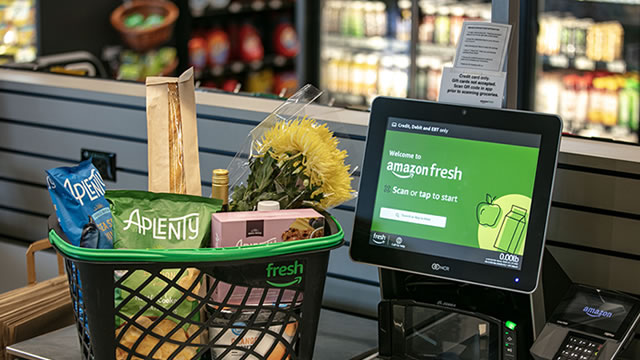
Amazon says it has no plans to display import-related charges on its website following White House protests.“The team that runs our ultra low cost Amazon Haul store considered the idea of listing import charges on certain products,” Amazon spokesperson Tim Doyle said in a statement provided to PYMNTS Tuesday (April 29). “This was never approved and is not going to happen.”Amazon had considered adding a line item to goods sold on Haul — the $20 or less discount store it launched last year — in response to Pr ...


Lululemon Stock Tanks 15% As Tariffs And Recession Concerns Threaten Canadian Retailer
Forbes· 2025-03-28 15:18
Core Viewpoint - Lululemon is experiencing significant stock market losses due to macroeconomic challenges, including tariffs imposed by President Trump and declining consumer confidence [1][3]. Stock Performance - Lululemon's stock fell 15% to approximately $290, marking its lowest intraday price since October and the worst percentage loss since last March [2]. - If the losses persist, this would represent Lululemon's second-largest drop in the last five years and the ninth-steepest decline since its IPO in 2007 [2]. Financial Guidance and Market Reaction - Despite exceeding Wall Street earnings forecasts for the last quarter, Lululemon's guidance of about 3% bottom line growth for 2025 raised concerns among investors, as it would be the worst growth since 2020 [3]. - The company's CEO noted a cautious consumer environment and slower traffic in U.S. retail stores [4]. Tariff Impact - The financial guidance from Lululemon only accounts for a minor slowdown of 0.2 percentage points due to tariffs, while Wall Street anticipates a more significant impact [5]. - Bank of America analysts reduced their 2025 profit forecast for Lululemon by 2% due to margin pressures from tariffs [5]. Consumer Sentiment and Economic Outlook - Analysts predict that continued tariffs and rising inflation could lead to Lululemon's first annual sales decline since at least 2006 [6]. - The macroeconomic environment is contributing to a more cautious consumer sentiment, with indicators showing a significant drop in consumer confidence [10]. Supply Chain Concerns - Lululemon sources about 40% of its products from Vietnam, making it vulnerable to potential tariffs on Vietnamese goods, which could exacerbate the company's challenges [8]. Industry Context - Other major retailers, including Walmart and Ford, have also expressed concerns about the negative impacts of tariffs on their businesses, indicating a broader industry challenge [11].


Markets Flat-to-Higher; Bears Look Exhausted
ZACKS· 2025-03-25 23:00
Market Performance - Three of the four major indexes saw gains, with the S&P 500 and Nasdaq experiencing three consecutive up-days. Tesla's stock rose by 28% over the past week and 3.3% today, although it remains down 29% year-to-date [1] - The Dow was flat at +0.01%, while the S&P 500 increased by 0.16%. The Nasdaq outperformed with an increase of 83 points, or 0.46%. The small-cap Russell 2000 declined by 14 points, or 0.66% [2] Consumer Confidence - The Conference Board reported a decline in Consumer Confidence, falling 7.75% month-over-month to a headline of 92.9, below the expected 95.0 and down from the revised 100.1 of the previous month. This marks the fourth consecutive month of decline [3] - The Expectations Index dropped by 9.6 points to 65.2, the lowest level in 12 years. This decline is reflected in significant stock price drops for specialty retailers, such as Abercrombie & Fitch down 48% and Victoria's Secret down 50% year-to-date [4] Housing Market - New Home Sales for February were reported at 676K, slightly below the estimate of 677K but up from the revised 664K in January. This indicates a stable housing market, although the Case-Shiller Home Prices data, which is a month behind, will need to be monitored for further trends [5] Upcoming Economic Indicators - Anticipation for new Durable Goods Orders for February, expected to show a month-over-month cooling. Additionally, earnings results from Dollar Tree will be announced ahead of the market opening [6]


Why Walmart Stock Was Sliding Today
The Motley Fool· 2025-03-25 18:57
Core Viewpoint - Walmart's stock is experiencing a decline due to a broader downturn in the retail sector, influenced by a significant drop in the Consumer Confidence Index, which has reached a four-year low [1][2]. Economic Context - As the largest retailer globally, Walmart is highly sensitive to consumer spending trends, but its low-price reputation may provide some resilience during economic downturns [2]. - The Consumer Confidence Index fell by 7.2 points to 92.9, with the expectations index dropping 9.6 points to 65.2, indicating a notable decline in consumer sentiment, particularly among older consumers and those earning less than $125,000 annually [4]. Company Performance - Walmart's stock was down 2.9% following the news, while the SPDR S&P Retail ETF decreased by 1.1%, and Target's stock fell by 3.4% [2]. - Despite the current economic pressures, Walmart has shown strong growth over the past two years, but cautious guidance for 2025 suggests potential challenges ahead [5]. Future Outlook - While Walmart is expected to endure a recession in the long term, its current valuation is higher than historical levels, which may lead to further stock declines if economic conditions worsen [6]. - Management remains confident in navigating macroeconomic uncertainties, but investors should anticipate continued stock reactions to economic news [6].


Holley (HLLY) - 2024 Q4 - Earnings Call Transcript
2025-03-11 21:46
Financial Data and Key Metrics Changes - Net sales for Q4 2024 decreased approximately 10% to $140.1 million compared to $156 million in the same period last year [21][49] - Gross margin improved significantly by 690 basis points year-over-year to 45.6%, with gross profit at $63.9 million [22][51] - Adjusted EBITDA for Q4 was $29.1 million, up from $28.5 million in the prior year, with an adjusted EBITDA margin increase of 250 basis points to 20.8% [53] - Free cash flow for Q4 was $1.8 million, a decrease of $28.1 million compared to the prior year, while total free cash flow for 2024 was $42 million, down from $88 million in 2023 [54][60] Business Line Data and Key Metrics Changes - Direct-to-consumer sales grew by 8% year-over-year, with significant growth in 17 brands across all channels [17][18] - B2B channel saw growth in 36 brands, supported by increased sales coverage [18] - National retailer channel experienced a 12% growth driven by SKU expansion and customer adoption [18] Market Data and Key Metrics Changes - The overall market sentiment has reverted to a cautious stance, with consumers holding back due to high prices and economic uncertainty [12][13] - The Mexican market is estimated to be between $3 billion and $5 billion, with opportunities in older car parks and modifications [80] Company Strategy and Development Direction - The company aims to become a $1 billion enthusiast platform, focusing on enhancing consumer experiences and balancing sales channels [8][10] - Strategic partnerships and operational improvements are key focuses, with a commitment to debt reduction and financial discipline [11][19] - The company is expanding into Mexico and enhancing its product offerings, particularly in chemicals and performance additives [20][108] Management's Comments on Operating Environment and Future Outlook - Management remains cautious about consumer spending and market conditions, with expectations for gradual improvement as new policies are understood [12][14] - The guidance for 2025 assumes no further deterioration in consumer confidence, with a focus on transformative growth initiatives [64][71] - The company acknowledges potential impacts from tariffs but believes proactive strategies can mitigate risks [73][74] Other Important Information - The company achieved a significant milestone by surpassing $100 million in direct-to-consumer sales on its e-commerce platform [25] - Operational improvements led to a 22% year-over-year reduction in past dues, reflecting a commitment to efficiency [19] Q&A Session Summary Question: Could you talk about the Mexico opportunity? - The Mexican market is estimated to be between $3 billion and $5 billion, with a focus on older car parks and modifications [80] Question: Can you provide more detail on gross margin performance in Q4? - Gross margin improvements were driven by cost to serve efforts and purchasing price variance, with expectations for a more balanced performance in 2025 [86] Question: Does your guidance assume consumer confidence improves? - The guidance assumes that consumer confidence does not worsen, with potential for growth if conditions improve [90] Question: How are inventories in the channel? - Inventory levels are healthier than last year, with improved alignment between sell-in and sell-through [92] Question: Can you discuss the Cataclean acquisition? - The acquisition of Cataclean allows for expansion in the chemicals market, enhancing the company's product portfolio [108]

Here's Why UPS Stock Isn't Delivering Today
The Motley Fool· 2025-03-11 17:41
Core Viewpoint - UPS shares experienced a decline of 3.5%, influenced by a broader market downturn and negative news from Delta Air Lines [1] Group 1: Company Performance - UPS is classified as a cyclical company, meaning its service demand fluctuates with economic activity and consumer/corporate confidence [2] - A reduction in consumer and corporate confidence is concerning for UPS investors, especially in light of recent developments from Delta Air Lines [2] Group 2: Industry Insights - Delta Air Lines revised its first-quarter revenue growth forecast from 7%-9% down to "closer to 4%", citing economic sentiment and consumer confidence issues beyond operational challenges [3] - The decline in Delta's outlook may signal caution among consumers and corporations, which could negatively impact UPS's small package delivery demand [4] Group 3: Future Considerations - UPS is currently managing a deliberate reduction in delivery volumes for Amazon.com, making any potential decrease in demand particularly concerning [4] - It remains uncertain whether the current signs of consumer and corporate caution will persist, as confidence can rebound quickly with improved economic conditions [4]


ADP: Job Growth Slows Amid Concerns About Uncertain Economic Outlook
PYMNTS.com· 2025-03-05 15:46
Core Insights - Private sector job growth slowed significantly in February, with only 77,000 jobs added, down from 186,000 in January, marking the lowest level of gains since July [1][2] - Concerns about policy uncertainty and a slowdown in consumer spending are contributing to hiring hesitancy among employers [2] - The Bureau of Labor Statistics (BLS) will release its Job Openings and Labor Turnover Summary (JOLTS) for January on March 11 [2] Job Openings and Labor Market Conditions - The BLS reported a decrease of 556,000 job openings in December, bringing the total to 7.6 million, down from 8.2 million at the end of November [3] - Consumer confidence has declined, affecting perceptions of current labor market conditions [3] Sector Performance - Among the 10 industry sectors tracked by ADP, six sectors experienced job gains in February, including leisure/hospitality (41,000), professional/business services (27,000), construction (26,000), financial activities (26,000), manufacturing (18,000), and other services (17,000) [4] - The four sectors that saw job losses included trade/transportation/utilities (33,000), education/health services (28,000), information (14,000), and natural resources/mining (2,000) [5] Establishment Size Impact - Small businesses (1-49 employees) lost a total of 12,000 jobs, while medium establishments (50-499 employees) added 46,000 jobs, and large establishments (500 or more employees) added 37,000 jobs [5] Wage Growth - Pay gains remained relatively unchanged in February, with job-changers experiencing a slight decrease in year-over-year pay gains from 6.8% in January to 6.7% in February, while job-stayers maintained a flat rate of 4.7% [6]