
Employment

Search documents
Powell Sees 'Challenging Situation' for Fed Amid Dual Threats
Youtube· 2025-09-23 17:17
Group 1 - Near-term risks to inflation are tilted to the upside while risks to employment are tilted to the downside, indicating a challenging economic situation [1] - The balance of risks has shifted due to increased downside risks to employment, leading to a decision to lower the target range for the federal funds rate by 25 basis points to 4 to 4.25 percent [2] - The current policy stance is considered modestly restrictive, allowing for flexibility in response to economic developments based on incoming data and evolving outlook [3] Group 2 - The commitment remains to support maximum employment and achieve a sustainable inflation rate of 2%, which is crucial for the well-being of all Americans [4]


Federal Reserve Chair Jerome Powell speaks on economic outlook
YOUTUBE· 2025-09-23 17:00
Economic Sentiment and Labor Market - Consumer and business sentiment measures have declined sharply in spring but have since improved, remaining low compared to the start of the year [1] - The unemployment rate increased to 4.3% in August, with payroll job gains slowing to an average of 29,000 per month over the past three months, below the break-even rate needed to maintain the unemployment rate [1] - Job openings remain stable, with the ratio of job openings to unemployment near one, indicating a less dynamic labor market [1] Inflation Trends - Total PCE prices rose by 2.7% over the 12 months ending in August, up from 2.3% in August 2024, while core PCE prices increased by 2.9% [1] - Goods prices are driving inflation increases, primarily due to higher tariffs rather than broader price pressures, while disinflation in services continues [2] - Near-term inflation expectations have risen due to tariff news, but longer-term expectations remain aligned with the 2% inflation goal [2] Monetary Policy Adjustments - The Federal Reserve lowered the target range for the federal funds rate by 25 basis points to 4 to 4.25%, reflecting a shift towards a more neutral policy stance [3][6] - The current economic environment presents a challenging situation with upside risks to inflation and downside risks to employment, necessitating a balanced approach to monetary policy [3][6] - The Fed's policy decisions will be based on incoming data and evolving economic conditions, with a commitment to supporting maximum employment and sustainable inflation [3][6] Labor Market Dynamics - There is significant uncertainty in the labor market, with companies hesitant to hire due to unclear public policy directions, leading to a low hiring rate [11][13] - The decline in immigration has contributed to a reduced supply of workers, compounding the challenges in the labor market [18] - The balance of risks has shifted, with increased downside risks to employment and a stable but low unemployment rate [18] Impact of Technology and AI - The emergence of AI is seen as a potential disruptor, but its long-term effects on the labor market and productivity remain uncertain [9][10] - Historical patterns suggest that technological advancements typically raise productivity and create new job opportunities, though the timing and balance of these changes are difficult to predict [10][12] - The importance of educational attainment and skills development is emphasized as a key factor in benefiting from technological advancements [13][14]
Economic Outlook Remarks by Jerome H. Powell_20250924
FOMC· 2025-09-23 17:00
Economic Outlook - The U.S. economy has shown resilience despite substantial changes in trade, immigration, fiscal, regulatory, and geopolitical policies, with their long-term implications still emerging [5] - Recent data indicates a moderation in economic growth, with GDP rising at approximately 1.5% in the first half of the year, down from 2.5% growth last year, primarily due to a slowdown in consumer spending [6][7] - The unemployment rate edged up to 4.3% in August, with payroll job gains slowing sharply to an average of 29,000 per month over the past three months, indicating a less dynamic labor market [9] Inflation Trends - Inflation has eased from its highs in 2022 but remains elevated, with total PCE prices rising 2.7% over the 12 months ending in August, up from 2.3% in August 2024 [10] - Core PCE prices rose 2.9% last month, driven by increases in goods prices, which reflect higher tariffs rather than broader price pressures [10][11] - There is uncertainty regarding the path of inflation, with a reasonable expectation that tariff-related effects will be short-lived, leading to a one-time shift in the price level [11][12] Monetary Policy - The balance of risks has shifted, with increased downside risks to employment and upside risks to inflation, prompting a move towards a more neutral policy stance [14][15] - The target range for the federal funds rate was lowered by 25 basis points to 4 to 4¼ percent, which is still considered modestly restrictive [15] - The policy approach will remain flexible, adapting to incoming data and evolving economic conditions while aiming to support maximum employment and achieve the 2% inflation goal [16][17]
Fed's Powell sees 'no risk-free path' for interest rates after central bank's cut last week
Yahoo Finance· 2025-09-23 16:59
Group 1 - Federal Reserve Chairman Jerome Powell indicated that there is "no risk-free path" for the central bank's next policy move due to elevated inflation and a weakening job market [1][2] - The Fed recently cut interest rates by 25 basis points and projected two more cuts of the same magnitude by year-end, reflecting a divided stance among policymakers regarding future monetary policy [2][4] - New Fed governor Stephen Miran suggested that benchmark interest rates should be around 2 percentage points lower than the current range of 4% to 4.25%, arguing that current rates are too restrictive and could exacerbate unemployment [3][4] Group 2 - The Fed's dual mandate requires balancing inflation control with maximizing employment, creating a complex environment as inflation remains above the 2% target while the labor market shows signs of weakness [4][6] - The Personal Consumption Expenditures index, the Fed's preferred inflation measure, is currently at 2.9%, with new data expected to be released soon [6] - Powell emphasized that the current policy stance is "modestly restrictive" and that the Fed will adapt its approach based on new economic data and the evolving balance of risks [7]
Miran argues Fed rates pose risks to employment, should be roughly 2 points lower
Yahoo Finance· 2025-09-22 16:00
Core Viewpoint - New Federal Reserve governor Stephen Miran advocates for a reduction in interest rates by approximately 2 percentage points, arguing that current rates are excessively high and could harm the US economy [1][2]. Group 1: Interest Rate Policy - Miran believes the appropriate level for the Fed's policy rate should be in the mid-2 percent range, significantly lower than the current 4.0% to 4.25% [1]. - He has proposed five additional rate cuts for this year, contrasting with the median expectation of two cuts for 2025 among his colleagues [2]. Group 2: Immigration and Economic Impact - Miran highlights a shift in US border policy, suggesting that reduced immigration is not being adequately factored into economic assessments, which may lead to misconceptions about the restrictiveness of the Fed's policy rate [3]. - He anticipates that up to 2 million illegal immigrants may leave the country by year-end, potentially lowering annual population growth from 1% to 0.4%, which could exert downward pressure on inflation [4]. Group 3: Inflation Expectations - Miran predicts that rent inflation in the Consumer Price Index will decrease from approximately 3.5% to below 1.5% by 2027, which would correspond to a 0.3 percentage point decline in the Fed's preferred inflation measure, the Personal Consumption Expenditures Index, currently at 2.9% [5]. - He emphasizes the importance of maintaining the Fed's 2% inflation target while cautioning against overly restrictive policies that could jeopardize employment [5]. Group 4: Colleague Perspectives - St. Louis Fed president Alberto Musalem supports recent rate cuts as a precautionary measure to mitigate unemployment risks but warns of limited capacity for further cuts without risking inflation [6].
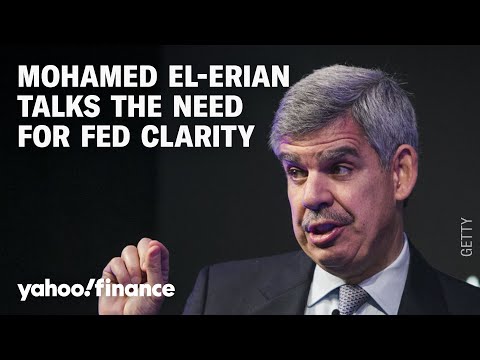
Why Mohamed El-Erian says the Fed needs to provide more clarity
Youtube· 2025-09-21 10:00
Group 1 - The central bank's decision to implement a quarter point cut is seen as justified, particularly with a focus on employment risks amid economic challenges [1][2] - There is a call for the central bank to provide clearer guidance and an anchor for the economy to reduce uncertainty, which is currently discouraging business investment and household spending [3][4] - The central bank's past mistakes in forecasting inflation have led to a highly data-dependent approach, which lacks forward guidance for the market [3][4] Group 2 - There is a need for transparent discussions regarding productivity expectations, particularly in relation to innovations in AI, life sciences, and robotics [5] - Understanding the dynamics of the labor market, including supply and demand issues, is crucial for economic clarity [6][7] - The current economic environment is marked by significant volatility, necessitating a strong policy anchor from the central bank to mitigate risks [7][9]

Why Mohamed El-Erian says the Fed needs to provide more clarity
Yahoo Finance· 2025-09-21 10:00
Do you think they arrived at the right conclusion for the action that they did, which was the quarter point cut. I absolutely do. In fact, I think a quarter point cut was warranted in July.So, I'm glad that they're starting the cutting cycle. I'm also glad that they are putting the emphasis on the employment side of the mandate. They are facing this very difficult situation as we heard Gary say where the economy is going away from them both on the inflation side and the employment side.So they are deep in t ...
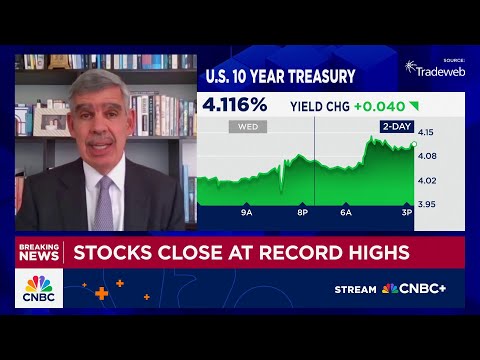
Allianz's Mohamed El-Erian: Firings have a way of spreading through the economy
CNBC Television· 2025-09-18 20:53
Market Reaction to Fed Rate Cut - Treasury market experienced volatility, with the 10-year yield initially dropping below 4% following the rate cut decision, then rising to 4116% [2] - Market's upward yield adjustment is attributed to strong jobless claims data and a reassessment of the support for further rate cuts [2][3] Fed's Policy and Economic Outlook - The Fed's rate cut is viewed as a risk management measure, prioritizing employment risks over inflation risks [4] - The Fed is perceived to be placing greater emphasis on the employment side of its mandate compared to inflation [4][6] - The Fed is projected to miss its inflation target for seven consecutive years, with inflation exceeding the target by more than 50 basis points (05%) in six of those years [7] Risks and Concerns - The primary risk to the economy is on the employment side, with concerns about companies transitioning from hiring hesitancy to layoffs [5] - There are concerns about the potential for a "cliff effect" if companies begin firing employees, which could spread through the economy [5]
Fundrat's Tom Lee: Fed made proper pivot & the focus is rightly on addressing employment risks
CNBC Television· 2025-09-18 19:25
which is a great way to pivot to your next guest. Tom Lee of Fund Strat is with us. Tom, welcome.You can comment on all those moves or anything else if you'd like, but also I want you to comment on something that hedge fund billionaire David Ter said on Squawkbox this morning. Listen, I don't think another ease matters, you know, as far as being too easy. This is going to be a little bit restrictive.I don't if they do too. Beyond that, it's going to be a little tricky, I think, because you got to be careful ...
Nvidia-Intel deal latest, Mohamed El-Erian weighs in on challenges facing the Federal Reserve
Youtube· 2025-09-18 18:10
Group 1: Federal Reserve and Market Reactions - The Federal Reserve has initiated a rate-cutting cycle, starting with a 25 basis point cut, and signaled the possibility of two more cuts later this year [2][4][107] - Following the Fed's decision, major stock indices have shown positive movements, with the NASDAQ leading gains, largely driven by tech stocks [4][6][107] - The bond market has experienced volatility, with yields rising despite the Fed's cut, indicating mixed investor sentiment [5][9] Group 2: Nvidia and Intel Partnership - Nvidia announced a $5 billion investment in Intel to develop new PC chips and data center products, resulting in a significant rise in Intel's stock price by approximately 25% [6][52][66] - This partnership is viewed as a product collaboration rather than a manufacturing agreement, which was unexpected by analysts [54][56] - The investment is seen as a positive development for Intel, potentially improving its market competitiveness and product offerings [66][70] Group 3: Darden Restaurants and Consumer Trends - Darden, the parent company of Olive Garden, reported first-quarter earnings that missed Wall Street estimates, leading to a decline in its stock price [31][36] - The company is shifting focus towards offering smaller, lower-priced portions at Olive Garden, reflecting a trend towards value dining [32][34] - Despite a 5.9% increase in comparable sales at Olive Garden, the results were below expectations, contributing to market disappointment [36][38] Group 4: Broader Market Trends and Consumer Behavior - The restaurant industry is experiencing a shift, with casual dining outperforming fast food chains, despite economic pressures [45][46] - Higher-income consumers are showing resilience, while fine dining concepts are underperforming, indicating a potential shift in consumer preferences [41][42] - Analysts suggest that Darden's strategy to offer more value-oriented options may help it navigate current market challenges [40][48]


