三投资理念

Search documents
“三投资”方法论 | 券商资管篇二 投资者如何与理性投资做朋友
Di Yi Cai Jing· 2025-05-15 02:58
Group 1 - The core viewpoint emphasizes the importance of rational investment amidst fluctuating investor emotions, highlighting the "Three Investments" philosophy as a guide for enhancing investment satisfaction [1][2] - The complexity and diversity of investment products can lead to decision-making difficulties for investors, especially those lacking professional knowledge, resulting in potential losses [1] - Market volatility can create significant psychological pressure on investors, prompting irrational investment behaviors [1] Group 2 - Investors must recognize their responsibility for investment outcomes and enhance their understanding of investment objects and management [2] - It is crucial for investors to align their investment efforts with the principle of importance matching and to consider their risk tolerance when making investment choices [2] - A balanced investment mindset is essential, characterized by the philosophy of "lower expectations, moderate connections, and enjoying higher blessings" [2] Group 3 - From the perspective of investment managers, achieving excellent investment performance involves three key concepts: proactivity, simplification, and respecting common sense [3] - Investment managers should actively take on valuable risks and step outside their comfort zones to identify opportunities during periods of extreme pessimism [3] - Focusing on high-quality businesses and avoiding the pursuit of mediocrity is essential for investment managers [3]
“三投资”方法论 | 公募基金篇一 破解信任危机,提升基民获得感
Di Yi Cai Jing· 2025-05-15 02:58
Core Viewpoint - The public fund industry has undergone a significant trust crisis over the past five years, with active equity funds experiencing a decline in scale and reputation, necessitating a shift towards a more investor-centric approach in marketing and management practices [1][4][8]. Group 1: Industry Performance and Trends - The active equity fund market reached a peak of 6.16 trillion yuan in 2021, a 177% increase from 2019, but is projected to shrink to 3.43 trillion yuan by the end of 2024, a 44% decrease [3]. - The average annual return for active equity funds was 53.57% in 2020, dropping to -19.2% in 2022 and -11.78% in 2023, reflecting a significant decline in performance [3]. - In the first quarter of this year, despite a 3.86% average return for active equity funds, net redemptions reached 693.04 million units, indicating ongoing investor skepticism [4]. Group 2: "Three Investments" Concept - The "Three Investments" concept (rational investment, value investment, long-term investment) is seen as essential for addressing the industry's trust issues and improving investor experience [1][2][4]. - The promotion of the "Three Investments" concept aims to reduce short-term speculation, enhance resource allocation, and stabilize the market [2]. - The transition from a scale-oriented approach to one focused on investor returns is crucial for sustainable industry development, emphasizing the importance of performance and service quality [4][5]. Group 3: Investor Trust and Experience - The shift in investor behavior from "high entry" to "deep entrapment" and "micro-redeem" highlights deficiencies in product management, marketing strategies, and investor education [6]. - Enhancing customer-centric demand response and solution capabilities is vital for rebuilding investor trust [6]. - The industry is encouraged to establish long-term assessment mechanisms that prioritize customer experience and retention over short-term performance metrics [7][8].
“三投资”方法论 | 信托篇一 回归本源、发挥制度优势,信托业加大权益市场布局
Di Yi Cai Jing· 2025-05-15 02:58
Core Viewpoint - The "three investment" philosophy is increasingly recognized for its role in cultivating patient capital and supporting the high-quality development of the capital market in China, as emphasized by recent government policies and industry practices [1][2]. Group 1: Industry Trends - The trust industry is accelerating its transformation towards active management, with over 8 trillion yuan of the approximately 20 trillion yuan in trust funds now allocated to the securities market, reflecting a 64.9% year-on-year increase [2][3]. - The new "National Nine Articles" implemented in April 2023 has raised expectations for asset management institutions regarding research capabilities and product innovation, emphasizing a shift from scale-oriented to investor return-oriented approaches [6][8]. Group 2: Institutional Advantages - Trust companies are positioned to improve market behavior by focusing on long-term value creation and reducing speculative trading, thereby fostering a healthier capital market ecosystem [2][4]. - Trust companies possess unique advantages in asset service trusts, which are tailored to client needs, allowing them to create investment portfolios that align with the "three investment" philosophy [5][6]. Group 3: Future Directions - Trust companies are encouraged to develop patient capital through services like family trusts and pension trusts, which can provide stable funding sources for long-term investments [7][8]. - There is a strong emphasis on diversifying product offerings and enhancing asset allocation strategies to support the capital market, including participation in private equity investments aligned with national strategic industries [7][8].
“三投资”方法论| 以时间丈量价值,以理性锚定未来
Di Yi Cai Jing· 2025-05-15 01:46
Core Viewpoint - The article emphasizes the transition of the asset management industry from scale expansion to value creation, aligning with the "Three Investments" philosophy to address long-standing issues in the capital market and enhance its effectiveness in serving the real economy [1][4]. Group 1: Industry Challenges - The asset management sector faces a "trust deficit" following the rapid growth of public funds, with a mismatch between the 30 trillion yuan bank wealth management market and less than 5% allocation to equities [2]. - There are ongoing struggles within the industry to balance long-term value with short-term assessments, as well as the need to meet both client demands and the pressures of market performance [2]. Group 2: Differentiated Approaches - Asset management institutions are exploring various strategies to overcome challenges, such as public funds embedding "client holding periods" in assessments and encouraging regular investments during market downturns [3]. - Banks are shifting from fixed income to a "low volatility and stable+" strategy, extending product durations and utilizing tools like ETFs to balance risk and return [3]. - Insurance asset management is innovating internally by increasing the weight of long-term assessments to 60%, thereby creating more space for technology investments [3]. - The trust industry is leveraging its institutional advantages to facilitate intergenerational wealth transfer and long-term investments through "wealth account trusts" [3]. - Brokerage asset management is focusing on a "buy-side perspective" to reshape the ecosystem, implementing three-year assessment cycles and dynamic investment correction tools [3]. Group 3: Implementation of the "Three Investments" Philosophy - The Shanghai Asset Management Association has introduced 18 quantitative indicators to provide a practical evaluation framework for the "Three Investments" philosophy [3]. - New models separating "ability and luck" and advocating a balance between "scale and performance" are emerging to guide industry evolution [3]. Group 4: Economic Context and Future Outlook - China's economy is at a critical juncture of transitioning from old to new growth drivers, with sectors like semiconductors, new energy, and artificial intelligence requiring long-term capital [4]. - The China Securities Regulatory Commission has issued an action plan to promote high-quality development of public funds, urging institutions to prioritize investor interests and shift focus from scale to investor returns [4]. - The implementation of the "Three Investments" philosophy is seen as a long-term project to cultivate new growth momentum in the capital market, with the expectation that rationality will ultimately prevail over speculation [4].

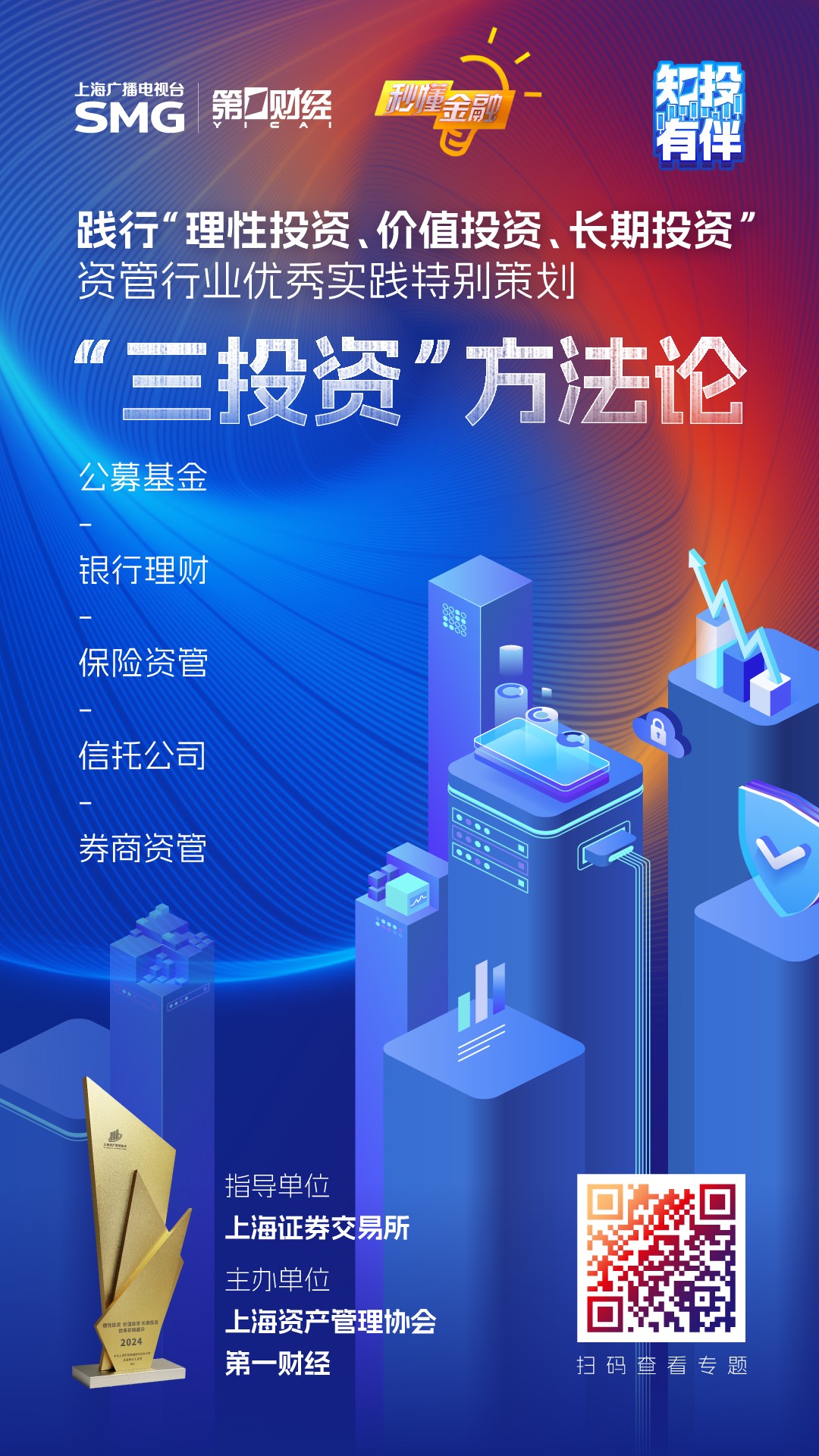
精彩抢先看|秒懂金融·资管行业践行“三投资”理念优秀实践系列访谈之国泰君安资管
第一财经· 2025-05-07 07:38
Core Viewpoint - The article emphasizes the importance of promoting the "Three Investment" philosophy in the asset management industry to enhance long-term investment strategies and rational investment practices, aligning with the directives from the central financial work conference and the new "National Nine Articles" [1] Group 1: Event Overview - The first asset management industry practice demonstration event focusing on the "Three Investment" philosophy is organized by the Shanghai Asset Management Association, guided by the Shanghai Municipal Financial Committee and the Shanghai Stock Exchange [1] - The event aims to deepen investors' understanding of the asset management industry and its practitioners through interviews with exemplary asset management institutions [1] Group 2: Program Details - A special program titled "Understanding Finance: Excellent Practices of Asset Management Industry in Practicing the 'Three Investment' Philosophy" will feature interviews with representatives from various asset management sectors, including public funds, bank wealth management, insurance asset management, trust companies, and securities asset management [1] - The program will showcase how these institutions implement the "Three Investment" philosophy and share their experiences and insights [1] Group 3: Guest Speakers - The program will include insights from key figures at Guotai Junan Asset Management, including the head of pan-equity investment, the assistant president, and the chief research officer, as well as the assistant general manager of the equity investment department and a fund manager [1] - These guests will discuss how Guotai Junan Asset Management practices the "Three Investment" philosophy to build trust with clients and create value for investors [1]