儿童健康

Search documents
赛哺高:“儿童成长益生菌行业领先品牌”是怎么炼成的
Zhong Guo Chan Ye Jing Ji Xin Xi Wang· 2025-07-10 02:48
Industry Overview - The children's probiotic market in China is rapidly growing, with a market size of 42.047 billion yuan in 2024, projected to reach 50.988 billion yuan by 2028, representing a compound annual growth rate (CAGR) of approximately 4.94% [1] - The product forms of probiotics are evolving to include gummies, powders, and liquids, catering to different age groups of children [1] - Both domestic and international brands are entering the children's probiotic sector, with imported high-quality products favored by parents, while local brands are accelerating R&D to develop probiotics suited to Chinese children's gut characteristics [1] Company Highlights - Saibugao has been recognized as a leading brand in the children's probiotic industry, receiving the title of "Leading Brand in Children's Growth Probiotics" during the "510 China Brand Day" [1][9] - The company invests heavily in research, employing a team of top microbiologists and nutritionists dedicated to optimizing and innovating children's probiotic formulations [3] - Saibugao's BL-11 probiotic has shown significant effects on promoting children's height growth, with clinical studies indicating that over 84% of children experienced noticeable height increases after three months of supplementation, averaging nearly 2.5 cm in height growth [8] Product Efficacy - BL-11 probiotic operates through three pathways: nutritional metabolism, endocrine, and immune, enhancing the absorption of essential nutrients and stimulating growth hormone production [5] - Clinical research led by Dr. Wu Chongming confirmed that BL-11 significantly promotes height growth in children, with better results observed in younger children and those with shorter stature [5][8] - Saibugao's BL-11 probiotic oil has served over 100,000 families, with a continuously rising repurchase rate, indicating market acceptance of non-drug interventions [9] Safety and Quality Assurance - Saibugao emphasizes food safety, adhering to national standards to ensure products are additive-free and without side effects, with over 30 billion CFU of live bacteria per milliliter [9] - The company employs advanced OSGA lipid encapsulation technology to ensure probiotics reach the gut alive and can better colonize [9]


“1米高度”视角改进儿童就医服务
Ke Ji Ri Bao· 2025-06-03 01:01
Group 1 - The core viewpoint is that the Chinese government is promoting the establishment of child-friendly hospitals, aiming for 2,000 medical institutions to meet these standards by the end of 2025 [1] - Recent data shows that child health levels in China have improved, with infant mortality and under-five mortality rates projected to reach historical lows of 4.0‰ and 5.6‰ respectively by 2024 [1] - The National Health Commission is addressing the shortage of pediatric services by enhancing pediatric care in county hospitals and promoting the establishment of national children's medical centers [1] Group 2 - Concerns remain regarding the rising obesity rates among children aged 6-17, which can lead to long-term health issues such as cardiovascular diseases and diabetes [2] - Recommendations for preventing childhood obesity include maintaining a balanced diet and ensuring at least 60 minutes of physical activity daily for school-aged children [2] - The National Health Commission is focusing on myopia prevention and treatment, with new guidelines and standards for eye care services being implemented [2] Group 3 - The application of new technologies and products is enhancing children's health services, such as the establishment of a digital platform for monitoring neuropsychological development in Zhejiang [3] - Vaccination initiatives, including the HPV vaccine, are being expanded, with free vaccination policies covering 60% of eligible girls nationwide [3]
我国多举措筑牢儿童健康防线 8000多所综合医院可开展儿科服务
Yang Guang Wang· 2025-05-31 01:24
Group 1 - The core viewpoint is that China's pediatric healthcare services have significantly improved, with over 8,000 general hospitals providing pediatric outpatient or inpatient services, and more than 80% of grassroots medical institutions offering treatment for common childhood illnesses [1][2] - The infant mortality rate and under-five mortality rate in China reached historical lows of 4.0‰ and 5.6‰ respectively, placing the country among the top in global middle-income nations [1] - The National Health Commission is enhancing the pediatric healthcare service network, led by maternal and child health institutions at the district and county levels, supported by community health service centers and village clinics [1] Group 2 - Various regions are exploring multi-department collaboration, with Shandong Province aiming for 90% of children's friendly hospitals by 2030 [2] - Chengdu has established a health administrator system for childcare institutions, with 639 registered institutions equipped with health administrators by April 2025 [2] - The National Health Commission is focusing on early screening and treatment for health issues like obesity and myopia, with a 95.4% coverage rate for eye health checks among children aged 0 to 6 [2]
我国6-17岁儿童青少年超重肥胖率呈上升趋势
Xin Jing Bao· 2025-05-30 12:23
Core Viewpoint - The report highlights the ongoing challenges in child health in China, particularly the rising obesity rates among children aged 6-17, despite improvements in infant mortality rates and healthcare access for children [1][2]. Group 1: Child Health Statistics - The overweight and obesity rate among children under 6 years is decreasing, while the rate for children aged 6-17 is still on the rise, indicating a concerning trend [1][2]. - By 2024, the infant mortality rate and the mortality rate for children under 5 are projected to reach 4.0‰ and 5.6‰ respectively, marking the best levels in history and positioning China among the top in global middle-income countries [1]. - From 2010 to 2023, the average life expectancy in China increased by 3.8 years, with 21.7% of this improvement attributed to the decline in mortality rates for children under 5 [1]. Group 2: Healthcare Infrastructure - Over 8,000 comprehensive hospitals in China can provide pediatric outpatient or inpatient services, with 98% of county hospitals having established pediatric departments [2]. - By the end of this year, there is a goal to have 2,000 medical institutions meet the requirements for becoming child-friendly hospitals, with a target of 90% of institutions providing pediatric healthcare services to be child-friendly by 2030 [2]. Group 3: Health Initiatives and Policies - The prevention and control of overweight and obesity among children and adolescents is included in the Healthy China strategy, with national standards for student physical fitness being a key assessment indicator [2]. - Initiatives include promoting at least 2 hours of physical activity daily for students and encouraging self-management for overweight children, alongside the establishment of health weight management clinics [2].
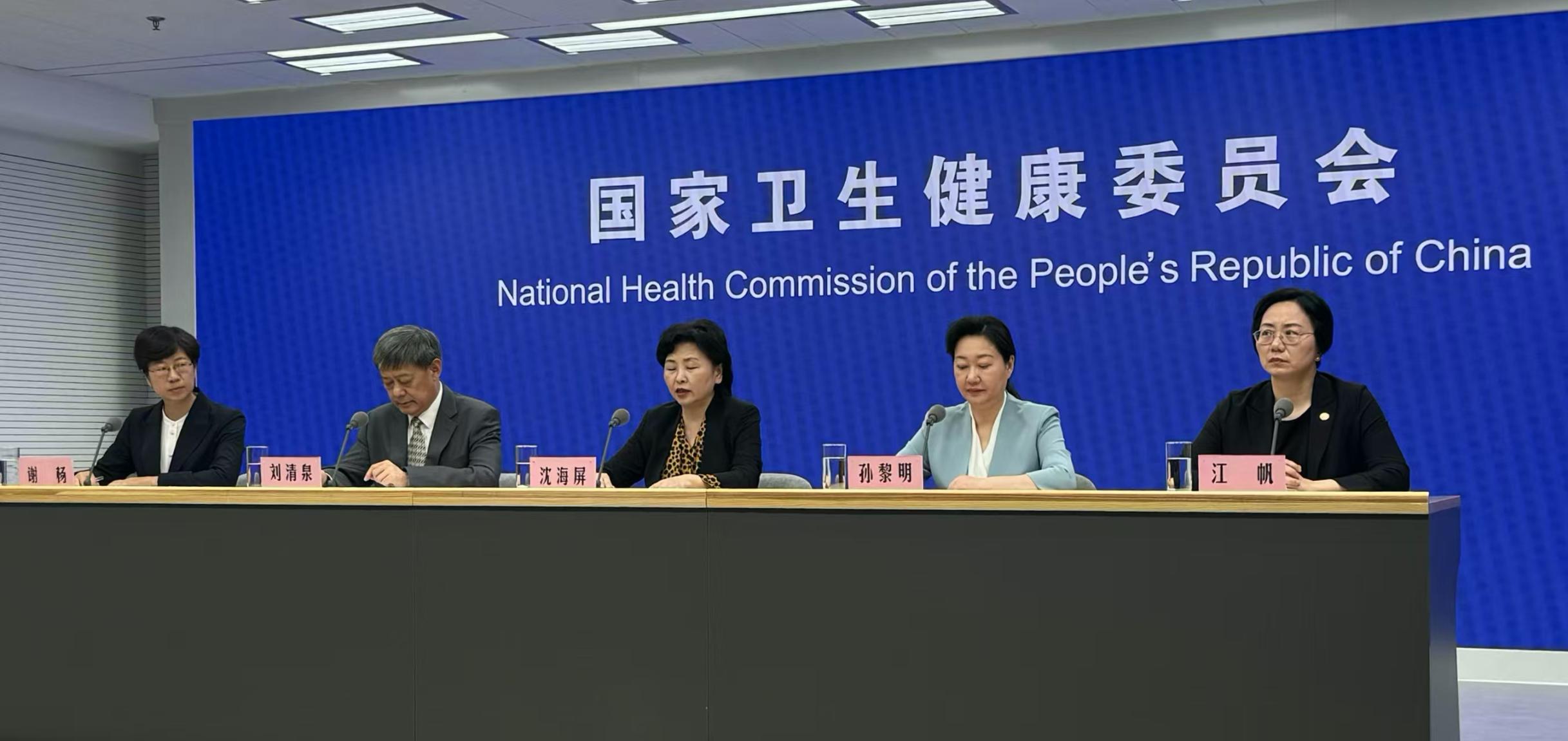
国家卫健委:我国儿童健康核心指标持续向好
Ren Min Wang· 2025-05-30 10:20
Core Viewpoint - The National Health Commission of China reported significant improvements in child health indicators, with infant mortality and under-five mortality rates reaching historical lows by 2024, positioning China among the top in global middle-income countries [3][4]. Group 1: Child Health Improvements - The infant mortality rate is projected to drop to 4.0‰ and the under-five mortality rate to 5.6‰ by 2024, marking the best levels in history [3]. - From 2010 to 2023, the average life expectancy in China increased by 3.8 years, with 21.7% of this increase attributed to the decline in under-five mortality rates [3]. Group 2: Service Enhancements - Over 8,000 comprehensive hospitals in China now provide pediatric outpatient or inpatient services, with 98% of county hospitals offering pediatric care and over 80% of grassroots medical institutions treating common childhood illnesses [3]. - The National Health Commission aims to establish 2,000 child-friendly hospitals by the end of 2025, with a target of 90% of institutions providing child healthcare services to be child-friendly by 2030 [3]. Group 3: Comprehensive Service Strengthening - Initiatives include pregnancy risk screening, enhanced measures for birth defect prevention, and a focus on key health issues such as myopia, obesity, and autism in children [4]. - The infant mortality rate due to birth defects and under-five mortality has decreased by over 30% compared to five years ago, with a 21% reduction in the incidence of neural tube defects and Down syndrome [4]. - The mother-to-child transmission rate of HIV has dropped to 1.2%, achieving a historical low, alongside the implementation of free HPV vaccinations covering 60% of eligible girls [4].