近视防控

Search documents
欧普康视(300595) - 2026年3月30日投资者关系活动记录表
2026-03-30 11:14
Group 1: Financial Performance and Product Sales - In 2025, the sales revenue of DK185 corneal reshaping lenses accounted for 5.71% of hard lens sales, while scleral lenses accounted for 1.23% [3] - The average price of existing corneal reshaping lenses decreased in 2025, but the overall profit margin for hard lens business declined due to increased sales and management expenses [6] - The revenue from frame glasses and other optical products grew by 19.49%, reflecting the implementation of a comprehensive optical service strategy [8] Group 2: Product Development and Market Strategy - The company is focusing on promoting ultra-high oxygen permeability corneal reshaping lenses and scleral lenses in 2026, with plans to expand the user base by introducing adult corneal reshaping lenses [3] - The company has several products in clinical trials, including the OVCTEK 210FX corneal reshaping lens and a hydrogen peroxide care solution [4] - The company is cautious about expanding optical terminals, prioritizing feasibility assessments and quality [5] Group 3: Investor Relations and Market Outlook - The online meeting on March 30, 2026, included 58 participants from various securities firms and investment institutions [2] - The company is exploring overseas sales through both offline and cross-border e-commerce, with ongoing registration for medical devices in Southeast Asia [9] - The company plans to enhance its product offerings in the eye health sector, including functional soft lenses and high-end soft lens materials [4][7]
教育部:开展学生超重肥胖筛查 加强中小学视力健康监测
Xin Lang Cai Jing· 2026-02-27 09:08
Core Viewpoint - The Ministry of Education in China has released guidelines aimed at promoting health in schools, focusing on obesity prevention and vision health monitoring for students [1][2] Group 1: Obesity Prevention - The guidelines emphasize the need for collaboration between medical and educational sectors to conduct screenings for overweight and obesity among students [1] - Schools are required to implement a comprehensive obesity prevention plan, which includes providing nutritious food that meets students' dietary needs and publicly displaying weekly meal plans [1] - There is a strong focus on family involvement in ensuring balanced nutrition at home, alongside promoting physical exercise to achieve a healthy lifestyle [1] Group 2: Vision Health Monitoring - The guidelines call for enhanced monitoring of students' vision health, with an emphasis on early intervention and management of myopia [1] - Schools are instructed to manage various aspects of students' lives, including mobile phone usage, homework, exams, sleep, reading materials, and physical fitness, to prevent vision issues [1] - The goal is to significantly reduce the incidence of myopia and control its progression, aiming to meet the vision health targets set for 2030 [2]
石家庄市、桥西区两级市场监督管理局联合开展“近视防控 计量在行动”主题宣传活动
Zhong Guo Zhi Liang Xin Wen Wang· 2026-02-26 09:48
Core Viewpoint - The event "Myopia Prevention and Control: Action in Measurement" was organized to promote measurement science knowledge and guide youth in protecting their eyesight, aiming to reduce and prevent myopia [1][2] Group 1: Event Overview - The event took place on February 25 at the Shijiazhuang Aier Eye Hospital, organized by the Shijiazhuang and Qiaoxi District Market Supervision Administration [1] - Over 300 youth and parents participated, with more than 400 promotional materials distributed [2] Group 2: Educational Focus - Market supervision staff provided education on measurement laws and regulations, emphasizing the importance of precise measurement in vision testing and eyewear fitting [1] - A senior doctor from Aier Eye Hospital explained myopia prevention knowledge, focusing on scientific eye care and good eye habits [1] Group 3: Future Initiatives - This event marks the beginning of a series of measurement-related promotional activities leading up to the International Consumer Rights Day on March 15 [2] - The Market Supervision Administration plans to continue focusing on public concerns and conduct various measurement promotion activities to ensure fair consumption and safeguard public welfare [2]
近视防控 计量在行动——塔城市市场监督管理局 扎实开展眼镜制配场所计量专项监督检查
Zhong Guo Shi Pin Wang· 2026-02-26 08:06
Core Viewpoint - The article emphasizes the importance of strengthening measurement assurance in myopia prevention and the implementation of a themed promotional activity to regulate the measurement order in the eyewear industry, ensuring the vision health of the public, especially the youth [1][2]. Group 1: Regulatory Actions - The market supervision administration of Tashkent City has conducted a special inspection focusing on eyewear fitting establishments, including optical shops and vision centers, to ensure compliance with measurement regulations [1]. - The inspection targeted mandatory measuring instruments such as refractors, dioptric meters, and lens boxes, checking for legal registration, timely calibration, and the use of compliant measuring tools [1]. Group 2: Compliance and Digital Management - During the inspection, staff encouraged merchants to use the Xinjiang Measurement Smart Supervision Management System for online reporting, simplifying the application process for mandatory calibration [1]. - The initiative aims to promote digital and standardized measurement management, ensuring that all required registrations and inspections are completed [1]. Group 3: Future Plans - The Tashkent City Market Supervision Bureau plans to continue enhancing measurement supervision and regularly conduct inspections in the eyewear fitting industry to establish a robust safety barrier for myopia prevention [2].
如何为青少年健康“加码”?“2小时+15分钟”让孩子们爱上运动
Yang Shi Wang· 2026-02-26 06:25
Group 1 - The core viewpoint emphasizes the importance of physical activity for students, mandating 2 hours of daily sports activities and 15 minutes of break time for physical movement [1] - The education system has been implementing the "health first" educational philosophy, leading to an overall improvement in student physical fitness levels, with a 9.3 percentage point increase in the overall good health rate from 2016 to 2024 [3] - There has been a continuous decline in the overall myopia rate among students, achieving a reduction to 50.3% in 2024, meeting the annual target of a 0.5 percentage point decrease [5] Group 2 - The management of food safety in schools has been strengthened, with a coverage rate of "Internet + Bright Kitchen" reaching 99.9% [5] - The total number of physical education and aesthetic education teachers in compulsory education has increased significantly, by 71.6% and 60.9% respectively since 2012 [5]

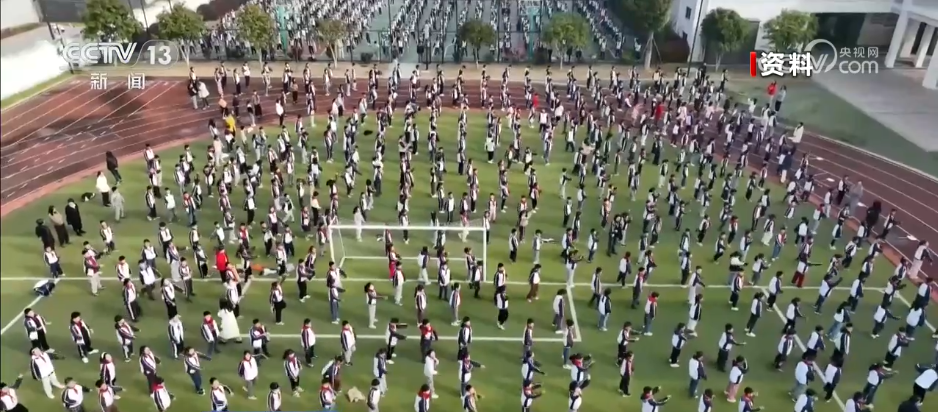
中国学生总体近视率“四连降”
Yang Shi Wang· 2026-02-25 23:24
Core Insights - The overall physical health quality rate of students in China has improved by 9.3 percentage points since 2016 [1] - The national myopia rate among students has decreased for four consecutive years from 2021 to 2024, reaching 50.3% in 2024, achieving the annual reduction target of 0.5 percentage points [1] Summary by Categories Physical Health - The overall physical health quality rate of students has increased significantly, indicating a positive trend in student health [1] Myopia Prevention - The myopia rate among students has shown a consistent decline, achieving a reduction to 50.3% in 2024, which aligns with the established prevention goals [1]
教育部:学生每天体育2小时、课间15分钟已在全国所有省份部署推开
Yang Shi Xin Wen Ke Hu Duan· 2026-02-25 10:59
Group 1 - The core viewpoint of the articles highlights the significant improvements in physical education and health among students in China, with a nationwide initiative to implement 2 hours of daily physical activity and 15 minutes of break time for students [1] - The total number of physical education and arts teachers in compulsory education has increased by 71.6% and 60.9% respectively since 2012 [1] - The overall rate of good physical health among students has improved by 9.3 percentage points from 2016 to 2024 [1] Group 2 - There has been a notable increase in students' height and lung capacity [2] - The overall myopia rate among students has decreased for four consecutive years, reaching 50.3% in 2024, achieving an annual reduction target of 0.5 percentage points [2] - Food safety management in schools has been strengthened, with the "Internet + Bright Kitchen and Bright Stove" coverage rate reaching 99.9% [3]
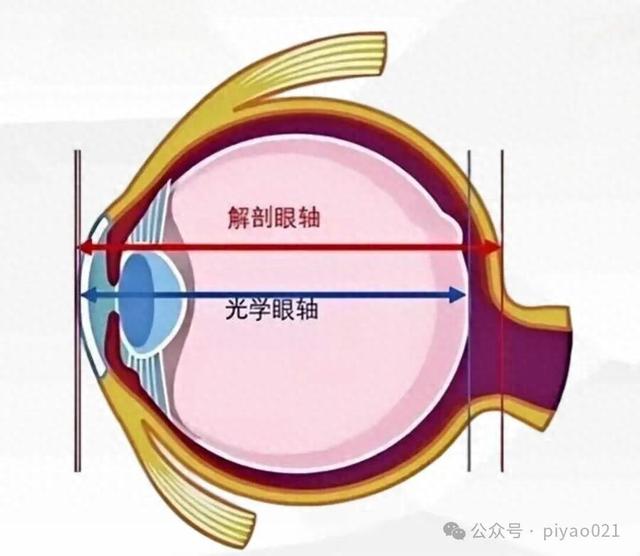
眼轴变长,近视就一定加深?上海市儿童医院眼科主任答疑
Xin Lang Cai Jing· 2026-01-28 08:29
Core Viewpoint - The article addresses common misconceptions about vision health and myopia in children, emphasizing the importance of accurate diagnosis and understanding of eye conditions. Group 1: Misunderstandings about Vision Health - Misunderstanding 1: Declining vision equates to myopia. Parents often assume that if a child has difficulty seeing far away, they are myopic. However, vision decline can result from various factors, including refractive errors and other health issues [2] - Misunderstanding 2: An increase in eye axis length means worsening myopia. Many parents worry about their child's eye axis length, but it is not the sole indicator of myopia severity. Accurate assessment of myopia should rely on refractive measurements rather than just eye axis length [3][9] - Misunderstanding 3: Wearing glasses will worsen myopia. Some parents fear that their child’s myopia will worsen if they wear glasses. Glasses are meant to correct refractive errors and do not cause myopia to increase [10] Group 2: Importance of Professional Assessment - The need for professional evaluation is crucial. Parents should seek proper eye examinations to determine the specific refractive status of their children, rather than relying on assumptions based on eye axis length or other superficial indicators [2][3][9] - The complexity of myopia causes. Myopia can arise from various factors, including corneal curvature, and the relationship between eye axis length and myopia is not straightforward. Therefore, a comprehensive assessment is necessary [8][11] Group 3: Lifelong Vision Care - Vision care should be a lifelong habit. Adults may experience changes in myopia due to lifestyle factors, and it is essential to maintain good eye hygiene practices throughout life [11]
保障睡眠、严控甜食、电子产品使用划红线……四川出台中小学生近视防控十条措施 开足艺体劳动课 禁止手机进课堂
Si Chuan Ri Bao· 2026-01-23 00:24
Group 1 - The core viewpoint of the articles emphasizes the implementation of comprehensive measures to prevent myopia among students, integrating various aspects of education and health management [3][4][5] - The measures include reducing written homework for elementary and middle school students, with no homework for grades one and two, and limiting daily written assignments to 60 minutes for grades three to six and 90 minutes for middle school [3][4] - Schools are required to provide at least one physical education class daily during the compulsory education phase and three classes weekly in high school, promoting longer class durations and extended break times [4][5] Group 2 - The initiative aims to cultivate good eye habits among students, including proper desk height adjustments and adherence to the "20-20-20" rule for eye care [3][4] - Strict regulations on electronic device usage are established, prohibiting mobile phones in classrooms and limiting teachers' use of electronic products to 30% of total teaching time [4][5] - Schools must conduct biannual vision screenings and maintain electronic health records for students, ensuring timely communication of results to parents and facilitating referrals for those with vision issues [4][5] Group 3 - The program includes a robust public awareness campaign, requiring schools to organize vision health education activities each semester and engage students in themed events [5] - A strict accountability mechanism is introduced, integrating vision health into the quality assessment system and establishing a closed-loop process for inspection, assessment, accountability, and incentives [5]
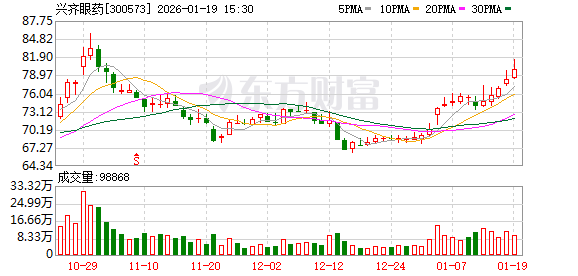
兴齐眼药近视防控新药获准临床试验 行业竞争从“单品突围”转向“多元竞争”
Zheng Quan Ri Bao· 2026-01-19 12:39
Core Viewpoint - The competition among domestic pharmaceutical companies in the field of myopia prevention drugs is intensifying, with Xingqi Eye Medicine leading the market by obtaining multiple approvals for atropine eye drops and advancing new drug trials [2][3][4]. Group 1: Product Approvals and Market Position - Xingqi Eye Medicine was the first in China to receive approval for 0.01% atropine eye drops in March 2024, establishing a competitive edge in the myopia prevention market [2][4]. - The company has also received approvals for 0.02% and 0.04% concentrations of atropine eye drops, enhancing its market position through a gradient concentration strategy [2][4]. - The newly approved SQ-24071 eye drops for clinical trials represent a significant milestone in the drug development process, indicating the transition from laboratory research to human testing [2][3]. Group 2: Financial Performance - Since the launch of its atropine eye drops, Xingqi Eye Medicine has experienced substantial revenue growth, with a 32.42% increase in revenue and a 40.84% increase in net profit for 2024 compared to 2023 [4]. - In the first three quarters of 2025, the company reported a 32.27% year-on-year increase in revenue and a remarkable 105.98% increase in net profit [5]. Group 3: Industry Trends and Future Outlook - The rising incidence of myopia in China, driven by excessive use of electronic devices and poor eye care habits, has created a significant public health issue, prompting increased competition among pharmaceutical companies [3]. - The approval of SQ-24071 eye drops signifies a shift in the myopia prevention market from single-product competition to a comprehensive strategy involving product matrices and service ecosystems [5].