
农村集体产权制度改革

Search documents
四川成都农村集体产权制度改革强村富民 “零元村”蝶变记
Ren Min Ri Bao· 2025-08-14 21:59
Core Insights - The article highlights the transformation of Wan'an Village in Chengdu, Sichuan, through collective agricultural initiatives and reforms, leading to increased income and economic growth for local farmers [1][2][3] Group 1: Agricultural Transformation - Wan'an Village faced challenges with over 5,000 acres of scattered farmland, leading to low efficiency and youth migration for work. In 2020, the village reported zero collective income [1] - In early 2022, village leaders established a cooperative with an initial investment of 100,000 yuan, encouraging local farmers to join by offering shared risks and benefits [1] - The cooperative successfully consolidated 1,316 plots into 478, reducing average farming costs by over 20% [1] Group 2: Economic Growth and Development - The village's collective economy generated over 4 million yuan in revenue last year, with participating farmers seeing an average income increase of over 6,000 yuan [2] - The establishment of a "Nine Village Alliance" with neighboring communities promotes resource sharing and unified management, enhancing agricultural productivity [2] - The cooperative's initiatives include the construction of a comprehensive agricultural service center, which has improved operational efficiency and profitability [2] Group 3: Policy and Structural Reforms - Chengdu has actively promoted rural collective property rights reform, achieving cloud-based supervision of 28.81 billion yuan in collective assets [3] - The city has developed nine models of rural collective economy, resulting in a collective operating income of 2.567 billion yuan last year, contributing to an increase in per capita disposable income for farmers [3] - Ongoing efforts focus on sustainable development of rural collective economies, aiming for long-term benefits for local communities [3]
首部规范农村集体经济运行的法律实施,如何防“蝇贪蚁腐”
Nan Fang Du Shi Bao· 2025-07-22 11:13
Core Points - The "Rural Collective Economic Organization Law" officially took effect on May 1, 2023, establishing the special legal status of rural collective economic organizations and outlining member qualifications, organizational registration, management of assets, and profit distribution [1][2][6] - The law aims to regulate the operation of rural collective economic organizations, prevent internal member infringement, and address issues like "empty shell villages" and "hanging accounts" [1][2][9] Group 1: Legal Framework and Objectives - The law provides a framework for the operation and rights protection of rural collective economic organizations, while also serving as a risk prevention measure [2][7] - It grants rural collective economic organizations the status of "special legal persons," allowing them to participate in market activities while also protecting collective assets from market risks [6][7] Group 2: Economic Impact and Development - As of April 30, 2025, there are over 1.03 million rural collective economic organizations in China, with total operating income reaching 288.9 billion yuan, indicating a stable upward trend [3] - The development paths of rural collective economies are diverse, including leasing, service economies, industrial economies, resource development, and asset participation [4][5] Group 3: Governance and Oversight - The law specifies prohibited actions for members of the governing bodies of rural collective economic organizations to prevent corruption and mismanagement [7][8] - It mandates regular financial disclosures to members, ensuring transparency in the management of collective assets [8] Group 4: Challenges and Recommendations - Current challenges include unbalanced development across regions, a high proportion of organizations with low income, and a lack of management talent [9] - The law encourages attracting external talent to rural collective economic organizations, providing a framework for non-members to gain rights after contributing significantly [9]
房地一体宅基地确权登记扎实推进 全国约七成宅基地发证——一本产权证带来农村大变革(经济新方位)
Ren Min Ri Bao· 2025-06-29 21:47
Core Viewpoint - The implementation of land and housing rights registration for rural homesteads is transforming dormant assets into valuable wealth for farmers, with significant progress made in the registration process across the country [2][4]. Group 1: Progress in Registration - Approximately 70% of rural homesteads have completed registration, with over 170 million entries in the national real estate registration database [2]. - The Ministry of Natural Resources has strengthened organizational coordination and improved the regulatory framework since the 18th National Congress of the Communist Party, leading to significant advancements in the registration process [2][4]. Group 2: Case Studies of Asset Utilization - In Jiangsu, a successful exchange of homesteads between two families illustrates the practical benefits of having a legal property certificate, enabling them to fulfill their housing desires [3][4]. - In Zhejiang, the issuance of property certificates has allowed farmers to rent out their homes, leading to increased tourism revenue and the revitalization of rural areas [8][9]. Group 3: Enhanced Government Services - The government has improved service efficiency by decentralizing registration services to local centers, allowing farmers to complete the process with minimal travel [6][7]. - Nationwide, 14,000 service points have been established to facilitate easier access to registration services for rural residents [6]. Group 4: Economic Impact - The activation of idle rural properties has led to significant economic benefits, with 25,000 properties revitalized, creating nearly 40,000 jobs and generating substantial income for local communities [9]. - The integration of rural industries, such as homestays and cultural spaces, has been bolstered by the legal recognition of property rights, enhancing farmers' economic prospects [9].
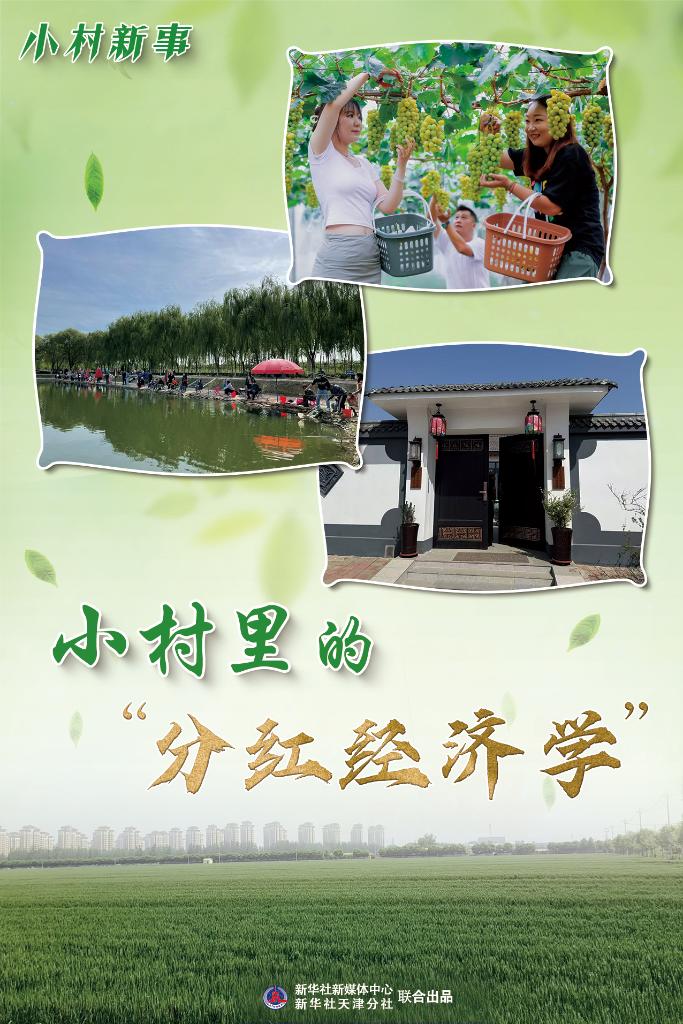
小村新事:小村里的“分红经济学”
Xin Hua Wang· 2025-05-14 07:26
Core Points - The article highlights the positive impact of rural collective property rights reform in Tianjin, particularly in Nanjin Village, where unified management has led to increased efficiency and better crop yields [2][4] - The establishment of a digital platform for managing collective economic organization shares has improved transparency and accountability, allowing villagers to easily track their equity and dividends [3][4] - The reforms have resulted in significant financial benefits for villagers, with collective income increasing and individual dividends being distributed, thus enhancing the overall economic well-being of the community [4][7] Group 1 - Nanjin Village has implemented a cooperative model that consolidates land management, resulting in a 200-acre increase in effective planting area and reduced operational costs through centralized purchasing and mechanization [2] - The village's collective income reached over 2 million yuan in 2024, with villagers experiencing a notable increase in disposable income [4] - The reforms have fostered a sense of ownership among villagers, with over 500 members participating in the cooperative, transforming resources into assets and villagers into shareholders [2][4] Group 2 - Xiyan Village has also benefited from similar reforms, establishing a cooperative that ensures every household has capital and receives annual dividends [5][7] - In 2023, Xiyan Village launched a tourism development company, utilizing idle land for agritourism activities, further boosting collective economic growth [5] - The overall completion of property rights reform across Tianjin's 3,635 collective economic organizations signifies a successful implementation of rural revitalization strategies [7]

财政部 税务总局关于支持农村集体产权制度改革有关税收政策的通知(财税〔2017〕55号)
蓝色柳林财税室· 2025-05-09 08:31
Core Points - The document outlines tax policies to support the reform of rural collective property rights in China, specifically regarding deed tax and stamp duty exemptions for rural collective economic organizations and village committees [1][2][3]. Group 1 - Exemption from deed tax for rural collective economic organizations that undergo shareholding cooperative reform and inherit land and property rights from the original collective economic organization [1]. - Exemption from deed tax for village committees and groups that recover collective assets through asset verification and inherit land and property rights [2]. - Exemption from deed tax for the confirmation registration of rural collective land ownership, homesteads, and collective construction land use rights, as well as the buildings on them [2]. Group 2 - Exemption from stamp duty for property transfer documents signed by rural collective economic organizations and village committees when recovering collective assets [2]. - The policies outlined in the document are effective from January 1, 2017 [3].
因地制宜发展新型农村集体经济
Jing Ji Ri Bao· 2025-04-17 22:08
Core Viewpoint - The development of a new type of rural collective economy is a crucial aspect of deepening rural reform in China, aimed at promoting comprehensive rural revitalization and increasing farmers' income [1][2]. Policy Background and Implementation - The growth of rural collective economy is seen as a vital pathway to achieve common prosperity for farmers, addressing issues such as unclear ownership of collective assets and unequal distribution of benefits [2]. - Since 2015, pilot reforms have been initiated in 29 counties to enhance farmers' rights to collective assets, leading to the formal introduction of the "new type of collective economy" concept in 2016 [2][3]. - By the end of 2020, 53.1 million administrative villages had completed reforms, representing 94.9% of the total villages in the country [3]. Financial Support and Development Trends - From 2018 to 2022, approximately 100,000 administrative villages received financial support from the central government to develop collective economies [4]. - The number of villages without operating income decreased from 195,000 in 2018 to 113,000 in 2023, while the proportion of villages with income below 100,000 yuan dropped from 43.1% to 32.9% during the same period [4]. Organizational Structure and Management - The establishment of rural collective economic organizations is essential for the development of the new type of rural collective economy, with a focus on standardizing their operations [5]. - By the end of 2023, 99.1% of villages had implemented financial transparency, and 98% had established democratic financial management groups [5]. Asset Management and Oversight - As of 2023, the total assets of rural collective economic organizations reached 9.61 trillion yuan, with total revenue of 715.73 billion yuan [6]. - The government has emphasized the need for a robust supervision and management system to prevent the loss of collective assets and ensure proper governance [6][7]. Reform Challenges and Future Directions - The rural collective property rights reform is crucial for revitalizing rural collective assets, but challenges remain, such as unclear asset ownership and a lack of market recognition for collective economic organizations [11]. - Future efforts should focus on enhancing the legal framework for collective asset rights and improving the management capabilities of rural collective economic organizations [12][13]. Diverse Development Models - Various regions have adopted different models for developing the new type of rural collective economy, including resource development, industry-driven approaches, service-oriented income generation, and asset management [14][15][16][18]. - For instance, in Fujian Province, a village developed a scenic area through collective investment, while in Guangdong, collective assets were quantified into shares to enhance value [15][18].