
医疗技术创新

Search documents
Aethlon Medical(AEMD) - Prospectus
2025-08-20 21:16
Table of Contents As filed with the Securities and Exchange Commission on August 20, 2025 Registration Statement No. 333- UNITED STATES SECURITIES AND EXCHANGE COMMISSION Washington, D.C. 20549 FORM S-1 REGISTRATION STATEMENT Under THE SECURITIES ACT OF 1933 AETHLON MEDICAL, INC. (Exact name of registrant as specified in its charter) (State or other jurisdiction of incorporation or organization) Nevada 3826 13-3632859 (Primary Standard Industrial Classification Code Number) (I.R.S. Employer Identification N ...

Medtronic(MDT) - 2026 Q1 - Earnings Call Transcript
2025-08-19 13:02
Financial Data and Key Metrics Changes - The company reported Q1 revenue of €8.6 billion, growing 8.4% reported and 4.8% organic, in line with guidance [38] - Adjusted EPS was €1.26, exceeding the midpoint of guidance by €0.03 [42] - Adjusted gross margin was 65.1%, down 80 basis points year over year, but stable compared to Q4 [38] Business Line Data and Key Metrics Changes - Cardiovascular grew 7% this quarter, driven by nearly 50% growth in Cardiac Ablation Solutions [21][22] - Neuroscience grew 3%, with high single-digit growth in neurosurgery and neuromodulation [11][28] - MedSurg grew 2%, with high single-digit growth in Advanced Energy [31] - Diabetes grew 8%, with 11% growth in international markets [34] Market Data and Key Metrics Changes - The U.S. market showed slower growth in certain segments, particularly in diabetes and pelvic health, while international markets performed better [60] - The company expects to ramp up procedures for the SIMPLICITY system following CMS's proposed national coverage decision [25][27] Company Strategy and Development Direction - The company is focused on accelerating growth through innovation and strategic investments in high-growth areas like CAS and Ardian [19][20] - A planned separation of the diabetes business is expected to enhance focus on core businesses and improve revenue and earnings growth [19][37] - New board committees have been established to enhance focus on growth and operational efficiency [48][49] Management Comments on Operating Environment and Future Outlook - Management expressed confidence in accelerating growth in the second half of fiscal 2026, driven by strong demand and new product launches [7][19] - The company anticipates significant revenue growth from its PFA portfolio and other upcoming product launches [13][14] - Management highlighted the importance of maintaining pricing discipline and improving operational efficiencies to support growth [38][45] Other Important Information - The company is increasing investments in R&D, with a 7.7% increase in adjusted R&D spending [40] - The anticipated impact of tariffs has been adjusted, with expectations now at approximately €185 million for fiscal 2026 [44] Q&A Session All Questions and Answers Question: Update on CAS growth and its impact on U.S. growth - Management confirmed that CAS growth is accelerating and will positively impact U.S. growth, despite some segments showing slower growth [56][58] Question: Impact of new board committees on governance and operations - The new committees will provide focused oversight on growth and operational performance, with increased interaction with management expected to drive improvements [68][70] Question: Commitment to CAS annual sales target - Management reaffirmed the commitment to achieving $2 billion in annual CAS sales, indicating strong confidence in the growth trajectory [76][78] Question: Discussion on capital allocation and potential changes - Management indicated that the new board members and committees will facilitate discussions on capital allocation and value creation strategies [81][89] Question: Overall portfolio growth expectations - Management stated that while significant growth opportunities exist, they will not neglect the rest of the business and expect to see incremental growth from various segments [99][100]

致敬“生命守护者”!2025年“最美医生”发布
Xin Hua She· 2025-08-19 10:36
Core Points - The article highlights the dedication and contributions of ten exemplary doctors in China, recognized as the "Most Beautiful Doctors" for their commitment to healthcare and patient welfare [1][2] - It emphasizes the spirit of selflessness and compassion in the medical profession, showcasing the impact of these individuals on their communities and the healthcare system [1][9] Group 1: Recognition of Medical Professionals - The "Most Beautiful Doctors" list for 2025 includes ten healthcare professionals who embody the values of life preservation and altruism [1] - These doctors represent nearly 16 million healthcare workers in China, symbolizing the dedication of the medical community [2] Group 2: Individual Stories of Dedication - Liang Chunrong, a village doctor, has spent over 30 years providing healthcare in rural areas, emphasizing affordable treatment for villagers [3] - Wang Yufeng, a pediatric psychiatrist, has dedicated half a century to improving children's mental health and establishing a nationwide service network [4] - Ni Ma La Mao, a Tibetan doctor, has worked tirelessly in high-altitude regions, providing healthcare and education to local herders [5] Group 3: Innovations in Medical Practice - He Jianxing, a thoracic surgeon, has pioneered minimally invasive surgical techniques, significantly improving patient recovery times [6][8] - The article also highlights the importance of continuous medical innovation and the commitment of healthcare professionals to enhance patient care [7] Group 4: Community Impact and Legacy - Nurses and doctors like Xing Shaoyun and Zhang Junqiao have made significant contributions to their communities, with efforts in patient care and emergency response training [9][10] - The article concludes by celebrating the collective efforts of these "Most Beautiful Doctors" in shaping a healthier future for China [10]
Hologic (HOLX) Q3 Revenue Beats 1%
The Motley Fool· 2025-07-31 09:03
Core Insights - Hologic reported Q3 2025 financial results with GAAP revenue of $1,023.8 million and non-GAAP earnings per share of $1.08, both exceeding analyst expectations [1][2] - The company experienced strong operating cash flow but faced challenges in organic revenue growth and margins, particularly in the Breast Health segment [1] Financial Performance - Non-GAAP EPS was $1.08, up 1.9% year-over-year, while GAAP EPS increased by 4.9% to $0.86 [2] - GAAP revenue of $1,023.8 million represented a 1.2% increase from Q3 2024 [2] - Non-GAAP gross margin decreased by 0.8 percentage points to 60.3%, and operating margin fell by 1.1 percentage points to 30.1% [2][9] - Net income (non-GAAP) was $244.1 million, down 2.6% from the previous year [2] Segment Performance - The Diagnostics segment saw a revenue increase of 1.8% to $448.9 million, with core molecular diagnostic products driving growth despite a 17.1% decline in COVID-19 related revenue [5] - Breast Health revenue declined by 5.1%, with organic revenue down 10.1%, attributed to a post-pandemic lull in equipment replacement [6] - The Surgical segment revenue increased by 7.1%, supported by the Gynesonics acquisition and strong international sales [7] - Skeletal Health revenue surged by 64.7%, recovering from previous supply constraints [8] Strategic Focus - Hologic is focusing on innovation in diagnostic testing and expanding advanced imaging products, with an emphasis on regulatory compliance and R&D investment [4] - The company aims to increase recurring revenue streams through service contracts and disposable products [4] Future Guidance - For Q4 FY2025, management projects GAAP revenue between $1.03 billion and $1.04 billion, indicating a 4.3% to 5.3% year-over-year increase [11] - Non-GAAP EPS is expected to rise to between $1.09 and $1.12, reflecting a 7.9% to 10.9% increase [11] - Full-year revenue guidance is set between $4.081 billion and $4.091 billion, with non-GAAP EPS projected at $4.23 to $4.26 [11] Cash Flow and Share Repurchase - The company generated $343.2 million in operating cash flow and held $1.74 billion in cash and equivalents at the end of the quarter [10] - Hologic repurchased 0.7 million shares for $36 million during the quarter [10]



国家医保局支持脑机接口等新技术进入临床并收费
Yang Shi Xin Wen· 2025-07-31 06:47
Group 1 - The National Healthcare Security Administration (NHSA) has established a new pricing mechanism for newly launched drugs to support innovation in pharmaceuticals and medical devices [1] - Over 100 pricing items related to new medical technologies have been added, facilitating the revenue return for urgently needed new products [1] - The NHSA aims to create a parallel structure of "pricing project establishment and technological innovation" through the introduction of 30 batches of project guidelines [1] Group 2 - Unified pricing items have been established for neurological system project guidelines, including "brain-machine interface implantation fee" and "brain-machine interface adaptation fee," allowing for rapid clinical application once the technology is approved [2] - For ear, nose, and throat project guidelines, pricing items such as "artificial cochlear implantation fee" and "speech device installation fee" have been introduced to encourage healthcare institutions to assist more patients [2] - Pricing items for radiation therapy project guidelines include "proton therapy" and "heavy ion therapy," promoting the clinical application of advanced medical equipment [2]
362亿!增长22.8%!波士顿科学季报发布
思宇MedTech· 2025-07-24 08:27
Core Viewpoint - Boston Scientific reported strong financial performance in Q2 2025, with sales of $5.061 billion, a year-over-year increase of 22.8%, driven primarily by its Cardiovascular and MedSurg segments [1][2]. Financial Performance - The company achieved net sales of $5.061 billion, exceeding analyst expectations of $4.89 billion, with an operational growth of 21.6% and organic growth of 17.4%, surpassing the previous guidance of 13%-15% [2][4]. - GAAP net profit reached $797 million, translating to an EPS of $0.53, more than doubling from $324 million (EPS of $0.22) in the same period last year [2][4]. - Adjusted EPS was $0.75, higher than the company's prior guidance of $0.71–$0.73 and market consensus of $0.73 [2][4]. - The company raised its full-year revenue growth guidance from 15%-17% to 18%-19% and adjusted EPS expectations from $2.87–$2.94 to $2.95–$2.99 [2]. Business Segment Performance - The Cardiovascular segment was the main growth driver, with sales of $3.345 billion, a 26.8% increase year-over-year [3][5]. - The MedSurg segment generated $1.716 billion in sales, reflecting a 15.7% year-over-year growth [3][6]. - Key contributors to Cardiovascular growth included electrophysiology and structural heart disease treatments, while MedSurg saw stable performance across urology, digestion, and neuromodulation [3][6][7]. Product and Regulatory Progress - The Farapulse system received FDA approval for expanded indications, and the company initiated clinical trials to evaluate its effectiveness in patients with recurrent atrial fibrillation [10][12]. - The Watchman FLX Pro device received CE mark certification in the EU, enhancing its clinical adoption potential [14]. Market Environment and Policy Changes - The CMS proposal to include catheter ablation procedures in outpatient surgery center payment coverage could significantly enhance patient access and affordability, benefiting the deployment of Farapulse and Watchman [15]. Strategic Acquisitions - Boston Scientific completed acquisitions of three medical technology companies, focusing on interventional oncology, chronic disease treatment, and vascular disease, which align with its existing business and enhance its product pipeline [16].


《全球及中国植入式给药装置市场:规模扩张与增长前景》
QYResearch· 2025-05-28 09:30
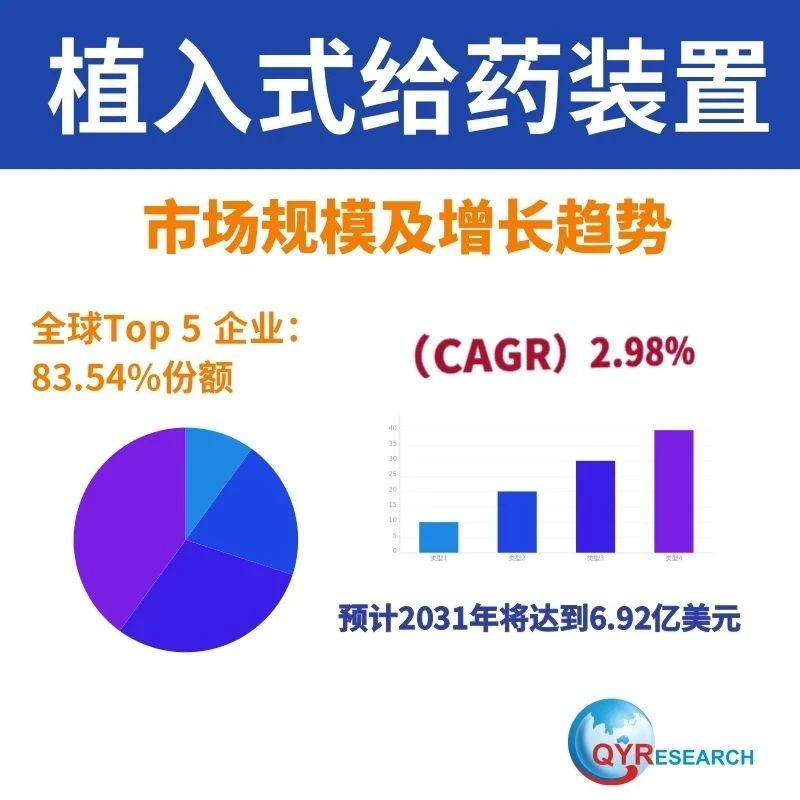
Core Viewpoint - The article discusses the growth and trends in the global and Chinese implantable drug delivery device market, highlighting the increasing demand driven by chronic diseases and advancements in medical technology [1][5][7]. Market Overview - The global implantable drug delivery device market is projected to reach $565 million in sales by 2024 and $692 million by 2031, with a compound annual growth rate (CAGR) of 2.98% from 2025 to 2031 [1]. - The Chinese market is expected to grow from $9 million in 2024 to $13.4 million by 2031, representing approximately 16% and 1.93% of the global market, respectively [4]. Competitive Landscape - The market is highly concentrated, with the top five companies (BD, B. Braun, AngioDynamics, ICU Medical, and Linhua Medical) holding 83.54% of the market share in 2024 [4]. - BD leads the industry with innovative infusion solutions and a global supply chain, while other companies focus on specific market segments to meet diverse clinical needs [4]. Growth Drivers - The increasing prevalence of chronic diseases such as cancer and diabetes is driving the demand for long-term intravenous infusion, making implantable drug delivery devices more appealing due to their advantages in reducing repeated punctures and vascular damage [5]. - Advances in medical technology, including safer anti-infection coatings and smart monitoring features, enhance device reliability and patient experience [5]. - Improved healthcare systems and expanded insurance coverage are reducing the financial burden on patients, facilitating market penetration [5]. Challenges - High costs associated with implantable drug delivery devices, including surgical and post-care expenses, limit their adoption in developing countries [5]. - Despite technological advancements, risks of complications such as infections and thrombosis remain, requiring skilled operation by healthcare professionals [5]. - Regulatory complexities and varying standards across countries prolong product approval timelines, impacting market entry [5]. Future Trends - The market is expected to evolve towards technological innovation and smart solutions, with advancements in biocompatible materials and remote monitoring technologies enhancing safety and patient comfort [6][7]. - The demand for personalized medication plans is increasing, pushing products towards more efficient, safer, and smarter designs [7]. - The competition will intensify, focusing on product innovation, market expansion, and cost control, particularly in high-value areas like anti-infection technology and smart infusion [6][7].
烟台毓璜顶医院利用电磁导航新技术助力重症患者营养支持
Qi Lu Wan Bao Wang· 2025-05-27 01:51
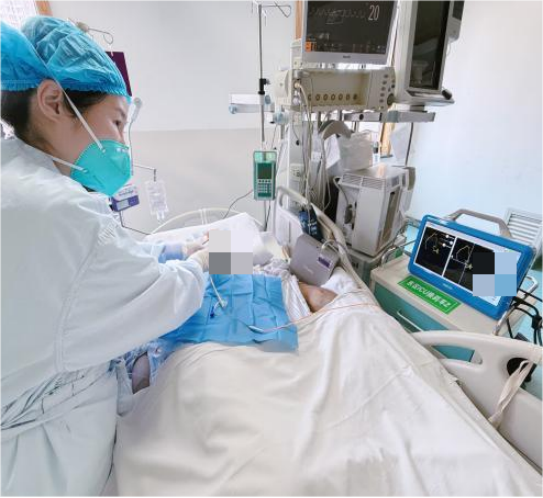
Core Viewpoint - Yantai Yuhuangding Hospital has successfully implemented a new electromagnetic navigation technology for nasoenteric tube placement, enhancing nutritional support for critically ill patients and marking a significant advancement in the hospital's enteral nutrition and nursing techniques [2][3][6] Group 1: Technology Implementation - The nursing team at Yantai Yuhuangding Hospital's East District has successfully performed nasoenteric tube placement using electromagnetic navigation technology, which opens new pathways for nutritional support in critically ill patients [2][6] - Traditional blind insertion techniques for nasoenteric tubes are time-consuming and heavily reliant on the experience of healthcare personnel, leading to challenges in ensuring successful placement [2][3] Group 2: Patient Case Study - A 67-year-old female patient with multiple severe conditions required enteral feeding and faced challenges due to her deep sedation and slow gastrointestinal motility, resulting in failed attempts at blind insertion [2][3] - The electromagnetic navigation-guided procedure was completed in just 20 minutes without causing any discomfort to the patient, ensuring the continuation of prone ventilation and avoiding interruptions in nutrition [3][6] Group 3: Advantages of New Technology - The electromagnetic navigation system acts like a precise navigator, allowing for accurate placement of the nasoenteric tube while monitoring its trajectory and real-time position, significantly improving success rates and reducing placement time compared to traditional methods [6] - This new technique is non-invasive and radiation-free, providing real-time alerts for any abnormal resistance or deviation during the procedure, thereby minimizing complications and enhancing patient comfort [6] Group 4: Future Implications - The successful application of this technology reflects the hospital's commitment to exploring and innovating medical techniques, with the potential for broader implementation to improve healthcare services for critically ill patients [6]
Insulet (PODD) - 2025 Q1 - Earnings Call Transcript
2025-05-08 21:30
Financial Data and Key Metrics Changes - Revenue for the total company was $569 million, growing 30% year over year, driven by total Omnipod growth of 29% [19][24] - Gross margin was 71.9%, up 240 basis points, primarily due to improved manufacturing and supply chain efficiencies [32][42] - Adjusted operating margin was 16.4% and adjusted EBITDA was 23.5% in the first quarter [33] Business Line Data and Key Metrics Changes - U.S. Omnipod revenue grew 26%, exceeding guidance, with strong demand for Omnipod five [24] - Over 30% of U.S. new customer starts were Type two, indicating successful market penetration [18][63] - International revenue grew 36% above the high end of guidance, driven by strong demand for Omnipod five [29] Market Data and Key Metrics Changes - Estimated global utilization remained stable compared to the prior year, with an annualized retention rate steady in the U.S. and improved slightly internationally [19][20] - The U.S. sales force expansion has increased the number of healthcare providers engaging with Type two patients by over 20% year over year [28][62] Company Strategy and Development Direction - The company aims to expand its market presence in Type one and Type two diabetes, with a focus on innovation and direct-to-consumer strategies [12][14] - The leadership transition is seen as a pivotal moment for driving growth and enhancing operational execution [6][7] - The company plans to leverage its data to improve patient engagement and retention [12] Management's Comments on Operating Environment and Future Outlook - Management expressed confidence in the company's growth trajectory, citing a strong first quarter performance and a robust pipeline of innovation [47][48] - The strategic priorities include advancing innovation, driving growth in U.S. Type one and Type two populations, and expanding internationally [14][40] - Management anticipates continued strong demand trends benefiting from the differentiated Omnipod five platform [38] Other Important Information - The company raised its full-year revenue growth guidance to a range of 19% to 22% [37] - The gross margin guidance for the full year was raised to approximately 71%, despite anticipated tariff impacts [42] - The company has a strong cash position with approximately $1.3 billion in cash and a $500 million credit facility available [35] Q&A Session Summary Question: What excites you about the role and vision for the business? - The new CEO expressed passion for the diabetes space and confidence in the company's unique insulin delivery platform, emphasizing the potential for future value creation [52][54] Question: Will there be a focus on top-line growth at the expense of margin expansion? - The CEO reassured that the business strategy remains intact, with continued focus on double-digit growth and margin improvement [58][60] Question: How is the Type two pump adoption going in the U.S.? - The Type two launch is progressing well, with a significant increase in new customer starts from Type two diabetes [61][63] Question: What are the drivers of strong new customer growth? - The differentiation of Omnipod five and effective direct-to-consumer advertising are key factors driving new customer starts [72][105] Question: What is the outlook for international expansion? - The company plans to launch Omnipod five in the Middle East by early 2026, with ongoing growth in established markets like the U.K. and Germany [91][94]

海圣医疗北交所上市仪式【全景路演】
2024-10-31 00:57
各位观众各位投资者朋友们大家好我现在所在的位置是北京证券交易所云上市直播厅今天我们将会通过云直播上市仪式的方式与大家共同来见证浙江海胜医疗器械股份有限公司向不特定合格投资者公开发行股票并在北交所上市的上市仪式首先我们向海胜医疗表示最热烈的欢迎和最诚挚的祝贺 我们从一个呵护生命健康的梦想出发如今演化为三大医疗产品系列构筑起国内高端医用耗材创新平台我们甚至专精不仅仅是一句口号所以在研发的实验室里用一次次技术突破回应生命的问号 浙江海生医疗器械股份有限公司成立于2000年是面向全球的麻醉监护类医疗器械综合产品提供商主业务为麻醉监护类医疗器械产品的研发生产和销售产品已经广泛的应用于麻醉科ICU病房急诊科等科室的终端临床需求 公司自成立以来持续深耕麻醉和监护医用耗材的研发和制造是我国较早从事麻醉和监护类医药耗材研发制造的科技型医疗器械生产企业之一也是该细分领域的头部企业 公司产品线种类丰富具有较强的市场和品牌影响力已经搭建起麻醉监护手术及护理三大类产品矩阵经过20余年的前线积累公司已经发展成为麻醉监护应用耗材领域内产品系列齐全营销渠道广泛品牌实力较强的行业头部企业 在仪式正式开始之前也请允许我们向一直以来关心支持海胜医 ...