地区和平稳定

Search documents
王毅同伊朗外长阿拉格齐通电话
券商中国· 2026-01-15 14:27
Group 1 - The article discusses a phone call between Wang Yi, a member of the Political Bureau of the CPC Central Committee and Foreign Minister, and Iranian Foreign Minister Amir-Abdollahian, focusing on the recent unrest in Iran attributed to external forces [1] - Amir-Abdollahian emphasized that Iran has restored stability and is prepared to respond to external interference while keeping the door open for dialogue, expecting China to play a greater role in regional peace and stability [1] - Wang Yi reiterated China's stance on adhering to the purposes of the UN Charter and international law, opposing the use or threat of force in international relations, and advocating for dialogue to resolve differences [1]

王毅同伊朗外长阿拉格齐通电话
证券时报· 2026-01-15 11:50
Core Viewpoint - The article discusses a recent phone call between Wang Yi, a member of the Political Bureau of the Central Committee and Foreign Minister of China, and Iranian Foreign Minister Amir-Abdollahian, focusing on the current situation in Iran and China's stance on international relations [1]. Summary by Relevant Sections - The Iranian Foreign Minister reported that recent unrest in Iran was incited by external forces, but the situation has stabilized. Iran is prepared to respond to external interference while keeping the door open for dialogue, hoping China will play a larger role in regional peace and stability [1]. - Wang Yi reiterated China's commitment to upholding the purposes of the UN Charter and international law, opposing the use or threat of force in international relations, and rejecting the imposition of one country's will on another. He expressed confidence that the Iranian government and people would unite to overcome difficulties and maintain national stability [1]. - Wang Yi emphasized the importance of cherishing peace, exercising restraint, and resolving differences through dialogue, stating that China is willing to play a constructive role in this process [1].
外交部回应加强两用物项对日出口管制、特朗普涉格陵兰岛言论
证券时报· 2026-01-12 09:46
Group 1 - The Chinese government has strengthened export controls on dual-use items to Japan, citing national security and international obligations as justifications for these measures [2] - China maintains its position on stabilizing and securing the global supply chain of critical minerals, emphasizing that all parties should play a constructive role [2] - In response to U.S. President Trump's comments regarding Greenland, China asserts that its activities in the Arctic aim to promote peace, stability, and sustainable development, and that the rights of all countries to operate in the Arctic should be respected [3] Group 2 - The Chinese Foreign Ministry stated that Latin American countries have the sovereign right to choose their partners, responding to U.S. claims about oil purchases from Venezuela [4] - China will continue to deepen practical cooperation with Latin American countries, including Venezuela, regardless of changing circumstances [4] - The Chinese government urges the U.S. to immediately stop its blockade and sanctions against Cuba, supporting Cuba's sovereignty and security [5] Group 3 - China expresses hope that the Iranian government and people can overcome current difficulties and maintain national stability, opposing foreign interference in domestic affairs [6] - The Chinese government emphasizes the importance of respecting the sovereignty and security of all nations under international law, and calls for actions that contribute to peace and stability in the Middle East [6] - China is closely monitoring the situation in Iran and has not received reports of Chinese citizens being harmed, ensuring the safety of its citizens in the region [6]

外交部:中方坚定支持古巴维护国家主权和安全 反对外来干涉
Jing Ji Guan Cha Wang· 2026-01-12 07:57
Core Viewpoint - The Chinese government firmly supports Cuba in maintaining its national sovereignty and security, opposing foreign interference, and urges the U.S. to lift its blockade and sanctions against Cuba [1] Group 1 - The Chinese government emphasizes its stance against U.S. sanctions and coercion towards Cuba [1] - The Chinese government calls for actions that contribute to regional peace and stability [1]
视频丨多国人士:高市错误言论损害地区和平稳定
Yang Shi Xin Wen Ke Hu Duan· 2026-01-11 14:27
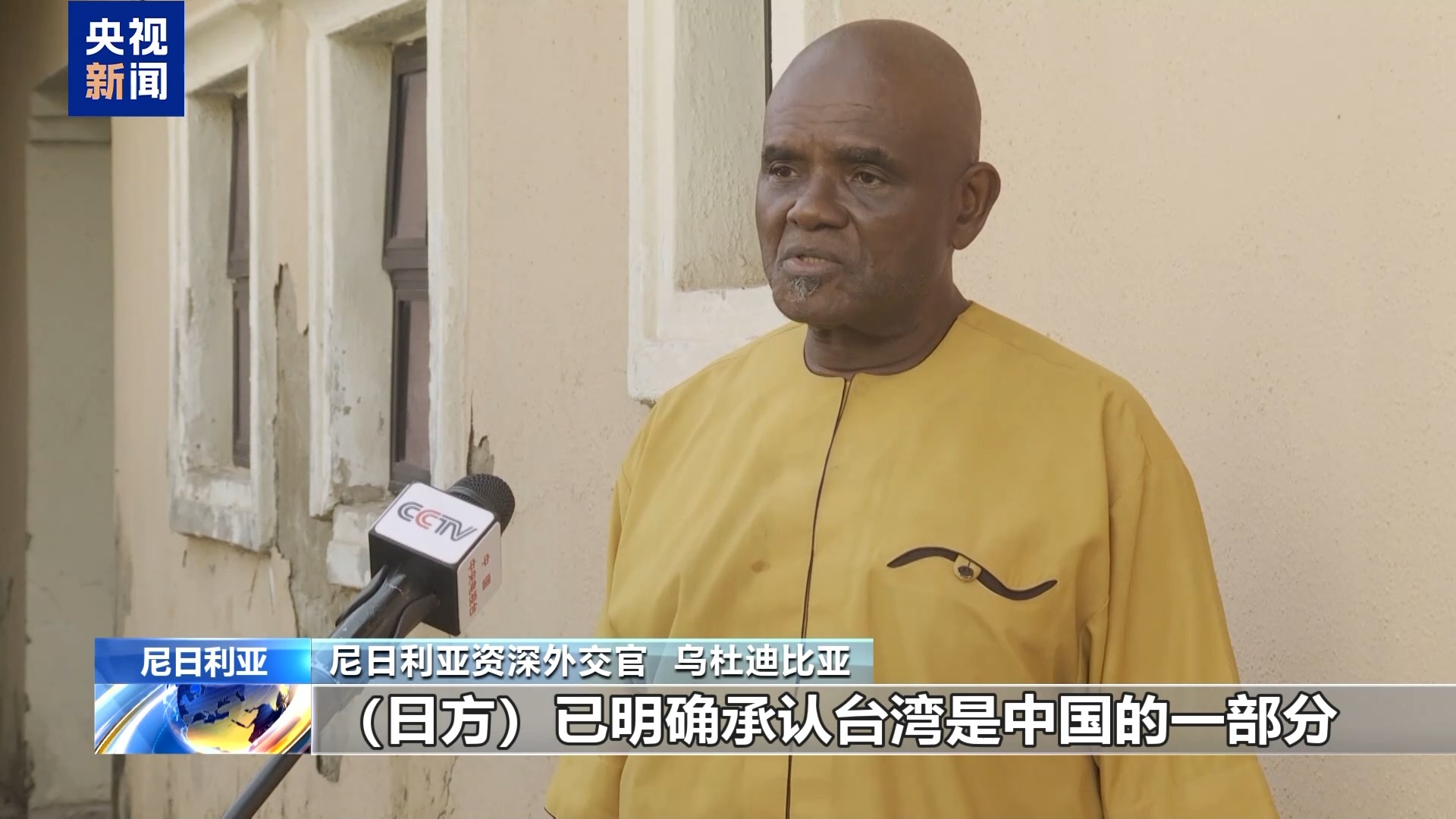
Group 1 - The remarks made by Japanese Prime Minister Sanae Takaichi have raised significant concerns and criticisms from the international community, as they are seen as a violation of international consensus and historical facts, potentially harming regional peace and stability [1] - The Deputy Minister of Agriculture and Livestock of Honduras, Alegria, emphasized that Takaichi's statements are inappropriate, as the international community adheres to the One China principle, which is a global consensus [3] - Nigerian senior diplomat Ududibia pointed out that the 1972 Sino-Japanese Joint Statement clearly acknowledges Taiwan as part of China, and Takaichi's claims regarding Taiwan posing a threat to Japan are reckless and erroneous [5] Group 2 - Wojciech Nowiak, a professor at Adam Mickiewicz University, stated that the current situation in Sino-Japanese relations is instigated by Japanese political figures, suggesting that Japan is playing with fire [7] - The historical context of World War II remains significant, as China continues to remember the immense suffering caused by events such as the Nanjing Massacre, while Japan has yet to issue a formal apology [7]
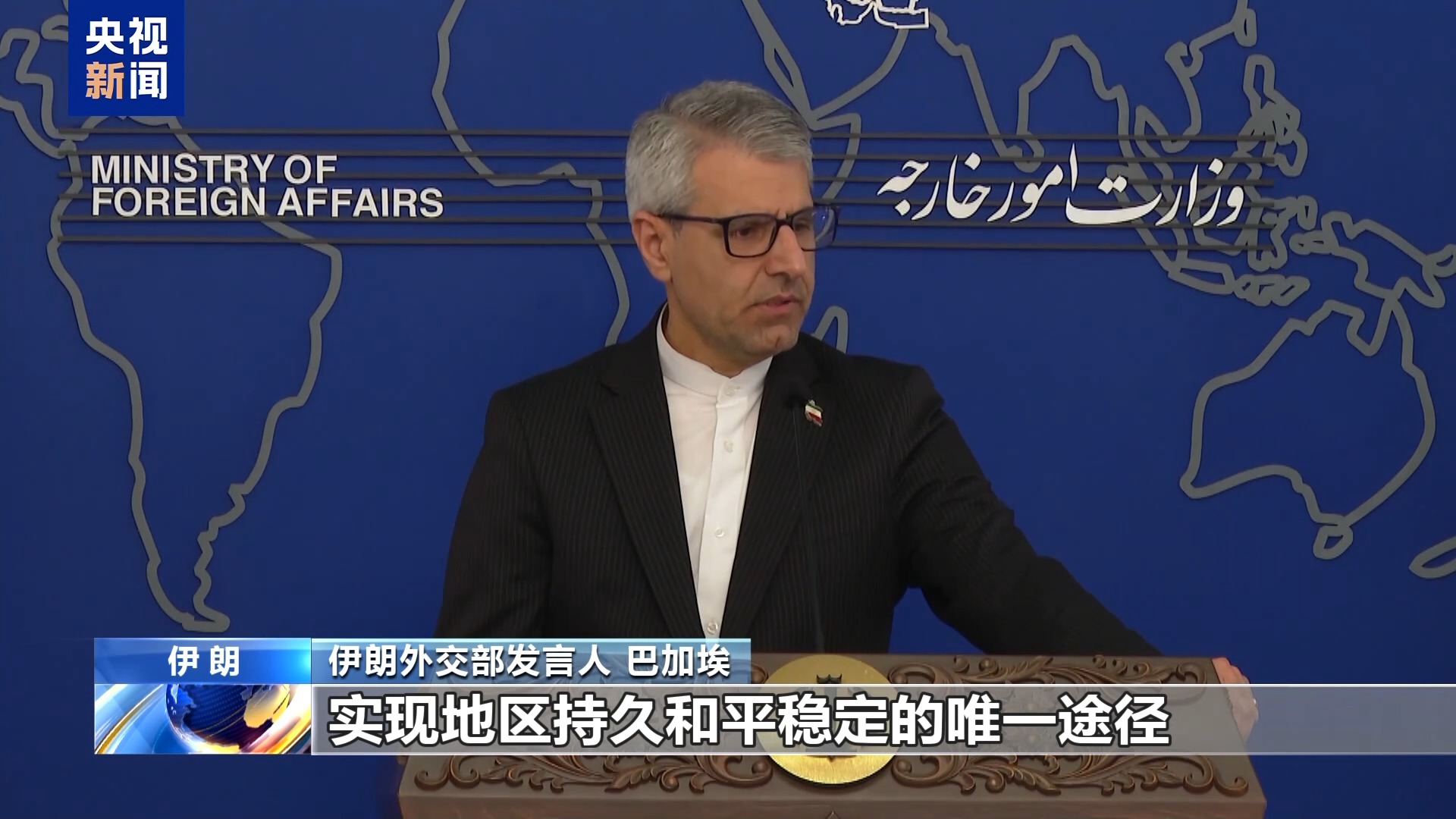
伊朗外交部:以色列用各种借口企图制造地区紧张局势
Yang Shi Xin Wen· 2025-12-30 01:50
Group 1 - The core viewpoint is that the Iranian government believes the only way to achieve lasting peace and stability in the region is to contain Israel, which it describes as having an aggressive nature and creating tension in the Middle East [1][3] - Iran has demonstrated its strength and is confident in overcoming challenges posed by psychological warfare from the US and Israel, with its armed forces actively enhancing their capabilities [1] - The Iranian Foreign Ministry spokesperson, Baghaei, stated that Israel has used various pretexts, including Iran's nuclear energy program and defense capabilities, to create instability in the region [3] Group 2 - Iran maintains diplomatic communication channels with the US regarding nuclear issues, but views the US stance as deceptive, claiming that the US sets unacceptable preconditions for negotiations [5] - Baghaei emphasized that if Israel engages in any acts of aggression or adventurism, it will face a more severe response than before [3]
中柬泰三方,发表新闻公报
财联社· 2025-12-29 08:10
Core Viewpoint - The meeting among China, Cambodia, and Thailand emphasizes the importance of dialogue and cooperation to ensure regional peace and stability, particularly following the signing of a ceasefire joint statement by Cambodia and Thailand [3][4]. Group 1: Immediate Actions - The urgent priority is to consolidate the ceasefire situation, ensuring the comprehensive and effective implementation of the ceasefire joint statement [3]. - China supports Cambodia and Thailand in their efforts to achieve a lasting ceasefire and is willing to provide necessary support for humanitarian demining efforts [3]. Group 2: Next Steps - The focus will be on restoring normal interactions, with China welcoming the commitment of Cambodia and Thailand to resume multi-level communication and cooperation in border areas [4]. - China is prepared to assist with humanitarian matters, including the resettlement of displaced persons in border regions [4]. Group 3: Political Trust - Cambodia and Thailand are committed to rebuilding political trust and enhancing diplomatic communication channels, with an emphasis on strengthening contacts between foreign ministers [4]. - Both countries aim to create a conducive atmosphere for the upcoming Mekong-Lancang Cooperation Leaders' Meeting in Thailand [4]. Group 4: Long-term Goals - The long-term objective is to improve bilateral relations, with China encouraging both countries to gradually restore normal diplomatic relations [4]. - China is willing to provide a platform for more comprehensive and effective communication between Cambodia and Thailand when necessary [4]. Group 5: Regional Stability - Cambodia and Thailand are dedicated to resolving differences peacefully and adhering to international charters, while also committing to combat cross-border crimes such as telecom fraud [4][5]. - The three parties agree to take stronger measures to ensure the safety of citizens and property in the region [4].
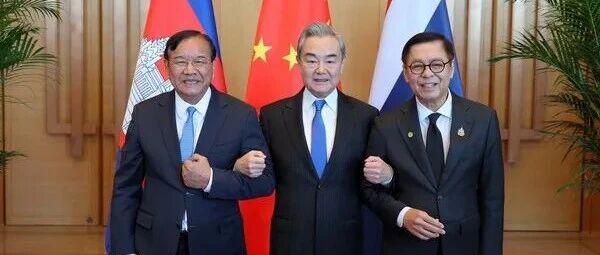
中柬泰三方抚仙会晤新闻公报
第一财经· 2025-12-29 07:39
Core Viewpoint - The meeting held between China, Cambodia, and Thailand emphasizes the importance of dialogue and cooperation to ensure regional peace and stability, particularly following the recent ceasefire agreement between Cambodia and Thailand [4][6]. Group 1: Immediate Actions - The immediate priority is to consolidate the ceasefire situation, ensuring the comprehensive and effective implementation of the ceasefire joint statement [4]. - China supports Cambodia and Thailand in their efforts to achieve a lasting ceasefire and is willing to provide necessary support for humanitarian demining efforts [4][5]. Group 2: Restoration of Normal Relations - The next focus is on restoring normal interactions, with China welcoming the commitment from Cambodia and Thailand to resume multi-level communication and cooperation in border areas [5]. - China is prepared to assist with humanitarian matters, including the resettlement of displaced persons in border regions [5]. Group 3: Rebuilding Political Trust - Cambodia and Thailand are committed to rebuilding political trust and enhancing diplomatic communication channels, with plans to create a conducive atmosphere for the upcoming Mekong River Cooperation Leaders' Meeting [6]. Group 4: Long-term Goals - The long-term objective is to improve bilateral relations, with China encouraging both countries to create conditions for the gradual restoration of normal diplomatic relations [6]. Group 5: Regional Stability - Cambodia and Thailand are dedicated to resolving differences peacefully and are committed to combating cross-border crimes such as telecom fraud to ensure the safety of their citizens [6].

解放军报:篡改历史包藏祸心,扩军黩武野心毕露
Xin Lang Cai Jing· 2025-12-24 00:17
Core Viewpoint - The article highlights the concerning trend in Japan of downplaying its historical aggression, particularly regarding the Nanjing Massacre, as part of a broader revisionist narrative that seeks to reshape public perception of Japan's wartime actions [1][2][3] Group 1: Historical Revisionism - Japan's Nagasaki Atomic Bomb Museum plans to change the term "Nanjing Massacre" to "Nanjing Incident," reflecting a wider trend of minimizing Japan's wartime atrocities [1] - There is a systematic reduction or removal of exhibits that accurately portray Japan's colonial aggression, leading to a scarcity of museums that present a complete and objective history [1] - Right-wing forces in Japan continue to propagate false narratives, claiming Japan never invaded and framing its actions as liberatory, while ignoring the atrocities committed [2] Group 2: Impact on Public Perception - A recent survey indicates a significant decline in the recognition of Japan's wartime actions as aggression, with only 35% of respondents acknowledging it as such, down from 52% in 1994 [2] - The number of respondents who are unsure about Japan's wartime history has risen dramatically to 48%, compared to 15% in 1994, indicating a troubling trend in historical awareness [2] Group 3: Military Expansion and Nationalism - Japan is increasingly abandoning its "defensive" military posture, seeking to expand its military capabilities under the guise of external threats, which raises concerns about regional stability [3] - The Japanese government is planning to deploy missiles on the Yonaguni Island and is discussing revisions to its "Three Non-Nuclear Principles," signaling a shift towards militarization [3] - The resurgence of militaristic ideologies poses a significant risk to peace in Asia, necessitating vigilance from countries that suffered under Japanese militarism [3]
外交部:日方没必要大惊小怪、对号入座
证券时报· 2025-12-11 12:31
Group 1 - The core viewpoint of the article highlights the increasing criticism within Japan regarding Prime Minister Kishi's remarks on Taiwan, indicating a growing awareness of the need for respectful dialogue based on equality [1] - The article mentions that the recent joint air strategic patrols by China and Russia are part of an annual cooperation plan, aimed at demonstrating their commitment to regional peace and stability, countering Japan's concerns [1] - The Chinese government has issued consular warnings to its citizens regarding travel to Japan due to recent earthquakes and tsunami alerts, emphasizing its responsibility for the safety and health of its citizens abroad [3]