
地磁暴

Search documents
地磁暴对人体健康影响微乎其微
Xin Lang Cai Jing· 2026-01-22 02:45
Core Viewpoint - The article discusses the recent X1.9-class solar flare and its resulting geomagnetic storm, marking the first significant solar activity of 2026, with implications for space weather forecasting and its effects on Earth [1][2]. Group 1: Solar Activity and Geomagnetic Storms - The X1.9-class solar flare occurred on January 19, 2026, leading to a significant geomagnetic storm that began on January 20, resulting in 15 hours of severe geomagnetic activity [1]. - The geomagnetic storm was triggered by a coronal mass ejection (CME), which can eject billions of tons of solar material at speeds exceeding 1,200 kilometers per second, causing significant disturbances in Earth's magnetic field [2][3]. Group 2: Forecasting and Monitoring - Current capabilities allow for geomagnetic storm warnings, which involve monitoring solar activity through satellites and predicting the arrival and impact of solar events on Earth [2][3]. - The forecasting process includes tracking solar flares, estimating the speed and direction of CMEs, and measuring solar wind characteristics to predict storm intensity and duration [3]. Group 3: Impact on Human Life and Technology - Experts indicate that geomagnetic storms have negligible effects on human health, as they are imperceptible and do not pose a direct threat [4]. - However, geomagnetic storms can affect satellite operations and aviation, necessitating monitoring and potential adjustments to satellite orbits [4].
地磁暴对人体健康有影响吗?
Huan Qiu Wang Zi Xun· 2026-01-22 01:08
Core Viewpoint - The article discusses the recent X1.9-class solar flare and its resulting geomagnetic storms, highlighting the intensity and implications of these solar activities on Earth and human life [1]. Group 1: Causes of Geomagnetic Storms - The recent geomagnetic storm was triggered by a coronal mass ejection (CME), which can eject billions of tons of solar material at speeds of hundreds to over a thousand kilometers per second [2]. - This particular event is noted as the strongest solar proton event since March 24, 1991, and the third strongest on record [2]. - The CME was directed towards Earth and occurred near the solar surface, contributing to the high intensity of the geomagnetic storm [2]. Group 2: Forecasting and Warnings - Current capabilities allow for geomagnetic storm warnings, which differ fundamentally from traditional weather forecasts [3]. - The forecasting process involves monitoring solar activity, predicting the arrival of solar "shock waves," and estimating the storm's intensity and duration [3]. - There is a noted error margin of approximately ±12 hours in predicting the timing of geomagnetic storms due to a lack of observational data during the CME's journey to Earth [4]. Group 3: Impact on Human Health and Technology - Experts agree that geomagnetic storms have minimal impact on human health, as they are not perceivable and do not pose a direct threat [5][6]. - While there are no health risks, geomagnetic storms can affect aircraft and satellite operations, necessitating monitoring and potential adjustments to satellite orbits [6]. - The storms may significantly impact animals that rely on geomagnetic navigation, such as homing pigeons, suggesting caution during such events [6].
我国北方多地迎来新年首场“极光秀”
Xin Hua She· 2026-01-22 00:30
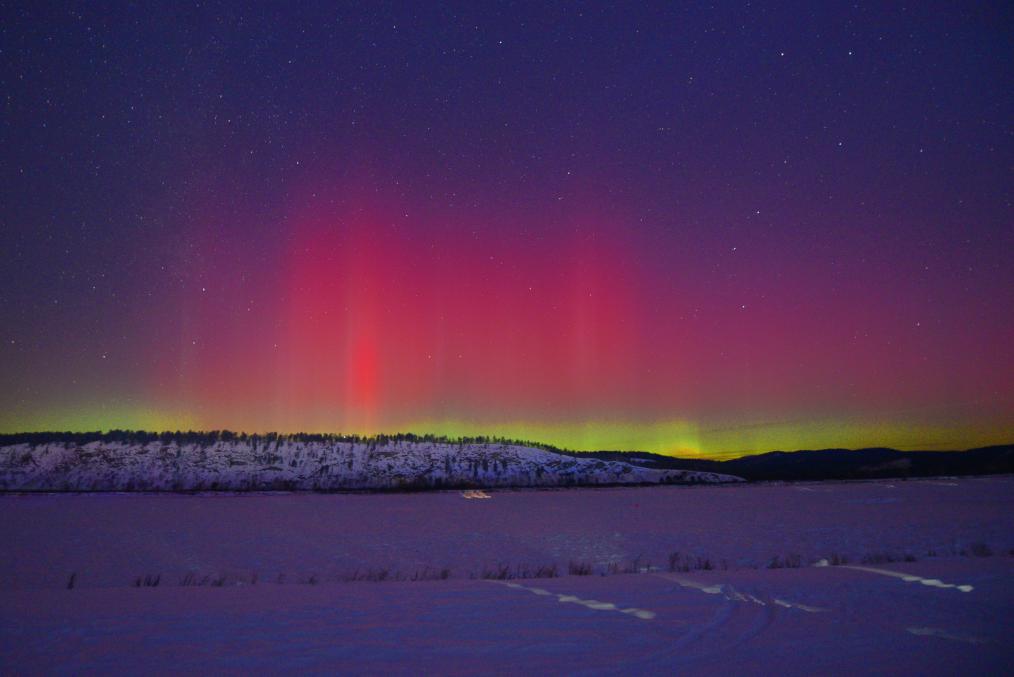
Core Viewpoint - The first aurora display of the new year was observed in several northern regions of China due to a geomagnetic storm that occurred on January 20, with significant intensity noted [1][2]. Group 1: Geomagnetic Storm and Aurora - A geomagnetic storm is caused by the interaction of charged particle flows from the sun with the Earth's magnetic field, primarily triggered by coronal mass ejections (CME) [2]. - The geomagnetic storm on January 20 was classified as a "super level," providing a great opportunity for aurora enthusiasts to witness vibrant auroras [2]. Group 2: Observations and Experiences - Aurora enthusiasts reported varying experiences; some, like Wang Junfeng in Beijing, were unable to see the aurora despite waiting for hours, while others in regions like Hami, Xinjiang, were able to observe colorful auroras [4][6]. - Observations indicated that the auroras featured colors such as red, orange, and green, although cloud cover affected visibility for some observers [6]. - The auroras were noted to be particularly beautiful in areas like the Eerguna Wetland, with reports of long-lasting displays due to the influence of two CMEs [6].

南非观测到 极强地磁暴
Xin Lang Cai Jing· 2026-01-21 16:27
Core Viewpoint - A geomagnetic storm triggered by a solar flare reached G5 (extreme) level in South Africa, impacting satellite performance and wireless communication [1] Group 1: Solar Activity - On the 18th, a prolonged X1.9 solar flare caused a coronal mass ejection, leading to charged particles reaching Earth [1] - The geomagnetic storm initially reached G4 (severe) level on the night of the 19th before escalating to G5 (extreme) level early on the 20th [1] Group 2: Geomagnetic Storm Measurement - The Kp index, which measures the intensity of geomagnetic storms, recorded a value of 9 during the G5 storm, indicating a significant disturbance [1] - The Kp index ranges from 0 to 9, with higher values representing stronger geomagnetic storm intensity [1] Group 3: Potential Impacts - The geomagnetic storm can cause severe disturbances in the Earth's magnetosphere, ionosphere, and upper atmosphere [1] - Potential impacts include effects on satellite performance and safety, as well as disruptions to wireless communication [1]
特大地磁暴发生!会不会给身体带来影响?
Xin Lang Cai Jing· 2026-01-21 11:16
Core Viewpoint - The article discusses the occurrence of an X1.9-class solar flare from solar activity region 14341, marking the first X-class flare of 2026, which led to significant geomagnetic storms on Earth starting January 20, 2026 [1][9]. Group 1: Solar Activity - The X1.9-class solar flare occurred on January 19, 2026, at 2:09 AM Beijing time [1][9]. - Following the solar flare, geomagnetic storms began on January 20, 2026, with a total of 6 hours of severe geomagnetic storms and 6 hours of moderate geomagnetic storms reported by 8 PM the same day [1][9]. Group 2: Geomagnetic Effects - The Fengyun-3E satellite detected the geomagnetic activity, showing a rapid decline in geomagnetic index values as the storm commenced [3][11]. - The Fengyun-3H satellite captured images of auroras in the Northern Hemisphere, visually indicating the regions affected by the auroras [4][15]. Group 3: Impacts of Geomagnetic Storms - Geomagnetic storms, while not harmful to human health, can affect aircraft and satellite operations, potentially causing satellites to experience altitude decreases due to atmospheric drag and increasing positioning errors in satellite navigation systems [8][17]. - Strong geomagnetic activity may significantly impact animal migration and navigation abilities, particularly for species like homing pigeons that rely on solar and geomagnetic cues [8][17].
美国发布警报
中国能源报· 2026-01-21 07:06
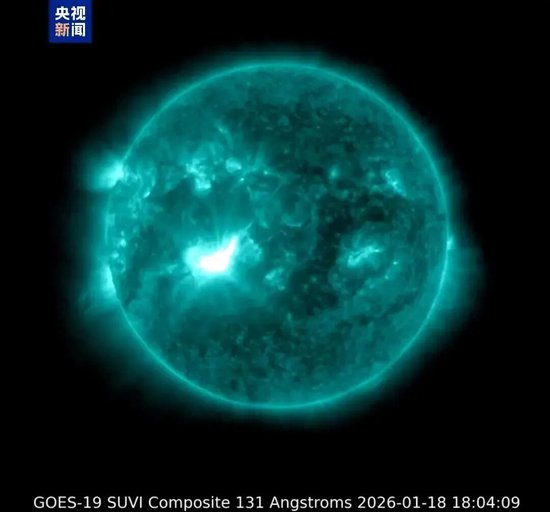
Core Viewpoint - The article discusses the severe geomagnetic storm and solar radiation storm currently affecting Earth's space environment, with impacts expected to last until the 21st [1][2]. Group 1: Geomagnetic and Solar Radiation Storms - The National Oceanic and Atmospheric Administration (NOAA) issued a warning about a strong geomagnetic storm and severe solar radiation storm, triggered by a solar flare on the 18th, which resulted in an S4 level solar radiation storm [1][2]. - The geomagnetic storm reached G4 level (severe) on two occasions, first on the 19th and again on the 20th, marking the strongest geomagnetic activity since October 2003 [2]. Group 2: Impacts on Infrastructure and Communication - High-latitude regions may experience voltage fluctuations in power systems, with some power grids facing operational instability risks due to the strong geomagnetic storm [2]. - Satellites may encounter attitude anomalies and increased atmospheric drag, while high-frequency radio communications in high-latitude areas could experience attenuation or interruptions [2]. - The S4 level solar radiation storm poses increased radiation exposure risks for astronauts and polar flight personnel, as well as heightened risks for geostationary satellites and space launch systems [2].

科普|地磁暴对地球影响几何
Xin Hua She· 2026-01-21 06:18
Core Viewpoint - A strong geomagnetic storm and severe solar radiation storm are currently affecting the Earth's space environment, with impacts expected to last until January 21 [1] Group 1: Geomagnetic Storms - Solar radiation storms are caused by intense solar activities such as flares and coronal mass ejections, which release high-speed charged particle flows that interact with the Earth's magnetic field, leading to geomagnetic storms [1] - The current solar activity is in the 25th cycle, characterized by periodic changes in solar activity approximately every 11 years [1] Group 2: Impact on Technology - The Swiss journal "Frontiers in Astronomy and Space Sciences" reported that geomagnetic activity significantly affects the fall of SpaceX's Starlink satellites, with the descent phase during strong geomagnetic storms occurring 10 to 12 days earlier than during quiet periods [2] - High-latitude regions may experience voltage fluctuations in power systems and instability in some power grids due to strong geomagnetic storms [2] - High-frequency radio communications in high-latitude areas may suffer from attenuation or interruption during geomagnetic storms [2] Group 3: Effects on Human Health - While the atmosphere protects humans on the ground from geomagnetic storms, individuals sensitive to electromagnetic environments may experience anxiety, insomnia, and decreased sleep quality [2]
地球出现特大地磁暴
Di Yi Cai Jing Zi Xun· 2026-01-20 14:28
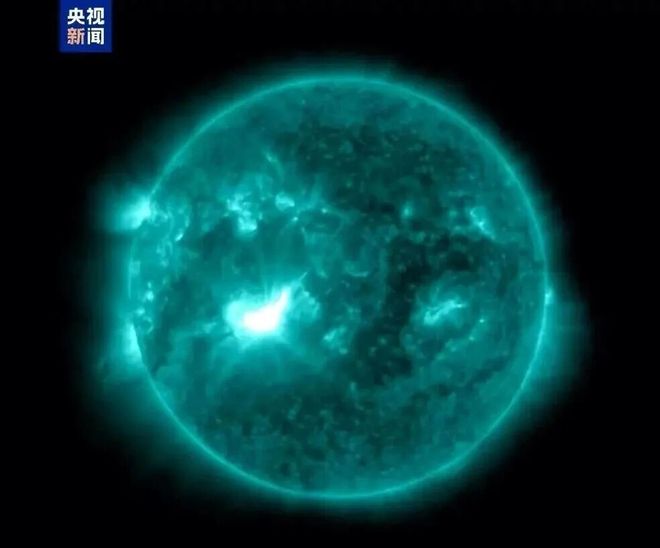
Core Viewpoint - The article discusses the occurrence of an X1.9-class solar flare from sunspot 14341, marking the first X-class flare of 2026, which has led to significant geomagnetic storms on Earth, resulting in beautiful auroras in various regions of China [2][5]. Group 1: Solar Activity and Geomagnetic Storms - On January 19, 2026, at 2:09 AM Beijing time, sunspot 14341 erupted with an X1.9-class flare, the first of its kind in 2026 [2]. - Following the flare, geomagnetic storms began on January 20, 2026, at 2:00 AM, with reports of 6 hours of severe geomagnetic storms and 6 hours of moderate storms, which are still ongoing [2]. Group 2: Effects of Geomagnetic Storms - The geomagnetic storms have led to the appearance of stunning auroras in northern China, particularly in the Greater Khingan Range of Heilongjiang province [7]. - Geomagnetic storms can disrupt shortwave communication and navigation systems across most regions of China [8]. - The storms cause disturbances in the ionosphere, affecting ground communication and satellite signals, which may impact the accuracy of navigation satellite systems and the quality of mobile and satellite TV signals [10]. - Strong geomagnetic storms can increase current loads on power transmission systems, potentially damaging transformers and other grid facilities, leading to power outages [11]. Group 3: Impact on Daily Life - The impact of geomagnetic storms on public daily life and health is minimal, and no special precautions are necessary [12]. - However, strong geomagnetic activity may affect animal migration and navigation abilities, particularly for birds that rely on solar and geomagnetic navigation [12].
地球出现特大地磁暴
第一财经· 2026-01-20 14:12
Core Viewpoint - The article discusses the occurrence of an X1.9-class solar flare from sunspot 14341, marking the first X-class flare of 2026, which has led to significant geomagnetic storms affecting Earth and creating beautiful auroras in several regions of China [3][8]. Group 1: Solar Activity and Geomagnetic Storms - On January 19, 2026, at 2:09 AM Beijing time, a significant solar flare occurred, resulting in geomagnetic storms starting from January 20, 2026, at 2:00 AM [3]. - The geomagnetic storm has been categorized into six hours of severe geomagnetic storms and six hours of moderate geomagnetic storms, with the storm still ongoing [3]. Group 2: Effects of Geomagnetic Storms - Geomagnetic storms can disrupt shortwave communication and navigation systems across most regions of China to varying degrees [10]. - The storms can increase atmospheric particle movement, leading to greater flight resistance for spacecraft, posing risks to their safety in orbit [11]. - Strong geomagnetic storms may affect power transmission systems, increasing current loads on transmission lines and potentially damaging transformers or other grid facilities, which could result in power outages [13]. Group 3: Impact on Daily Life - The impact of geomagnetic storms on public daily life and health is minimal, and no special precautions are necessary [15]. - However, strong geomagnetic activity may affect animal migration and navigation abilities, particularly for species that rely on solar and geomagnetic navigation, such as homing pigeons [15].
南非观测到极强地磁暴
Xin Hua She· 2026-01-20 14:04
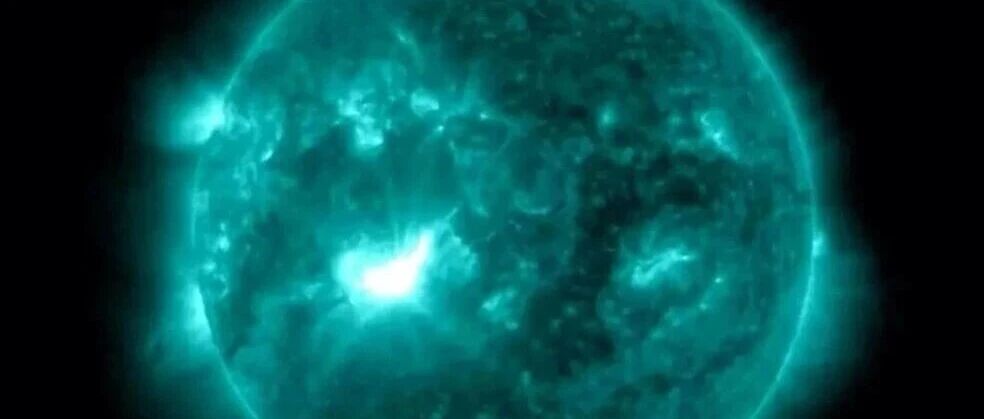
Core Viewpoint - A geomagnetic storm triggered by a solar storm reached G5 (extreme) level in South Africa on January 20, 2023, impacting satellite performance and wireless communication [1] Group 1: Solar Activity - A prolonged X1.9 solar flare on January 18 initiated a coronal mass ejection, leading to charged particles reaching Earth and causing a geomagnetic storm [1] - The geomagnetic storm escalated to G4 (severe) level on the evening of January 19 before reaching G5 (extreme) level early on January 20 [1] Group 2: Geomagnetic Storm Metrics - The Kp index, which measures the intensity of geomagnetic storms, peaked at 9 during the G5 storm, indicating a high level of disturbance in Earth's magnetic field [1] - On January 20 at 6:21 AM, the Earth experienced a Kp value of 6, with solar wind speeds reaching 900 kilometers per second, while the geomagnetic storm intensity in Hermanus was recorded at Kp value 7 [1] Group 3: Effects and Observations - Geomagnetic storms can cause significant disturbances in the Earth's magnetosphere, ionosphere, and upper atmosphere, potentially affecting satellite operations and wireless communications [1] - Residents in parts of South Africa's Western Cape shared photos of auroras on social media, which are more vibrant during stronger geomagnetic storms [1]