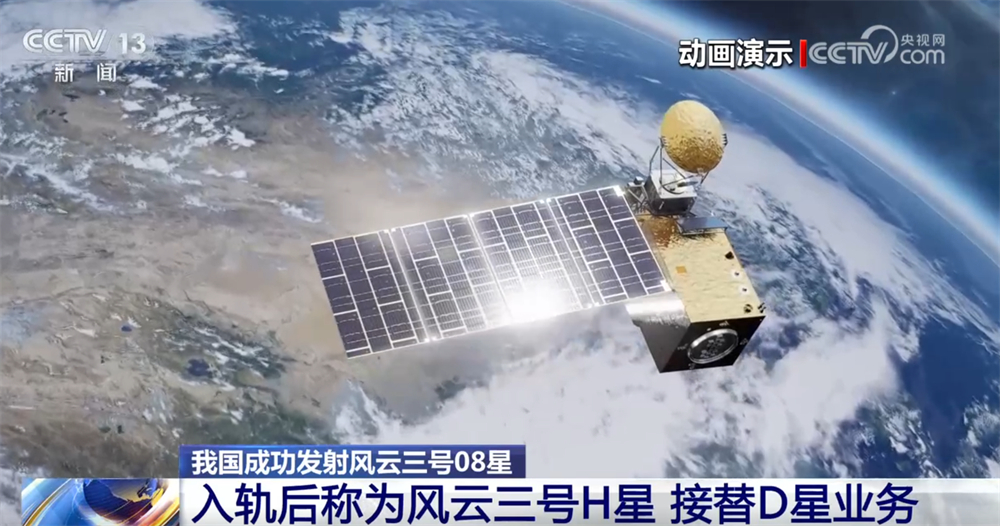
风云三号H星

Search documents
特大地磁暴发生!会不会给身体带来影响?
Xin Lang Cai Jing· 2026-01-21 11:16
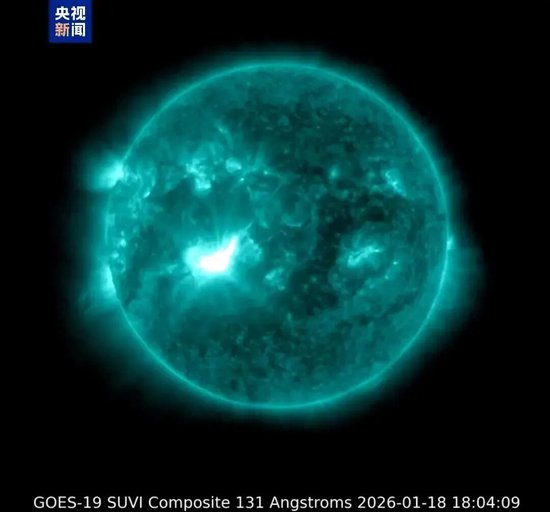
Core Viewpoint - The article discusses the occurrence of an X1.9-class solar flare from solar activity region 14341, marking the first X-class flare of 2026, which led to significant geomagnetic storms on Earth starting January 20, 2026 [1][9]. Group 1: Solar Activity - The X1.9-class solar flare occurred on January 19, 2026, at 2:09 AM Beijing time [1][9]. - Following the solar flare, geomagnetic storms began on January 20, 2026, with a total of 6 hours of severe geomagnetic storms and 6 hours of moderate geomagnetic storms reported by 8 PM the same day [1][9]. Group 2: Geomagnetic Effects - The Fengyun-3E satellite detected the geomagnetic activity, showing a rapid decline in geomagnetic index values as the storm commenced [3][11]. - The Fengyun-3H satellite captured images of auroras in the Northern Hemisphere, visually indicating the regions affected by the auroras [4][15]. Group 3: Impacts of Geomagnetic Storms - Geomagnetic storms, while not harmful to human health, can affect aircraft and satellite operations, potentially causing satellites to experience altitude decreases due to atmospheric drag and increasing positioning errors in satellite navigation systems [8][17]. - Strong geomagnetic activity may significantly impact animal migration and navigation abilities, particularly for species like homing pigeons that rely on solar and geomagnetic cues [8][17].

新材料产业周报:存储器价格持续上涨,神舟二十一号发射圆满成功-20251102
Guohai Securities· 2025-11-02 11:58
Investment Rating - The industry investment rating is "Recommended (Maintain)" [1] Core Views - The new materials sector is a crucial direction for the chemical industry, currently experiencing rapid growth in downstream demand. With policy support and technological breakthroughs, domestic new materials are expected to accelerate their long-term growth. The report emphasizes that "one generation of materials supports one generation of industry," highlighting the foundational nature of the new materials industry for other sectors [4]. Summary by Relevant Sections 1. Electronic Information Sector - Focus on semiconductor materials, display materials, and 5G materials [5] - As of October 31, 2025, global AI server shipments are projected to grow by over 20% annually, with AI applications driving demand [6][20]. 2. Aerospace Sector - Key areas of interest include PI films, precision ceramics, and carbon fibers [7]. 3. New Energy Sector - Focus on photovoltaic materials, lithium-ion batteries, proton exchange membranes, and hydrogen storage materials [8]. - In 2025, China's new energy heavy trucks have seen sales exceed 10,000 units for seven consecutive months, with September sales surpassing 20,000 units, marking a record high [9]. 4. Biotechnology Sector - Emphasis on synthetic biology and scientific services [10]. - A strategic cooperation agreement was signed between Zhejiang University and Shanghai Chemical Industry Park Development Co., focusing on project applications and technology exchanges [11]. 5. Energy Conservation and Environmental Protection Sector - Focus on adsorption resins, membrane materials, and biodegradable plastics [12]. - The Henan provincial government has issued an action plan for upgrading the steel industry, aiming for significant improvements in energy efficiency and environmental performance by 2025 [13]. Industry Rating and Investment Strategy - The new materials sector is expected to enter a prosperous cycle driven by downstream application sectors, maintaining a "Recommended" rating [14]. Key Companies and Earnings Forecast - A list of key companies with their stock prices and earnings per share (EPS) forecasts for 2024-2026 is provided, indicating various investment ratings such as "Buy" and "Increase Holdings" [14].
覆盖大气、极地与空间天气 风云三号H星首套图发布
Yang Shi Xin Wen· 2025-10-29 03:38
Core Insights - The Fengyun-3H satellite (H satellite) has officially released its first set of images, showcasing its capabilities in atmospheric remote sensing and global observation [1][2] - H satellite is equipped with nine remote sensing instruments, six of which are currently operational, enabling it to monitor various atmospheric elements and greenhouse gases [1] - The satellite is expected to enter its operational phase in July 2026, providing global data services [3] Group 1: Atmospheric Monitoring - H satellite can perform multi-element atmospheric remote sensing, including temperature, humidity, and cloud observations, while also capturing greenhouse gas and aurora information [1] - It features a high-resolution optical imaging capability, allowing for seamless daily multi-spectral global observations [1][2] - Advanced microwave instruments, such as the microwave temperature and humidity meters, facilitate multi-band global observations, supporting numerical weather forecasting [1] Group 2: Typhoon Monitoring - The satellite utilizes advanced atmospheric vertical detection instruments to conduct a "CT scan" of the atmosphere, successfully capturing vertical temperature and humidity information of Typhoon "Maidum" [1] Group 3: Polar Observation - H satellite has a high-frequency observation capability for polar regions, with 14 daily orbits passing over the North and South Poles [2] - It provides clear images of the Antarctic ice and snow cover, and quantitatively detects polar sea ice and snow [2] Group 4: Space Weather Monitoring - The satellite is equipped with instruments for space weather monitoring, including a global navigation satellite occultation detector and an ionospheric photometer [2] - It can reconstruct the global three-dimensional electron density field, providing critical data for space weather warnings [2]
风云三号H星成功发射 进一步强化地球系统多圈层数据获取能力
Ke Ji Ri Bao· 2025-09-28 02:12
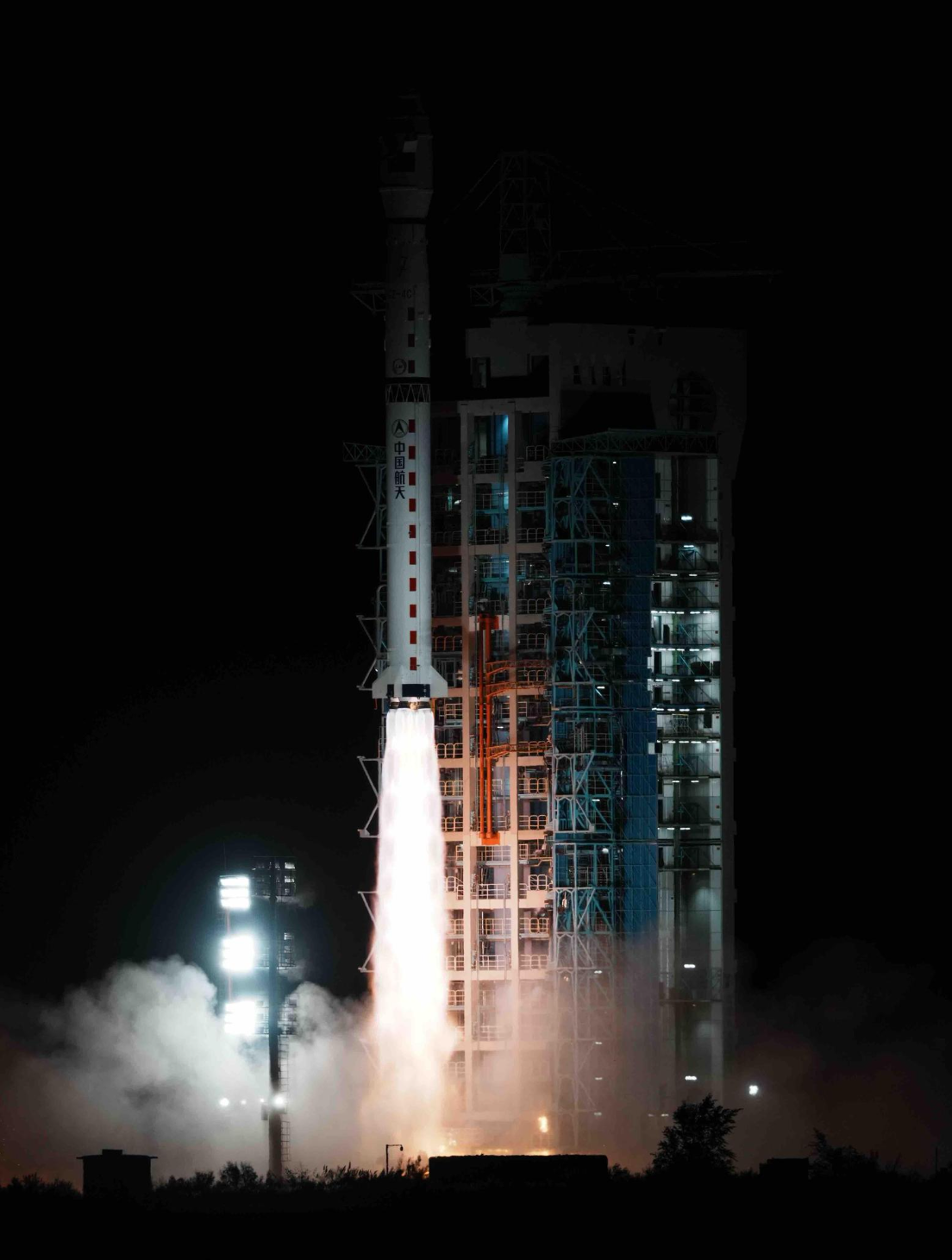
Core Points - The successful launch of the Fengyun-3H satellite enhances China's capabilities in global monitoring, forecasting, and service in meteorology [1][6] - Fengyun-3H will replace the Fengyun-3D satellite, which has been operational for nearly 8 years, ensuring continuity in core meteorological services [1][3] Group 1: Satellite Launch and Functionality - The Fengyun-3H satellite was launched using the Long March 4B rocket from the Jiuquan Satellite Launch Center [1] - It is part of a multi-satellite network that includes the Fengyun-3F, Fengyun-3E, and Fengyun-3G satellites, providing comprehensive observational data [3] Group 2: Technological Advancements - Fengyun-3H is equipped with nine payloads, including the newly developed high-spectral greenhouse gas monitoring instrument II, which achieves global monitoring of greenhouse gases with a 100 km width [4] - The satellite's capabilities include aurora imaging and particle concentration detection, enhancing the ability to forecast space weather events [4] Group 3: Data Products and Services - Upon becoming operational, Fengyun-3H will provide 70 products across six categories, including cloud radiation, sea surface, land surface, atmospheric parameters, atmospheric components, and space weather [4] - The satellite supports meteorological core services and enhances China's capabilities in numerical weather prediction, climate change monitoring, and disaster reduction [4][5] Group 4: Global Impact - China has launched a total of 22 Fengyun meteorological satellites, with 9 currently operational, providing data products and services to 133 countries and regions [5]
风云三号H星成功发射 首次实现百公里幅宽高精度全球温室气体精细探测
Ren Min Ri Bao· 2025-09-28 00:01
Group 1 - The core point of the article is the successful launch of the Fengyun-3H satellite, which will enhance China's capabilities in weather forecasting, climate change monitoring, and disaster prevention [1] - The Fengyun-3H satellite is equipped with 9 payloads and will provide 70 products across 6 categories, including cloud radiation, sea surface, land surface, atmospheric parameters, atmospheric components, and space weather [1] - China has launched a total of 22 Fengyun meteorological satellites, with 9 currently operational, providing data services to 133 countries and regions [1] Group 2 - The successful launch of 11 low-orbit satellites for satellite internet was conducted using the Long March 6 modified rocket, marking another achievement in China's satellite deployment efforts [2]
首次实现百公里幅宽高精度全球温室气体精细探测
Ren Min Wang· 2025-09-27 21:56
Core Points - China successfully launched the Fengyun-3H satellite on September 27, 2023, at 3:28 AM using the Long March 4B rocket, marking a significant advancement in meteorological satellite capabilities [1] - The Fengyun-3H satellite will replace the Fengyun-3D satellite, which has been operational for nearly 8 years, and will work in conjunction with other Fengyun satellites to enhance observational capabilities [1] - The Fengyun-3H is equipped with 9 payloads and will provide 70 products across 6 categories, significantly improving China's capabilities in weather forecasting, climate change monitoring, and disaster prevention [1] - As of now, China has launched a total of 22 Fengyun meteorological satellites, with 9 currently operational, providing data services to 133 countries and regions [1] - China is the only country globally operating a network of meteorological satellites in various orbits, including morning, afternoon, and inclined orbits [1] Additional Launch - On the same day, China successfully launched 11 low-orbit satellites for satellite internet using the Long March 6 rocket at 8:40 PM, completing the mission successfully [2]
“风云”可测,这颗卫星能观“气象万千”
Xin Hua She· 2025-09-27 12:56
Core Viewpoint - The successful launch of the Fengyun-3H satellite enhances China's capabilities in weather forecasting, atmospheric chemistry, and climate change monitoring, contributing significantly to global climate change efforts [1][2][3] Group 1: Satellite Features - Fengyun-3H satellite weighs approximately 2780 kilograms and operates at an altitude of 830 kilometers in a sun-synchronous orbit with an inclination of 98.7 degrees [1] - It is equipped with nine advanced remote sensing instruments, including a high-spectral greenhouse gas monitoring instrument, which will enable high-precision global greenhouse gas detection with a 100-kilometer width [1][2] Group 2: Monitoring Capabilities - The satellite will monitor ice and snow cover, sea surface temperature, and provide remote sensing information necessary for short-term climate forecasting and climate change assessment [2] - It will enhance the ability to respond to natural disasters and environmental issues, improving comprehensive capabilities for weather disaster prevention and mitigation [2] Group 3: Global Contribution - China operates a unique multi-satellite network for near-Earth meteorological observation, providing a complete global observation network with operational satellites in various orbits [3] - The Fengyun-3H satellite will replace the Fengyun-3D satellite in the afternoon monitoring role and work in conjunction with other operational satellites to ensure high-quality data support for meteorological services [3]
风云气象卫星再添“新成员” 有何亮点?一文了解全球防灾减灾中的中国智慧!
Yang Shi Wang· 2025-09-27 03:17
Core Viewpoint - The successful launch of the Fengyun-3 08 satellite enhances China's capabilities in global climate monitoring and weather forecasting, marking a significant advancement in the Fengyun satellite family [2][6][19] Group 1: Launch Details - The Fengyun-3 08 satellite was successfully launched on September 27, using the Long March 4B rocket from the Jiuquan Satellite Launch Center, marking the 596th flight of the Long March series [1] - Upon entering orbit, the Fengyun-3 08 satellite will be designated as Fengyun-3 H, replacing the Fengyun-3 D satellite in its operational role [2][14] Group 2: Technological Advancements - The Fengyun-3 H satellite is equipped with nine advanced payloads, including a newly developed hyperspectral greenhouse gas monitoring instrument capable of high-precision monitoring of CO2 and methane globally [2][4] - It features a wide 100-kilometer observation width and higher precision than existing international carbon satellites, significantly improving data acquisition on carbon emissions and exchanges at various regional levels [4] Group 3: Applications and Services - The satellite will provide six categories of products, including cloud radiation, atmospheric parameters, and space weather data, enhancing meteorological forecasting capabilities [11][13] - It will support real-time monitoring of auroras and ionospheric phenomena, contributing to space weather forecasting [9][7] Group 4: Global Impact - The Fengyun satellite system now serves 133 countries and regions, becoming a crucial part of the World Meteorological Organization's global observation system [17] - The Fengyun-3 H satellite will provide valuable data and technological support for international efforts in disaster prevention, climate change response, and ecological monitoring [19]