城市热岛效应

Search documents
“空调热浪”可能加剧城市暴雨强度
Ke Ji Ri Bao· 2025-07-30 01:16
Core Insights - Recent research indicates that waste heat emitted from air conditioning systems may significantly enhance the intensity of urban summer rainstorms, presenting new challenges for extreme weather management and urban planning [1][2] Group 1: Research Findings - The study conducted by a team from Nankai University utilized high-precision meteorological models to explore the impact of air conditioning waste heat on short-duration heavy rainfall, particularly in the densely populated coastal region of Shenzhen-Hong Kong [1] - Findings revealed that in scenarios with air conditioning usage, the peak intensity of short-duration heavy rainfall in Shenzhen increased by approximately 22%, while Hong Kong experienced a 3% increase [1] - The enhancement of rainfall was particularly pronounced in high-density, high-rise building areas, attributed to the increase in surface temperature and the exacerbation of the urban heat island effect caused by waste heat [1] Group 2: Implications and Recommendations - With global warming leading to more frequent air conditioning use, urban short-duration rainstorms are likely to become more common and severe [2] - The research team recommends improving the energy efficiency of air conditioning systems to reduce waste heat emissions and incorporating green infrastructure in urban planning, such as increasing urban greenery and using cooling pavement materials to mitigate the urban heat island effect [2] - This study provides important references for urban climate adaptation and infrastructure planning, particularly in high-density and rapidly urbanizing areas, emphasizing the need for effective management of air conditioning waste heat to ensure sustainable urban development [2]
“空调热浪”可能加剧城市暴雨
Ke Ji Ri Bao· 2025-07-29 23:34
Core Viewpoint - The research conducted by Professor Huang Jinhui's team at Nankai University reveals that the waste heat generated by air conditioning during cooling processes significantly alters urban weather patterns, potentially intensifying summer rainstorms in cities. This finding presents new challenges for extreme weather management and urban planning [1][2]. Group 1: Research Findings - The study focuses on the densely populated and energy-intensive coastal region of Shenzhen-Hong Kong, utilizing high-precision meteorological models to explore the impact of air conditioning waste heat on short-duration heavy rainfall [1]. - The results indicate that in scenarios where air conditioning is used, the peak intensity of short-duration heavy rainfall in Shenzhen increases by approximately 22%, while in Hong Kong, it rises by about 3%. The enhancement of rainfall is particularly pronounced in high-density, high-rise building areas [1]. Group 2: Mechanism of Impact - Air conditioning waste heat primarily increases the sensible heat flux at the urban surface, significantly raising urban surface temperatures and exacerbating the urban heat island effect. This additional heat causes air to rise more vigorously, making moisture in the urban atmosphere more likely to reach condensation height, thereby triggering or intensifying convective rainfall [1]. Group 3: Recommendations and Implications - In response to the rising frequency and intensity of short-duration rainstorms due to increased air conditioning usage amid global warming, the research team suggests two approaches: improving the energy efficiency of air conditioning units to reduce waste heat emissions and incorporating more green infrastructure in urban planning, such as increasing urban greenery and using cooling pavement materials to mitigate the urban heat island effect [2]. - This research provides important references for urban climate adaptation and infrastructure planning, particularly in high-density and rapidly urbanizing areas, highlighting the need for effective management and mitigation of the negative impacts of air conditioning waste heat for sustainable urban development [2].
全球多地遭遇高温“烤”验(国际视点)
Ren Min Ri Bao· 2025-07-13 22:00
Core Points - The global climate is experiencing unprecedented heat waves, with June 2023 recorded as the third hottest since 1940, and Arctic sea ice extent down 6% from average, marking the second lowest for June in 47 years of satellite records [1][2] - The World Meteorological Organization (WMO) reports that high temperatures are occurring earlier in the year, with Europe experiencing record-breaking heat, including temperatures exceeding 40 degrees Celsius in multiple countries [2][3] - The extreme heat is attributed to climate change, leading to more frequent and intense heat waves, which pose significant challenges to public health and infrastructure [4][5] Group 1 - The heat wave affecting Europe originated from Africa, creating a "heat dome" effect that compresses air near the surface, resulting in increased temperatures [4] - Countries are implementing emergency measures to cope with the heat, including school closures, remote work policies, and the establishment of cooling centers for vulnerable populations [5][6] - Vulnerable groups, such as outdoor workers, the elderly, and children, face serious health risks during extreme heat events, necessitating public health strategies and early warning systems [6][7] Group 2 - The WMO emphasizes the need for accelerated climate action, focusing on reducing greenhouse gas emissions and enhancing resilience to extreme weather [7][8] - The upcoming COP30 conference in Brazil is expected to address national climate action plans and support for developing countries in combating climate change [8]

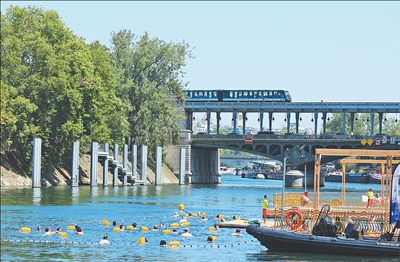
野火、中暑、供电故障……欧洲多国经受高温“烤”验
Xin Hua Wang· 2025-07-04 14:38
Core Points - Europe is experiencing extreme heat waves leading to increased air pollution, heightened wildfire risks, and significant disruptions to daily life [1][10] - The heat wave is attributed to a high-pressure system originating from Africa, creating a "heat dome" effect that compresses air and raises temperatures [10][12] Group 1: Temperature Records and Alerts - Southern Spain recorded temperatures of 46 degrees Celsius, while much of France was under heat alerts with temperatures exceeding 40 degrees Celsius [2] - Austria, Bosnia, Serbia, and Slovenia issued red alerts due to ongoing high temperatures, with many regions experiencing record heat for June [2] Group 2: Wildfires and Emergency Responses - Severe wildfires erupted in Greece, particularly around Athens and Crete, forcing over 5,000 individuals to evacuate [3] - Germany declared a state of emergency in multiple regions due to wildfires, with significant areas affected, including approximately 1,000 hectares in the Görlitz area [4][5] Group 3: Health and Infrastructure Impact - Italy reported multiple deaths linked to high temperatures, with 18 cities under "red alert" for heat, indicating health risks even for healthy adults [7][9] - High temperatures have caused power outages in cities like Florence and Bergamo, and road surfaces in northern Italy have cracked due to heat [9] Group 4: Climate Change Implications - The World Meteorological Organization noted that extreme heat events are becoming more frequent and intense due to climate change, emphasizing the need for public safety measures [12] - Experts warn that the Mediterranean region is warming rapidly, which could lead to more severe weather events in the future if emissions reduction measures are not implemented [12]
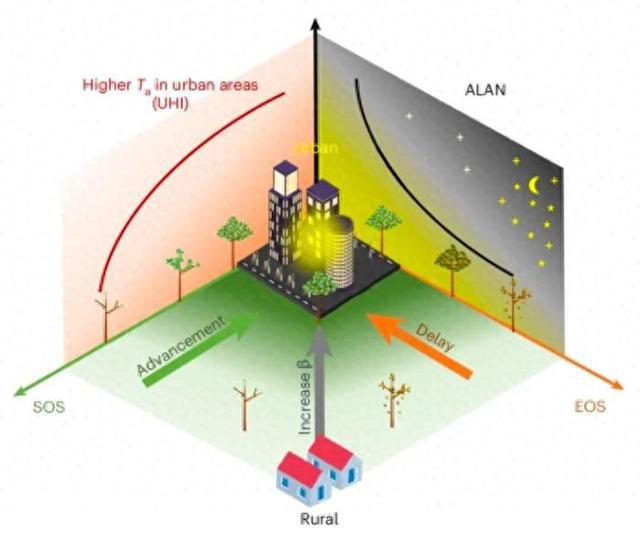
中外合作研究发现:万家灯火或悄然改变城市植被生长季长度
Huan Qiu Wang Zi Xun· 2025-06-17 15:11
Core Findings - A recent study indicates that urban nighttime lighting significantly extends the growing season of vegetation in cities compared to rural areas, with an extension of up to three weeks [1][3] - The research, led by scholars from Wuhan University and Vanderbilt University, highlights that the impact of nighttime lighting on vegetation growth is greater than that of urban heat island effects [1][4] Urbanization and Vegetation Growth - The study analyzed satellite data from 428 cities in the Northern Hemisphere over seven years, revealing that urban nighttime light intensity has increased by an average of 10% over the past decade [1][3] - Vegetation in urban areas tends to sprout and bloom earlier and change color later in the fall compared to rural areas, with the average start date of the growing season in cities being 12.6 days earlier and the end date 11.2 days later than in surrounding rural regions [3][4] Regional Differences - The study found variations in the growing season patterns across continents, with Europe experiencing the earliest start to the growing season, followed by Asia and North America [4] - The influence of nighttime lighting on the start of the growing season is stronger in temperate climates with dry summers and cold climates without dry seasons, while the impact on the end of the growing season is more consistent across cities [4] Future Considerations - The transition from high-pressure sodium lamps to LED lighting in many cities complicates the effects of nighttime lighting on vegetation growth, as plants may respond differently to LED illumination [4] - The researchers emphasize the need to consider both urban heat island effects and nighttime lighting when assessing the impact of urbanization on vegetation ecosystems [4]